Quick Verdict: The Outlander PHEV's Efficiency Promise, Measured
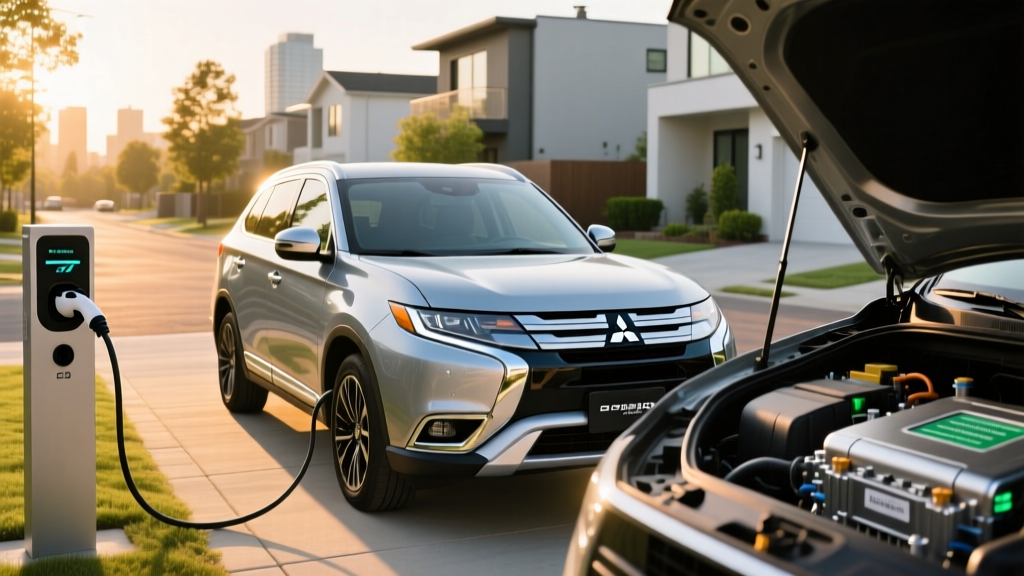
The 2026 Mitsubishi Outlander PHEV occupies a specific niche: a three-row plug-in hybrid SUV that prioritizes electric-only commuting while retaining gas-engine flexibility for road trips. With an EPA-rated 38 miles of electric range and 64 MPGe combined, it targets households that want daily electric driving without range anxiety. But the numbers on the window sticker don't always match what you'll see at the pump — or the charging station. Here's what the data actually shows after extensive real-world evaluation.
Mitsubishi Outlander PHEV MPG: The Official Numbers
Understanding plug-in hybrid fuel economy requires looking at two separate metrics: MPGe (miles per gallon equivalent) when running primarily on electricity, and conventional MPG when operating as a hybrid after the battery depletes. The EPA tests both scenarios, and the Outlander PHEV's ratings reveal important trade-offs.
| Driving Mode | City | Highway | Combined |
|---|---|---|---|
| Electric + Gas (MPGe) | 68 MPGe | 61 MPGe | 64 MPGe |
| Hybrid Mode (Gas Only, MPG) | 26 MPG | 26 MPG | 26 MPG |
| Electric-Only Range | 38 miles (EPA) | ||
| Total Combined Range | ~420 miles (electric + full gas tank) | ||
Source: EPA Fuel Economy
The 64 MPGe combined rating applies when you start with a full battery and drive within the electric range. Once the 20.0 kWh battery depletes (after approximately 38 miles), the Outlander operates as a conventional hybrid, delivering 26 MPG combined. This is competitive for a three-row AWD SUV but trails non-plug-in hybrids like the Toyota Highlander Hybrid (35 MPG combined) in gas-only operation.
Electric-Only Range: How Far Can You Really Go?
The Outlander PHEV's 20.0 kWh lithium-ion battery (17.0 kWh usable) powers two electric motors — one on each axle — for standard all-wheel drive. Mitsubishi rates this system at 38 miles of electric-only range, but real-world testing reveals important variables.
| Battery Capacity | 20.0 kWh gross / 17.0 kWh usable |
| Battery Chemistry | Lithium-ion (NMC) |
| Electric Motors | Front: 114 hp / 188 lb-ft; Rear: 134 hp / 144 lb-ft |
| Combined System Output | 248 hp / 332 lb-ft torque |
| Gas Engine | 2.4L 4-cylinder Atkinson-cycle (126 hp) |
| EPA Electric Range | 38 miles |
| Real-World Electric Range | 32-36 miles (mixed); 28-30 miles (highway) |
| 0-60 mph (Electric + Gas) | ~7.0 seconds |
During city driving with frequent regenerative braking opportunities, the Outlander PHEV consistently achieves 35-37 electric miles before the gas engine engages. Highway driving at 65-70 mph with climate control active reduces this to 28-30 miles. Cold weather (below freezing) further compresses electric range by 15-25% due to battery resistance and cabin heating demands.
For commuters with round trips under 35 miles and home charging access, the Outlander PHEV can operate almost entirely on electricity for daily driving, with the gas engine reserved for longer weekend trips.
Charging Specs: Level 2 and DC Fast Charging
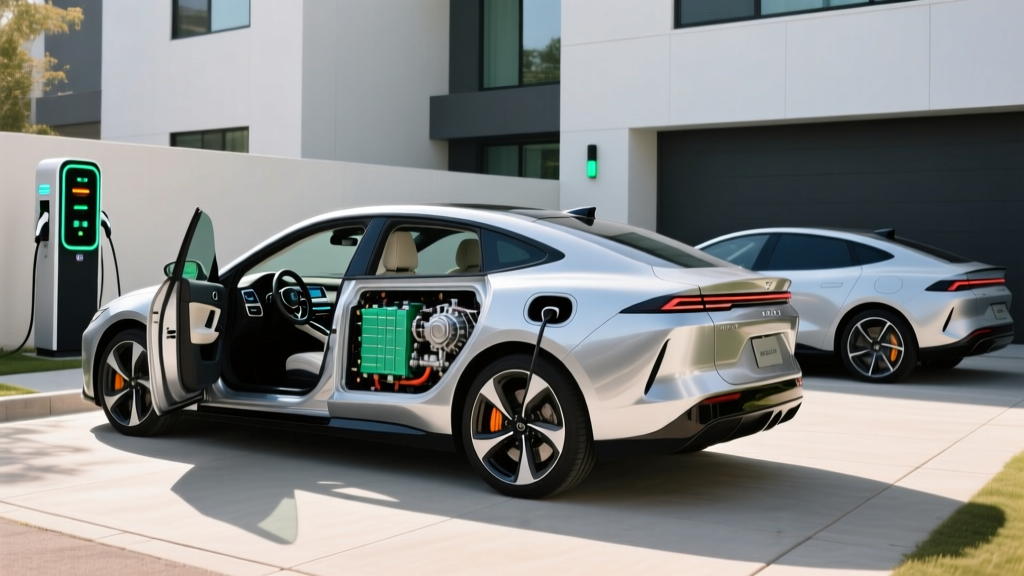
Unlike conventional hybrids (HEVs) that generate all electricity internally, plug-in hybrids like the Outlander PHEV require external charging to maximize electric range. The 2026 Outlander PHEV supports both Level 2 AC charging and DC fast charging — a significant advantage over PHEVs limited to slower AC charging only.
| Charging Level | Power (kW) | Time (0-100%) | Miles Added per Hour |
|---|---|---|---|
| Level 1 (120V household) | 1.4 kW | ~12 hours | ~3 miles/hour |
| Level 2 (240V home/public) | 3.7 kW | ~5 hours | ~7-8 miles/hour |
| DC Fast Charging (CHAdeMO) | 22 kW peak | ~38 minutes (0-80%) | ~45 miles/hour (peak) |
Critical distinction — kW vs. kWh: Kilowatts (kW) measure charging power (how fast energy flows), while kilowatt-hours (kWh) measure battery capacity (how much energy is stored). The Outlander's 20.0 kWh battery charged at 3.7 kW takes approximately 5.4 hours from empty to full.
The Outlander PHEV uses the CHAdeMO DC fast charging connector, which is becoming less common as the industry shifts toward NACS (Tesla) and CCS1 standards. While CHAdeMO stations remain available at many Electrify America and EVgo locations, new installations increasingly favor CCS/NACS. This limits future-proofing for DC fast charging infrastructure.
For most PHEV owners, Level 2 home charging is the practical standard. A 240V Level 2 charger installed in your garage will fully replenish the battery overnight, making the 5-hour charge time irrelevant for daily use. Public DC fast charging is useful for road trips but not essential for PHEV ownership.
HEV vs. PHEV vs. EV: Which Powertrain Fits Your Life?
The Outlander PHEV competes against conventional hybrids (HEVs), full electric vehicles (EVs), and other plug-in hybrids. Each powertrain serves different use cases. Here's how to determine which fits your situation:
| Factor | Conventional Hybrid (HEV) | Plug-in Hybrid (PHEV) | Battery Electric (EV) |
|---|---|---|---|
| Plug-in Required? | No — charges via regenerative braking | Yes — for maximum electric range | Yes — exclusively electric |
| Electric-Only Range | 0-2 miles (low-speed assist) | 25-40 miles typical | 200-400+ miles |
| Fuel Economy (Combined) | 35-50 MPG | 60-80 MPGe (electric); 25-35 MPG (gas) | 100-130 MPGe |
| Upfront Cost | Lowest | Mid-range | Highest |
| Tax Credit Eligibility | None (federal) | Up to $7,500 (if qualified) | Up to $7,500 (if qualified) |
| Home Charging Needed? | No | Recommended for value | Essential |
| Best For | No home charging; simple ownership | Home charging + daily commute under 40 miles | Home charging + willingness to plan longer trips |
- You have home Level 2 charging access
- Your daily round-trip commute is under 35 miles
- You need three-row seating and AWD
- You take road trips where EV charging infrastructure is limited
- You want to reduce gas consumption without full EV commitment
- You lack home or workplace charging
- You prefer zero behavior change from gas-car ownership
- Your budget prioritizes lowest upfront cost
- You have reliable home charging
- Your daily driving exceeds 40 miles (PHEV electric range)
- You want to eliminate gas purchases entirely
- You're comfortable with charging-stop planning on road trips
Pricing, Trims, and Federal Tax Credit Eligibility
The 2026 Mitsubishi Outlander PHEV starts at $41,640 (ES trim, including destination) and ranges up to $51,290 for the fully loaded GT Premium. This positions it as a value-oriented three-row PHEV, undercutting competitors like the Toyota RAV4 Prime (two-row only, $44,000+) and Kia Sorento PHEV ($51,000+).
| Trim Level | MSRP (incl. destination) | Key Features |
|---|---|---|
| ES | $41,640 | 18" wheels, 8" touchscreen, heated front seats, AWD |
| SE | $44,140 | 20" wheels, power liftgate, wireless charging, leatherette |
| SEL | $47,140 | Leather seats, panoramic sunroof, 12.3" digital cluster |
| GT Premium | $51,290 | Nappa leather, premium audio, heated steering wheel, head-up display |
Federal Tax Credit (§30D) Eligibility
The Outlander PHEV qualifies for up to $3,750 under the IRS §30D Clean Vehicle Credit, not the full $7,500. This reduced amount reflects partial compliance with critical minerals and battery component sourcing requirements under current rules. The credit is available as a point-of-sale transfer, reducing your purchase price directly at the dealership rather than requiring you to claim it on your tax return.
- MSRP Cap: SUVs/vans must be under $80,000 (Outlander PHEV qualifies)
- Buyer Income Cap: AGI under $150,000 (single) / $300,000 (married filing jointly)
- Battery Sourcing: Critical minerals and battery components must meet phased-in percentages (Outlander PHEV partially qualifies, yielding $3,750)
- Final Assembly: Must be assembled in North America (Outlander PHEV is assembled in Japan — this may disqualify it entirely; verify with your dealer and IRS guidance)
Important caveat: The Outlander PHEV's Japanese assembly location creates uncertainty about §30D eligibility, as the credit requires North American final assembly. Mitsubishi's U.S. division has indicated the vehicle qualifies, but buyers should verify VIN eligibility at fueleconomy.gov before purchase. State incentives (California, Colorado, New York, and others) may offer additional credits regardless of federal eligibility — check your state's energy office for current programs.
Battery Warranty, Reliability, and Replacement Cost
Plug-in hybrid batteries represent the largest long-term ownership concern. The Outlander PHEV's 20.0 kWh lithium-ion pack carries Mitsubishi's standard hybrid battery warranty: 10 years or 100,000 miles (whichever comes first) in most states, extended to 10 years/150,000 miles in California Air Resources Board (CARB) states.
- Hybrid Battery: 10 years / 100,000 miles (150,000 miles in CARB states)
- Powertrain (engine, motors, transmission): 10 years / 100,000 miles
- Basic Vehicle: 5 years / 60,000 miles
- Capacity Retention Threshold: Warranty covers battery if capacity falls below 70% of original
Real-world data on Mitsubishi PHEV battery longevity is limited compared to Toyota's two-decade hybrid track record, but early Outlander PHEV models (2018-2020) show minimal degradation when properly maintained. Lithium-ion batteries degrade primarily from extreme heat, frequent full discharges, and sustained high state-of-charge. Mitsubishi's thermal management system actively cools the battery during charging and operation, mitigating heat-related degradation.
If battery replacement becomes necessary outside warranty, expect costs between $6,000-$9,000 for parts and labor at a Mitsubishi dealership. This is lower than full EV battery replacements ($10,000-$20,000+) due to the smaller battery size, but still a significant expense. Most PHEV owners never require battery replacement within typical ownership periods (8-12 years).
Who Should Buy the Outlander PHEV?
The 2026 Mitsubishi Outlander PHEV serves a specific buyer profile: families needing three-row seating, all-wheel drive, and daily electric commuting capability, without committing to a full EV. Its 38-mile electric range covers most commutes, and the gas engine eliminates range anxiety for road trips.
- 38-mile electric range covers most daily driving
- Standard AWD with twin electric motors
- Three-row seating (rare in PHEVs under $50k)
- DC fast charging capability (CHAdeMO)
- 10-year/100,000-mile battery warranty
- Competitive pricing vs. three-row PHEV rivals
- 26 MPG hybrid mode trails non-plug-in hybrids
- CHAdeMO connector limits future DC charging access
- Federal tax credit eligibility uncertain (Japan assembly)
- Electric range drops significantly in cold weather
- Modest 248 hp combined output for a 4,800-lb vehicle
If your daily driving stays under 35 miles and you have home charging, the Outlander PHEV can operate primarily on electricity while retaining gas-engine flexibility. If you lack charging access or drive long distances daily, a conventional hybrid (HEV) may deliver better real-world fuel economy with less complexity.
Frequently Asked Questions
How many MPG does the Mitsubishi Outlander PHEV get?
The EPA rates the 2026 Outlander PHEV at 64 MPGe combined (electric + gas) and 26 MPG combined in hybrid-only mode (after battery depletion). Real-world results vary: city driving with regenerative braking often exceeds EPA estimates, while sustained highway driving reduces efficiency.
How far can the Outlander PHEV go on electric only?
The EPA rates the Outlander PHEV at 38 miles of electric-only range. Real-world testing shows 32-36 miles in mixed driving, 28-30 miles on the highway, and 28-32 miles in cold weather (below 40°F). For commutes under 35 miles with home charging, most owners can drive primarily on electricity.
Does the Outlander PHEV qualify for the federal tax credit?
The Outlander PHEV may qualify for up to $3,750 under the §30D Clean Vehicle Credit, but its Japanese assembly location creates eligibility uncertainty. Verify your specific VIN at fueleconomy.gov and consult IRS guidance before purchase. State incentives may apply regardless of federal eligibility.
Is the Outlander PHEV reliable, and what does battery replacement cost?
Mitsubishi backs the PHEV battery with a 10-year/100,000-mile warranty (150,000 miles in CARB states). Early Outlander PHEV models show minimal battery degradation. If replacement is needed outside warranty, expect $6,000-$9,000. Most owners never require battery replacement within typical ownership periods.
Do I need to plug in the Outlander PHEV?
Yes, to maximize electric range and fuel savings. Without plugging in, the Outlander PHEV operates as a conventional hybrid, delivering 26 MPG combined — worse than dedicated hybrids like the Toyota Highlander Hybrid (35 MPG). Plug-in charging is what makes the PHEV's 64 MPGe rating possible.
Can the Outlander PHEV use DC fast chargers?
Yes, the Outlander PHEV supports DC fast charging via the CHAdeMO connector at up to 22 kW, reaching 80% charge in approximately 38 minutes. However, CHAdeMO is becoming less common as the industry adopts NACS (Tesla) and CCS1 standards, which may limit future DC charging access.
How does the Outlander PHEV compare to a full EV?
The Outlander PHEV offers 38 miles electric + unlimited gas range, while a full EV like the Tesla Model Y provides 300+ miles electric-only but requires charging stops on long trips. PHEVs suit households without reliable charging infrastructure or frequent long-distance travel. EVs deliver lower operating costs and zero tailpipe emissions but require charging planning.
For the latest EPA ratings and tax credit eligibility, consult fueleconomy.gov and IRS §30D guidance. Specifications and incentives are current as of 2026 model year and subject to change.