Quick Verdict: The Mini Cooper PHEV in a Nutshell
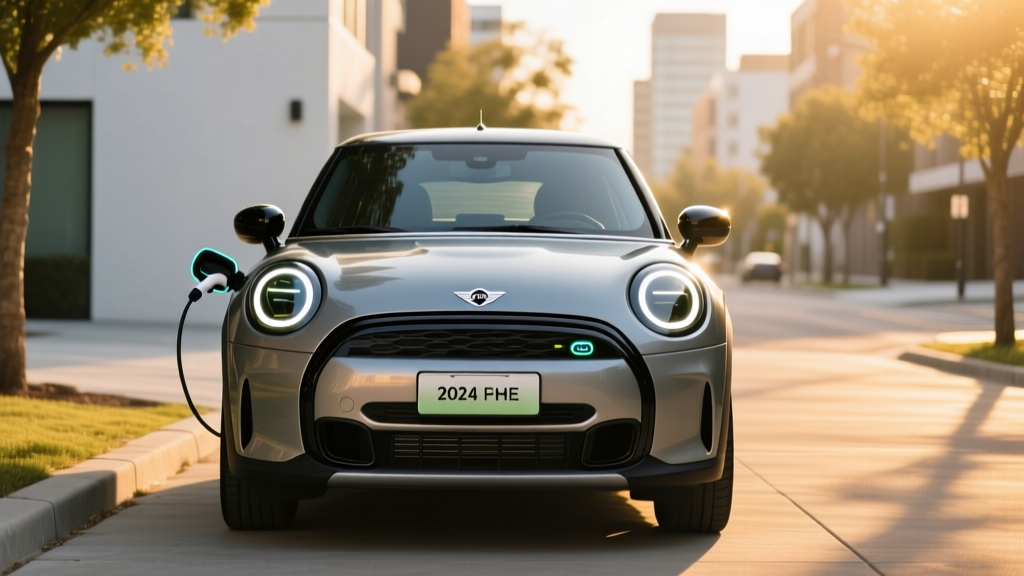
The Mini Cooper SE Countryman ALL4 plug-in hybrid is a niche play — a premium compact crossover that lets you commute on electricity and road-trip on gasoline. For 2025–2026, the Countryman PHEV pairs a turbocharged 1.5-liter three-cylinder engine with a rear-axle electric motor for a combined 321 horsepower and all-wheel drive. Its 16.3 kWh battery delivers an EPA-rated 32 miles of electric-only range, enough for most daily commutes without burning a drop of fuel.
But the Countryman PHEV is not for everyone. Its premium pricing, modest EV range relative to competitors like the Toyota RAV4 Prime, and ineligibility for the full federal §30D tax credit make it a lifestyle choice rather than a value play. Here's everything you need to know — exact numbers, real-world expectations, and whether it fits your garage.
HEV vs. PHEV: What the Mini Countryman Actually Is
Conventional Hybrid (HEV): A small battery (typically 1–2 kWh) recharges via regenerative braking and the engine. You never plug it in. Fuel economy improves 20–40% over a gas car. Example: Toyota Prius.
Plug-In Hybrid (PHEV): A larger battery (10–20+ kWh) that you plug in to recharge. It provides 20–50 miles of electric-only driving before the gas engine takes over. Example: Mini Cooper SE Countryman ALL4.
Full EV (BEV): No engine. A large battery (50–100+ kWh) provides 200–400+ miles of range. Requires regular plug-in charging. Example: Tesla Model Y.
The Mini Cooper SE Countryman ALL4 is a PHEV. You plug it in to unlock its electric range, but if you forget or skip charging, it simply operates as a conventional hybrid — the engine and regen braking keep the battery partially charged. You'll never be stranded for lack of a charger.
Spec Table: Mini Cooper SE Countryman ALL4 PHEV at a Glance
| Specification | Value |
|---|---|
| Powertrain | 1.5L turbo 3-cyl + rear electric motor (AWD) |
| Combined Horsepower | 321 hp |
| Combined Torque | 354 lb-ft |
| Battery Capacity | 16.3 kWh (usable ~14.9 kWh), NMC chemistry |
| EPA Electric-Only Range | 32 miles |
| Total Combined Range (EV + Gas) | ~370 miles |
| EPA MPGe (electric + gas) | 82 MPGe combined |
| EPA MPG (gas only, charge-depleted) | 29 city / 31 highway / 30 combined |
| 0–60 mph | 5.6 seconds |
| Level 2 Charging (AC) | 7.4 kW max; 0–100% in ~2.5 hours |
| DC Fast Charging | Not supported |
| Fuel Tank | 11.6 gallons (premium recommended) |
| Cargo Volume | 18.4 cu ft (rear seats up) / 47.6 cu ft (folded) |
| Base MSRP (2025 SE ALL4) | $44,900 (Signature trim) |
| Federal §30D Tax Credit | Not eligible (BMW/Mini assembly outside US; battery sourcing) |
| Battery Warranty | 8 years / 80,000 miles (capacity retention) |
Electric Range, MPG, and Real-World Efficiency
The EPA rates the Countryman SE ALL4 at 32 miles of electric-only range on a full charge. In real-world testing, that figure holds up reasonably well in mild weather (60–80°F) with moderate acceleration and suburban speeds. Expect 28–32 miles in practice. In cold weather (below 30°F), battery efficiency drops — plan on 22–26 miles of electric range due to cabin heating demands and reduced lithium-ion performance.
On the highway at 70+ mph, the electric range shrinks further to roughly 20–24 miles because aerodynamic drag and higher speeds drain the battery faster. This is typical for PHEVs and not unique to Mini.
Gas-Only MPG (Charge-Depleted Operation)
Once the battery is depleted, the Countryman operates as a conventional hybrid. The EPA rates it at 30 MPG combined (29 city / 31 highway). In real-world mixed driving, owners report 28–31 MPG, which is reasonable for a 3,900-pound AWD crossover with a turbocharged engine. However, it falls short of competitors like the Toyota RAV4 Prime (38 MPG gas-only) and the Hyundai Tucson PHEV (35 MPG gas-only).
| Driving Scenario | EPA Rating | Real-World Expectation |
|---|---|---|
| Electric-only range | 32 miles | 28–32 mi (mild); 22–26 mi (cold) |
| City MPG (gas only) | 29 MPG | 28–30 MPG |
| Highway MPG (gas only) | 31 MPG | 28–31 MPG |
| Combined MPG (gas only) | 30 MPG | 28–31 MPG |
| Combined MPGe (EV + gas) | 82 MPGe | Varies with charging frequency |
Key insight: Your actual MPGe depends entirely on how often you charge. If you plug in nightly and commute under 30 miles, you may use almost no gasoline for months. If you never plug in, you're driving a 30 MPG hybrid — which is unremarkable for the price.
Charging: Level 2 Only, No DC Fast Charging
The Countryman PHEV accepts up to 7.4 kW on Level 2 (240V AC), which replenishes the battery from 0–100% in approximately 2.5 hours. This is adequate for overnight home charging or topping up at a workplace charger during the day.
On a standard 120V household outlet (Level 1, ~1.4 kW), a full charge takes roughly 10–12 hours — feasible overnight but slow.
Notable limitation: The Countryman SE ALL4 does not support DC fast charging. You cannot use public 50–350 kW DC chargers to quickly top up on road trips. For a PHEV with a small battery, this is a common omission (the RAV4 Prime also lacks DC fast charging), but it's worth knowing if you expected rapid public charging.
Charging cost at home (at the US average of $0.16/kWh) works out to roughly $2.40 for a full charge, or about $0.075 per electric mile — substantially cheaper than gasoline at current prices.
Powertrain and Performance
The Countryman PHEV's powertrain is its strongest selling point. The front-mounted 1.5-liter turbocharged three-cylinder engine produces 161 hp and drives the front wheels, while a 130 kW (174 hp) electric motor on the rear axle provides all-wheel drive and instant torque. Combined output is 321 hp and 354 lb-ft of torque, launching the Countryman to 60 mph in 5.6 seconds — quick for a compact crossover.
The transition between electric and gas power is well-managed. In default AUTO eDrive mode, the car starts in electric and seamlessly engages the engine under hard acceleration or when the battery depletes. You can also select MAX eDrive (electric-only up to 84 mph) or SAVE mode (reserves battery for later use, such as entering a city center).
Regenerative braking is moderate — not strong enough for true one-pedal driving, which is typical for PHEVs. You'll still use the brake pedal normally.
Pricing, Tax Credits, and Ownership Costs
The 2025 Mini Cooper SE Countryman ALL4 starts at $44,900 for the Signature trim, with the Iconic trim pushing past $48,000 with options. Destination charges add approximately $995.
Federal Tax Credit Eligibility
Under current IRS §30D rules, the Mini Cooper SE Countryman ALL4 does not qualify for the federal plug-in vehicle tax credit. The reasons are twofold:
- Final assembly requirement: The vehicle must undergo final assembly in North America. Mini Countryman production occurs at BMW's Leipzig, Germany plant (and previously VDL Nedcar in the Netherlands).
- Battery sourcing requirements: Critical minerals and battery components must meet escalating domestic-content thresholds that the Countryman's supply chain does not satisfy.
- MSRP cap: SUVs must be under $80,000 — the Countryman clears this, but the assembly and sourcing rules disqualify it regardless.
Some state-level incentives may still apply. Check your state's EV rebate program — states like California, Colorado, and New York offer additional credits for PHEVs, though amounts and eligibility vary. Consult IRS §30D guidelines and your tax professional for personalized advice.
Five-Year Ownership Cost Estimate
Assuming 15,000 miles/year, 60% electric driving (with nightly home charging), and premium gasoline at $4.20/gallon:
| Cost Category | 5-Year Estimate |
|---|---|
| Fuel (gas + electricity) | $5,800–$7,200 |
| Insurance (national avg, premium vehicle) | $9,500–$12,000 |
| Maintenance (PHEVs: less than gas, more than EV) | $2,500–$3,500 |
| Depreciation (estimated) | $18,000–$22,000 |
| Total (5 years) | $35,800–$44,700 |
Insurance premiums run higher than average due to the Countryman's premium positioning and BMW parts costs. Get quotes before committing.
Battery Warranty, Reliability, and Replacement Costs
Battery Warranty: BMW/Mini covers the high-voltage battery for 8 years or 80,000 miles, whichever comes first. The warranty guarantees the battery will retain a minimum percentage of its original capacity (typically 70%). If degradation exceeds that threshold within the warranty period, BMW will repair or replace the battery at no cost.
Mini's parent company BMW has extensive experience with PHEV and EV battery systems, and the NMC chemistry in the Countryman is well-understood. PHEV batteries experience less stress than full EV batteries because they operate in a narrower state-of-charge window (the system reserves buffers at the top and bottom to reduce degradation).
Out-of-warranty replacement cost: If the high-voltage battery fails after the warranty period, expect a replacement cost of $8,000–$12,000 including parts and labor at a BMW/Mini dealer. This is lower than full EV battery replacements because the PHEV battery is much smaller (16.3 kWh vs. 60–100 kWh in a BEV).
The conventional 12V auxiliary battery (which powers electronics, not propulsion) follows standard automotive replacement intervals of 4–6 years and costs $200–$350.
Reliability Track Record
The current-generation Countryman (U25 platform, introduced for the 2025 model year) is too new for long-term reliability data. The previous-generation Countryman PHEV (F60, 2018–2024) had mixed reliability ratings — J.D. Power and Consumer Reports gave it average to below-average scores, with common complaints around infotainment software and minor electrical gremlins rather than powertrain failures. The new platform uses BMW's updated FAAR architecture, which is also shared with the BMW X1 xDrive30e PHEV.
For the latest safety data, check NHTSA and IIHS ratings as they become available for the current generation.
Mini Cooper PHEV: Pros and Cons
Pros
- 321 hp provides genuinely quick acceleration (5.6s 0–60)
- 32-mile EV range covers most commutes gasoline-free
- Premium interior with distinctive Mini design and build quality
- AWD standard via rear electric motor — no mechanical driveshaft
- Operates as a normal hybrid if you forget to charge
- Compact footprint with reasonable cargo space (18.4 / 47.6 cu ft)
Cons
- $44,900+ MSRP with no federal tax credit eligibility
- Gas-only MPG (30 combined) trails RAV4 Prime (38) and Tucson PHEV (35)
- No DC fast charging — Level 2 only
- Requires premium gasoline (91+ octane)
- EV range drops to ~22 miles in cold weather
- Insurance costs above average for the segment
- Previous-generation reliability was middling
Who Should Buy the Mini Cooper PHEV (and Who Shouldn't)
Choose the Mini Cooper SE Countryman ALL4 PHEV if:
- You want a premium, stylish compact crossover with real performance (321 hp)
- Your commute is under 30 miles round-trip and you can charge at home nightly
- You want AWD for weather or light off-road use without the range anxiety of a full EV
- You road-trip occasionally and don't want to plan around charging infrastructure
- You value Mini's design language and driving dynamics over maximum efficiency
Look elsewhere if:
- Maximum fuel savings is your priority — the RAV4 Prime delivers 38 MPG gas-only and 42 miles EV range for less money
- You want the federal $7,500 tax credit — the Countryman doesn't qualify
- You need more cargo space or a third row
- You're ready to go fully electric — consider the fully electric Mini Cooper SE Countryman (all-electric variant) or a Tesla Model Y
- You drive over 50 miles daily and lack home charging — a PHEV's small battery won't cover your commute, and you'll burn gas at 30 MPG
Hybrid vs. PHEV vs. EV — Which Fits You?
If you can charge at home and your daily driving is under 30 miles, a PHEV like the Countryman gives you the best of both worlds: electric commuting with gasoline backup. If you drive more than 50 miles daily, a full EV with 300+ miles of range (and lower per-mile energy costs) makes more financial sense. If you can't charge at home at all, a conventional hybrid (HEV) avoids the frustration of a PHEV battery you can't recharge conveniently — though you'll miss the EV-only commuting benefit.
Frequently Asked Questions
How many MPG does the Mini Cooper PHEV get?
The Mini Cooper SE Countryman ALL4 PHEV is EPA-rated at 30 MPG combined (29 city / 31 highway) when running on gasoline after the battery is depleted. In real-world driving, expect 28–31 MPG. When factoring in electric driving, the combined rating is 82 MPGe — but your actual efficiency depends heavily on how often you plug in.
How far can the Mini Cooper PHEV go on electric only?
The EPA rates the Countryman SE ALL4 at 32 miles of electric-only range. In real-world conditions, expect 28–32 miles in mild weather and 22–26 miles in cold weather (below 30°F). Highway driving at 70+ mph reduces electric range to approximately 20–24 miles.
Does the Mini Cooper PHEV qualify for a federal tax credit?
No. Under current IRS §30D rules, the Mini Cooper SE Countryman ALL4 does not qualify for the federal plug-in vehicle tax credit because it is assembled outside North America (Germany) and its battery components do not meet domestic sourcing requirements. State-level incentives may still apply — check your local program.
Is the Mini Cooper PHEV reliable, and what does battery replacement cost?
The current-generation Countryman is too new for long-term reliability data. The previous generation had average to below-average reliability scores, with complaints focused on software rather than powertrain issues. The high-voltage battery is warranted for 8 years / 80,000 miles. Out-of-warranty replacement is estimated at $8,000–$12,000.
Can the Mini Cooper PHEV use DC fast chargers?
No. The Countryman SE ALL4 supports only AC charging — up to 7.4 kW on Level 2 (240V), taking about 2.5 hours for a full charge. It does not have a DC fast-charging port. This is common for PHEVs with smaller batteries but worth noting if you expected rapid public charging.
How much does it cost to charge the Mini Cooper PHEV at home?
At the US average electricity rate of $0.16/kWh, a full charge of the 16.3 kWh battery costs approximately $2.40. That works out to about $0.075 per electric mile — roughly one-quarter the cost of gasoline on a per-mile basis.
Should I buy the PHEV or the fully electric Mini Countryman?
If you have reliable home charging and your daily driving stays under 200 miles, the all-electric Mini Countryman (SE ALL4, ~240 miles EPA range) offers lower running costs, less maintenance, and smoother operation. Choose the PHEV if you regularly take longer road trips, lack dependable charging access, or want the safety net of a gasoline engine.