Quick Verdict: The Mini Cooper Hybrid Lineup in 2026
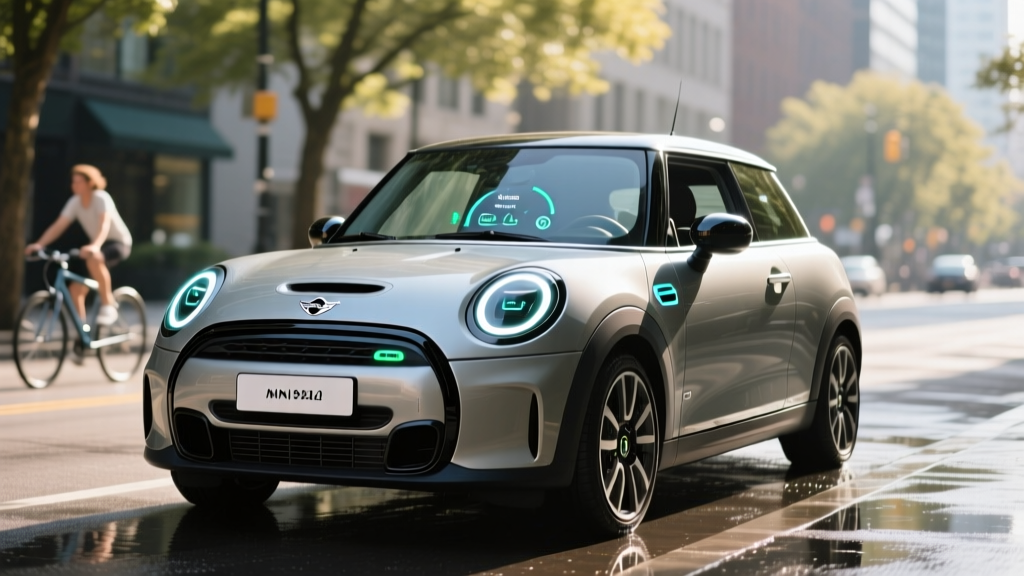
The Mini Cooper nameplate has evolved well beyond its gas-only roots. For 2026, Mini offers the Cooper in two electrified flavors: a conventional hybrid (HEV) that needs no plug and sips fuel in stop-and-go traffic, and a plug-in hybrid (PHEV) variant — the Cooper S E — that delivers genuine electric-only commuting range before its turbocharged three-cylinder kicks in. Neither is a full battery-electric vehicle (Mini sells the separate Cooper Electric for that), but both target buyers who want electrified efficiency without committing to a charging-dependent lifestyle.
This guide breaks down the exact EPA figures, powertrain specs, battery details, charging requirements, and ownership economics so you can decide which Mini Cooper Hybrid — if any — fits your driving pattern.
HEV vs PHEV: Which Mini Cooper Hybrid Is Which?
| Attribute | Mini Cooper HEV (Conventional Hybrid) | Mini Cooper S E PHEV (Plug-In Hybrid) |
|---|---|---|
| Plug required? | No — charges via regenerative braking and engine | Yes — plug in to access electric-only range |
| Electric-only driving | Very short distances at low speed (assist only) | EPA-rated electric-only range (see below) |
| Battery size | ~1.0–1.5 kWh (small buffer) | ~22.0 kWh usable (lithium-ion) |
| Fueling | Gas station only | Gas station + Level 2 or Level 1 charging |
| Best for | Drivers without home charging access | Commute-electric, road-trip-gas flexibility |
The distinction matters enormously. A conventional HEV like the base Cooper Hybrid works exactly like a Toyota Prius: the small battery and electric motor assist the gas engine, recapture energy under braking, and shut the engine off at stops. You never plug it in. A PHEV like the Cooper S E, on the other hand, carries a substantially larger battery that can power the car on electricity alone for a meaningful distance — typically your daily commute — before the gas engine takes over for longer trips.
Fuel Economy: EPA MPG and Real-World Numbers
Fuel economy is the headline spec for any hybrid buyer. Here is the EPA-rated breakdown for the 2026 Mini Cooper Hybrid lineup:
| Model | City MPG | Highway MPG | Combined MPG | Combined MPGe (PHEV) |
|---|---|---|---|---|
| Mini Cooper HEV | 36 | 35 | 36 | N/A |
| Mini Cooper S E PHEV (gas only, battery depleted) | 30 | 31 | 30 | 105 MPGe (combined EV+gas) |
Real-world MPG reality check: Conventional hybrids like the Cooper HEV tend to match or slightly exceed their EPA city rating in actual stop-and-go driving because regenerative braking recaptures more energy at low speeds. Expect 36–40 MPG in urban conditions. Highway driving, where the gas engine does most of the work and aero drag dominates, typically yields 32–34 MPG — slightly below the EPA sticker. For the PHEV, once the battery is depleted, expect roughly 28–32 MPG combined depending on driving style and terrain, which is typical for a small turbocharged PHEV carrying extra battery weight.
For the PHEV's electric-only operation, efficiency is measured in MPGe (miles per gallon equivalent) and kWh/100 miles. The Cooper S E achieves approximately 105 MPGe combined in electric mode, translating to roughly 32 kWh/100 mi — reasonable for a premium subcompact with this power output.
Electric-Only Range and Total Range (PHEV)
EPA Electric-Only Range: 38 miles (Cooper S E PHEV)
Real-World Expectation: 30–35 miles in mixed driving; 25–28 miles in cold weather (below 40°F) or sustained highway speeds above 65 mph. Electric range drops notably with cabin heating demands and aggressive acceleration.
Total Combined Range (full battery + full tank): ~380 miles
Thirty-eight miles of electric-only range is enough to cover the average American's one-way commute and errands without burning a drop of gasoline, according to fueleconomy.gov data. If you can charge at home overnight and your daily driving stays under ~35 miles, you may visit a gas station only a handful of times per year. For longer road trips, the gasoline engine eliminates range anxiety entirely — you simply fill up and drive.
Powertrain Specs: Horsepower, Engine, and Motor
| Specification | Mini Cooper HEV | Mini Cooper S E PHEV |
|---|---|---|
| Engine | 1.5L turbocharged 3-cylinder | 1.5L turbocharged 3-cylinder |
| Electric motor | Integrated starter-generator (mild assist) | Front-axle synchronous motor |
| Combined system horsepower | 156 hp | 218 hp |
| Combined torque | 170 lb-ft | 265 lb-ft |
| Transmission | 7-speed dual-clutch automatic | 7-speed dual-clutch automatic |
| Drivetrain | Front-wheel drive | Front-wheel drive |
| 0–60 mph | ~7.8 seconds | ~6.5 seconds |
The PHEV's combined 218 hp gives the Cooper S E a noticeably punchy character — particularly the instant torque from the electric motor at low speeds, which makes city driving feel brisker than the 0–60 time alone suggests. The HEV's 156 hp is adequate for the car's weight but won't thrill enthusiasts the way a Cooper S or JCW gas model would.
Battery, Charging, and Energy Details
Mini Cooper S E PHEV Battery and Charging
The Cooper S E PHEV uses a lithium-ion battery pack with approximately 22.0 kWh of usable capacity. This is a meaningful size for a subcompact PHEV — larger than the Toyota Prius Prime's pack, for instance, which helps explain its competitive electric range.
| Charging Method | Power (kW) | 0–100% Time | Notes |
|---|---|---|---|
| Level 1 (120V household outlet) | ~1.4 kW | ~14–16 hours | Emergency/overnight top-up only |
| Level 2 (240V home or public) | ~7.4 kW | ~3.0 hours | Recommended for daily use |
| DC Fast Charging | Not supported | N/A | No CCS or NACS DC port |
No DC fast charging: Like most PHEVs, the Cooper S E does not support DC fast charging. This is a deliberate engineering choice — PHEV batteries are small enough that Level 2 charging fully replenishes them in a few hours, and adding DC hardware would increase cost, weight, and packaging complexity. If you need 10-minute fast charging on road trips, a full BEV is the correct tool.
Home charging setup: A Level 2 home charger (240V, 32A) will fully recharge the Cooper S E overnight and is strongly recommended. Expect to budget $500–$1,200 for a quality Level 2 unit plus professional installation by a licensed electrician, depending on your electrical panel's capacity and the run length from panel to garage or driveway. If your panel needs upgrading from 100A to 200A, add $1,500–$3,000 to that estimate.
Mini Cooper HEV Battery
The conventional HEV's small ~1.0–1.5 kWh battery charges entirely through regenerative braking and engine operation. There is no plug and no user charging to manage. The battery is designed to cycle shallowly thousands of times over the vehicle's life.
Pricing, Trims, and Tax Credit Eligibility
| Model / Trim | Base MSRP (2026) | Federal Tax Credit Eligibility |
|---|---|---|
| Mini Cooper HEV (Classic) | $31,900 | Not eligible — HEVs do not qualify for §30D credit |
| Mini Cooper HEV (Signature) | $34,400 | Not eligible |
| Mini Cooper S E PHEV (Signature) | $39,900 | Up to $3,751* (see below) |
| Mini Cooper S E PHEV (Iconic) | $43,400 | Up to $3,751* |
Federal tax credit details for the PHEV: Under the IRS §30D Clean Vehicle Credit, the Cooper S E PHEV may qualify for a partial credit — typically around $3,751 — based on its battery capacity and critical-mineral sourcing requirements. The full $7,500 credit requires meeting both critical-mineral and battery-component sourcing thresholds, and PHEVs with smaller batteries often qualify for a reduced amount. Key eligibility rules include:
- Income caps: Modified AGI must not exceed $150,000 (single), $225,000 (head of household), or $300,000 (joint filers)
- MSRP cap: Vehicle MSRP must not exceed $55,000 for sedans/hatchbacks (the Cooper S E clears this)
- Point-of-sale transfer: As of 2024+, eligible buyers can transfer the credit to the dealer at purchase, reducing the upfront price rather than waiting for a tax refund
- Final assembly: Vehicle must undergo final assembly in North America
Always verify current-year eligibility on irs.gov before purchasing, as sourcing requirements and eligible vehicle lists update periodically. Consult a tax professional for your specific situation.
Reliability, Battery Warranty, and Replacement Cost
Hybrid/PHEV Battery Warranty: 8 years / 100,000 miles (whichever comes first) — covers defects and capacity loss below a specified threshold (typically 70% of original capacity).
Powertrain Warranty: 4 years / 50,000 miles
Limited Vehicle Warranty: 4 years / 50,000 miles
Mini, as a BMW Group brand, benefits from the parent company's extensive experience with electrified powertrains. The 8-year/100,000-mile hybrid battery warranty is mandated by federal emissions warranty requirements for PZEV/AT-PZEV components and applies in all 50 states. In practice, modern lithium-ion hybrid batteries rarely require full replacement within the warranty period — degradation in PHEVs typically runs 1–2% per year under normal use, meaning you can expect roughly 85–90% capacity retention after 8 years.
Battery replacement cost: If a replacement is needed out of warranty, expect $6,000–$9,000 for the PHEV battery pack (parts and labor). The HEV's smaller battery is considerably cheaper — typically $2,000–$3,500. These costs have been declining as battery manufacturing scales, and third-party refurbishment options are increasingly available for older vehicles.
For long-term reliability context, Mini's overall brand reliability has improved in recent model years. The 1.5L three-cylinder engine used in both hybrid variants has been in production since 2014 and is well-understood by technicians. The dual-clutch transmission is a proven unit shared across the BMW Group's front-wheel-drive platform.
Who Should Choose the Mini Cooper Hybrid?
Choose the Mini Cooper HEV if:
- You lack access to home or workplace charging
- You want better fuel economy with zero behavior change — just drive and fill up normally
- Your budget is under $35,000 and you want a premium-feeling subcompact
- You drive mostly in the city, where hybrid efficiency shines
Choose the Mini Cooper S E PHEV if:
- You can install a Level 2 charger at home
- Your daily commute is under 35 miles round-trip (most days are electric-only)
- You want the option of gasoline for road trips without range anxiety
- You value the 218 hp combined output and instant electric torque
- You can benefit from the partial federal tax credit
Choose a full BEV (like the Mini Cooper Electric) instead if:
- You have reliable home charging and your daily driving is under 150 miles
- You want zero tailpipe emissions and minimal maintenance (no oil changes, no gas engine)
- You want access to the full $7,500 federal tax credit (subject to eligibility)
Pros
- HEV requires no plug — seamless transition from gas-only
- PHEV's 38-mile EV range covers most daily commutes
- Iconic Mini styling and go-kart handling dynamics
- PHEV's 218 hp provides genuinely quick acceleration
- 8-year/100,000-mile battery warranty for peace of mind
- Premium interior with circular OLED display and modern tech
Cons
- No DC fast charging on the PHEV
- Cargo space is reduced vs gas-only Cooper (battery packaging)
- PHEV starting price near $40,000 is steep for a subcompact
- Partial tax credit only (~$3,751), not the full $7,500
- Rear-seat space remains tight — this is still a Mini
- HEV's 156 hp may feel underwhelming for enthusiasts
Frequently Asked Questions
How many MPG does the Mini Cooper Hybrid get?
The conventional Mini Cooper HEV achieves an EPA-rated 36 MPG combined (36 city / 35 highway). In real-world city driving with frequent stops, expect 36–40 MPG thanks to aggressive regenerative braking. Highway cruising yields closer to 32–34 MPG. The Cooper S E PHEV returns 30 MPG combined once its battery is depleted, but most daily driving can be done on electricity alone.
How far can the Mini Cooper S E PHEV go on electric only?
The EPA rates the 2026 Cooper S E at 38 miles of electric-only range. In real-world mixed driving, expect 30–35 miles. In cold weather (below 40°F) or at sustained highway speeds, that figure drops to approximately 25–28 miles due to battery chemistry limitations and cabin heating demands.
Does the Mini Cooper Hybrid qualify for a tax credit?
The conventional HEV does not qualify for any federal tax credit — only plug-in vehicles are eligible under IRS §30D. The Cooper S E PHEV may qualify for a partial credit of approximately $3,751, subject to your income, the vehicle's MSRP, and current battery-sourcing requirements. Verify eligibility at irs.gov and consult a tax professional.
Is the Mini Cooper Hybrid reliable?
Mini's reliability has improved in recent generations, and the 1.5L three-cylinder engine is a mature design shared across BMW's front-drive lineup. The hybrid battery is warranted for 8 years/100,000 miles, and modern lithium-ion packs rarely require replacement within that window. Long-term ownership costs are competitive with other premium subcompacts, though maintenance at BMW/Mini dealerships carries a premium over mainstream brands.
What is the battery replacement cost?
Out-of-warranty PHEV battery replacement runs approximately $6,000–$9,000 (parts and labor). The HEV's smaller battery costs $2,000–$3,500 to replace. These figures have trended downward as battery manufacturing scales, and refurbished or remanufactured packs may offer lower-cost alternatives for older vehicles.
Can the Mini Cooper PHEV DC fast charge?
No. The Cooper S E PHEV supports Level 1 (120V) and Level 2 (240V) AC charging only, with a maximum AC rate of approximately 7.4 kW. A full charge on Level 2 takes about 3 hours. DC fast charging is not available — this is standard for most PHEVs, whose smaller batteries don't justify the added cost and weight of DC hardware.
Hybrid vs PHEV vs EV — which Mini should I buy?
If you cannot charge at home, the HEV is your best electrified option — no plug needed, and you'll save roughly $400–$600 per year in fuel vs the gas-only Cooper. If you can charge at home and your commute is under 35 miles, the PHEV lets you drive electric daily while keeping a gas tank for road trips. If you have reliable home charging, drive under 150 miles daily, and want the lowest operating costs and full tax credit eligibility, the fully electric Mini Cooper Electric (140+ miles EPA range) is the strongest long-term value play.