The S 580e at a Glance: Mercedes' Flagship Plug-In Hybrid
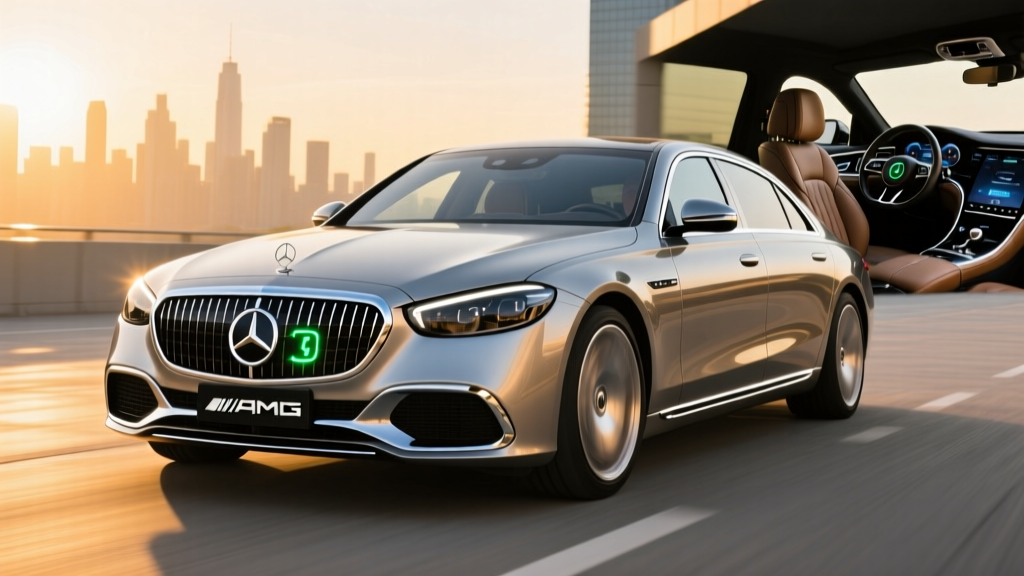
The Mercedes-Benz S-Class has long defined luxury sedan engineering, and the current-generation S 580e plug-in hybrid (PHEV) represents the brand's most sophisticated electrified flagship. Unlike a conventional hybrid (HEV) that you never plug in, the S 580e carries a substantial battery you can charge from a wall outlet — giving it genuine electric-only commuting capability before the inline-six gasoline engine ever fires up. For buyers who want S-Class refinement but aren't ready to commit to a full battery-electric vehicle like the EQS, this PHEV bridges the gap with real numbers behind it.
Below, we break down every spec that matters: EPA fuel economy, electric-only range, charging times, powertrain output, pricing, tax credit eligibility, and the reliability questions hybrid buyers always ask. All figures reflect the latest available model-year data from fueleconomy.gov and Mercedes-Benz USA.
HEV vs PHEV: Which S-Class Hybrid Are We Talking About?
Conventional Hybrid (HEV): Uses a small battery recharged solely by regenerative braking and the engine. You never plug it in. Electric-only driving is limited to brief low-speed bursts. The current US-market S-Class does not offer a conventional HEV variant.
Plug-In Hybrid (PHEV) — S 580e: Carries a larger 28.6 kWh battery pack that you charge via a plug. Delivers meaningful electric-only range (EPA-rated 48 miles) for daily commuting, then seamlessly transitions to hybrid operation for longer trips. Total system range exceeds 440 miles.
The distinction matters because some buyers conflate the two. The S 580e requires access to charging — ideally a home Level 2 setup — to realize its efficiency and cost advantages. If you cannot plug in regularly, you're carrying extra battery weight for nothing, and a conventional gas S 500 or S 580 may serve you better.
EPA Fuel Economy and Electric-Only Range
| Metric | EPA Rating | Real-World Expectation |
|---|---|---|
| Combined MPGe (electric + gas) | 56 MPGe | 48–54 MPGe (varies with charge frequency) |
| Gas-only combined MPG | 26 MPG | 23–28 MPG (city-favorable, highway lower) |
| City MPG (gas-only) | 27 MPG | 25–30 MPG (regen helps in stop-and-go) |
| Highway MPG (gas-only) | 25 MPG | 22–25 MPG (aero drag at 75+ mph) |
| Electric-only range | 48 miles | 38–46 miles (climate, terrain, driving style) |
| Total combined range | ~440 miles | 380–440 miles |
Real-world range reality: The EPA's 48-mile electric-only rating assumes moderate temperatures and mixed driving. In cold weather (below 35°F), expect 30–38 miles on a full charge due to cabin heating demands and reduced battery efficiency. Highway-speed electric driving at 70+ mph will also deplete the battery faster — plan for roughly 35 miles of electric range on interstate commutes. When the battery depletes, the 3.0L turbocharged inline-six takes over seamlessly, delivering 26 MPG combined in gas-only operation.
Hybrids typically exceed their EPA city rating because regenerative braking recovers energy in stop-and-go traffic. The S 580e is no exception — owners who commute in dense urban environments with frequent charging report gas consumption far below the sticker number.
Powertrain: 442 Horsepower from Engine + Electric Motor
| Specification | Detail |
|---|---|
| Engine | 3.0L turbocharged inline-6 + 48V mild-hybrid assist |
| Engine output | 362 hp / 369 lb-ft torque |
| Electric motor | 110 kW (148 hp) permanently excited synchronous |
| Combined system output | 442 hp / 516 lb-ft torque |
| Transmission | 9-speed automatic (9G-TRONIC) with integrated motor |
| Drivetrain | Rear-wheel drive (4MATIC AWD available) |
| 0–60 mph | 5.0 seconds (RWD) / 4.9 seconds (4MATIC) |
| Battery capacity | 28.6 kWh (total) / ~22 kWh usable |
| Battery chemistry | NMC (nickel-manganese-cobalt) lithium-ion |
| Cargo volume | 12.9 cu ft (battery reduces trunk vs gas S-Class) |
| Curb weight | ~5,100 lbs |
The electric motor sits between the engine and transmission, enabling pure electric driving at speeds up to 87 mph before the engine engages. The 48-volt mild-hybrid system on the engine side also powers an integrated starter-generator for smooth stop-start and brief torque-fill during acceleration. The result is a powertrain that feels effortless in electric mode around town and authoritative when both systems combine for highway passing.
Charging: Level 1, Level 2, and DC Fast Charge Capability
| Charging Level | Power (kW) | Time (0–100%) | Miles of EV Range per Hour |
|---|---|---|---|
| Level 1 (120V household) | ~1.4 kW | ~16 hours | ~5 mi/hr |
| Level 2 (240V, 32A) | 7.4 kW | ~3.5 hours | ~22 mi/hr |
| Level 2 (240V, 48A) | 11 kW | ~2.5 hours | ~30 mi/hr |
| DC Fast Charge | Up to 60 kW | ~30 min (10–80%) | N/A |
The S 580e comes with a CCS1 charge port and supports DC fast charging at up to 60 kW — a significant advantage over many luxury PHEVs that lack DC capability entirely. At a public fast charger, you can recover roughly 80% of battery capacity in about 30 minutes. For daily use, a home Level 2 charger (240V, 32A or higher) fully replenishes the battery overnight and is strongly recommended.
Charging on a standard 120V outlet (Level 1) is technically possible but impractical for daily use — it takes roughly 16 hours for a full charge, meaning you'd only recover partial range overnight. If home Level 2 installation isn't an option, workplace charging or opportunistic DC fast charging can supplement, though reliance on public infrastructure adds friction.
Important kW vs kWh distinction: The battery stores 28.6 kWh of energy (capacity). The onboard charger accepts up to 11 kW of AC power (rate) or 60 kW of DC power (rate). kW is how fast energy flows; kWh is how much energy the battery holds.
Pricing, Trims, and Federal Tax Credit Eligibility
| Trim | Base MSRP | Est. After Federal Credit |
|---|---|---|
| S 580e Sedan (RWD) | $120,350 | See eligibility below |
| S 580e 4MATIC Sedan (AWD) | $123,350 | See eligibility below |
Destination charges, options (AMG Line packages, Executive Rear Seat Plus, Burmester 4D surround sound, rear-axle steering), and dealer adjustments push real transaction prices well above base MSRP. A well-equipped S 580e can reach $140,000–$155,000.
§30D Federal Tax Credit — Current Rules (verify at irs.gov):
- MSRP cap: Sedans must be under $55,000 MSRP. The S 580e at $120,350+ far exceeds this cap — it does not qualify for the new-vehicle §30D credit.
- Buyer income limits: AGI must not exceed $150,000 (single) / $300,000 (joint) — moot given the MSRP disqualification.
- Battery sourcing / critical minerals: Additional requirements that phase in annually. Again, moot for this model.
- Used EV credit (§25E): If you purchase a qualifying pre-owned S 580e under $25,000 (unlikely for this model year), a credit of up to $4,000 may apply.
- State incentives: Some states offer additional PHEV rebates regardless of MSRP — check your state energy office or DMV for current programs.
The bottom line: the S 580e is too expensive for the federal new-vehicle tax credit. Buyers should look to state-level incentives, employer EV benefits, or potential lease pass-through credits (some manufacturers structure leases to capture the commercial credit and pass savings to the lessee — consult your dealer and tax professional).
Reliability, Battery Warranty, and Replacement Cost
Hybrid/PHEV Battery Warranty: Mercedes-Benz covers the S 580e high-voltage battery for 10 years or 155,000 miles (whichever comes first) against defects and excessive capacity loss. The standard vehicle limited warranty is 4 years/50,000 miles. Powertrain coverage extends to 6 years/70,000 miles.
Hybrid battery reliability in modern PHEVs has proven strong. The NMC chemistry in the S 580e uses active liquid thermal management — the battery is kept within an optimal temperature window, reducing degradation compared to passively cooled packs. Industry data suggests PHEV batteries from major manufacturers retain 85–92% of original capacity after 8–10 years of typical use.
Is this hybrid reliable? The S-Class platform is mature (W223 generation launched for 2021), and the PHEV powertrain has accumulated significant fleet miles in European markets. Common concerns center on the complexity of integrating high-voltage systems with luxury electronics — not the battery itself. Independent reliability data from sources like IIHS and owner surveys generally rate the powertrain as dependable, though the S-Class's electronics suite can generate sporadic fault codes.
Battery replacement cost: If the high-voltage battery requires out-of-warranty replacement, expect $12,000–$18,000 for the pack plus labor. This is a worst-case scenario — most PHEV batteries outlast the vehicle's useful economic life. Mercedes also offers battery module-level repair (replacing individual cell groups rather than the full pack), which can reduce costs significantly.
Who Should Choose the S 580e vs a Full EV or Gas S-Class?
Choose the S 580e PHEV if:
- Your daily commute is under 45 miles round-trip and you can charge at home or work
- You regularly take long road trips (300+ miles) and want zero range-anxiety
- You want S-Class luxury but your garage or route isn't ready for a full EV like the EQS
- You value the flexibility of gasoline infrastructure for remote or rural travel
Choose the gas S 500/S 580 if:
- You have no access to home or workplace charging
- Your driving is predominantly highway/long-distance with minimal short trips
- You want to minimize upfront cost (S 500 starts ~$15,000 less)
Choose a full EV (Mercedes EQS or similar) if:
- You have reliable Level 2 home charging and your trips rarely exceed 300 miles
- You want the lowest per-mile operating cost and zero tailpipe emissions
- You prefer fewer moving parts and no engine maintenance
The S 580e occupies a specific niche: luxury buyers who commute short distances on electricity but need the security of a gasoline engine for longer journeys. If you can charge nightly, most weekday driving happens in silent, smooth electric mode — and you'll visit a gas station perhaps once a month. If you cannot charge regularly, the PHEV premium over a gas S-Class is hard to justify, because gas-only MPG (26 combined) isn't dramatically better than the S 500's rating.
Pros and Cons
Pros
- 48-mile EPA electric range covers most daily commutes
- DC fast charging at 60 kW — rare among PHEVs
- 442 combined hp with seamless engine/motor transitions
- 10-year/155,000-mile battery warranty
- S-Class ride quality, NVH, and interior craftsmanship
- Total range exceeds 440 miles — no trip planning needed
Cons
- $120,350+ MSRP disqualifies it from federal §30D tax credit
- Battery reduces trunk space to 12.9 cu ft vs 15.4 in gas S-Class
- Requires home Level 2 charging to realize full value
- Gas-only MPG (26 combined) is modest for the price premium
- Complex powertrain means higher long-term maintenance potential
- Curb weight (~5,100 lbs) affects handling dynamics vs lighter sedans
Frequently Asked Questions
How many MPG does the Mercedes S-Class hybrid get?
The S 580e PHEV is EPA-rated at 56 MPGe when combining electric and gasoline operation, and 26 MPG combined in gas-only mode (27 city / 25 highway). Real-world gas-only MPG ranges from 23–28 depending on driving conditions. If you charge daily and commute within the 48-mile electric range, your actual gasoline consumption may drop to just a few gallons per week.
How far can the S 580e go on electric only?
The EPA rates the S 580e at 48 miles of electric-only range. In real-world conditions, expect 38–46 miles depending on temperature, terrain, and driving speed. Cold weather (below 35°F) can reduce this to 30–38 miles. Highway-speed electric driving at 70+ mph also shortens range to roughly 35 miles.
Does the S 580e qualify for a federal tax credit?
No. Under current IRS §30D rules, new sedans must have an MSRP under $55,000 to qualify for the up-to-$7,500 federal clean vehicle credit. The S 580e starts at $120,350, far exceeding this cap. Check with your state energy office for possible state-level PHEV incentives and consult a tax professional about lease structures that may pass through commercial credits.
Is the S-Class hybrid reliable and what does battery replacement cost?
The S 580e's PHEV powertrain has proven reliable in European fleet use since 2021, with active liquid thermal management protecting the NMC battery from accelerated degradation. Mercedes covers the high-voltage battery for 10 years/155,000 miles. Out-of-warranty battery replacement runs $12,000–$18,000, though module-level repair can reduce this. Most PHEV batteries retain 85–92% capacity after a decade of typical use.
Hybrid vs PHEV vs EV — which is right for me?
A conventional hybrid (HEV) never plugs in and offers modest MPG gains — good if you lack charging access. A plug-in hybrid (PHEV) like the S 580e gives you 30–50 miles of electric range for daily commuting plus a gas engine for long trips — ideal if you can charge at home but take regular road trips. A full EV eliminates gasoline entirely, offers the lowest operating cost, but requires charging infrastructure and trip planning for routes beyond ~300 miles. Your charging access and driving patterns should drive the decision.
Can I charge the S 580e at a Tesla Supercharger?
The S 580e uses a CCS1 charge port. Tesla Superchargers equipped with the Magic Dock adapter (NACS-to-CCS) can charge CCS-equipped vehicles at select locations. Check the Tesla app for Supercharger stations with "NACS and CCS" compatibility. Most Electrify America, EVgo, and ChargePoint DC fast chargers natively support CCS1.
Does the S 580e battery reduce cargo space?
Yes. The high-voltage battery sits beneath the trunk floor, reducing cargo volume to 12.9 cubic feet compared to 15.4 cubic feet in the gas-only S-Class. The trunk floor is also slightly raised. For most sedan buyers this is adequate, but it's worth measuring against your typical luggage needs.