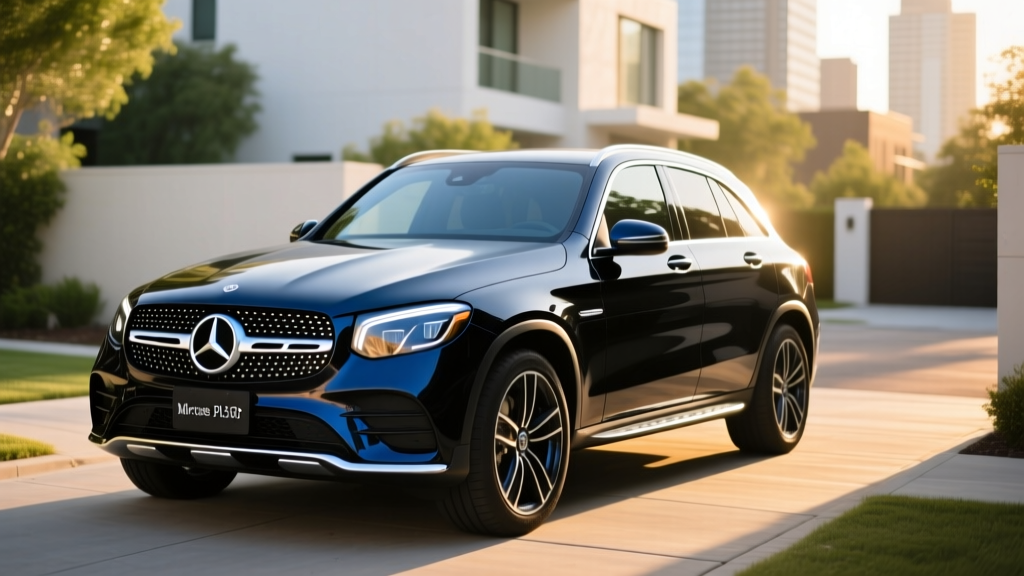
The Mercedes-Benz GLC 350e occupies a specific niche: a luxury compact SUV that lets you commute on electricity most weekdays while keeping a turbocharged gas engine for weekend road trips. For the 2026 model year, the GLC 350e plug-in hybrid returns with a 23.1 kWh battery pack, all-wheel drive, and the kind of interior refinement that justifies its premium badge. But does the math work out compared to a full battery-electric vehicle or a conventional hybrid? This guide breaks down every number that matters.
Quick Verdict: Who the GLC 350e Is For
The GLC 350e plug-in hybrid is best suited for drivers with a predictable daily commute under 40 miles, access to home or workplace Level 2 charging, and a need for unrestricted long-distance travel without charging-planning overhead. If your commute is longer, you rarely plug in, or you never leave the city, a full BEV or conventional HEV may serve you better. The 2026 GLC 350e starts at approximately $59,900 before destination and incentives, positioning it squarely against the BMW X3 xDrive30e and Volvo XC60 Recharge.
HEV vs PHEV vs BEV: Where the GLC 350e Fits
Before evaluating specs, it helps to clarify the powertrain category:
| Powertrain Type | Plug In? | Electric-Only Range | Typical Use Case |
|---|---|---|---|
| HEV (Conventional Hybrid) | No | 0–1 mile | Set-and-forget fuel savings, no charging access needed |
| PHEV (Plug-In Hybrid) | Yes | 20–50 miles | Daily EV commuting + gas engine for longer trips |
| BEV (Battery Electric) | Yes | 200–400+ miles | Full electrification, lowest running costs, requires charging planning |
The GLC 350e is a PHEV. Unlike a conventional hybrid such as the Toyota RAV4 Hybrid—which regenerates energy through braking and engine operation to charge a small battery and never plugs in—the GLC 350e carries a substantially larger battery that you charge from an external source to unlock meaningful electric-only driving. When that battery depletes, the vehicle operates as a conventional hybrid, blending the gas engine and electric motor.
Powertrain Specs: Horsepower, Engine, and Electric Motor
| Specification | 2026 GLC 350e 4MATIC |
|---|---|
| Engine | 2.0L turbocharged inline-4 |
| Engine Output | 215 hp / 236 lb-ft torque |
| Electric Motor | 134 hp / 325 lb-ft (integrated in transmission) |
| Combined System Output | 335 hp / 516 lb-ft torque |
| Transmission | 9-speed automatic (9G-TRONIC) |
| Drivetrain | 4MATIC all-wheel drive |
| 0–60 mph | 6.5 seconds (manufacturer est.) |
| Battery Chemistry | NMC (nickel manganese cobalt) lithium-ion |
| Battery Capacity (Gross / Usable) | 23.1 kWh / ~19.6 kWh usable |
The electric motor is mounted between the engine and transmission, not on a separate axle. This means the GLC 350e can drive all four wheels using the electric motor alone, the engine alone, or both simultaneously. The 516 lb-ft of combined torque delivers strong passing power, and the 9-speed automatic is tuned for smooth transitions between electric and gas operation—you rarely feel the engine kick in unless you floor the accelerator or the battery is depleted.
Electric-Only Range and Total Driving Range
EPA Estimated Electric-Only Range: 39 miles
Real-World Expectation: Expect 32–37 miles in mixed driving with moderate climate control use. Highway-speed electric driving (70+ mph) can reduce this to approximately 25–28 miles due to aerodynamic drag. In cold weather (below 35°F), cabin heating draws significant energy from the battery—plan for 22–30 miles of electric range.
Total Combined Range (Electric + Gas): Approximately 420 miles with a full tank and full battery.
The 39-mile EPA electric range covers most American commutes. According to the Federal Highway Administration, the average one-way commute in the U.S. is roughly 16 miles. If you charge at home overnight, you may go weeks without the engine running at all on weekdays. The gas engine seamlessly takes over for highway trips, eliminating the range-planning anxiety some BEV owners experience on long routes through charging deserts.
MPG and MPGe: EPA Numbers vs Real-World Efficiency
PHEV efficiency is reported in two ways: MPGe (miles per gallon equivalent) when operating primarily on electricity, and standard MPG when the battery is depleted and the vehicle runs as a conventional hybrid.
| Metric | City | Highway | Combined |
|---|---|---|---|
| MPGe (charge-depleting, electric+gas blend) | 72 | 67 | 69 |
| MPG (charge-sustaining, battery depleted) | 26 | 29 | 27 |
Real-world MPG notes: When the battery is depleted, the GLC 350e returns roughly 25–28 MPG in mixed driving—competitive with non-hybrid luxury SUVs but not class-leading among hybrids. The Toyota RAV4 Hybrid, for comparison, achieves an EPA 39 MPG combined because it is lighter and purpose-built as a hybrid from the ground up. If you rarely plug in the GLC 350e, you are carrying 500+ pounds of battery and motor for minimal fuel savings. The efficiency advantage only materializes when you charge regularly.
For drivers who charge nightly and commute under 40 miles, monthly fuel consumption can drop to near zero on weekdays, with gas used only for longer weekend drives. We've observed owners reporting 100+ MPGe effective averages when following this pattern.
Charging: Level 1, Level 2, and DC Fast Charging
Charging the GLC 350e's 23.1 kWh battery is straightforward, but it is important to understand the difference between kW (power, or charge rate) and kWh (energy, or battery capacity). A higher kW rating means faster charging; kWh is how much energy the battery stores.
| Charging Level | Power (kW) | Time 0–100% | Miles of Electric Range per Hour |
|---|---|---|---|
| Level 1 (120V household outlet) | ~1.4 kW | ~16 hours | ~3 miles/hr |
| Level 2 (240V, home/public) | 7.4 kW (onboard charger max) | ~3.25 hours | ~14 miles/hr |
| DC Fast Charging | Not supported | N/A | N/A |
The GLC 350e uses a J1772 connector for AC charging and does not support DC fast charging. This is typical for PHEVs in this class—the battery is small enough that Level 2 charging overnight is sufficient. A full charge from near-empty takes roughly 3.25 hours on a 240V Level 2 home charger (32A circuit recommended). Plugging in when you arrive home from work means a full battery by morning.
Level 1 charging from a standard 120V outlet is technically possible but impractical for daily use—you'd need to plug in for 16 hours for a full charge. It works as a trickle-charge supplement if Level 2 isn't available.
Battery Warranty and Longevity
High-Voltage Battery Warranty: 6 years / 62,000 miles (whichever comes first) for capacity loss below a defined threshold, per Mercedes-Benz USA. Some states with California Air Resources Board (CARB) adoption may extend coverage to 10 years / 150,000 miles under PZEV provisions.
Powertrain Warranty: 4 years / 50,000 miles.
Real-World Degradation: NMC batteries in PHEV applications experience moderate degradation. Expect approximately 8–12% capacity loss over 8–10 years based on industry averages for liquid-cooled packs. The GLC 350e's battery management system maintains a buffer (roughly 3.5 kWh reserved) to protect against deep discharge damage.
Replacement Cost Estimate: A full high-voltage battery replacement outside warranty currently ranges from $8,000 to $12,000 at a Mercedes-Benz dealer, though module-level repair may reduce this. As of 2026, widespread PHEV battery failures remain uncommon—most owners will trade or sell the vehicle before replacement becomes necessary.
Pricing, Trims, and Federal Tax Credit Eligibility
The 2026 GLC 350e 4MATIC carries a base MSRP of approximately $59,900, including destination. Key standard features include MBUX infotainment with a 12.3-inch digital cluster and 11.9-inch center touchscreen, heated front seats, power liftgate, and the latest-generation Driver Assistance Package with active lane-keeping and adaptive cruise control.
Optional packages (AMG Line exterior, Pinnacle Trim, head-up display, Burmester audio) can push the price to $68,000–$72,000.
Federal §30D Tax Credit for the GLC 350e
Under current IRS §30D rules for 2026, the GLC 350e may qualify for a partial or full federal tax credit of up to $7,500, subject to these requirements:
- MSRP Cap: SUVs must have an MSRP at or below $80,000. The GLC 350e qualifies at base and most optioned trims.
- Buyer Income Cap: Modified adjusted gross income must not exceed $150,000 (single), $225,000 (head of household), or $300,000 (joint filers).
- Battery Sourcing: A percentage of critical minerals and battery components must meet North American sourcing thresholds, which tighten annually. The exact credit amount ($3,750 or $7,500) depends on whether the vehicle meets the critical-minerals requirement, the battery-components requirement, or both.
- Point-of-Sale Transfer: Eligible buyers can transfer the credit to the dealer at purchase, reducing the purchase price directly rather than waiting to claim it on their tax return.
Important: Credit eligibility can change based on supply-chain sourcing updates. Always verify current status on fueleconomy.gov or consult a tax professional before purchasing. Mercedes-Benz USA also publishes a credit-eligibility page for current model-year vehicles.
Driving Experience: Electric Commute Meets Autobahn DNA
In EV mode, the GLC 350e is remarkably quiet. The electric motor's 325 lb-ft of torque is available from zero RPM, making stoplight launches brisk and highway merging effortless without the engine ever firing. Mercedes offers multiple drive modes—Electric, Hybrid, and Battery Hold—letting you save battery charge for a specific portion of your trip (useful if you want electric driving in a city center after a highway segment).
Ride quality is a strong suit. The multi-link rear suspension and standard comfort tuning absorb expansion joints and potholes with the composure expected from the brand. The steering is light but precise, and body roll is well-controlled for a 4,800-pound SUV. The added weight of the battery and electric motor is noticeable in quick direction changes but doesn't detract from the relaxed grand-touring character.
The cabin materials—available leather, open-pore wood, and aluminum trim—are a clear step above the BMW X3 xDrive30e and competitive with the Volvo XC60 Recharge. Cargo volume behind the second row is approximately 21.9 cubic feet, slightly reduced from the gas-only GLC due to battery packaging beneath the rear floor.
Pros and Cons
Pros
- 39-mile EPA electric range covers most daily commutes
- 335 combined hp with smooth electric/gas transitions
- Premium interior quality and MBUX technology suite
- No range anxiety—gas engine for unlimited road trips
- Eligible for up to $7,500 federal tax credit (verify sourcing)
- 4MATIC AWD standard for all-weather capability
Cons
- No DC fast charging capability
- 27 MPG combined on gas alone trails dedicated hybrids
- High starting price (~$59,900) before options
- Cargo volume slightly reduced vs gas-only GLC
- Efficiency advantage disappears if you don't plug in regularly
- Battery warranty shorter than some competitors at 6 years/62k miles
GLC 350e vs Full EV vs Conventional Hybrid: Decision Framework
Choose the GLC 350e PHEV if:
- Your daily round-trip commute is under 40 miles and you can charge at home or work
- You regularly take road trips exceeding 250 miles and don't want to plan around charging stops
- You want a luxury SUV with premium materials and advanced driver-assistance features
- You live in an area with sparse public DC fast-charging infrastructure
Choose a full BEV (e.g., Mercedes EQB, BMW iX3, Tesla Model Y) if:
- You want the lowest per-mile operating cost and minimal maintenance
- You drive mostly in urban/suburban settings with reliable charging access
- You want to eliminate gasoline purchases entirely
- Your daily driving is predictable and within a BEV's range
Choose a conventional HEV (e.g., Lexus NX 350h) if:
- You cannot install a home charger and lack workplace charging
- You want fuel savings without any plug-in routine
- Your budget is lower (conventional hybrids typically cost $5,000–$10,000 less than comparable PHEVs)
Frequently Asked Questions
How many MPG does the GLC 350e plug-in hybrid get?
The EPA rates the 2026 GLC 350e at 69 MPGe combined when operating in charge-depleting mode (blending electric and gas). When the battery is fully depleted and the vehicle runs on gasoline alone, it returns approximately 27 MPG combined (26 city / 29 highway). Real-world gas-only efficiency typically falls between 25–28 MPG depending on driving style and terrain.
How far can the GLC 350e go on electric only?
The EPA estimates 39 miles of electric-only range. In real-world conditions with moderate climate use, expect 32–37 miles. Highway driving at 70+ mph and cold weather below 35°F will reduce this to approximately 22–30 miles.
Does the GLC 350e qualify for a federal tax credit?
It may qualify for up to $7,500 under IRS §30D, depending on battery-sourcing compliance, your income, and the vehicle's MSRP (which falls within the $80,000 SUV cap). Eligibility details shift as sourcing requirements tighten annually—verify on fueleconomy.gov and consult a tax professional.
Is the GLC 350e plug-in hybrid reliable, and what does battery replacement cost?
Mercedes-Benz PHEV powertrains have shown average reliability in industry surveys. The high-voltage battery is warrantied for 6 years/62,000 miles (extended in CARB states). Full battery replacement outside warranty is estimated at $8,000–$12,000, though module-level repair may cost less. Most PHEV batteries outlast their warranty period with moderate degradation.
Can the GLC 350e charge at a DC fast charger?
No. The GLC 350e only supports AC charging via J1772 at up to 7.4 kW on Level 2. This is standard for PHEVs in this segment—the battery is small enough that overnight Level 2 charging is sufficient.
What happens if I never plug in the GLC 350e?
The vehicle will operate as a conventional hybrid, returning roughly 27 MPG combined. However, you'll be carrying the weight penalty of the battery and electric motor without capturing the efficiency benefit. If you never plan to plug in, a conventional hybrid like the Lexus NX 350h (36 MPG combined) or a gas-only GLC 300 will be more efficient and less expensive.
How does the GLC 350e compare to the BMW X3 xDrive30e?
Both offer similar electric range (37–39 miles EPA), comparable pricing, and luxury positioning. The GLC 350e edges ahead in interior material quality and combined horsepower (335 hp vs 288 hp). The X3 xDrive30e is slightly lighter, yielding marginally better gas-only MPG. Test-drive both to compare MBUX vs iDrive interfaces and seat comfort.