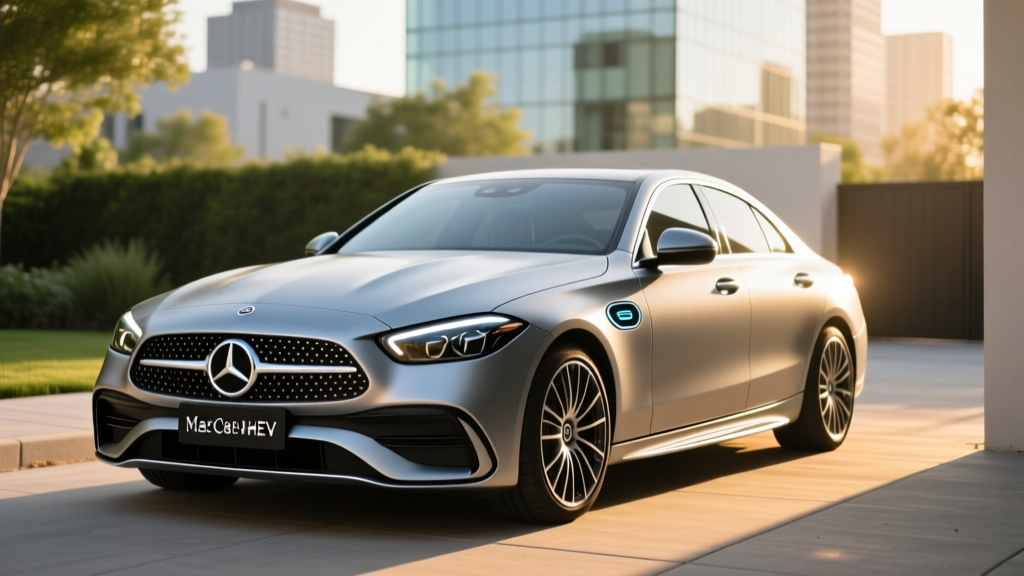
The Mercedes-Benz C-Class has long been the benchmark compact luxury sedan, and for 2026, the Mercedes hybrid C-Class lineup centers on the C 300e plug-in hybrid (PHEV). Unlike a conventional hybrid that you simply fuel and forget, the C 300e pairs a turbocharged four-cylinder engine with a substantial battery pack and electric motor — giving it genuine electric-only commuting capability before the gas engine ever wakes up. But with a starting MSRP pushing past $57,000 and federal tax credit eligibility that depends on your income and the vehicle's battery sourcing, the C 300e demands a closer look before you sign.
This guide breaks down the 2026 C 300e's real-world efficiency, electric range, charging behavior, powertrain output, and ownership economics — with the exact numbers you need to decide whether this PHEV, a full battery-electric vehicle (BEV), or a conventional hybrid makes sense for your driveway.
HEV vs PHEV: What the Mercedes Hybrid C-Class Actually Is
Mercedes-Benz does not currently sell a conventional hybrid (HEV) version of the C-Class in the United States. The only electrified C-Class available stateside is the C 300e plug-in hybrid. This distinction matters enormously for your daily routine and your wallet.
Conventional Hybrid (HEV)
- No plug — charges via regenerative braking and the engine
- Small battery (~1–2 kWh)
- Electric-only driving limited to low-speed coasting, typically under 1 mile
- No federal tax credit eligibility
- Example: Toyota Camry Hybrid
Plug-in Hybrid (PHEV) — Mercedes C 300e
- Plugs into Level 1 (120V) or Level 2 (240V) chargers
- Large battery: 25.4 kWh usable (from a 25.8 kWh gross pack)
- Electric-only range: EPA-estimated 58 miles
- May qualify for up to $7,500 federal tax credit under IRS §30D (subject to income, MSRP caps, and battery sourcing rules)
- Operates as a conventional hybrid once the battery is depleted
If you see references to a "Mercedes C-Class mild hybrid" — that's the 48-volt EQ Boost system on the standard C 300. It provides a brief electric torque fill during acceleration but offers zero electric-only range. It is not a hybrid in any meaningful fuel-economy sense. The C 300e is the model that delivers real electrified driving.
2026 Mercedes C 300e Powertrain and Performance Specs
| Specification | 2026 Mercedes-Benz C 300e |
|---|---|
| Powertrain | 2.0L turbocharged I4 + permanent-magnet electric motor |
| Engine Output | 201 HP / 236 lb-ft torque |
| Electric Motor Output | 127 HP / 325 lb-ft torque |
| Combined System Output | 312 HP / 406 lb-ft torque |
| Transmission | 9G-TRONIC 9-speed automatic |
| Drivetrain | Rear-wheel drive (4MATIC AWD available) |
| 0–60 mph | 6.1 seconds (RWD) |
| Battery (Gross / Usable) | 25.8 kWh / 25.4 kWh |
| Battery Chemistry | NMC (nickel manganese cobalt) |
| EPA Electric-Only Range | 58 miles |
| Total Combined Range (Est.) | ~440 miles (electric + gas) |
| EPA MPGe (Electric + Gas) | 66 MPGe combined |
| EPA MPG (Charge-Sustaining / Gas Only) | 30 city / 36 highway / 32 combined |
| Fuel Tank Capacity | 11.6 gallons |
| Max DC Fast Charge Rate | 60 kW (optional; CCS connector) |
| Level 2 Charge Rate | 7.4 kW (standard, J1772/Type 2) |
| Level 2 Charge Time (0–100%) | ~3 hours 30 minutes |
| DC Fast Charge (10–80%) | ~25 minutes at 60 kW |
| Base MSRP (RWD) | $57,950 (including destination) |
| Battery / Powertrain Warranty | 6 years / 62,000 miles (hybrid components) |
The 312 combined horsepower makes the C 300e genuinely quick. In electric-only mode, acceleration is brisk enough for highway merging — the motor's 325 lb-ft of torque is available instantly from zero RPM. Once the battery depletes, the 2.0L turbo four engages seamlessly; most drivers won't notice the transition.
Fuel Economy: EPA Numbers vs Real-World MPG
| Driving Scenario | EPA Estimate | Real-World Expectation |
|---|---|---|
| Electric-only (MPGe) | 66 MPGe combined | 60–70 MPGe (varies with temperature and speed) |
| Gas-only city | 30 MPG | 32–36 MPG (hybrids often exceed EPA in stop-and-go) |
| Gas-only highway | 36 MPG | 33–35 MPG (aerodynamic drag at 75+ mph reduces efficiency) |
| Gas-only combined | 32 MPG | 31–34 MPG |
Like most plug-in hybrids, the C 300e's real-world efficiency depends heavily on your charging habits. If you commute 30 miles round-trip and charge nightly, you might burn gasoline only a handful of times per month. On a long road trip with a depleted battery, expect the combined figure to settle around 31–34 MPG — respectable for a 4,300-pound luxury sedan, but not Toyota Prius territory.
Cold weather reduces electric-only range by roughly 15–25%. In freezing conditions, expect the 58-mile EPA electric range to drop to approximately 44–50 miles. The C 300e does not include a dedicated battery heat pump for the traction battery (unlike some BEVs), so preconditioning while plugged in helps preserve range on cold mornings.
Electric-Only Range and Charging: What to Expect
Real-World Expectation: 48–55 miles in mild weather at mixed speeds; 44–50 miles in freezing conditions; 42–48 miles at sustained 75 mph highway speeds.
Total Combined Range: Approximately 440 miles (58 electric + ~382 on the 11.6-gallon fuel tank at 32 MPG).
The C 300e's 58-mile electric range is among the longest in the luxury PHEV segment. For context, the BMW 330e offers roughly 22 miles electric, and the Volvo S60 Recharge delivers about 41 miles. If your daily driving falls under 50 miles and you charge at home, the C 300e effectively operates as an electric car for most weekday driving.
Charging the C 300e
| Charging Level | Power (kW) | Connector | 0–100% Time | Miles of EV Range per Hour |
|---|---|---|---|---|
| Level 1 (120V household) | ~1.4 kW | Standard NEMA 5-15 | ~18 hours | ~5 miles/hr |
| Level 2 (240V home/public) | 7.4 kW | J1772 (Type 2 in some markets) | ~3.5 hours | ~18 miles/hr |
| DC Fast Charge (optional) | 60 kW peak | CCS1 | ~25 min (10–80%) | N/A (burst charging) |
The 7.4 kW onboard charger is standard and sufficient for overnight replenishment on a Level 2 home charger. A full charge in roughly 3.5 hours means you can easily top off during the workday if your office has Level 2 stations.
The 60 kW DC fast-charging capability is an option — and it's worth considering if you lack home charging or take frequent road trips. At 60 kW, the C 300e can recover 10–80% in about 25 minutes, which aligns with a typical rest stop. Note that 60 kW is modest by BEV standards (where 150–350 kW is common), but it's exceptional for a PHEV. Most competitors in this segment offer no DC fast charging at all.
Pricing, Trims, and Federal Tax Credit Eligibility
The 2026 Mercedes-Benz C 300e starts at $57,950 (including $1,150 destination charge) for the rear-wheel-drive sedan. Adding 4MATIC all-wheel drive adds approximately $2,500. A fully optioned C 300e with AMG Line styling, MBUX premium package, and the DC fast-charging option can reach $68,000–$72,000.
Does the Mercedes C 300e Qualify for a Federal Tax Credit?
Under IRS §30D rules for 2026, the C 300e is potentially eligible for a federal tax credit of up to $7,500, but qualification depends on several factors that change periodically:
- MSRP Cap: Sedans must be under $55,000 MSRP to qualify. The C 300e's base MSRP of $57,950 exceeds this cap, which may disqualify it unless Mercedes adjusts pricing or the IRS reclassifies the vehicle. Check the latest IRS guidance before assuming eligibility.
- Buyer Income Limits: Modified adjusted gross income (MAGI) must not exceed $150,000 (single), $225,000 (head of household), or $300,000 (joint filers).
- Battery Sourcing: The credit splits into two $3,750 halves — one for critical minerals sourcing and one for battery component manufacturing. Mercedes sources battery cells globally, and compliance with North American sourcing requirements varies by model year. Verify current compliance on fueleconomy.gov.
- Point-of-Sale Transfer: As of 2024, eligible buyers can transfer the credit to the dealer at purchase, reducing the upfront price rather than waiting for a tax refund.
Bottom line: The MSRP cap for sedans is the primary obstacle. Consult a tax professional and check the IRS and fueleconomy.gov databases for the latest eligibility status before relying on the credit in your purchase math.
Reliability, Battery Warranty, and Replacement Cost
Federal Emissions Warranty: The hybrid battery and related components may also be covered under the 8-year/80,000-mile federal emissions warranty for certain components classified as emissions-related.
Estimated Out-of-Warranty Battery Replacement: $12,000–$18,000 (parts and labor at a Mercedes dealer), based on current NMC pack pricing for the 25.8 kWh unit.
Mercedes-Benz's hybrid battery warranty is shorter than the 8-year/100,000-mile coverage offered by Toyota, Hyundai, and BMW for their electrified models. This is a legitimate concern for second owners or those who plan to keep the vehicle past the warranty period.
That said, NMC lithium-ion batteries in PHEV applications tend to degrade slowly because the battery management system (BMS) maintains a generous buffer — you never truly use 100% or drain to 0%. Real-world data from earlier-generation Mercedes PHEVs suggests capacity loss of approximately 8–12% over 100,000 miles under normal use. The usable capacity shrinks, but the pack rarely fails catastrophically.
Mercedes-Benz reliability ratings from IIHS and owner surveys place the brand in the mid-pack among luxury automakers. The C-Class's MBUX infotainment system and driver-assistance electronics generate more warranty claims than the powertrain itself. The hybrid system has proven robust in European-market C 300e fleets, where these vehicles have accumulated high mileage as company cars.
Mercedes C 300e vs the Competition
| Specification | Mercedes C 300e | BMW 330e | Volvo S60 Recharge |
|---|---|---|---|
| Combined HP | 312 HP | 288 HP | 455 HP |
| EPA Electric Range | 58 miles | 22 miles | 41 miles |
| Battery (Usable) | 25.4 kWh | 10.6 kWh | 18.8 kWh |
| DC Fast Charge | 60 kW (optional) | No | No |
| Gas MPG (Combined) | 32 MPG | 28 MPG | 30 MPG |
| Base MSRP | $57,950 | $47,795 | $53,795 |
| 0–60 mph | 6.1 sec | 5.6 sec | 4.4 sec |
The C 300e dominates on electric range and battery capacity — 58 miles is nearly triple the BMW 330e's figure. If your priority is electric commuting without range anxiety, the Mercedes is the clear segment leader. The Volvo S60 Recharge splits the difference with more power and AWD standard, but less electric range.
The BMW's lower price is its main advantage. If you only need 20 miles of electric range for a short commute and value a lower entry cost, the 330e makes financial sense. But for buyers who want to maximize gasoline-free driving without committing to a full BEV, the C 300e has no serious rival in the compact luxury class.
Who Should Choose the C 300e — and Who Shouldn't
Choose the Mercedes C 300e PHEV if:
- Your daily round-trip commute is under 55 miles and you can charge at home or work
- You want electric daily driving but need gasoline flexibility for road trips
- You value luxury, MBUX technology, and a refined ride over outright performance
- You're not ready for full BEV ownership due to apartment living, unreliable public charging, or frequent long-distance travel
Choose a Full EV (BEV) Instead if:
- You have reliable home Level 2 charging and rarely drive over 250 miles between stops
- You want near-zero maintenance (no oil changes, no engine, no transmission fluid)
- You want to maximize federal and state incentives (BEVs face fewer MSRP cap issues)
- Consider: Tesla Model 3, BMW i4, Mercedes EQB, Hyundai Ioniq 6
Choose a Conventional Hybrid (HEV) Instead if:
- You cannot charge at home or work (no garage, no workplace chargers)
- You want simplicity — no plugs, no charging cables, no battery management
- Your budget is under $35,000
- Consider: Toyota Camry Hybrid, Honda Accord Hybrid
Pros
- Best-in-class 58-mile electric range for the luxury PHEV segment
- Smooth, seamless transitions between electric and gas power
- Genuine 312 HP with effortless passing power
- Optional DC fast charging — rare for a PHEV
- Premium MBUX interior with excellent build quality
- Strong regenerative braking enables one-pedal-like driving in EV mode
Cons
- Base MSRP exceeds the $55,000 federal tax credit cap for sedans
- Battery warranty (6 yr / 62k mi) is shorter than most competitors
- Trunk space reduced by battery placement (~10.6 cu ft vs ~12.6 cu ft in gas C-Class)
- DC fast charging is an extra-cost option, not standard
- No conventional hybrid (HEV) variant available — PHEV or nothing
- Heavier than the gas C 300, affecting tire wear and handling dynamics
Frequently Asked Questions
How many MPG does the Mercedes C 300e hybrid get?
The EPA rates the 2026 C 300e at 66 MPGe combined when operating in blended electric-gas mode. Once the battery is depleted and the car runs on gasoline alone, it achieves an EPA-estimated 30 city / 36 highway / 32 combined MPG. In real-world city driving with frequent regenerative braking, owners often report 33–36 MPG in charge-sustaining mode.
How far can the Mercedes C 300e go on electric only?
The EPA estimates 58 miles of electric-only range. In real-world conditions at moderate temperatures and mixed speeds, expect 48–55 miles. In freezing weather or at sustained highway speeds above 70 mph, that drops to roughly 42–50 miles.
Does the Mercedes C 300e qualify for a tax credit?
Possibly, but there's a significant obstacle: the IRS §30D credit caps sedan eligibility at $55,000 MSRP, and the C 300e starts at $57,950. Check fueleconomy.gov and consult a tax professional for the latest status, as manufacturer pricing adjustments or IRS reclassifications could change eligibility.
Is the Mercedes C 300e hybrid reliable?
The PHEV powertrain has proven robust in European fleet use. Mercedes covers the hybrid battery for 6 years / 62,000 miles. NMC battery degradation in PHEV applications is typically 8–12% over 100,000 miles. The main reliability concerns center on MBUX electronics and sensor systems rather than the hybrid drivetrain itself.
What does a Mercedes C 300e battery replacement cost?
Out-of-warranty replacement of the 25.8 kWh NMC battery pack is estimated at $12,000–$18,000 including parts and labor at a Mercedes-Benz dealer. This is a significant expense, though most PHEV batteries outlast the vehicle's typical ownership cycle without requiring replacement.
Can I charge the C 300e at a Tesla Supercharger?
No. The C 300e uses a J1772 connector for Level 2 AC charging and CCS1 for optional DC fast charging. Tesla Superchargers use the NACS connector. While Tesla has begun opening some Superchargers to non-Tesla EVs via a built-in adapter or the Tesla app, CCS-equipped vehicles like the C 300e can only access Superchargers that have the CCS "Magic Dock" adapter — currently a limited subset of stations.
Hybrid vs PHEV vs EV — which is right for me?
If you can charge at home and your daily driving is under 55 miles, the C 300e PHEV gives you electric commuting with gas-engine backup. If you can always charge and rarely exceed 250 miles, a full BEV like the BMW i4 eliminates engine maintenance entirely. If you have no charging access at all, a conventional HEV (like a Camry Hybrid) is simpler — but Mercedes doesn't offer one in the C-Class.