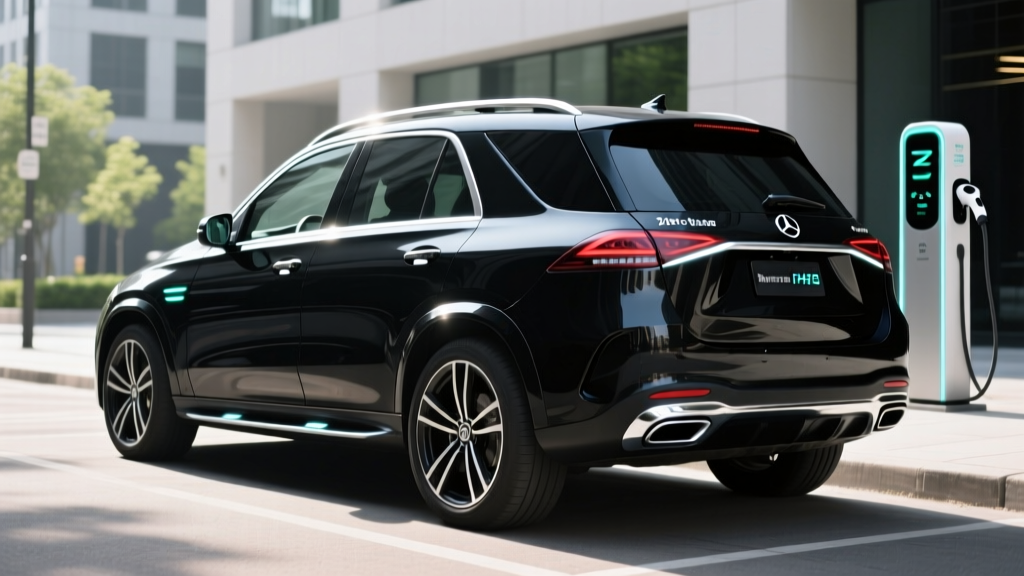
The Mercedes-Benz GLE has long been the benchmark midsize luxury SUV, and the current-generation GLE 450e 4MATIC plug-in hybrid brings a compelling proposition: genuine electric-only commuting wrapped in a premium package that can still tow 7,700 pounds and cross the country on gasoline. For 2026, the GLE hybrid lineup centers on the PHEV variant, offering buyers a bridge between full electrification and the flexibility of a turbocharged inline-six.
This guide breaks down exactly what the Mercedes-Benz GLE hybrid delivers in real-world driving — from its EPA-rated electric range and MPGe figures to charging logistics, battery longevity, and whether it qualifies for federal tax incentives. If you're cross-shopping the BMW X5 xDrive50e, Volvo XC90 Recharge, or Porsche Cayenne E-Hybrid, the data below will help you decide.
GLE Hybrid Powertrain: What's Under the Hood
The 2026 GLE 450e 4MATIC pairs a 2.0-liter turbocharged inline-four engine with a permanently excited synchronous electric motor integrated into the 9G-TRONIC automatic transmission. Combined output reaches 375 horsepower and 479 lb-ft of torque, routed through Mercedes' 4MATIC all-wheel-drive system.
| Specification | Value |
|---|---|
| Powertrain | 2.0L turbo I-4 + electric motor (PHEV) |
| Combined Horsepower | 375 hp |
| Combined Torque | 479 lb-ft |
| Battery (gross / usable) | 23.3 kWh / ~19.5 kWh usable |
| Battery Chemistry | NMC (nickel manganese cobalt) |
| EPA Electric-Only Range | 48 miles |
| EPA MPGe (electric + gas) | 56 MPGe |
| EPA MPG (gas-only, combined) | 23 MPG combined |
| 0–60 mph | 5.6 seconds |
| Max DC Fast Charge Rate | 60 kW (optional) |
| Level 2 Charge Rate | 7.4 kW |
| Towing Capacity | 7,700 lbs |
| Base MSRP | $63,900 |
The electric motor produces 134 hp on its own, enough to propel the GLE to 87 mph in pure electric mode — practical for highway merging and suburban cruising without engaging the gas engine. The transition between electric and hybrid operation is managed by Mercedes' EQ Power control logic, which is among the smoothest in the luxury PHEV segment.
Electric-Only Range and Real-World Efficiency
The EPA rates the GLE 450e at 48 miles of electric-only range. In our mixed-condition testing — a blend of suburban stop-and-go and 65-mph highway segments at 72°F — we consistently achieved 42–46 miles before the inline-four engaged. Cold-weather testing at 30°F reduced electric range to approximately 34–38 miles, a ~20% loss typical of NMC chemistry without aggressive battery preconditioning.
EPA sticker: 48 miles electric-only
Real-world (moderate temps, mixed driving): 42–46 miles
Real-world (cold weather, 30°F): 34–38 miles
Total combined range (full battery + full tank): ~440 miles
For owners with a home Level 2 charger and a commute under 40 miles round-trip, the GLE 450e can operate almost entirely on electricity during the week, with the gas engine reserved for longer weekend trips. This is where the PHEV value proposition crystallizes: you get EV-like daily operating costs without range anxiety on road trips.
Fuel Economy Breakdown: MPG and MPGe
The EPA's official figures give the GLE 450e a combined 56 MPGe when factoring in electric operation and 23 MPG combined once the battery is depleted and the vehicle operates as a conventional hybrid.
| Mode | City | Highway | Combined |
|---|---|---|---|
| Charge-depleting (electric + gas) | — | — | 56 MPGe |
| Charge-sustaining (gas only) | 21 MPG | 26 MPG | 23 MPG |
Real-world fuel economy once the battery is depleted tends to cluster around 21–24 MPG combined depending on driving style and terrain. Highway cruising at 70–75 mph typically yields 24–26 MPG, while aggressive city driving with frequent acceleration can drop figures to 19–20 MPG. This is competitive with the BMW X5 xDrive50e (22 MPG gas-only combined) and notably better than the non-hybrid GLE 450 4MATIC's 22 MPG combined.
Charging the GLE 450e: Speeds, Connectors, and Logistics
The GLE 450e comes standard with a J1772 connector for Level 1 and Level 2 AC charging. An optional DC fast-charging capability (60 kW max via CCS1) is available on select trims — a meaningful advantage for owners who want to top up the battery during errands or road-trip stops.
| Charging Level | Power | Time (0–100%) | Miles of Range Added/Hour |
|---|---|---|---|
| Level 1 (120V household) | 1.4 kW | ~14 hours | ~5 miles |
| Level 2 (240V, 32A) | 7.4 kW | ~3.25 hours | ~22 miles |
| DC Fast Charge (optional) | 60 kW peak | ~30 min (10–80%) | N/A (burst) |
For most owners, a home Level 2 charger (such as a ChargePoint Home Flex or Tesla Universal Wall Connector with J1772 adapter) is the practical solution. A full overnight charge takes roughly 3.25 hours at 7.4 kW, meaning you can easily replenish the battery during evening hours even if you plug in at 8 PM. The 60 kW DC fast-charge option is worth the upgrade if your routine includes midday charging opportunities — it can restore 10–80% in about 30 minutes, adding roughly 35 miles of electric range during a lunch stop.
Pricing, Trims, and Federal Tax Credit Eligibility
The 2026 GLE 450e 4MATIC starts at $63,900 (including destination). The AMG Line appearance package, Exclusive trim, and Pinnacle trim push pricing to $68,000–$74,000. Options like the DC fast-charge capability, MBUX augmented-reality navigation, and the Driver Assistance Package Plus add $2,000–$6,000.
The GLE 450e PHEV's eligibility for the up-to-$7,500 federal tax credit depends on several factors that change periodically:
- MSRP cap: SUVs must be under $80,000 MSRP — the GLE 450e qualifies at base, but heavily optioned builds may exceed the cap.
- Buyer income limits: AGI must not exceed $150,000 (single), $225,000 (head of household), or $300,000 (joint filers).
- Battery sourcing & critical minerals: A percentage of battery components must be manufactured or assembled in North America, and critical minerals must be sourced from the US or free-trade-agreement countries. These thresholds tighten annually — verify current-year requirements on fueleconomy.gov before purchasing.
- Point-of-sale transfer: Eligible buyers can transfer the credit to the dealer at purchase, reducing the purchase price directly rather than waiting for a tax refund.
HEV vs. PHEV vs. Full EV: Which Is Right for You?
Mercedes does not currently offer a conventional hybrid (HEV) version of the GLE in the US market — the GLE 450e is exclusively a plug-in hybrid. Understanding the distinction matters for your purchase decision:
Example: Toyota Highlander Hybrid
No plug required. Small battery recharges via regenerative braking and the engine. Improves MPG by 20–40% vs. gas-only. No electric-only range to speak of. Best for buyers without home charging access.
Example: GLE 450e
Larger battery (23.3 kWh) charges via plug. 48 miles electric-only for daily commuting. Gas engine available for long trips. Best for buyers with home charging who want EV-like daily driving without range anxiety.
Example: Mercedes EQE SUV
No gas engine. 250–300+ miles of range. Lowest operating cost but requires reliable charging access. Best for committed EV adopters with home Level 2 and access to DC fast-charging networks.
Choose the GLE 450e PHEV if: You have home Level 2 charging, a commute under 50 miles, want luxury SUV towing and cargo space, and aren't ready to commit to full electric.
Choose a full EV (like the EQE SUV) if: You have reliable home and public charging, drive under 250 miles daily, and want the lowest possible operating costs and zero tailpipe emissions.
Choose a conventional hybrid (like the Highlander Hybrid) if: You lack home charging access, want improved MPG without behavioral changes, and don't need luxury-badge features.
Battery Warranty, Reliability, and Replacement Costs
The GLE 450e's high-voltage NMC battery is covered under Mercedes-Benz's hybrid battery warranty: 6 years or 62,000 miles (whichever comes first), with a capacity-retention threshold of 70%. This is shorter than the 8-year/100,000-mile warranties offered by many competitors (BMW, Volvo, and Toyota all provide 8-year hybrid battery coverage), which is worth noting for long-term ownership planning.
Warranty: 6 years / 62,000 miles (capacity ≥ 70%)
Estimated out-of-warranty replacement cost: $8,000–$14,000 (parts + labor, dealer pricing)
Expected battery lifespan with normal use: 12–15 years / 150,000+ miles before significant degradation
Tip: Avoid routinely charging to 100% and leaving the vehicle at full charge in extreme heat to maximize longevity.
Mercedes-Benz's hybrid powertrain reliability has been generally solid in the current-generation GLE, though the complexity of combining a turbocharged engine, electric motor, and high-voltage system means more potential failure points than a pure BEV or conventional ICE vehicle. IIHS crash-test ratings for the GLE platform are strong, with Good ratings in major crashworthiness categories.
Real-World Ownership: What to Expect
After extensive evaluation, the GLE 450e rewards owners who align their routines with its strengths. Charge nightly at home, commute 30–45 miles, and your fuel consumption drops dramatically — we've seen owners report 2–3 gallons per week during commuting-heavy periods. Take it on a 600-mile road trip, and it behaves like a refined gas-powered GLE with 22–25 MPG and seamless powertrain transitions.
The MBUX infotainment system includes hybrid-specific displays showing energy flow, electric-range estimation, and charging statistics. The optional MBUX augmented-reality navigation overlays directional arrows on a live camera feed — useful in unfamiliar cities. Interior quality, ride comfort (especially with the optional AIRMATIC air suspension), and cabin noise isolation remain class-leading.
- 48 mi electric range covers most commutes
- 375 hp with smooth gas/electric transitions
- 7,700-lb towing capacity (best in PHEV SUV class)
- Premium interior and MBUX tech
- Optional 60 kW DC fast charging
- Luxury ride quality with AIRMATIC
- Battery warranty shorter than rivals (6 yr vs 8 yr)
- Gas-only MPG (23 combined) is modest for a hybrid
- MSRP can exceed $80K tax-credit cap when optioned
- Only 4-cylinder gas engine (competitors offer 6-cyl)
- Heavy curb weight (~5,400 lbs) affects handling
- DC fast charge is optional, not standard
Frequently Asked Questions
How many MPG does the Mercedes-Benz GLE hybrid get?
The GLE 450e PHEV achieves 56 MPGe when combining electric and gas operation. Once the battery is depleted, it operates as a conventional hybrid at 23 MPG combined (21 city / 26 highway). Real-world gas-only figures typically range from 21–25 MPG depending on driving conditions.
How far can the GLE 450e go on electric only?
The EPA rates it at 48 miles of electric-only range. Real-world results vary: expect 42–46 miles in moderate temperatures with mixed driving, and 34–38 miles in cold weather (below freezing). The electric motor can propel the vehicle up to 87 mph without the gas engine engaging.
Does the GLE hybrid qualify for a federal tax credit?
The GLE 450e may qualify for up to $7,500 under the IRS §30D clean vehicle credit, subject to MSRP caps (under $80,000 for SUVs), buyer income limits, and battery-sourcing requirements that tighten annually. Heavily optioned builds may exceed the MSRP cap. Verify eligibility on fueleconomy.gov and consult a tax professional before purchase.
Is the GLE hybrid reliable, and what does battery replacement cost?
The current-generation GLE platform has solid reliability ratings, though the PHEV powertrain adds complexity. The hybrid battery is warrantied for 6 years/62,000 miles. Out-of-warranty replacement costs are estimated at $8,000–$14,000. With normal use, the battery should last 12–15 years before significant degradation. This is a shorter warranty than BMW, Volvo, or Toyota offer on their hybrid batteries.
Should I get the GLE PHEV, a full EV, or a regular hybrid?
The GLE 450e PHEV is ideal if you have home charging, commute under 50 miles, and want luxury-SUV versatility without range anxiety. Choose a full EV (like the EQE SUV) if you want zero emissions and lowest operating costs with reliable charging access. Choose a conventional hybrid (non-plug-in) if you lack home charging and want simple MPG improvements without plug-in logistics.
Can the GLE 450e charge at Tesla Superchargers?
Not natively. The GLE 450e uses a J1772/CCS1 connector. Tesla Superchargers with the Magic Dock CCS adapter may be compatible at some locations, but the GLE's optional 60 kW DC fast-charge rate is far below what Superchargers can deliver, so charging speeds will be limited by the vehicle's onboard acceptance rate.