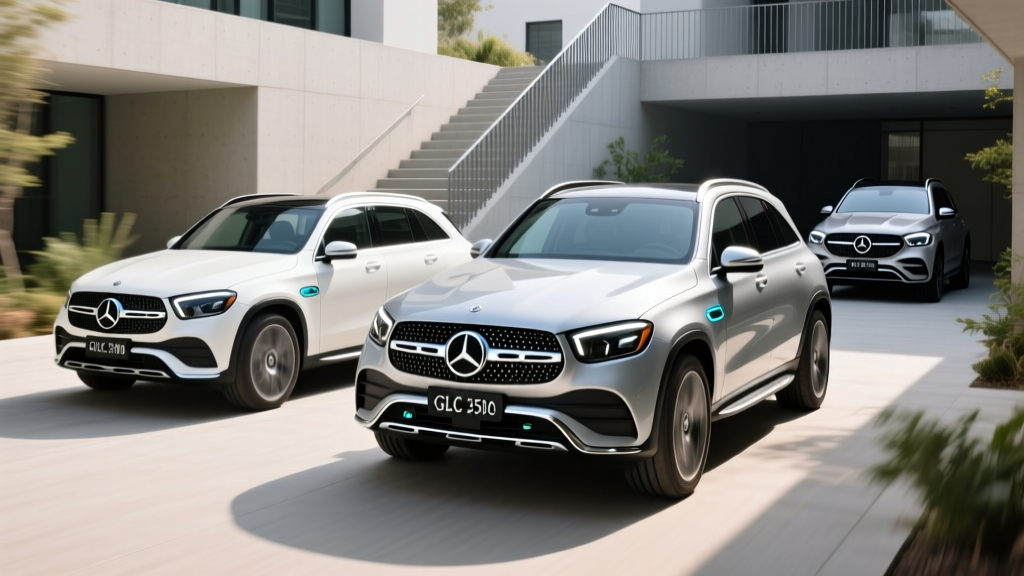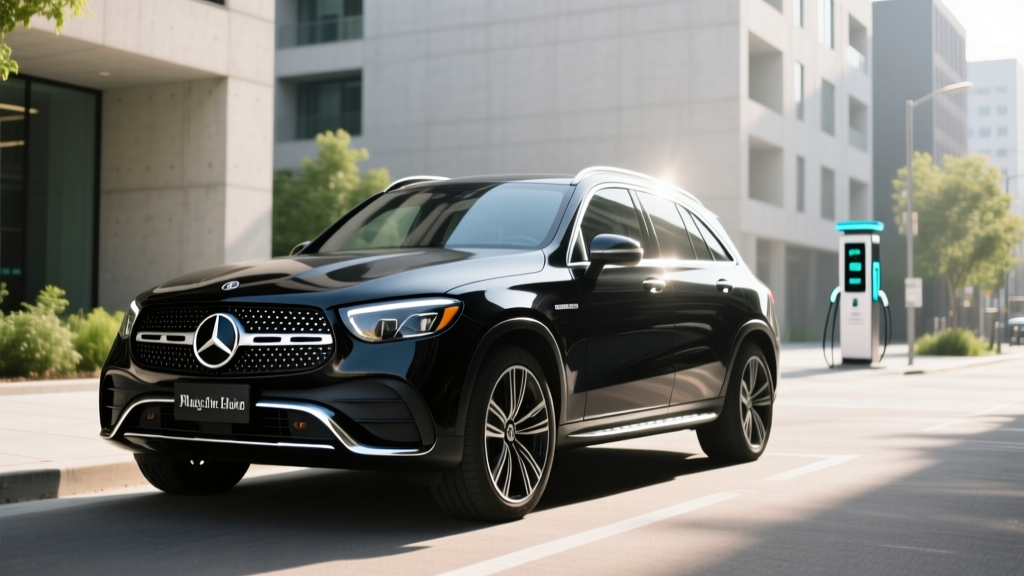
The Mercedes-Benz GLC has long been the brand's best-selling SUV in the United States, and for 2026 it continues to offer an electrified variant that bridges the gap between conventional luxury crossovers and full battery-electric vehicles. The Mercedes-Benz GLC hybrid lineup centers on the GLC 350e 4MATIC, a plug-in hybrid (PHEV) that pairs a turbocharged four-cylinder engine with an electric motor and a sizable battery pack for meaningful electric-only commuting. But is it the right electrified choice for your driveway, or should you look at a full EV or a conventional hybrid instead?
We've spent time with the 2026 GLC 350e to break down its real-world efficiency, charging practicality, ownership costs, and the nuances of the federal tax credit. If you're cross-shopping the BMW X3 xDrive30e, Audi Q5 TFSI e, or Lexus NX 450h+, this guide gives you the exact numbers you need.
HEV vs PHEV: Which GLC Hybrid Are You Actually Looking At?
Before diving into specs, it's critical to clarify terminology because Mercedes-Benz has offered both hybrid flavors across recent model years, and the distinction changes everything about how you use the vehicle.
| Feature | Conventional Hybrid (HEV) | Plug-In Hybrid (PHEV) — GLC 350e |
|---|---|---|
| Plug-in charging? | No — charges via regen and engine | Yes — plug in to unlock electric range |
| Electric-only driving | Minimal (under 1 mile at low speed) | ~38 miles EPA on battery alone |
| Battery size | ~1.0–1.5 kWh (small buffer) | 31.2 kWh (gross), ~25.4 kWh usable |
| Federal tax credit | Not eligible under §30D | Potentially up to $7,500 (see eligibility below) |
| Best for | Drivers who can't charge at home | Drivers with home/work charging and short commutes |
The 2026 Mercedes-Benz GLC sold in the U.S. as the "GLC hybrid" is the GLC 350e 4MATIC PHEV. Mercedes-Benz previously offered a mild-hybrid (MHEV) system on the GLC 300 with a 48-volt EQ Boost starter-generator, but that system provides no electric-only range and is not a true hybrid in the consumer sense. If a dealer tells you the GLC 300 is a "hybrid," ask specifically whether it can drive on electricity alone — it cannot.
2026 GLC 350e Powertrain and Performance Specs
The GLC 350e uses Mercedes' fourth-generation PHEV architecture, combining a 2.0-liter turbocharged inline-four with a permanently excited synchronous electric motor integrated into the 9G-TRONIC automatic transmission. Here's the full spec breakdown:
| Specification | 2026 GLC 350e 4MATIC |
|---|---|
| Engine | 2.0L turbocharged I4 |
| Engine output | 215 hp / 236 lb-ft torque |
| Electric motor | 134 hp (100 kW) / 325 lb-ft |
| Combined system output | 313 hp / 406 lb-ft torque |
| Transmission | 9-speed automatic (9G-TRONIC) |
| Drivetrain | 4MATIC AWD |
| 0-60 mph | 6.1 seconds |
| Battery (gross / usable) | 31.2 kWh / ~25.4 kWh |
| Battery chemistry | NMC (nickel manganese cobalt) |
| EPA electric-only range | 38 miles |
| Total combined range | ~430 miles (electric + gas) |
| Onboard AC charger | 7.4 kW (Level 2) |
| DC fast charging | Not available |
| Level 2 charge time (0-100%) | ~3 hours 15 minutes |
| Towing capacity | 3,500 lbs (braked) |
| Cargo volume (rear seats up) | 21.9 cu ft |
| Cargo volume (rear seats folded) | 56.5 cu ft |
On paper, 313 combined horsepower in a compact luxury SUV delivers confident highway merging and brisk off-the-line acceleration. The instant electric torque fills the gap before the turbo spools, eliminating the lag you'd feel in the gas-only GLC 300. In real-world driving, the transition between electric and gas power is nearly seamless — Mercedes' hybrid management software is among the smoothest in the segment.
Fuel Economy: EPA Ratings vs Real-World MPG
Plug-in hybrids have two efficiency ratings: MPGe (miles-per-gallon-equivalent, which includes electric driving) and MPG (gasoline-only operation after the battery is depleted). Both matter depending on how you drive.
| Driving Mode | City | Highway | Combined |
|---|---|---|---|
| Electric + Gas (MPGe) | 58 MPGe | 54 MPGe | 56 MPGe |
| Gas-only (charge-sustaining MPG) | 27 MPG | 28 MPG | 27 MPG |
Source: fueleconomy.gov — EPA estimates for 2026 GLC 350e 4MATIC.
For context, the conventional-hybrid Lexus NX 350h achieves 39 MPG combined without any plug-in requirement. If you cannot charge at home or work, a conventional HEV like the NX 350h or the upcoming Toyota RAV4 Hybrid will deliver better real-world fuel savings than a PHEV you never plug in. A PHEV driven without charging is just a heavier, more expensive gas car.
Charging the GLC 350e: What You Need at Home
The GLC 350e comes with a J1772 AC charging port and a 7.4 kW onboard charger. Here's what that means in practice:
| Charging Level | Power Source | Rate | 0-100% Time | Miles of EV Range per Hour |
|---|---|---|---|---|
| Level 1 | 120V household outlet | ~1.4 kW | ~18 hours | ~5 miles/hr |
| Level 2 | 240V home charger or public AC | 7.4 kW (max) | ~3.25 hours | ~14 miles/hr |
| DC Fast Charge | Not supported | N/A | N/A | N/A |
Mercedes-Benz includes a dual-voltage charging cord (120V/240V) with the vehicle, but for daily use, a dedicated Level 2 home charger is strongly recommended. A 32-amp or 40-amp wallbox (such as a ChargePoint Home Flex or Emporia VUE) installed on a 240V/50A circuit will replenish the battery overnight in roughly three hours — more than enough for nightly top-ups.
No DC fast charging: Unlike the BMW X3 xDrive30e (which also lacks DCFC) and the Toyota RAV4 Prime (which offers optional DCFC at limited speeds), the GLC 350e cannot use public DC fast chargers. This means road-trip charging relies entirely on Level 2 destination chargers or simply driving on gasoline. For most PHEV buyers who charge at home and use gas for long trips, this is a minor limitation — but it's worth knowing before you buy.
Pricing, Trims, and Federal Tax Credit Eligibility
The 2026 GLC 350e 4MATIC starts at $59,850 MSRP (including destination). Mercedes-Benz offers it in a single well-equipped trim, with optional packages adding features like the Pinnacle Trim ($2,500), AMG Line exterior ($2,150), and Driver Assistance Package ($1,950).
A realistically equipped GLC 350e with popular options lands between $63,000 and $68,000 before incentives.
Federal §30D Tax Credit: Does the GLC 350e Qualify?
Under current IRS rules (IRS §30D Clean Vehicle Credit), the GLC 350e PHEV is potentially eligible for a partial or full federal tax credit up to $7,500, subject to the following requirements:
- MSRP cap: SUVs must have an MSRP at or below $80,000. The GLC 350e qualifies — even loaded, it stays under the cap.
- Buyer income cap: Modified adjusted gross income must not exceed $150,000 (single), $225,000 (head of household), or $300,000 (joint filers).
- Battery sourcing: The credit is split into two halves — $3,750 for meeting critical-minerals sourcing requirements and $3,750 for battery-component manufacturing in North America or a free-trade-agreement country. Mercedes-Benz's battery supply chain sourcing determines how much of the credit applies for a given model year.
- Point-of-sale transfer: As of 2024, buyers can transfer the credit to the dealer for an immediate price reduction at purchase, rather than waiting to claim it on their tax return.
Battery Warranty, Reliability, and Replacement Costs
Mercedes-Benz covers the PHEV battery pack for 6 years or 62,000 miles (whichever comes first) against defects and capacity loss below 70% of original capacity. This is shorter than the 8-year/100,000-mile warranty mandated for full EVs and offered by many competitors (BMW, Toyota, Hyundai). Confirm exact terms with your dealer at purchase.
Mercedes-Benz's PHEV battery warranty is a weak point relative to the segment. BMW covers the X3 xDrive30e battery for 8 years/80,000 miles. Toyota covers the RAV4 Prime and NX 450h+ hybrid batteries for 10 years/150,000 miles. If long-term battery security is a top priority, the GLC 350e's coverage falls short.
Reliability outlook: Mercedes-Benz's recent PHEV systems have been generally reliable, but the brand's overall vehicle reliability scores from Consumer Reports and J.D. Power remain below Japanese competitors. The 9G-TRONIC transmission and M254 engine are proven units, but the complexity of the combined hybrid-electric-gas powertrain means more potential failure points than a conventional HEV. Electrical gremlins and MBUX infotainment issues are the most commonly reported complaints across the GLC range.
Battery replacement cost: If the high-voltage battery requires full replacement outside of warranty, expect a cost in the range of $12,000 to $18,000 (parts and labor) at a Mercedes-Benz dealer. Individual module replacement may be possible for partial failures, reducing cost. NMC chemistry batteries degrade gradually — expect 85-90% capacity retention after 8 years of normal use if you avoid frequent 100% charges and extreme heat exposure.
GLC 350e vs the Competition: Where It Fits
The luxury PHEV SUV segment is competitive. Here's how the GLC 350e stacks up on the metrics that matter:
| Model | EV Range | Combined HP | Gas-only MPG | Base MSRP | DC Fast Charge |
|---|---|---|---|---|---|
| 2026 Mercedes-Benz GLC 350e | 38 mi | 313 hp | 27 MPG | $59,850 | No |
| 2026 BMW X3 xDrive30e | 35 mi | 288 hp | 28 MPG | $58,200 | No |
| 2026 Lexus NX 450h+ | 37 mi | 304 hp | 36 MPG | $60,460 | No |
| 2026 Audi Q5 55 TFSI e | 23 mi | 362 hp | 26 MPG | $61,400 | No |
The GLC 350e leads on electric-only range (tied closely with the NX 450h+) and offers strong system horsepower. The Lexus NX 450h+ dominates in charge-sustaining fuel economy at 36 MPG — nearly 10 MPG better than the GLC on long road trips. The BMW X3 is slightly less expensive and offers comparable electric range. The Audi Q5 has the shortest EV range and lowest gas-only efficiency but the most power.
Who Should Choose the GLC 350e (and Who Shouldn't)?
Choose the GLC 350e PHEV if:
- Your daily commute is under 40 miles round-trip and you have home Level 2 charging
- You want a luxury badge with a premium interior, MBUX tech, and Mercedes build quality
- You take regular road trips and don't want to plan around EV charging infrastructure
- You want to reduce fuel consumption significantly without full EV commitment
Choose a full EV (like the Mercedes EQB or BMW iX3) if:
- You have reliable home charging and rarely drive more than 250 miles in a day
- You want the lowest per-mile energy cost and minimal maintenance
- You want to maximize federal tax credit eligibility (full EVs often qualify more easily)
Choose a conventional hybrid (like the Lexus NX 350h) if:
- You cannot install a home charger (apartment, street parking)
- You want reliable fuel savings without any plug-in behavior change
- Long-term battery warranty and proven reliability are top priorities
Pros and Cons at a Glance
Pros
- Class-leading 38-mile electric-only range covers most commutes
- Smooth, nearly imperceptible gas-electric transitions
- Strong 313 hp combined output; 0-60 in 6.1 seconds
- Premium MBUX interior with excellent material quality
- 3,500-lb towing capacity exceeds most PHEV competitors
- MSRP under $80K cap keeps federal tax credit in play
Cons
- Battery warranty (6yr/62K mi) is shorter than BMW, Toyota, Hyundai
- No DC fast charging capability
- Gas-only MPG (27 combined) trails Lexus NX 450h+ significantly
- Cargo space reduced vs gas GLC due to battery placement
- Higher starting price than gas GLC 300 by ~$12,000
- Mercedes reliability scores lag Japanese competitors
Frequently Asked Questions
How many MPG does the Mercedes-Benz GLC hybrid get?
The 2026 GLC 350e PHEV achieves 56 MPGe combined when factoring in electric driving, and 27 MPG combined in gas-only (charge-sustaining) mode. City gas-only is 27 MPG and highway gas-only is 28 MPG. Your real-world blended figure depends entirely on how often you charge and how far you drive between charges.
How far can the GLC 350e go on electric only?
The EPA rates the GLC 350e at 38 miles of electric-only range. In real-world conditions, expect 32-36 miles in mild weather with moderate driving, and 25-30 miles in cold weather or at sustained highway speeds above 65 mph. The electric motor can propel the GLC up to 87 mph without engaging the gas engine.
Does the Mercedes-Benz GLC hybrid qualify for a tax credit?
The GLC 350e PHEV may qualify for up to $7,500 under the federal §30D Clean Vehicle Credit, depending on battery-sourcing compliance and your income level. The vehicle's MSRP is below the $80,000 SUV cap. Verify the exact current credit amount on fueleconomy.gov and consult a tax professional. Note: the conventional-hybrid GLC (if one were offered) would not qualify — only plug-in hybrids and full EVs are eligible under §30D.
Is the GLC 350e hybrid reliable, and what does a battery replacement cost?
Mercedes-Benz's PHEV powertrain is generally reliable, but the brand's overall reliability ratings trail Lexus, Toyota, and Honda. The high-voltage battery is warrantied for 6 years/62,000 miles — shorter than most competitors. Out-of-warranty battery replacement runs $12,000-$18,000. For comparison, Toyota covers its PHEV batteries for 10 years/150,000 miles.
Can I charge the GLC 350e at a Tesla Supercharger?
No. The GLC 350e uses a J1772 AC charging port and does not support DC fast charging at all. Tesla Superchargers (NACS) and Electrify America CCS stations provide DC power. You can use any J1772 Level 2 public charger (ChargePoint, EVgo Level 2, Blink, etc.) to charge the GLC 350e at up to 7.4 kW.
Hybrid vs PHEV vs EV — which should I buy?
If you have home charging and a commute under 40 miles, the PHEV gives you electric daily driving with gas-engine flexibility for road trips. If you can't charge at home, a conventional HEV delivers fuel savings without behavior change. If you have home charging, rarely exceed 250 miles daily, and want the lowest operating cost, a full EV eliminates gasoline entirely. The GLC 350e is specifically a strong PHEV choice for luxury buyers who want Mercedes refinement with reduced fuel bills.