Quick Verdict: A Performance Sedan That Moonlights as an EV Commuter
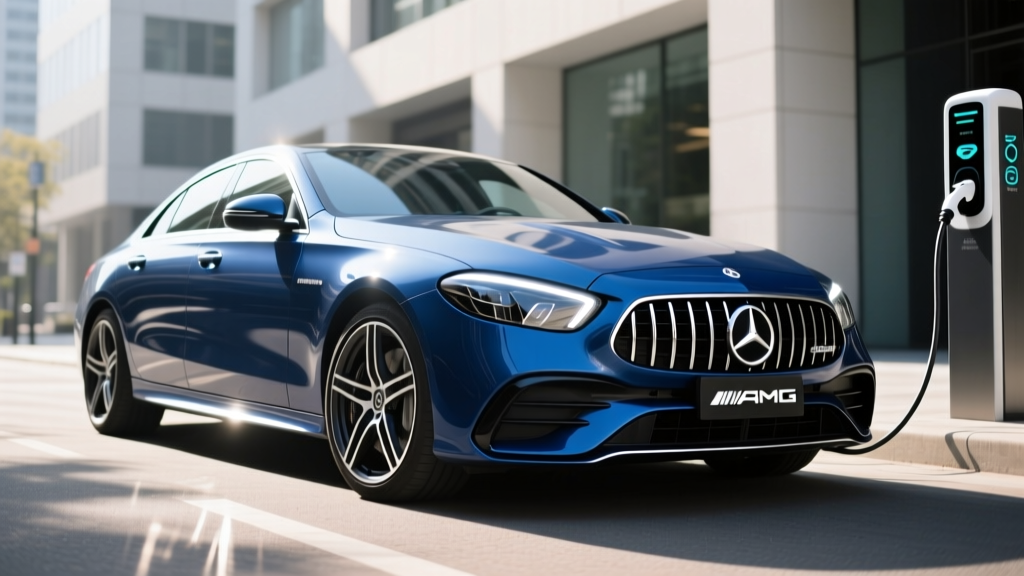
The 2026 Mercedes-AMG E 53 Hybrid occupies a rare niche: a plug-in hybrid (PHEV) luxury sport sedan that delivers genuine AMG performance while offering enough electric-only range to handle most daily commutes without burning a drop of fuel. With a combined output of 577 horsepower from its turbocharged inline-six and electric motor, plus an EPA-estimated 50+ miles of electric driving, the E 53 Hybrid asks a compelling question — why choose between a sports sedan and an EV when you can have both?
But at a starting MSRP above $85,000, and with a battery too small to qualify for the full federal tax credit, the value proposition requires a closer look. This guide breaks down the real-world MPG, charging logistics, ownership costs, and whether the AMG E 53 Hybrid fits your garage better than a full EV or a conventional hybrid.
HEV vs. PHEV: Where the AMG E 53 Hybrid Fits
Before diving into specs, it's critical to understand what the AMG E 53 Hybrid actually is — because the word "hybrid" covers two very different architectures.
Conventional Hybrid (HEV)
A conventional hybrid like the Toyota Prius uses a small battery (typically 1-2 kWh) that recharges solely through regenerative braking and the gas engine. You never plug it in. The electric motor assists the engine for better fuel economy, but electric-only driving is limited to very low speeds and short distances.
Plug-In Hybrid (PHEV) — The AMG E 53
The AMG E 53 Hybrid is a plug-in hybrid (PHEV). It carries a much larger 21.2 kWh battery that you charge by plugging in — either at home via Level 2 or at a public charger. This enables 50+ miles of pure electric driving before the gasoline inline-six engine engages. Once the battery depletes, it operates like a conventional hybrid.
The distinction matters enormously for daily use. If you can charge at home and your commute is under 50 miles round-trip, you may go weeks without visiting a gas station. If you can't charge, you're carrying 400+ pounds of battery you never use, and your fuel economy drops to that of a heavy conventional hybrid.
Powertrain Specs: 577 HP from Inline-Six Meets Electric Motor
| Specification | 2026 AMG E 53 Hybrid |
|---|---|
| Engine | 3.0L turbocharged inline-6 (mild-hybrid) |
| Engine Output | 443 hp / 413 lb-ft torque |
| Electric Motor | Permanently excited synchronous, integrated in transmission |
| Motor Output | 161 hp (120 kW) / 354 lb-ft torque |
| Combined System Output | 577 hp (with boost) / 553 lb-ft torque |
| Transmission | AMG SPEEDSHIFT TCT 9-speed automatic |
| Drivetrain | 4MATIC+ all-wheel drive |
| Battery Capacity | 21.2 kWh (usable, lithium-ion NMC) |
| 0-60 mph | 3.7 seconds |
| Top Speed | 155 mph (electronically limited) |
| Base MSRP | ~$85,900 (Sedan) |
The E 53's powertrain is fundamentally different from most PHEVs. Rather than pairing a small four-cylinder with an electric motor for efficiency, Mercedes-AMG uses a high-output turbocharged inline-six — the same engine family found in non-hybrid AMG models — and layers a 120 kW electric motor between the engine and the nine-speed transmission. The result is torque-fill that eliminates turbo lag and delivers instantaneous thrust from any RPM.
The electric motor can propel the car independently at speeds up to 87 mph, meaning highway merging and suburban driving can happen entirely on electricity. When both power sources work together, the 3.7-second 0-60 time puts the E 53 Hybrid in sports-car territory.
Electric-Only Range, MPG, and Real-World Efficiency
| Metric | EPA Estimate | Real-World Expectation |
|---|---|---|
| Electric-Only Range | ~52 miles | 42-48 mi (highway/cold weather) |
| MPGe (electric + gas) | ~58 MPGe combined | Depends on charging frequency |
| Gas-Only City MPG | ~25 MPG | 23-27 MPG |
| Gas-Only Highway MPG | ~28 MPG | 26-30 MPG |
| Gas-Only Combined MPG | ~26 MPG | 24-28 MPG |
| Total Range (EV + Gas) | ~430 miles | ~380-410 miles real-world |
The EPA electric range of approximately 52 miles is generous for a performance PHEV. In real-world driving, expect 42-48 miles on a full charge during mixed suburban/highway use. Cold weather (below 40°F) can reduce electric range by 15-25%, dropping it to roughly 35-42 miles — still enough for most commutes, but worth planning for.
Once the battery depletes, the E 53 operates as a heavy hybrid sedan. At roughly 5,000 lbs, the combined MPG of ~26 is respectable for an AWD performance sedan but unremarkable compared to efficiency-focused PHEVs like the Toyota Prius Prime (which returns 48+ MPG combined in gas-only mode). If you rarely charge, you're essentially driving a 26-MPG luxury sedan that cost $85,000+.
Real-World Range Note: The E 53's electric range shines in stop-and-go city driving, where regenerative braking recaptures energy. Highway cruising at 75+ mph depletes the battery faster — expect closer to 38-42 electric miles on an all-highway route. Preconditioning the battery while plugged in (via the Mercedes me app) preserves range in cold weather.
Charging the AMG E 53 Hybrid: Level 2 at Home, No DC Fast Charging
| Charging Level | Power (kW) | Time (0-100%) | Availability |
|---|---|---|---|
| Level 1 (120V household) | ~1.4 kW | ~15 hours | Any standard outlet |
| Level 2 (240V home/public) | Up to 7.4 kW (onboard charger) | ~3 hours | Home wallbox, public Level 2 stations |
| DC Fast Charging | N/A | N/A | Not supported on E 53 Hybrid |
The AMG E 53 Hybrid charges exclusively via AC — either Level 1 (standard 120V outlet) or Level 2 (240V). The onboard charger is rated at 7.4 kW, meaning a full charge from a Level 2 home wallbox takes approximately three hours. This is practical for overnight charging but means you cannot use DC fast chargers (the kind found at Electrify America or Tesla Supercharger stations) to top up on road trips.
This is a deliberate engineering trade-off. Adding DC fast-charge capability requires additional hardware, weight, and cost. For a PHEV with a 21.2 kWh battery, Mercedes determined that overnight Level 2 charging covers the use case. For most owners, plugging in when they get home and waking up to a full battery is sufficient — but if you take frequent long road trips and want to recharge the battery at highway rest stops, this limitation matters.
Home charging setup cost: A Level 2 home wallbox (such as the ChargePoint Home Flex or Mercedes-Benz Wallbox) costs $500-$800 for the unit, plus $500-$2,000 for professional electrician installation depending on your panel capacity and run length. Most E 53 owners will want a dedicated 40-amp circuit.
Pricing, Tax Credits, and Total Ownership Cost
The 2026 Mercedes-AMG E 53 Hybrid sedan starts at approximately $85,900 (MSRP including destination), with the wagon variant commanding roughly $2,000 more. Options packages — AMG Night Package, Driver Assistance Package, Executive Rear Seat — can push a well-equipped example past $100,000.
Federal §30D PHEV Tax Credit Eligibility
- Battery capacity: 21.2 kWh — exceeds the 7 kWh minimum ✓
- MSRP cap: Sedan must be under $55,000 — E 53 at ~$85,900 exceeds the cap ✗
- Buyer income cap: $150K single / $300K joint — varies by buyer
- Critical minerals & battery sourcing: Subject to annual phase-in requirements per IRS §30D rules
- Verdict: The E 53 Hybrid does NOT qualify for the federal §30D new-vehicle credit due to MSRP exceeding the $55,000 sedan cap
This is a significant consideration. The federal clean vehicle credit under IRS §30D caps eligible sedans at $55,000 MSRP — and the E 53 Hybrid sits well above that threshold. Buyers should not factor a $7,500 credit into their purchase decision for this vehicle. Some states offer separate PHEV incentives that are not MSRP-capped; check your state energy office or the AFDC state incentive database for specifics.
| 5-Year Cost Factor | Estimated Cost |
|---|---|
| Purchase price (base) | ~$85,900 |
| Federal tax credit | $0 (MSRP cap exceeded) |
| Insurance (5 years avg.) | ~$18,000-$24,000 |
| Electricity (charging at home, 50 mi/day) | ~$2,500-$3,500 |
| Gasoline (weekend/long trips) | ~$3,000-$4,500 |
| Maintenance (5 years) | ~$4,500-$6,000 |
| Estimated depreciation (5 yr) | ~$35,000-$42,000 |
Ownership costs are substantial. AMG-badged Mercedes vehicles carry premium insurance rates, and maintenance costs are higher than non-performance PHEVs. However, if you charge nightly and drive under 50 miles daily, your fuel expenditure drops dramatically compared to the gas-only AMG E 53.
Battery Warranty, Reliability, and Replacement Cost
AMG E 53 Hybrid Battery Warranty
High-voltage battery: 6 years / 62,000 miles (Mercedes-Benz standard PHEV warranty)
Capacity retention guarantee: Mercedes warrants the battery against dropping below ~70% state of health during the warranty period
Powertrain: 4 years / 50,000 miles (standard Mercedes new-vehicle warranty)
Estimated out-of-warranty battery replacement: $12,000-$18,000 (parts + labor at dealership)
Mercedes-Benz provides a 6-year/62,000-mile warranty on the high-voltage battery, which is slightly shorter than the 8-year/100,000-mile coverage offered by some competitors (Toyota, Hyundai/Kia). For a luxury PHEV in this price range, buyers should consider an extended warranty or factor potential battery replacement into long-term ownership plans.
The 21.2 kWh NMC (nickel-manganese-cobalt) lithium-ion pack is liquid-cooled, which helps manage thermal degradation. Based on data from earlier-generation Mercedes PHEVs (such as the previous S 580e and GLE 350e), owners typically see 8-12% capacity loss over the first five years with normal use — meaning the 52-mile electric range might drop to 46-48 miles over that period. This is gradual and rarely impacts daily usability.
Reliability of the M256 inline-six engine is generally strong, though the added complexity of the integrated electric motor and nine-speed transmission means more potential failure points than a conventional powertrain. Mercedes dealership service is essential for high-voltage system work — independent shops typically lack the diagnostic tools and safety certification for PHEV battery service.
AMG E 53 Hybrid vs. Full EV vs. Conventional Hybrid: Which Fits You?
Choose the AMG E 53 Hybrid (PHEV) if:
- You have home Level 2 charging and a commute under 50 miles
- You want AMG performance (577 hp, 3.7s 0-60) without full-EV range anxiety on road trips
- You regularly take trips beyond 300 miles where charging infrastructure is sparse
- You want one vehicle for daily EV commuting and weekend gas-powered touring
Choose a Full EV (e.g., Porsche Taycan, Mercedes EQE) if:
- You want zero tailpipe emissions and minimal maintenance (no oil changes, no spark plugs)
- You have reliable home charging and access to DC fast chargers for road trips
- You want lower per-mile energy costs and qualify for the federal tax credit on eligible models
- You drive primarily in urban/suburban areas with good charging infrastructure
Choose a Conventional Hybrid (HEV) if:
- You cannot charge at home (apartment, street parking, no garage)
- You want simplicity — no plugs, no charging apps, no battery management
- Your priority is fuel efficiency over performance (a Toyota Crown Hybrid returns 41 MPG combined at $42,000)
- You want lower upfront cost and proven long-term reliability
The E 53 Hybrid's ideal buyer is a performance-oriented driver with home charging access who refuses to compromise on road-trip flexibility. If you can charge nightly, you'll commute on electricity and only burn fuel on longer drives. If you can't charge at home, the PHEV premium over the gas-only E 450 is harder to justify — you'll get 26 MPG combined instead of 24, but you paid thousands more for a battery you never use.
Pros
- 577 hp with instant electric torque-fill — genuine AMG performance
- 52 miles electric range covers most daily commutes
- No range anxiety — gas engine for road trips
- Luxurious E-Class interior with MBUX and AMG sport seats
- Regenerative braking enables one-pedal-like driving in EV mode
- Quiet, smooth electric operation in city traffic
Cons
- $85,900+ MSRP disqualifies it from federal §30D tax credit
- No DC fast-charging capability
- Only 26 MPG combined in gas-only mode (heavy vehicle)
- 6-year battery warranty is shorter than some competitors
- Requires home Level 2 charging to realize PHEV benefits
- Complex powertrain = higher long-term maintenance risk
Frequently Asked Questions
How many MPG does the 2026 AMG E 53 Hybrid get?
In gas-only mode (battery depleted), the E 53 Hybrid returns an EPA-estimated ~25 city / 28 highway / 26 combined MPG. When regularly charged, MPGe reaches ~58 combined, but this depends entirely on how often you charge and the ratio of electric to gasoline miles driven. Owners who charge nightly and drive under 50 miles daily may use very little gasoline.
How far can the AMG E 53 Hybrid go on electric only?
The EPA estimates approximately 52 miles of electric-only range. Real-world results vary: expect 42-48 miles in mixed driving, 38-42 miles on the highway, and 35-42 miles in cold weather (below 40°F). The electric motor can propel the car to 87 mph, so highway driving in EV mode is fully supported.
Does the AMG E 53 Hybrid qualify for a federal tax credit?
No. Under current IRS §30D rules, the federal clean vehicle credit caps eligible sedans at $55,000 MSRP. The E 53 Hybrid starts at ~$85,900, well above the threshold. Some state-level incentives may still apply — check your state's EV rebate program.
Is the AMG E 53 Hybrid reliable, and what does a battery replacement cost?
The M256 inline-six and Mercedes PHEV system have proven reasonably reliable in earlier applications. The high-voltage battery is warrantied for 6 years/62,000 miles. Out-of-warranty replacement is estimated at $12,000-$18,000. Liquid-cooled thermal management helps preserve battery health, and typical degradation is 8-12% over five years.
Can the AMG E 53 Hybrid use DC fast chargers?
No. The E 53 Hybrid supports only AC charging: Level 1 (120V, ~15 hours for a full charge) and Level 2 (240V, ~3 hours at 7.4 kW). DC fast chargers (CCS, NACS) are not compatible. This is typical for PHEVs with smaller batteries — the use case assumes overnight home charging.
Do I need to plug in the AMG E 53 Hybrid?
You don't have to, but you should. The E 53 is a plug-in hybrid (PHEV), meaning its 52-mile electric range is only accessible by charging the battery externally. If you never plug in, the car operates as a conventional hybrid returning ~26 MPG combined — making the PHEV premium over a gas-only E 450 difficult to justify. Plug-in charging is where the value lies.