The Only Rotary Engine Car You Can Buy New — And It's a Hybrid
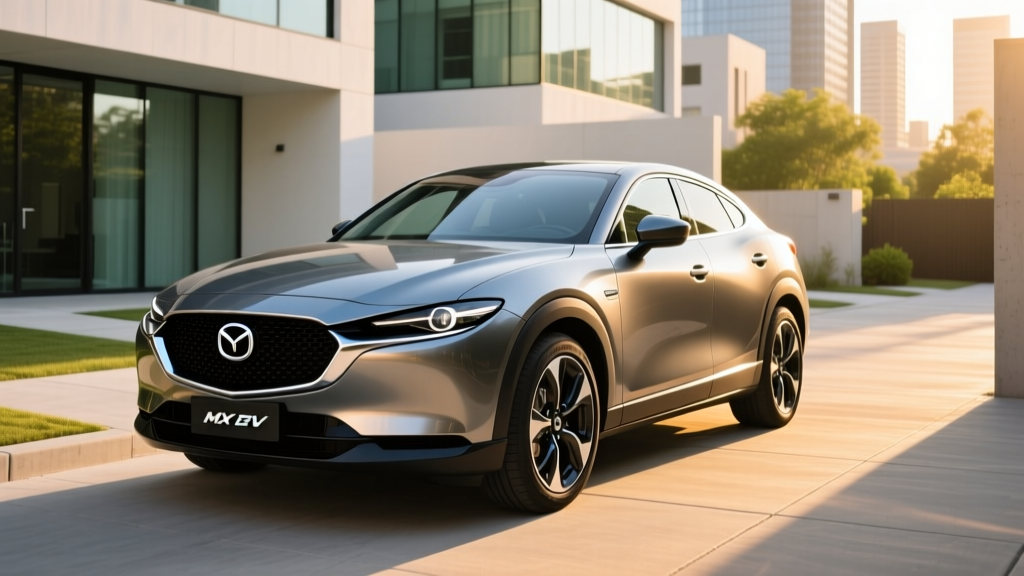
Mazda's Wankel rotary engine was supposed to be dead. After the RX-8 bowed out in 2012, enthusiasts assumed the compact, smooth-spinning rotary was a museum piece. But in 2023, Mazda resurrected it — not as a sports car powerplant, but as a range-extending generator in the Mazda MX-30 R-EV, a plug-in hybrid (technically classified as an extended-range electric vehicle, or EREV) that pairs an 830cc single-rotor engine with a 170-horsepower electric drive motor.
The result is one of the most unconventional electrified vehicles on the market: you drive on electricity 100% of the time, while the rotary engine never touches the wheels. It only generates electricity to extend your range beyond the battery's 85-mile EV limit. For 2026, the MX-30 R-EV remains a niche proposition — a compelling one for the right buyer, but one that demands clear-eyed analysis before you sign.
This guide breaks down every spec that matters: real-world MPG, electric-only range, charging speeds, pricing, tax credit eligibility, and the critical question of whether a rotary hybrid makes more sense than a conventional PHEV or a full battery-electric vehicle.
HEV vs PHEV vs EREV: Where the Rotary Hybrid Fits
Before we dig into specs, it's essential to understand what the MX-30 R-EV actually is, because Mazda's "rotary hybrid" label can confuse shoppers comparing it to a Toyota Prius or a RAV4 Prime.
| Type | How It Works | Plug In? | EV-Only Range | Example |
|---|---|---|---|---|
| HEV (Conventional Hybrid) | Gas engine + small motor; battery recharges via regen and engine | No | 0–2 mi | Toyota Prius |
| PHEV (Plug-In Hybrid) | Larger battery + motor; can drive on electricity or gas, or both | Yes | 25–50 mi | Toyota RAV4 Prime |
| EREV (Extended-Range EV) | Electric motor drives wheels 100%; gas engine is a generator only | Yes | 50–100+ mi | Mazda MX-30 R-EV |
The MX-30 R-EV is an EREV. The rotary engine never mechanically drives the wheels. You always experience electric-drive torque and smoothness. The engine spins up only to charge the battery or supply electricity directly to the motor when the battery depletes. This is the same architecture as the original BMW i3 REx, though Mazda's execution is more refined.
MX-30 R-EV Specifications: Battery, Powertrain, and Range
| Specification | Value |
|---|---|
| Powertrain Type | EREV (series hybrid / range-extended EV) |
| Drive Motor Output | 170 hp / 236 lb-ft torque |
| Rotary Generator Engine | 830cc single-rotor Wankel, 74 hp (generator only) |
| Battery Capacity (Usable) | 17.8 kWh (lithium-ion, NMC chemistry) |
| EPA Electric-Only Range | 85 miles |
| Total Combined Range (EV + Gas) | ~340 miles (85 EV + 255 on 13.2-gal tank) |
| EPA Fuel Economy (Charge-Sustaining) | 25 MPG combined (24 city / 26 highway) |
| MPGe (EV Mode) | 88 MPGe combined |
| Fuel Tank Capacity | 13.2 gallons (premium recommended) |
| 0–60 mph | ~7.4 seconds |
| Drivetrain | Front-wheel drive |
| DC Fast Charge (CCS) | Yes, up to ~40 kW peak |
| Level 2 AC Charge Rate | 7.2 kW onboard charger |
| Level 2 Charge Time (0–100%) | ~2 hours 50 minutes |
| DC Fast Charge (20–80%) | ~25 minutes |
| Cargo Volume | 11.4 cu ft (rear seats up) |
Real-World Range Expectations: The EPA rates the MX-30 R-EV at 85 miles of electric-only range. In mild weather (60–75°F) with city driving and regenerative braking, expect to see 80–90 miles. On the highway at 70 mph, plan for 65–75 miles before the rotary kicks in. In freezing temperatures with cabin heat, electric range can drop to 55–65 miles. Once the engine engages, total range depends on your driving style — the 25 MPG combined rating translates to roughly 250–270 miles on the 13.2-gallon tank in mixed driving, giving you a realistic total range of 320–350 miles.
Fuel Economy Breakdown: MPG in Every Scenario
Because the MX-30 R-EV operates as a pure EV until the battery depletes, "fuel economy" depends entirely on how you use it.
| Driving Scenario | Fuel Consumption | Effective MPG / MPGe |
|---|---|---|
| Daily commute under 80 miles (charge nightly) | 0 gallons; electricity only | 88 MPGe / ~$0.04–0.06/mi |
| Charge-sustaining mode (battery depleted, engine running) | Gas only | 25 MPG combined (24 city / 26 hwy) |
| Mixed use (partial charge + engine) | Varies | 40–70+ MPGe depending on EV ratio |
| Long highway road trip (no charging) | Gas only, steady state | ~26 MPG highway |
The key insight: if your daily driving stays under 85 miles and you charge at home every night, you may go months without buying gasoline. Mazda's rotary engine only exists as a safety net for longer trips. But if you routinely drive 200+ miles without charging access, you'll operate as a 25 MPG hybrid — which is unremarkable compared to a Toyota Prius (57 MPG combined) or even a Honda Accord Hybrid (48 MPG combined).
The 25 MPG charge-sustaining figure reflects the energy conversion losses of running a generator to power an electric motor. Series hybrids are inherently less efficient at highway speeds than parallel hybrids (where the engine can directly drive the wheels). This is a known engineering trade-off of the EREV layout.
Charging: Level 1, Level 2, and DC Fast Charging
The MX-30 R-EV's 17.8 kWh battery is small by full-EV standards but large enough to require real charging infrastructure. Here's what each level delivers:
| Level | Power | Time (0–100%) | Miles of EV Range per Hour |
|---|---|---|---|
| Level 1 (120V household outlet) | ~1.4 kW | ~13 hours | ~6 mi/hr |
| Level 2 (240V home charger) | 7.2 kW (max onboard) | ~2 hrs 50 min | ~30 mi/hr |
| DC Fast Charge (CCS) | ~40 kW peak | 20–80% in ~25 min | ~90+ mi/hr (at peak) |
A few practical notes on charging the MX-30 R-EV:
- DC fast charging is limited to ~40 kW. The small battery can't accept the 150–250 kW rates that larger EVs handle. You won't see blazing-fast top-ups on Electrify America or Tesla Supercharger (with adapter) stations, but 25 minutes for a 20–80% top-up is acceptable given the battery size.
- The 7.2 kW Level 2 onboard charger is adequate. A full charge in under 3 hours means you can easily top off at workplace chargers or public Level 2 stations during errands.
- Level 1 charging is viable for this car. Because the battery is only 17.8 kWh, a standard 120V outlet adds roughly 6 miles of range per hour. If you drive 30–40 miles daily, overnight Level 1 charging can actually cover your commute — though a Level 2 home charger is strongly recommended for convenience and battery health.
- CCS1 connector is standard. As the industry shifts to NACS (Tesla's connector), Mazda has not announced a NACS transition timeline for the MX-30 R-EV. You may need a CCS-to-NACS adapter for Supercharger access as networks transition.
Pricing, Trims, and Tax Credit Eligibility
For the 2026 model year, the Mazda MX-30 R-EV is offered in a single well-equipped trim:
| Item | Amount |
|---|---|
| Base MSRP (MX-30 R-EV Premium Plus) | $38,445 (including destination) |
| Federal §30D Tax Credit | $0 — does not qualify |
| Estimated Out-of-Pocket (before state incentives) | $38,445 |
Why no federal tax credit? Under IRS §30D rules, a plug-in hybrid must meet strict battery component sourcing and critical minerals requirements to qualify for up to $7,500. The MX-30 R-EV's battery does not meet the domestic-sourcing thresholds required for the 2026 tax year. This is a significant disadvantage against PHEV competitors like the Chrysler Pacifica Hybrid or certain trims of the Ford Escape PHEV, which may qualify for partial or full credits depending on current IRS guidance.
Some states offer their own rebates for PHEVs. California's CVRP, for instance, has historically offered up to $1,000–$1,750 for qualifying PHEVs (subject to income caps and program funding). Check your state's energy office or the DOE's alternative fuels incentive database for current local programs. Always verify eligibility with a tax professional before relying on any credit.
§30D Federal Tax Credit — Why the MX-30 R-EV Falls Short:
- ❌ Battery components do not meet North American manufacturing threshold
- ❌ Critical minerals sourcing does not meet FTA-country requirements
- ✅ MSRP is under the $55,000 cap for sedans/hatchbacks
- ✅ Buyer income limits would likely not disqualify most purchasers
- Result: $0 federal credit for 2026
Battery Longevity, Warranty, and Replacement Costs
The MX-30 R-EV uses a 17.8 kWh lithium-ion (NMC chemistry) traction battery. Mazda has engineered a generous buffer into the pack — the usable capacity is well below the gross capacity — which reduces stress on individual cells and should slow long-term degradation.
Mazda MX-30 R-EV Hybrid Battery Warranty:
- Hybrid Battery: 8 years / 100,000 miles (whichever comes first)
- Coverage: Defects and capacity loss below a specified threshold (typically 70% of original capacity, though confirm with your dealer for the exact Mazda guarantee)
- Powertrain Warranty: 5 years / 60,000 miles
- Bumper-to-Bumper: 3 years / 36,000 miles
Battery replacement cost: As of 2026, Mazda has not published an out-of-warranty replacement price for the MX-30 R-EV's traction battery. For context, comparable small PHEV battery replacements from other manufacturers run $4,000–$8,000. The rotary generator engine, being a simple single-rotor unit with few moving parts, should be inexpensive to service relative to a conventional piston engine — but parts availability for a niche powertrain could be a concern in years 10+.
Reliability outlook: Mazda scores well in long-term reliability surveys from Consumer Reports and J.D. Power. The Wankel rotary has historically had concerns with apex seal wear and oil consumption, but in this application, the engine runs at relatively constant RPM as a generator — the least stressful duty cycle for a rotary. Real-world longevity data is still limited given the model's 2023 introduction, so early adopters carry some uncertainty risk.
Who Should Buy the Mazda Rotary Hybrid — And Who Shouldn't
Choose the MX-30 R-EV if:
- Your daily commute is under 80 miles and you can charge at home nightly
- You take occasional road trips of 200–400 miles and don't want to plan around DC chargers
- You want the smooth, quiet experience of 100% electric driving without range anxiety
- You appreciate Mazda's premium interior, driving dynamics, and design
- You value the novelty and engineering elegance of a rotary range extender
Look elsewhere if:
- You want maximum fuel economy on long gas-only drives (a Prius gets 57 MPG vs. 25 here)
- You need a federal tax credit to make the math work
- Cargo space is a priority (11.4 cu ft is tight — smaller than a Mazda3 hatchback)
- You want AWD (MX-30 R-EV is FWD only)
- You drive 200+ miles daily without charging access (you'll burn gas at mediocre efficiency)
Pros
- 100% electric driving feel with no range anxiety
- 85 miles of EV range covers most daily commutes
- Rotary generator is smooth, quiet, and vibration-free
- Premium Mazda interior quality at a sub-$40K price
- DC fast charging capability (rare for small-battery PHEVs)
- Unique powertrain — nothing else like it on the market
Cons
- No federal tax credit eligibility
- 25 MPG in charge-sustaining mode is poor vs. conventional hybrids
- Limited cargo space (11.4 cu ft)
- FWD only — no AWD option
- DC fast charge rate capped at ~40 kW
- Rotary engine long-term reliability unproven in this application
- Limited availability — initially only sold in California, expanding slowly
MX-30 R-EV vs. Competing PHEVs and EVs
The rotary hybrid doesn't exist in a vacuum. Here's how it stacks up against realistic alternatives in the $35K–$45K plug-in space:
| Spec | Mazda MX-30 R-EV | Toyota RAV4 Prime | Hyundai Tucson PHEV | Chevrolet Bolt EV (baseline EV) |
|---|---|---|---|---|
| Type | EREV | PHEV | PHEV | BEV |
| EV Range | 85 mi | 42 mi | 33 mi | 259 mi |
| Total Range | ~340 mi | ~600 mi | ~400 mi | 259 mi |
| Gas MPG (charge-sust.) | 25 MPG | 38 MPG | 35 MPG | N/A |
| Combined HP | 170 hp | 302 hp | 261 hp | 200 hp |
| AWD Available? | No | Yes (standard) | Yes (standard) | No |
| Federal Tax Credit | $0 | Up to $3,750* | Up to $3,750* | $0 (discontinued) |
| Starting MSRP | $38,445 | $44,500 | $38,725 | $26,500 (used market) |
*Tax credit amounts for PHEVs vary by model year, battery sourcing, and buyer income. Verify current eligibility at irs.gov.
The RAV4 Prime dominates on power, AWD, total range, and gas-only efficiency — but costs $6,000+ more. The Tucson PHEV offers AWD and a lower price but with shorter EV range. A used Bolt EV provides far more electric range at lower cost, but with no gas backup. The MX-30 R-EV occupies a specific niche: maximum EV range in a PHEV, with premium Mazda refinement, at the cost of gas-mode efficiency and cargo practicality.
Frequently Asked Questions
How many MPG does the Mazda rotary hybrid get?
The MX-30 R-EV achieves 25 MPG combined (24 city / 26 highway) when operating in charge-sustaining mode with the rotary engine running as a generator. In EV-only mode, it achieves 88 MPGe combined. If you charge nightly and drive under 85 miles daily, you may use little to no gasoline.
How far can the MX-30 R-EV go on electric only?
The EPA rates the MX-30 R-EV at 85 miles of electric-only range. Real-world results vary: expect 80–90 miles in mild city driving, 65–75 miles at highway speeds, and 55–65 miles in freezing temperatures with cabin heating.
Does the rotary engine ever drive the wheels?
No. The 830cc Wankel rotary in the MX-30 R-EV is strictly a generator. It produces electricity to either charge the battery or feed the 170-hp drive motor directly. The driving experience is always that of a pure electric vehicle — instant torque, single-speed, no gear shifts.
Is the Mazda MX-30 R-EV reliable?
Mazda as a brand rates well in reliability surveys, but the MX-30 R-EV's specific powertrain — combining a rotary generator with a PHEV battery — has limited long-term data. The rotary runs at steady RPM (low stress), and the battery has an 8-year/100,000-mile warranty. Early adopters should budget for some uncertainty as the platform matures.
What is the hybrid battery replacement cost?
Mazda has not published an official out-of-warranty replacement price for the MX-30 R-EV's 17.8 kWh battery. Comparable PHEV battery replacements typically cost $4,000–$8,000. The 8-year/100,000-mile warranty should cover premature degradation.
Does the MX-30 R-EV qualify for a federal tax credit?
No. As of the 2026 tax year, the MX-30 R-EV does not qualify for the IRS §30D federal clean vehicle credit because its battery components and critical minerals do not meet domestic-sourcing requirements. Some state-level incentives may still apply — check your state's energy office.
Hybrid vs PHEV vs EV — which should I choose?
Choose a conventional hybrid (HEV) if you want maximum gas-only MPG (50+), can't charge at home, and want zero behavioral change. Choose a PHEV or EREV like the MX-30 R-EV if you can charge at home, want electric daily driving, but need gas backup for road trips. Choose a full EV (BEV) if you want the lowest operating costs, can charge at home, and are comfortable planning around DC chargers on long trips — or if your trips rarely exceed 250 miles.
Can I DC fast charge the MX-30 R-EV?
Yes. The MX-30 R-EV supports CCS DC fast charging at up to ~40 kW peak, achieving a 20–80% charge in approximately 25 minutes. This is slower than full EVs with larger batteries (which can accept 150–250 kW), but it's uncommon and useful for a PHEV in this price range.
Is the MX-30 R-EV available nationwide?
Mazda initially launched the MX-30 R-EV exclusively in California. Availability has been gradually expanding to additional states. Check with your local Mazda dealer for current market availability, as this remains a low-volume model.
Sources: EPA Fuel Economy — Mazda MX-30 R-EV, IRS §30D Clean Vehicle Credit Rules, Mazda USA official specifications.