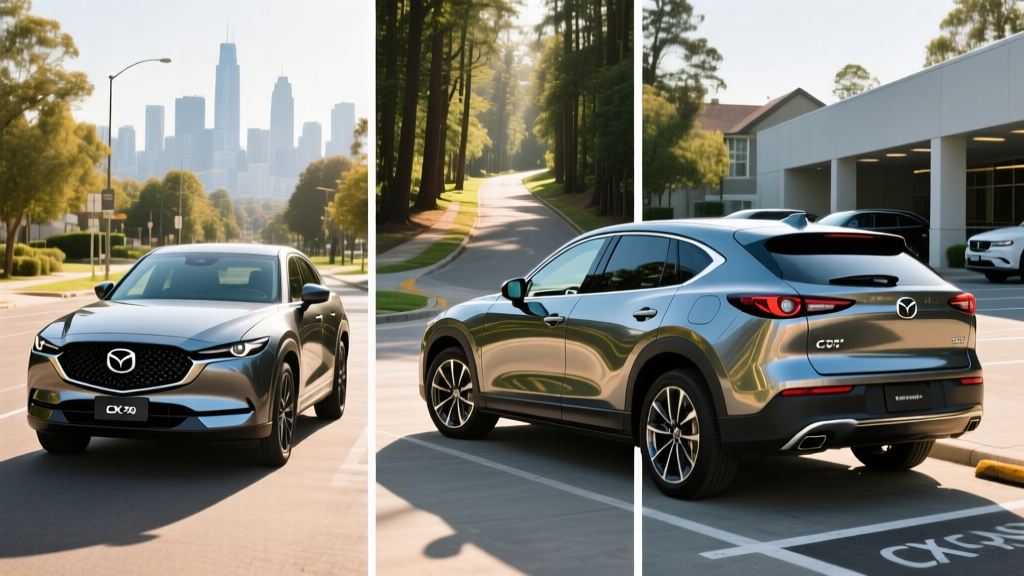
Mazda's electrification strategy has always been pragmatic rather than revolutionary, and the 2026 lineup reflects that philosophy. Unlike brands that went all-in on battery-electric vehicles, Mazda has invested heavily in conventional hybrids and plug-in hybrids — powertrains that deliver measurable fuel savings without requiring owners to change their driving or charging habits. For 2026, the Mazda hybrid models spanning the CX-50, CX-70, and CX-90 represent some of the most fuel-efficient options in the premium-crossover segment, but they also come with trade-offs worth understanding before you sign a purchase agreement.
This guide breaks down every current Mazda hybrid and plug-in hybrid by the numbers: EPA MPG, electric-only range, battery capacity, real-world efficiency, pricing, and tax-credit eligibility. Whether you're cross-shopping against a Toyota RAV4 Hybrid or a Volvo XC60 Recharge, you'll have the exact data to decide.
HEV vs. PHEV: How Mazda's Two Hybrid Systems Differ
Before diving into specific models, it's critical to understand the two distinct hybrid architectures Mazda offers. Confusing them is one of the most common buyer mistakes we see.
Conventional Hybrid (HEV) — CX-50 Hybrid
How it works: A gasoline engine and electric motor work together, with the battery recharged exclusively through regenerative braking and engine power. No plug. No charging cable. You fuel up at a gas station like any other car.
Best for: Drivers who want better MPG without any lifestyle change — no home charger, no plug-in routine, no range planning.
Plug-In Hybrid (PHEV) — CX-70 PHEV & CX-90 PHEV
How it works: A larger battery (17.8 kWh usable) powers an electric motor for a limited distance — roughly 26–28 miles — before the gasoline engine engages. The battery recharges via a Level 2 (240V) plug or regenerative braking. No DC fast charging on any current Mazda PHEV.
Best for: Drivers with home Level 2 charging whose daily commute falls within the electric-only range, but who want gasoline flexibility for road trips.
The distinction matters enormously for your wallet and daily routine. A conventional hybrid saves fuel passively. A PHEV saves fuel actively — but only if you plug it in regularly. Drive a CX-90 PHEV without charging and you're hauling a heavy, depleted battery on gasoline alone, which can actually worsen fuel economy compared to a conventional model.
2026 Mazda CX-50 Hybrid: The Toyota-Sourced Efficiency Play
The CX-50 Hybrid borrows its powertrain directly from the Toyota RAV4 Hybrid — a proven, reliable system that Mazda integrated into its rugged-styled compact crossover. The result is the most fuel-efficient vehicle Mazda currently sells.
| Spec | Value |
|---|---|
| Powertrain | 2.5L 4-cyl + 2 electric motors (AWD) |
| Combined Horsepower | 219 hp |
| EPA MPG (City / Hwy / Combined) | 39 / 37 / 38 MPG |
| Battery | ~1.6 kWh NiMH (self-charging, no plug) |
| 0–60 mph | ~7.3 seconds |
| Towing Capacity | 1,500 lbs |
| Base MSRP (Preferred trim) | $35,395 |
| Federal Tax Credit | Not eligible (HEV, not PHEV/BEV) |
How Many MPG Does the CX-50 Hybrid Actually Get?
The EPA rates the CX-50 Hybrid at 38 MPG combined (39 city / 37 highway), per fueleconomy.gov. In real-world driving, conventional hybrids frequently exceed their EPA city estimates because regenerative braking recovers more energy in stop-and-go traffic. Many owners report 40–42 MPG in urban commutes. Highway driving at 75+ mph typically yields 34–36 MPG — slightly below the sticker — because the electric motor contributes less at sustained high speeds.
Compared to the non-hybrid CX-50 Turbo (24 MPG combined), the hybrid saves roughly 150–180 gallons of fuel per year at 12,000 miles driven — worth approximately $500–$600 annually at current fuel prices.
2026 Mazda CX-70 PHEV: The Two-Row Plug-In
The CX-70 PHEV slots into Mazda's lineup as a two-row midsize crossover with plug-in capability. It shares its powertrain with the larger CX-90 PHEV but benefits from slightly less weight, translating to marginally better electric range and efficiency.
| Spec | Value |
|---|---|
| Powertrain | 2.5L 4-cyl PHEV + electric motor (AWD) |
| Combined Horsepower | 323 hp / 369 lb-ft torque |
| EPA Electric-Only Range | 26 miles |
| Total Combined Range | ~440 miles (electric + gasoline) |
| Battery (Usable) | 17.8 kWh lithium-ion |
| Level 2 Charge Time (0–100%) | ~2.5 hours at 7.2 kW |
| DC Fast Charging | Not supported |
| EPA MPG (Charge-Sustaining) | 25 MPG combined (gas only, battery depleted) |
| MPGe (Charge-Depleting) | 56 MPGe combined |
| 0–60 mph | ~6.0 seconds |
| Base MSRP (Preferred) | $55,895 |
How Far Can the CX-70 PHEV Go on Electric Only?
The EPA rates the CX-70 PHEV at 26 miles of electric-only range. In real-world conditions, expect 22–24 miles in warm weather with moderate driving, dropping to 18–20 miles in freezing temperatures due to cabin heating demands and reduced battery efficiency. This range covers most daily commutes under 20 miles round-trip, but it's noticeably shorter than competitors like the Toyota RAV4 Prime (42 miles) or the Hyundai Tucson PHEV (33 miles).
Once the battery depletes, the CX-70 PHEV operates as a conventional hybrid at 25 MPG combined — respectable for a 4,800-lb AWD crossover, but not class-leading. The charge-sustaining MPG matters enormously if you can't charge at home or work regularly.
2026 Mazda CX-90 PHEV: The Three-Row Flagship Plug-In
The CX-90 PHEV is Mazda's largest and most premium offering, providing three-row seating with plug-in hybrid efficiency. It targets buyers who might otherwise consider a BMW X5 xDrive50e or Volvo XC90 Recharge but want a lower entry price.
| Spec | Value |
|---|---|
| Powertrain | 2.5L 4-cyl PHEV + electric motor (AWD) |
| Combined Horsepower | 323 hp / 369 lb-ft torque |
| EPA Electric-Only Range | 26 miles |
| Total Combined Range | ~430 miles |
| Battery (Usable) | 17.8 kWh lithium-ion |
| Level 2 Charge Time (0–100%) | ~2.5 hours at 7.2 kW |
| DC Fast Charging | Not supported |
| EPA MPG (Charge-Sustaining) | 25 MPG combined |
| MPGe (Charge-Depleting) | 56 MPGe combined |
| 0–60 mph | ~6.2 seconds |
| Base MSRP (Preferred) | $57,450 |
The CX-90 PHEV shares its 17.8 kWh battery and powertrain with the CX-70 PHEV, and the EPA electric range is identical at 26 miles. The additional ~200 lbs of the third-row body structure accounts for a slightly lower total range figure. Real-world electric range follows the same pattern: 22–24 miles warm, 18–20 miles cold.
Battery Warranty, Reliability & Replacement Costs
Mazda Hybrid & PHEV Battery Warranty
Hybrid battery coverage: 8 years / 100,000 miles (whichever comes first) against defects and capacity loss below a specified threshold. In California Air Resources Board (CARB) states, hybrid battery warranty extends to 10 years / 150,000 miles per emissions-component requirements.
PHEV battery coverage: Same 8-year/100,000-mile federal warranty, 10-year/150,000-mile in CARB states.
Estimated out-of-warranty replacement cost: $3,000–$5,000 for the CX-50 Hybrid NiMH pack; $6,000–$9,000 for the CX-70/CX-90 PHEV lithium-ion pack (parts and labor, based on current dealer pricing and aftermarket availability).
On reliability, Mazda's hybrid track record benefits enormously from the Toyota-sourced powertrain in the CX-50 Hybrid — the same system powering millions of RAV4 Hybrids with well-documented longevity. The PHEV powertrain is Mazda's own design and newer to market, so long-term data (10+ years) is not yet available. Early owner reports and NHTSA complaint databases show no systemic battery-failure patterns through the 2024–2025 model years.
Hybrid batteries typically degrade 1–2% per year under normal use. At 10 years, most PHEV owners report 85–90% of original battery capacity remaining — enough to maintain the bulk of the electric-only range. The battery warranty protects against accelerated degradation, not normal wear.
Pricing, Trims & Federal Tax Credit Eligibility
| Model | Base MSRP | Top Trim MSRP | §30D Federal Tax Credit |
|---|---|---|---|
| CX-50 Hybrid (Preferred) | $35,395 | $41,595 (Premium Plus) | Not eligible |
| CX-70 PHEV (Preferred) | $55,895 | $63,245 (Premium Plus) | Up to $3,750* |
| CX-90 PHEV (Preferred) | $57,450 | $65,300 (Premium Plus) | Up to $3,750* |
*Tax credit amounts and eligibility are subject to IRS §30D rules and change frequently based on battery sourcing, critical-mineral requirements, buyer income caps, and MSRP limits. As of early 2026, Mazda's PHEV models have qualified for a partial credit (typically $3,750 due to critical-mineral sourcing thresholds). Conventional hybrids like the CX-50 Hybrid do not qualify for the §30D new clean vehicle credit. Consult a tax professional and verify current eligibility on the IRS website before purchasing.
The §30D credit can now be transferred to the dealer at the point of sale, effectively reducing your purchase price at the dealership rather than waiting for a tax refund. Both PHEVs fall under the $80,000 MSRP cap for SUVs. Buyer income limits apply: $300,000 joint / $225,000 head of household / $150,000 single filer (modified adjusted gross income).
Real-World MPG vs. EPA: What to Actually Expect
EPA ratings are a useful baseline, but hybrid efficiency varies significantly with driving style, terrain, and climate. Here's what real-world data from owner forums and independent testing suggests:
| Model | EPA Combined | City (Real-World) | Highway 75 mph | Cold Weather (Below 32°F) |
|---|---|---|---|---|
| CX-50 Hybrid | 38 MPG | 40–42 MPG | 34–36 MPG | 33–35 MPG |
| CX-70 PHEV (gas only) | 25 MPG | 26–28 MPG | 23–25 MPG | 21–23 MPG |
| CX-90 PHEV (gas only) | 25 MPG | 25–27 MPG | 22–24 MPG | 20–22 MPG |
The CX-50 Hybrid's city advantage is a hallmark of conventional hybrids: every stop light and traffic jam generates regenerative braking energy. Highway driving is where the gasoline engine does most of the work alone. For PHEVs, the charge-sustaining MPG figures assume a fully depleted battery. If you charge daily and stay within the 26-mile electric range, your effective fuel consumption drops to near zero for local driving — the 56 MPGe figure reflects this blended use.
Hybrid vs. PHEV vs. Full EV: Which Mazda Fits Your Life?
Choose the CX-50 Hybrid (HEV) If:
- You have no access to home or workplace charging
- Your budget is under $42,000
- You want maximum MPG without plugging in
- You drive mostly in the city (regenerative braking advantage)
- You want Toyota-proven hybrid reliability
Choose the CX-70 or CX-90 PHEV If:
- You can install a Level 2 home charger (240V)
- Your daily round-trip commute is under 25 miles
- You want 300+ hp performance with lower fuel costs
- You take road trips and don't want range anxiety
- You qualify for the partial §30D tax credit
Consider a Full EV Instead If:
- Your commute is predictable and under 250 miles
- You have reliable Level 2 home charging
- You want the lowest per-mile fuel cost (~$0.04–$0.06/mi vs. $0.12–$0.15/mi for hybrid)
- You want the full $7,500 federal tax credit
- You want near-zero maintenance (no oil changes, no engine)
The honest truth: Mazda does not currently offer a fully electric SUV competitive with the Tesla Model Y, Hyundai Ioniq 5, or Ford Mustang Mach-E in range and charging speed. The Mazda MX-30 EV (100-mile range) was discontinued. If you're committed to the Mazda brand and want electrification, the PHEV models are the strongest option. If you're brand-flexible and have home charging, a full EV from another manufacturer will deliver lower operating costs and stronger tax incentives.
Frequently Asked Questions
Does the Mazda CX-50 Hybrid need to be plugged in?
No. The CX-50 Hybrid is a conventional hybrid (HEV). Its small battery recharges through regenerative braking and the gasoline engine. You never plug it in — you simply refuel at any gas station. This is fundamentally different from the CX-70 PHEV and CX-90 PHEV, which benefit from plug-in charging.
How long does it take to charge the CX-90 PHEV at home?
Using a Level 2 home charger (240V, 32-amp), the CX-90 PHEV's 17.8 kWh battery charges from 0% to 100% in approximately 2.5 hours at the vehicle's maximum onboard charge rate of 7.2 kW. On a standard 120V household outlet (Level 1), a full charge takes roughly 10–12 hours. No Mazda PHEV currently supports DC fast charging.
Do Mazda PHEVs qualify for the $7,500 federal tax credit?
As of early 2026, the CX-70 PHEV and CX-90 PHEV have qualified for a partial credit of approximately $3,750, not the full $7,500. The reduced amount is due to battery critical-mineral sourcing requirements under IRS §30D. Eligibility depends on your income, the vehicle's MSRP, and the specific battery sourcing at time of manufacture — all of which can change. The CX-50 Hybrid does not qualify for any federal clean vehicle credit. Verify current eligibility on the IRS website and with your dealer before purchase.
What happens if the hybrid battery dies out of warranty?
Out-of-warranty hybrid battery replacement costs range from approximately $3,000–$5,000 (CX-50 Hybrid NiMH pack) to $6,000–$9,000 (CX-70/CX-90 PHEV lithium-ion pack), including parts and labor. However, hybrid battery failure before 150,000 miles is uncommon based on industry data. Most batteries degrade gradually (1–2% per year) rather than failing catastrophically. The 8-year/100,000-mile warranty (10 years/150,000 miles in CARB states) covers defects and abnormal capacity loss.
Which Mazda hybrid gets the best gas mileage?
The CX-50 Hybrid at 38 MPG combined (39 city / 37 highway) is the most fuel-efficient Mazda currently sold. The PHEV models achieve 56 MPGe when operating on electric power, but their charge-sustaining (gas-only) fuel economy is 25 MPG combined — lower than the CX-50 Hybrid because of their greater weight and more powerful engines.
Is the Mazda CX-50 Hybrid the same as the Toyota RAV4 Hybrid?
The CX-50 Hybrid uses a Toyota-sourced hybrid powertrain — the same 2.5L engine and dual-motor system found in the RAV4 Hybrid — but it's wrapped in Mazda's own exterior design, interior, suspension tuning, and all-wheel-drive calibration. The driving experience is distinctly Mazda (firmer ride, more precise steering), while the hybrid efficiency and reliability profile closely mirrors the Toyota.
Sources: EPA fueleconomy.gov, IRS §30D Clean Vehicle Credits, Mazda USA official specifications. Pricing and tax-credit eligibility reflect 2026 model year data and are subject to change. Verify all figures with your dealer and a tax professional before purchasing.