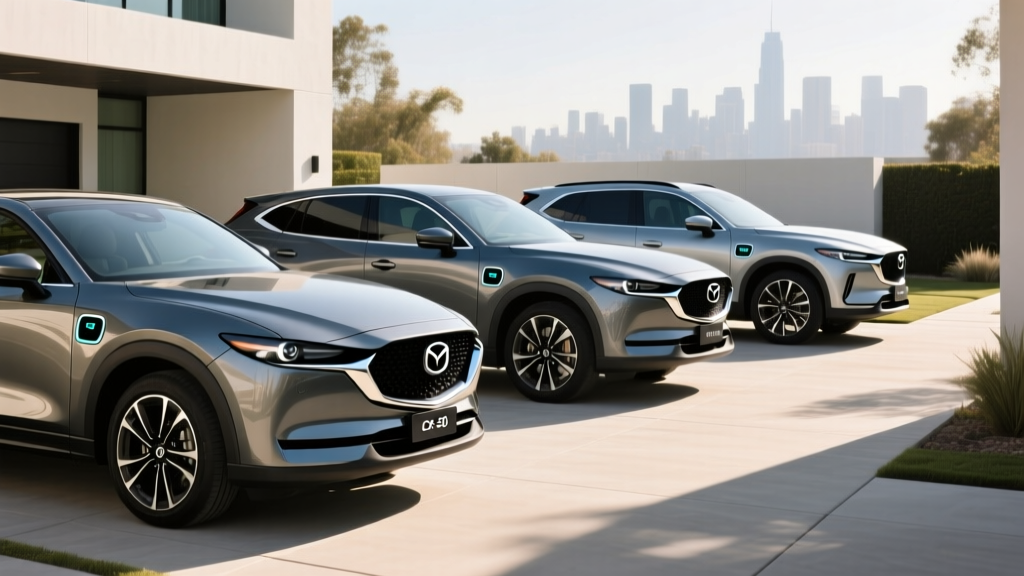
Mazda's path to electrification has been deliberate rather than aggressive. While competitors rushed to full EVs, Mazda focused on what many buyers actually want right now: hybrid efficiency without range anxiety. For 2026, the Mazda hybrid lineup spans three distinct vehicles — the CX-50 Hybrid (a conventional HEV), the CX-70 PHEV (a plug-in midsize), and the CX-90 PHEV (a three-row plug-in flagship). Each serves a different use case, and the distinctions between them matter enormously when you're spending $40,000 to $60,000.
This guide breaks down every Mazda hybrid and PHEV currently on sale with exact EPA figures, real-world expectations, powertrain specs, and tax-credit eligibility so you can match the right model to your driving pattern.
HEV vs PHEV: Which Mazda Hybrid Architecture Fits You?
Before comparing models, it's critical to understand the two fundamentally different powertrain architectures Mazda uses. Confusing these is the most common mistake hybrid shoppers make.
Conventional Hybrid (HEV) — CX-50 Hybrid
- No plug required. The battery charges via regenerative braking and the gasoline engine.
- Small battery (~1.1 kWh usable): provides electric assist, not standalone electric driving.
- How it saves fuel: the electric motor handles low-speed driving and supplements the engine under acceleration, reducing fuel consumption 20–35% versus a gas-only equivalent.
- Best for: drivers who can't charge at home or work, apartment dwellers, and those who want zero behavior change.
Plug-In Hybrid (PHEV) — CX-70 PHEV & CX-90 PHEV
- Plug-in capable. A larger battery charges from a wall outlet or public charger.
- 17.8 kWh battery (gross): enables 26–28 miles of pure electric driving before the gas engine engages.
- How it saves fuel: short commutes can be completed entirely on electricity. Once the battery depletes, it operates as a conventional hybrid.
- Best for: drivers with home Level 2 charging and commutes under 30 miles who still want road-trip flexibility.
The practical implication: if you can install a Level 2 home charger and your daily round-trip commute is under 28 miles, a PHEV lets you drive on electricity most days while keeping a gas engine for weekend trips. If you lack charging access, the CX-50 HEV delivers meaningful fuel savings with zero infrastructure requirements.
CX-50 Hybrid: Mazda's Toyota-Sourced Efficiency Play
The CX-50 Hybrid uses a powertrain sourced directly from Toyota — specifically the same 2.5-liter four-cylinder hybrid system found in the RAV4 Hybrid. This is not a Mazda-engineered hybrid; it's a proven Toyota drivetrain installed in a Mazda body. That matters for reliability expectations and real-world fuel economy.
| Specification | Value |
|---|---|
| Powertrain | 2.5L 4-cyl + 2 electric motors (AWD) |
| Combined Horsepower | 219 hp |
| EPA MPG (City / Hwy / Combined) | 38 / 35 / 37 MPG |
| Hybrid Battery | ~1.1 kWh (NiMH), sealed, no plug |
| 0–60 mph | ~7.3 seconds |
| Drivetrain | AWD (electronic rear motor) |
| Cargo Volume | 31.4 cu ft (rear seats up) |
| Starting MSRP | ~$35,395 (Preferred Hybrid) |
| Battery Warranty | 10 years / 150,000 miles (hybrid components) |
Real-World MPG: City vs Highway Reality
Like most hybrids, the CX-50 Hybrid delivers its best efficiency in stop-and-go city driving where regenerative braking and electric-only low-speed operation dominate. The EPA rates it at 38 city / 35 highway, which reflects this physics reality. In real-world mixed driving, owners typically report 34–38 MPG combined. On sustained highway trips at 75+ mph, expect 32–34 MPG as aerodynamic drag overwhelms the hybrid system's advantages. In cold weather (below 30°F), the engine runs more frequently for cabin heat, dropping city efficiency to roughly 33–35 MPG until the powertrain warms up.
Compared to the gas-only CX-50 (25 city / 31 highway with the turbo engine), the hybrid saves approximately 100–130 gallons of fuel per year at 12,000 miles annually — roughly $350–$450 in annual fuel savings depending on local gas prices.
CX-70 PHEV: The Two-Row Plug-In With Real Electric Range
The CX-70 PHEV occupies a unique position: a midsize two-row SUV with plug-in capability and a premium interior. It shares its powertrain and platform with the larger CX-90 PHEV but sacrifices the third row for a lower price and slightly better efficiency.
| Specification | Value |
|---|---|
| Powertrain | 2.5L 4-cyl + electric motor (8-speed auto, AWD) |
| Combined Horsepower | 323 hp / 369 lb-ft torque |
| EPA Electric-Only Range | 28 miles |
| EPA Combined Range (Electric + Gas) | ~430 miles total |
| EPA MPGe (Electric Mode) | ~56 MPGe |
| EPA MPG (Hybrid Mode, Battery Depleted) | ~25 combined |
| Battery Capacity | 17.8 kWh (gross) / ~14.2 kWh usable |
| Level 2 Charge Time (240V, 7.2 kW) | ~2.5 hours (0–100%) |
| DC Fast Charging | Not available |
| 0–60 mph | ~6.0 seconds |
| Starting MSRP | ~$54,400 (Preferred) |
| Battery Warranty | 8 years / 100,000 miles |
Electric-Only Range: What 28 Miles Actually Means
The EPA-rated 28 miles of electric-only range is achievable under moderate conditions: temperatures above 50°F, speeds under 55 mph, and gentle acceleration. On a cold morning at 25°F with the heater running, expect that range to contract to 20–22 miles. At sustained highway speeds of 70+ mph, electric range drops to roughly 22–24 miles even in mild weather because electric motors are less efficient at high speeds than in stop-and-go traffic.
For a daily commute of 20–25 miles round trip with home charging, the CX-70 PHEV will operate almost entirely on electricity on weekdays, with the gasoline engine engaging only for longer weekend drives. Owners who charge nightly and drive less than 28 miles daily report using gasoline only a handful of times per month.
Charging: Level 2 Only, No DC Fast Charge
The CX-70 PHEV accepts up to 7.2 kW on Level 2 (240V) charging, which replenishes the battery from empty to full in approximately 2.5 hours. A standard 120V household outlet (Level 1) charges at roughly 1.4 kW, requiring about 10–11 hours for a full charge — workable for overnight charging but slow. The CX-70 PHEV does not support DC fast charging, which is typical for PHEVs in this class. The battery is simply too small to benefit from DC fast-charging infrastructure, and the added cost and weight of DC hardware wouldn't justify the minimal time savings on a 17.8 kWh pack.
CX-90 PHEV: Three-Row Plug-In Flagship
The CX-90 PHEV is Mazda's most expensive and most capable electrified vehicle. It adds a third row to the CX-70 PHEV's powertrain, targeting families who need seven-passenger seating but want to commute on electricity during the week.
| Specification | Value |
|---|---|
| Powertrain | 2.5L 4-cyl + electric motor (8-speed auto, AWD) |
| Combined Horsepower | 323 hp / 369 lb-ft torque |
| EPA Electric-Only Range | 26 miles |
| EPA Combined Range (Electric + Gas) | ~420 miles total |
| EPA MPGe (Electric Mode) | ~56 MPGe |
| EPA MPG (Hybrid Mode, Battery Depleted) | ~25 combined |
| Battery Capacity | 17.8 kWh (gross) / ~14.2 kWh usable |
| Level 2 Charge Time (240V, 7.2 kW) | ~2.5 hours (0–100%) |
| DC Fast Charging | Not available |
| 0–60 mph | ~6.3 seconds |
| Cargo Volume (Behind 3rd Row) | 14.9 cu ft |
| Starting MSRP | ~$51,400 (Preferred) |
| Battery Warranty | 8 years / 100,000 miles |
The CX-90 PHEV sacrifices 2 miles of electric range compared to the CX-70 PHEV due to its greater weight (approximately 400 lbs heavier). The powertrain is identical — 323 combined horsepower — but the extra mass slightly reduces both electric range and hybrid-mode fuel economy. For families who need the third row regularly, this is an acceptable trade-off. For two-row shoppers, the CX-70 PHEV offers marginally better efficiency at a lower price.
Side-by-Side MPG and Range Comparison
| Model | Type | City MPG | Hwy MPG | Combined | EV Range | MPGe (EV) |
|---|---|---|---|---|---|---|
| CX-50 Hybrid | HEV | 38 | 35 | 37 | N/A | N/A |
| CX-70 PHEV | PHEV | 25 (hybrid mode) | 28 mi | 56 | ||
| CX-90 PHEV | PHEV | 25 (hybrid mode) | 26 mi | 56 | ||
Source: EPA estimates via fueleconomy.gov. Real-world results vary with temperature, terrain, and driving style. PHEV MPG figures reflect charge-sustaining (hybrid) mode after electric range is depleted.
Tax Credit Eligibility: What Mazda Hybrids Actually Qualify For
Federal tax credit rules under IRS §30D have become increasingly complex, and eligibility depends on battery sourcing, vehicle MSRP, buyer income, and final assembly location. Here's where each Mazda hybrid stands for 2026:
Federal Tax Credit Summary
- CX-50 Hybrid (HEV): Not eligible for the §30D new clean vehicle credit. Conventional hybrids without plug-in capability do not qualify.
- CX-70 PHEV: Eligibility is limited. The §30D credit requires battery components and critical minerals to meet domestic-sourcing thresholds that phase in annually. As of 2026, Mazda's battery supply chain has not fully met these requirements. Check the latest eligible vehicle list at fueleconomy.gov before purchasing. Even if eligible, the credit may be reduced from the maximum $7,500.
- CX-90 PHEV: Same sourcing restrictions apply as the CX-70 PHEV. Both share the same battery pack and supply chain.
Income caps (2026): Modified AGI cannot exceed $150,000 (single), $225,000 (head of household), or $300,000 (joint). MSRP caps: SUVs must not exceed $80,000. All Mazda PHEV trims fall under this cap.
Source: IRS §30D guidance. Always consult a tax professional before relying on credit eligibility.
Some states offer additional rebates for PHEVs (California's CVRP, for example, offers up to $2,000 for eligible PHEVs depending on income). Check your state energy office or DMV for current programs.
Hybrid Battery Longevity and Replacement Costs
Battery Warranty Coverage
- CX-50 Hybrid: 10 years / 150,000 miles on hybrid battery and components (Toyota-sourced, backed by Mazda)
- CX-70 PHEV / CX-90 PHEV: 8 years / 100,000 miles on high-voltage battery
- Warranty threshold: Coverage typically applies if battery capacity drops below 60–70% of original capacity (varies by model; check your warranty booklet)
Hybrid battery longevity is one of the most over-worried aspects of hybrid ownership. The Toyota-sourced hybrid system in the CX-50 has an extensive real-world track record — RAV4 Hybrids using the same architecture have demonstrated battery lifespans exceeding 150,000–200,000 miles with minimal degradation. The NiMH chemistry is less energy-dense than lithium-ion but extremely durable under the shallow charge-discharge cycles that hybrids use (the battery never fully charges or fully depletes, which extends cycle life significantly).
For the CX-70 and CX-90 PHEV lithium-ion batteries, the larger capacity means deeper daily cycling, but Mazda's thermal management system and conservative usable-capacity buffer (roughly 3.6 kWh held in reserve) protect against accelerated degradation. Based on similar PHEV systems from competing manufacturers, expect 8–12% capacity loss over 100,000 miles under normal use.
Replacement costs if out of warranty:
- CX-50 Hybrid battery: $2,500–$4,000 (NiMH pack, Toyota-sourced, widely available)
- CX-70/CX-90 PHEV battery: $6,000–$9,000 (lithium-ion, higher capacity, Mazda-specific)
For context, the vast majority of hybrid owners never replace the battery within the vehicle's useful life. The warranty coverage exceeds the average ownership period for most buyers.
Pricing and Trim Breakdown
| Model | Trim | MSRP (incl. destination) |
|---|---|---|
| CX-50 Hybrid | Preferred | $35,395 |
| CX-50 Hybrid | Premium | $39,745 |
| CX-50 Hybrid | Premium Plus | $42,395 |
| CX-70 PHEV | Preferred | $54,400 |
| CX-70 PHEV | Premium | $58,150 |
| CX-70 PHEV | Premium Plus | $62,100 |
| CX-90 PHEV | Preferred | $51,400 |
| CX-90 PHEV | Premium | $56,250 |
| CX-90 PHEV | Premium Plus | $60,500 |
The CX-50 Hybrid offers the lowest barrier to entry, starting under $36,000 with standard AWD and competitive fuel economy. The PHEV models command a significant premium — roughly $15,000–$20,000 more than the CX-50 Hybrid — which must be justified by your ability to charge at home and your daily driving distance. If you can't charge at home, a PHEV operates as a heavy, expensive hybrid with 25 MPG, negating much of its efficiency advantage.
Who Should Choose Each Mazda Hybrid?
Choose the CX-50 Hybrid if:
- You live in an apartment or lack home charging access
- Your daily driving is 30+ miles and you want consistent fuel savings
- You want proven Toyota hybrid reliability in a Mazda package
- Your budget is under $43,000
- You don't want to change any driving or fueling habits
Choose the CX-70 PHEV if:
- You have a garage or dedicated parking spot with 240V outlet access
- Your daily commute is under 28 miles round trip
- You want a premium two-row SUV with strong acceleration (323 hp)
- You take occasional long road trips and don't want EV range anxiety
- You want to reduce gasoline consumption by 60–80% on daily driving
Choose the CX-90 PHEV if:
- You need three-row seating for family or carpooling
- You meet the same charging and commute criteria as the CX-70 PHEV
- You're willing to accept 2 fewer miles of electric range for the extra seating
- You value Mazda's premium interior over competitors like the Toyota Highlander Hybrid
Choose a Full EV Instead if:
- Your daily driving is consistently under 200 miles
- You have reliable home Level 2 charging
- You want zero gasoline purchases and minimal maintenance
- Models like the Hyundai Ioniq 5, Tesla Model Y, or Kia EV9 better match your space and range needs
Mazda Hybrid Lineup — Pros
- CX-50 Hybrid uses proven Toyota powertrain with exceptional reliability history
- PHEV models deliver usable 26–28 mi electric range for real commutes
- Premium interiors that compete with luxury brands at mainstream prices
- Standard AWD across all hybrid models
- 323 hp in PHEV models provides genuinely quick acceleration
- No range anxiety — gas engine provides full flexibility for road trips
Mazda Hybrid Lineup — Cons
- PHEV fuel economy in hybrid mode (25 MPG) trails non-plug-in competitors like the Toyota Highlander Hybrid (35 MPG)
- No DC fast charging on PHEV models
- Federal tax credit eligibility uncertain due to battery sourcing rules
- CX-90 third row is tight for adults — better suited to children
- PHEV premium of $15,000+ over CX-50 Hybrid takes years to recoup in fuel savings alone
- No fully electric Mazda SUV yet for buyers ready to go all-in on EVs
Frequently Asked Questions
How many MPG does the Mazda CX-50 Hybrid get?
The EPA rates the CX-50 Hybrid at 38 city / 35 highway / 37 combined MPG. In real-world driving, most owners report 34–38 MPG combined, with city-heavy driving yielding the best results. Highway-only driving at speeds above 70 mph will return closer to 32–34 MPG.
How far can the CX-70 PHEV and CX-90 PHEV go on electric only?
The EPA rates the CX-70 PHEV at 28 miles of electric-only range and the CX-90 PHEV at 26 miles. Real-world range varies: expect 20–22 miles in cold weather (below 30°F) and 22–24 miles at sustained highway speeds. For city commutes in mild weather, the EPA estimates are achievable.
Hybrid vs PHEV vs EV — which Mazda is right for me?
If you can't charge at home, the CX-50 Hybrid (HEV) is your best option — it requires zero infrastructure changes. If you can install a Level 2 charger and commute under 28 miles daily, the PHEV models let you drive on electricity most days while keeping gas-engine flexibility. If your commute is short, you have home charging, and you're ready to eliminate gasoline entirely, a full EV like the Ioniq 5 or Model Y may be a better long-term fit, though Mazda doesn't currently offer a comparable EV in the US market.
Is the Mazda hybrid system reliable, and what does battery replacement cost?
The CX-50 Hybrid's Toyota-sourced powertrain has an outstanding reliability record — the same system in the RAV4 Hybrid has proven durable to 200,000+ miles. The PHEV battery is newer but uses conservative charge buffers that should support long life. Hybrid battery replacement costs range from $2,500–$4,000 (CX-50) to $6,000–$9,000 (PHEV models), though most owners never need a replacement within the 8–10 year warranty period.
Does any Mazda hybrid qualify for the federal tax credit?
The CX-50 Hybrid does not qualify — conventional HEVs are ineligible for the §30D credit. The CX-70 PHEV and CX-90 PHEV may qualify for a partial or full credit depending on battery-sourcing compliance, which changes annually. As of early 2026, check the current eligible vehicle list at fueleconomy.gov. Buyer income caps ($150K single / $300K joint) and the $80,000 SUV MSRP cap also apply.
Can I DC fast charge the Mazda PHEV models?
No. Neither the CX-70 PHEV nor CX-90 PHEV supports DC fast charging. They charge at up to 7.2 kW on Level 2 (240V), reaching a full charge in approximately 2.5 hours. This is standard for PHEVs — the battery capacity is too small to justify the cost and weight of DC fast-charging hardware.
How long does it take to charge the Mazda PHEV at home?
On a 240V Level 2 charger at 7.2 kW, a full charge takes approximately 2.5 hours. On a standard 120V household outlet (Level 1, ~1.4 kW), a full charge takes 10–11 hours. Most PHEV owners install a Level 2 charger and charge overnight, waking to a full battery every morning.
Safety data sourced from IIHS and NHTSA. Pricing and specifications reflect 2026 model year as published by Mazda North American Operations. Always verify current pricing and credit eligibility before purchase.