Quick Verdict: The CX-90 PHEV Bridges Two Worlds
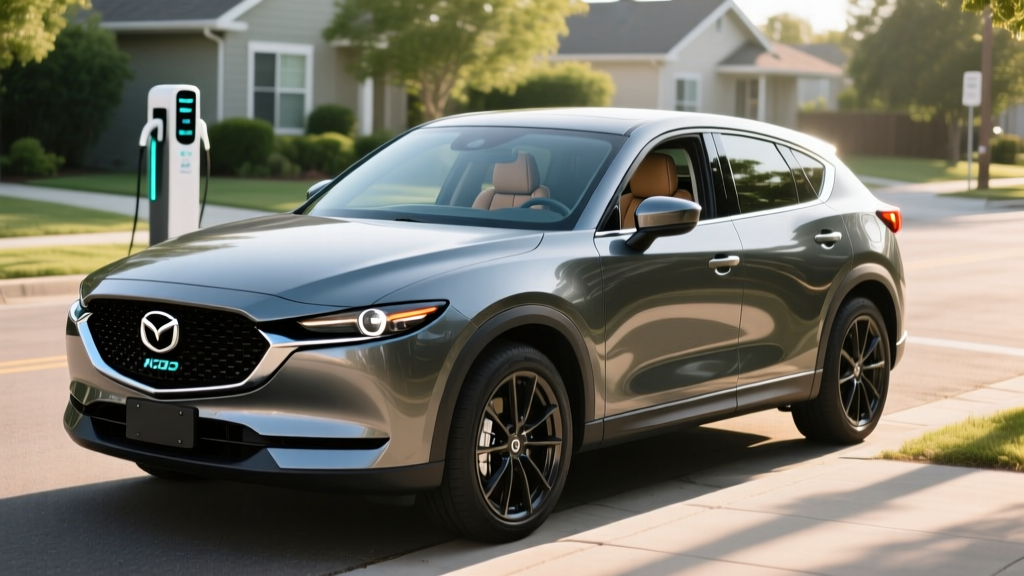
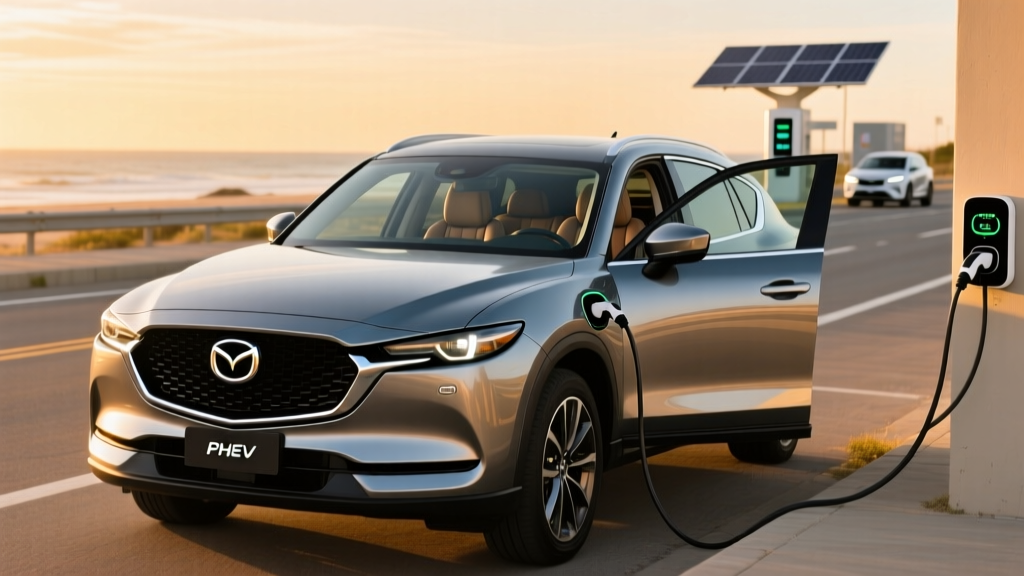
The Mazda CX-90 PHEV occupies a narrow but compelling space in the three-row SUV market. It pairs a 2.5-liter inline-four with an electric motor for a combined 327 horsepower, delivers 26 miles of electric-only range, and offers the driving dynamics Mazda is known for — all without the range anxiety of a full battery-electric vehicle. For families who can charge at home and mostly drive under 30 miles daily, it functions as an EV most days and a capable gas SUV on road trips.
But with a starting MSRP near $50,000 and a battery too small for DC fast charging, the CX-90 PHEV demands a specific buyer profile to justify its premium over the conventional turbo-six CX-90. This guide breaks down every number that matters.
HEV vs PHEV: What the CX-90 Actually Is
Before diving into specs, it's critical to distinguish what the CX-90 PHEV is — and what it isn't.
Conventional Hybrid (HEV)
- No plug — battery recharges via regenerative braking and the engine
- Small battery (~1-2 kWh)
- Electric motor assists the engine; no meaningful electric-only driving
- Example: Toyota Highlander Hybrid
Plug-In Hybrid (PHEV) — CX-90
- Plugs in to charge — Level 1 (120V) or Level 2 (240V)
- Larger battery (17.8 kWh) enables electric-only driving
- Can drive 26 miles without using any gasoline
- Once battery depletes, operates as a conventional hybrid
The CX-90 is offered in both flavors: the conventional turbo-six mild-hybrid (labeled CX-90) and the plug-in hybrid (labeled CX-90 PHEV). This article focuses on the PHEV variant.
Electric-Only Range and Total Driving Range
EPA Electric-Only Range: 26 miles
Real-World Expectation: 20–24 miles in mixed driving; 18–20 miles at sustained highway speeds or in cold weather (below 40°F)
Total Combined Range (Electric + Gas): Approximately 430 miles with a full tank and full battery
The 26-mile EPA rating is modest compared to rivals like the Toyota RAV4 Prime (42 miles) or the Kia Sorento PHEV (32 miles). However, the CX-90 is a larger, heavier three-row SUV. For daily commutes under 25 miles round-trip, the electric range is sufficient to avoid burning gasoline on most weekdays. On longer trips, the 2.5-liter engine takes over seamlessly — you'll never be stranded waiting for a charger.
The 17.8 kWh battery pack is mounted low in the chassis, preserving interior cargo space while contributing to the CX-90's composed handling. Mazda uses an NMC (nickel-manganese-cobalt) chemistry optimized for cycle life rather than maximum energy density.
Fuel Economy: EPA Numbers vs Real-World MPG
| Metric | EPA Rating | Real-World Expectation |
|---|---|---|
| Combined MPGe (electric + gas) | 56 MPGe | 50–55 MPGe with regular charging |
| Combined MPG (gas only, battery depleted) | 25 MPG | 23–26 MPG depending on driving style |
| City MPG (gas only) | 24 MPG | 25–27 MPG (regen helps in stop-and-go) |
| Highway MPG (gas only) | 27 MPG | 24–26 MPG at 70+ mph |
Once the battery is depleted, the CX-90 PHEV operates as a conventional hybrid. The 25 MPG combined figure is respectable for a 5,000+ lb three-row SUV but trails the four-cylinder Toyota Grand Highlander Hybrid (36 MPG combined). The trade-off: the CX-90 delivers substantially more power and a more engaging drive.
Real-world note: Owners who charge nightly at home and drive under 26 miles daily may go weeks without visiting a gas station. Those who rarely charge will see fuel bills closer to a conventional turbo-six SUV, negating much of the PHEV advantage.
Powertrain, Performance, and Charging Specs
| Specification | 2026 Mazda CX-90 PHEV |
|---|---|
| Engine | 2.5L inline-4 + electric motor |
| Combined Horsepower | 327 HP |
| Combined Torque | 369 lb-ft |
| 0–60 mph | ~5.9 seconds |
| Battery Capacity | 17.8 kWh (NMC lithium-ion) |
| Electric-Only Range | 26 miles (EPA) |
| Level 1 Charging (120V) | ~11 hours (0–100%) |
| Level 2 Charging (240V) | ~3.5 hours (0–100%) |
| DC Fast Charging | Not supported |
| Charge Port | J1772 (Level 2) |
| Drivetrain | All-wheel drive (standard) |
| Towing Capacity | 3,500 lbs |
| Cargo Volume (behind 3rd row) | 14.9 cu ft |
| Cargo Volume (3rd row folded) | 40.8 cu ft |
The CX-90 PHEV cannot DC fast charge. This is typical for PHEVs with batteries under 20 kWh — the added cost and weight of DC hardware isn't justified for a pack this size. You'll charge exclusively at home or at Level 2 public stations. A full Level 2 charge in roughly 3.5 hours means plugging in when you arrive home yields a full battery by morning.
The 327 HP output makes the CX-90 PHEV one of the most powerful PHEVs in its class. The electric motor provides instant torque off the line, and the inline-four engine is well-insulated from the cabin. Mazda's 8-speed automatic transmission (no CVT here) contributes to a direct, non-rubbery acceleration feel that sets it apart from many hybrid competitors.
Pricing, Trims, and Tax Credit Eligibility
The 2026 CX-90 PHEV starts at approximately $49,945 MSRP (including destination) for the Preferred trim. Higher trims push past $58,000:
- Preferred: ~$49,945
- Premium: ~$53,950
- Premium Plus: ~$57,450
Federal §30D Tax Credit Eligibility (2026 Rules)
- Credit Amount: Up to $3,750 (partial credit — battery sourcing requirements limit the full $7,500)
- MSRP Cap: SUVs must be under $80,000 — the CX-90 qualifies
- Buyer Income Cap: AGI must not exceed $150,000 (single) / $300,000 (joint)
- Battery Sourcing: Critical mineral and battery component requirements phase in annually; check IRS qualified vehicle list for current-year eligibility
- Point-of-Sale Transfer: Available — you can transfer the credit to the dealer for an upfront price reduction
Critical caveat: PHEV tax credit eligibility depends on battery capacity (minimum 7 kWh — the CX-90's 17.8 kWh qualifies) and evolving battery-sourcing rules. The credit amount may be $3,750 or $7,500 depending on whether the vehicle meets critical-mineral and component sourcing thresholds for the 2026 tax year. Always verify against the IRS qualified manufacturer list and consult a tax professional before relying on a specific credit amount.
Battery Warranty, Reliability, and Replacement Cost
Hybrid/PHEV Battery Warranty: 8 years / 100,000 miles (whichever comes first)
Warranty Coverage Threshold: Battery must retain at least 70% of original capacity during the warranty period
Powertrain Warranty: 5 years / 60,000 miles
Estimated Battery Replacement Cost (out of warranty): $8,000–$12,000 including labor
Mazda's 8-year/100,000-mile hybrid battery warranty aligns with the industry standard set by federal emissions warranty requirements. In practice, PHEV batteries from major manufacturers have demonstrated strong longevity. NMC cells in PHEV applications experience less stress than in full EVs because the battery operates within a narrower state-of-charge window — the vehicle's software prevents full 0% or 100% usage, preserving cell health.
IIHS has rated the CX-90 favorably in crash testing, and Mazda's overall brand reliability ratings have trended upward in recent J.D. Power and Consumer Reports assessments. The inline-four engine is a proven design shared across Mazda's lineup, reducing the risk of powertrain-specific failures.
For buyers concerned about long-term cost: the battery is unlikely to need replacement within typical first-ownership periods (5–7 years). Out-of-warranty replacement, while expensive, is comparable to a major transmission repair on a conventional vehicle and is rarely needed before 150,000+ miles.
Who Should Choose the CX-90 PHEV?
Pros
- 327 HP delivers genuinely quick, engaging acceleration
- Electric-only range covers most daily commutes when charged nightly
- Premium interior materials rival European luxury SUVs
- Standard AWD and 3,500-lb towing capability
- No range anxiety — gas engine covers long trips seamlessly
- Eligible for partial federal tax credit
Cons
- 26-mile electric range trails RAV4 Prime (42 mi) and Sorento PHEV (32 mi)
- No DC fast charging capability
- Third row is tight for adults on longer trips
- Fuel economy once depleted (25 MPG) trails dedicated hybrids
- Premium pricing — starts near $50K before options
- Must charge regularly to realize PHEV value
Choose the CX-90 PHEV If:
- You can charge at home (Level 2) every night
- Your daily driving is under 30 miles round-trip
- You need three rows but want EV-like daily driving
- You value driving dynamics and interior quality over maximum efficiency
- You take road trips where EV charging infrastructure is unreliable
Choose a Full EV (e.g., Kia EV9, Tesla Model X) If:
- You want zero gasoline use and 250+ miles of range
- You have reliable home and destination charging
- You want lower per-mile fueling costs and less maintenance
Choose a Conventional Hybrid (e.g., Grand Highlander Hybrid) If:
- You cannot charge at home
- You prioritize maximum MPG (36+ combined) over electric-only driving
- You want a lower purchase price
Charging Setup: What You Need at Home
To get meaningful value from the CX-90 PHEV, a Level 2 home charger is strongly recommended. Here's what to budget:
| Item | Estimated Cost |
|---|---|
| Level 2 Charger (240V, 32A) | $300–$600 |
| Electrician — wiring and outlet/install | $500–$1,500 |
| Electrical permit | $50–$200 |
| Panel upgrade (if needed, 200A service) | $1,500–$3,000 |
| Total (typical, no panel upgrade) | $850–$2,300 |
At 3.5 hours for a full Level 2 charge, plugging in when you get home ensures a full battery every morning. Level 1 (standard 120V outlet) works but takes roughly 11 hours — feasible if you park for extended periods but inconvenient for daily top-ups. Always consult a licensed electrician for final installation specifications; your home's panel capacity and wiring distance affect cost.
Frequently Asked Questions
How many MPG does the CX-90 PHEV get?
The EPA rates the CX-90 PHEV at 56 MPGe when using both electric and gas power, and 25 MPG combined once the battery is depleted. In real-world driving with regular charging, owners typically see 50–55 MPGe. Without charging, expect 23–26 MPG — similar to a conventional turbo-six SUV.
How far can the CX-90 PHEV go on electric only?
The EPA rates it at 26 miles electric-only. In real-world conditions, expect 20–24 miles in moderate weather and mixed driving. Highway speeds above 65 mph and temperatures below 40°F will reduce this to approximately 18–20 miles.
Does the CX-90 PHEV qualify for a tax credit?
Yes, it qualifies for a partial federal tax credit under §30D — typically $3,750 depending on current-year battery sourcing rules. Eligibility also depends on your income (under $150K single / $300K joint) and the vehicle's MSRP (under $80K for SUVs — the CX-90 qualifies). The credit can be transferred to the dealer at point of sale for an upfront discount. Verify current eligibility on the IRS qualified vehicles page.
Is the CX-90 PHEV reliable? What about battery replacement cost?
Mazda's PHEV powertrain is well-proven, and the hybrid battery carries an 8-year/100,000-mile warranty. Out-of-warranty battery replacement is estimated at $8,000–$12,000, but PHEV batteries typically last 150,000+ miles before significant degradation. The inline-four engine is a shared, proven design across Mazda's lineup.
Hybrid vs PHEV vs EV — which should I choose?
If you can charge at home and drive under 30 miles daily, a PHEV like the CX-90 gives you EV-like commuting with gas-car flexibility for road trips. If you can't charge at home, a conventional hybrid (HEV) is more practical — you'll never plug in. If you have reliable charging access and want zero gas use, a full EV (like the Kia EV9) offers lower running costs and 250+ miles of range but requires planning for long trips.
Can the CX-90 PHEV fast charge on road trips?
No. The CX-90 PHEV does not support DC fast charging. This is standard for PHEVs with sub-20 kWh batteries. You'll charge exclusively via Level 1 (120V) or Level 2 (240V). On road trips, the gas engine handles all driving once the initial 26-mile electric range is used.