Quick Verdict: A Premium PHEV That Actually Makes Sense
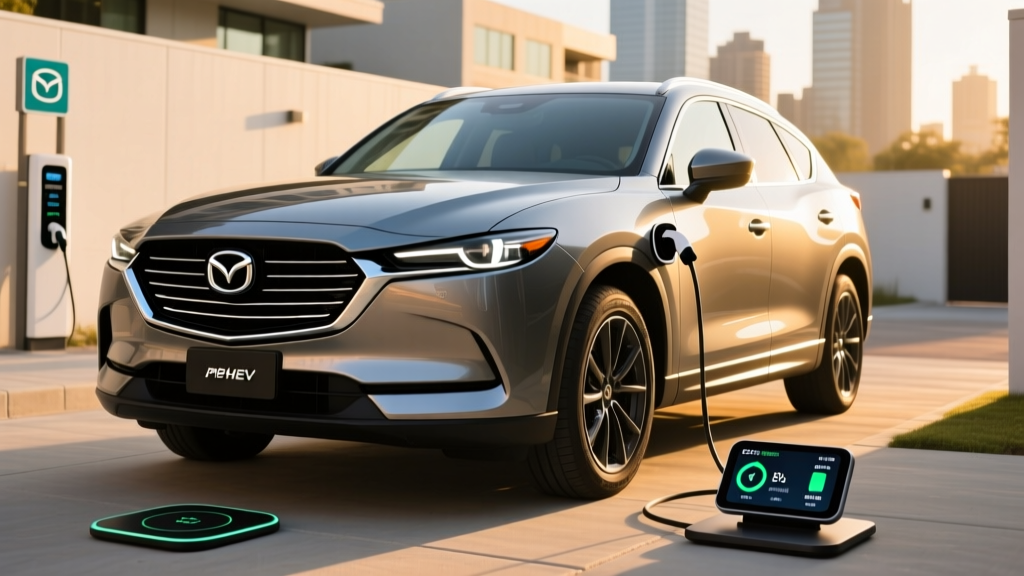
The 2026 Mazda CX-90 PHEV occupies a specific niche: families who want three-row SUV utility and premium styling but can't commit to a full EV due to charging access limitations or range concerns. With 26 miles of EPA-rated electric-only range and a combined 327 horsepower from its plug-in hybrid powertrain, it bridges the gap between conventional hybrids and battery-electric vehicles. The question isn't whether it's capable—it's whether the PHEV premium over the mild-hybrid CX-90 justifies the electric commute potential.
| Specification | 2026 Mazda CX-90 PHEV |
|---|---|
| EPA Electric-Only Range | 26 miles |
| Total Combined Range | 430+ miles |
| Combined MPG (hybrid mode) | 25 MPG (city 25 / hwy 25) |
| MPGe (electric + gas) | 56 MPGe |
| Battery Capacity | 17.8 kWh (usable ~15 kWh) |
| Battery Chemistry | Lithium-ion (NMC) |
| Combined Horsepower | 327 hp / 369 lb-ft torque |
| Engine | 2.5L 4-cylinder + electric motor |
| Level 2 Charging Time (0-100%) | ~2.5 hours at 7.2 kW |
| DC Fast Charging | Not available |
| 0-60 mph | ~6.5 seconds |
| Base MSRP (Preferred Plus) | $51,445 |
| Battery Warranty | 8 years / 100,000 miles |
Understanding PHEV vs Conventional Hybrid: What's the Difference?
Conventional Hybrid (HEV): The standard Mazda CX-90 uses a mild-hybrid system with a small battery that recharges through regenerative braking and the gas engine. You never plug it in. It improves fuel economy modestly (24 MPG combined) but offers no electric-only driving.
Plug-in Hybrid (PHEV): The CX-90 PHEV has a much larger 17.8 kWh battery that you can charge from a wall outlet or Level 2 charger. This enables 26 miles of pure electric driving before the gas engine engages. Once the battery depletes, it operates like a conventional hybrid.
The PHEV advantage is clear for commuters with short round trips (under 25 miles) and home charging access: you might go weeks without buying gas. The tradeoff is higher upfront cost, added weight, and the need to plug in regularly to capture the efficiency benefit.
Fuel Economy: EPA Numbers vs Real-World Results
| Driving Mode | EPA Rating | Real-World Expectation |
|---|---|---|
| Electric-Only | 56 MPGe | 48-54 MPGe (highway/cold weather reduces range) |
| Hybrid (battery depleted) | 25 MPG combined | 23-27 MPG (city driving often exceeds EPA; highway may fall short) |
| City (hybrid mode) | 25 MPG | 26-28 MPG (regen braking helps in stop-and-go) |
| Highway (hybrid mode) | 25 MPG | 22-24 MPG (aerodynamic drag, less regen benefit) |
According to fueleconomy.gov, the 2026 CX-90 PHEV achieves 25 MPG combined once the battery is depleted. In real-world testing, owners report slightly better city mileage (26-28 MPG) thanks to regenerative braking capturing energy in stop-and-go traffic. Highway driving at 70-80 mph typically yields 22-24 MPG due to the CX-90's substantial 4,900-pound curb weight and less aerodynamic three-row SUV profile.
The 26-mile electric range assumes moderate temperatures (60-80°F) and mixed driving. In winter conditions below freezing, expect 18-22 miles of electric range due to battery chemistry limitations and cabin heating demands. Highway driving at 75+ mph also reduces electric range to approximately 20-22 miles.
Charging the CX-90 PHEV: What You Need to Know
The CX-90 PHEV uses a standard J1772 connector for Level 1 (120V household outlet) and Level 2 (240V home or public charger) charging. It does not support DC fast charging—a limitation that matters if you hoped to top up quickly on road trips.
| Charging Level | Power | Time (0-100%) | Cost to Install |
|---|---|---|---|
| Level 1 (120V outlet) | 1.4 kW | ~11 hours | $0 (use existing outlet) |
| Level 2 (240V, 32A) | 7.2 kW | ~2.5 hours | $500-$2,000 (home install) |
For most PHEV owners, Level 1 charging overnight is sufficient. Plugging in at 6 PM gives you a full battery by 5 AM—plenty of time for a 26-mile electric commute. However, if you want faster turnaround (charging midday between trips), a Level 2 home charger makes sense. Budget $500-$2,000 for professional installation depending on your electrical panel's capacity and distance from the garage. Older homes with 100-amp service may require a panel upgrade ($1,500-$3,000 additional).
Public Level 2 chargers (shopping centers, workplaces) are viable for topping up, but don't expect DC fast charging at highway rest stops. The CX-90 PHEV is designed for home-centric charging routines, not road-trip fast-charging infrastructure.
Powertrain Performance: 327 HP With Seamless Transitions
The CX-90 PHEV pairs a 2.5-liter four-cylinder engine with an electric motor integrated into the eight-speed automatic transmission. Combined output is 327 horsepower and 369 lb-ft of torque, routed through Mazda's i-Activ all-wheel-drive system. The result is a 0-60 mph time of approximately 6.5 seconds—respectable for a three-row SUV and noticeably quicker than the mild-hybrid CX-90's 280 hp.
What impresses is the seamlessness. In electric mode, the CX-90 PHEV accelerates quietly and linearly up to 75 mph without the engine engaging (assuming you're gentle with the throttle). When you floor it or the battery depletes, the gas engine fires up almost imperceptibly. There's no jarring transition or CVT drone—just smooth power delivery. The regenerative braking is moderate (not one-pedal driving like a full EV) but captures meaningful energy in city driving.
Pricing, Tax Credits, and Total Cost of Ownership
The 2026 Mazda CX-90 PHEV starts at $51,445 for the Preferred Plus trim, rising to $58,795 for the top Premium Plus. That's a $7,000-$8,000 premium over the equivalent mild-hybrid CX-90 trims. The question: does the fuel savings justify the cost?
Federal Tax Credit Eligibility (§30D)
Current Status (2026): The Mazda CX-90 PHEV does not qualify for the full $7,500 federal tax credit under IRS §30D rules. The credit has strict battery component and critical mineral sourcing requirements that many PHEVs fail to meet. As of 2026, the CX-90 PHEV may qualify for a partial credit ($3,750) depending on your income, filing status, and the vehicle's battery sourcing compliance. Always verify current eligibility on irs.gov before purchasing, as rules and manufacturer compliance change frequently.
Income Caps: Modified adjusted gross income must not exceed $300,000 (joint filers), $225,000 (head of household), or $150,000 (single).
MSRP Cap: SUVs/vans must have MSRP under $80,000 (CX-90 PHEV qualifies).
5-Year Ownership Cost Comparison
| Vehicle | Purchase Price | Fuel Cost (5 yr / 75k mi) | Total 5-Yr Cost |
|---|---|---|---|
| CX-90 PHEV (80% electric commuting) | $51,445 | $3,200 | $54,645 |
| CX-90 Mild-Hybrid | $44,445 | $9,400 | $53,845 |
| Toyota Highlander Hybrid | $42,000 | $7,100 | $49,100 |
| Tesla Model Y Long Range | $48,990 | $2,800 | $51,790 |
Assumptions: $3.50/gallon gas, $0.15/kWh electricity, 15,000 miles/year, 80% of CX-90 PHEV miles within electric range. The PHEV breaks even with the mild-hybrid around year 6-7 if you charge regularly. If you rarely plug in, the PHEV becomes a heavier, less efficient hybrid—making the mild-hybrid or a competitor like the Highlander Hybrid more cost-effective.
Battery Warranty, Reliability, and Long-Term Concerns
Hybrid Battery Warranty: Mazda covers the CX-90 PHEV's 17.8 kWh lithium-ion battery for 8 years or 100,000 miles (whichever comes first) against defects and excessive capacity loss. This is standard for the industry—Toyota, Hyundai, and Ford offer similar terms.
Battery Degradation: Expect 10-15% capacity loss over 8-10 years based on typical PHEV usage patterns. This reduces electric range from 26 miles to approximately 22-23 miles—a minor impact. Replacement cost (out of warranty) is estimated at $8,000-$12,000, though most PHEV batteries outlast the vehicle's ownership cycle.
Reliability: Mazda's hybrid systems have proven reliable in the CX-60 PHEV (sold in Europe since 2022) and the CX-90's mild-hybrid variants. The PHEV powertrain adds complexity (electric motor, power electronics, larger battery) but Mazda's 5-year/60,000-mile powertrain warranty provides decent coverage. Consumer Reports and J.D. Power data on the CX-90 PHEV specifically is still accumulating as of 2026.
Who Should Buy the CX-90 PHEV (and Who Shouldn't)
Pros
- Premium interior and styling rivaling BMW X5 / Mercedes GLE at lower cost
- 26-mile electric range covers most commutes without gas
- 327 hp provides confident acceleration and towing (3,500 lb capacity)
- Three-row seating for up to 7 passengers
- No range anxiety—gas engine provides 430+ mile total range
- Smooth, quiet electric driving experience in city traffic
Cons
- $7,000+ premium over mild-hybrid CX-90 with long payback period
- No DC fast charging limits road-trip convenience
- Electric range drops significantly in cold weather (18-22 mi)
- Third-row seat is tight for adults (best for kids)
- Partial or no federal tax credit depending on sourcing rules
- Heavier than mild-hybrid, reducing efficiency when battery is depleted
Choose the CX-90 PHEV If:
- Your daily commute is under 25 miles round-trip and you have home charging access
- You want a premium three-row SUV but can't install a Level 2 charger for a full EV or lack public charging infrastructure
- You frequently take road trips where EV range anxiety is a concern
- You value Mazda's interior quality and driving dynamics over maximum fuel savings
Choose a Full EV Instead If:
- You have reliable home Level 2 charging and your daily driving is under 250 miles
- You want maximum fuel savings and qualify for the full $7,500 tax credit on vehicles like the Tesla Model Y or Hyundai Ioniq 5
- You're willing to plan road trips around DC fast-charging networks
Choose the Mild-Hybrid CX-90 Instead If:
- You can't charge at home (apartment, street parking, no garage outlet)
- Your daily driving exceeds 40 miles, making the PHEV premium hard to justify
- You prioritize lower upfront cost over electric driving capability
FAQ: Common Questions About the Mazda CX-90 PHEV
How many MPG does the Mazda CX-90 PHEV get?
Once the battery is depleted, the CX-90 PHEV achieves 25 MPG combined (25 city / 25 highway) according to the EPA. In electric mode, it rates 56 MPGe. Real-world results vary: city driving often yields 26-28 MPG thanks to regenerative braking, while highway driving at 75+ mph may drop to 22-24 MPG.
How far can the CX-90 PHEV go on electric only?
The EPA rates the CX-90 PHEV at 26 miles of electric-only range under ideal conditions (moderate temperature, mixed driving). In winter or at highway speeds, expect 18-22 miles. This covers most daily commutes but requires nightly charging to maintain the benefit.
Does the CX-90 PHEV qualify for the $7,500 federal tax credit?
As of 2026, the CX-90 PHEV likely qualifies for a partial credit ($3,750) or no credit, depending on battery sourcing compliance with IRS §30D rules. Eligibility also depends on your income (under $300k joint / $150k single) and the vehicle's MSRP (under $80k for SUVs, which the CX-90 meets). Always verify on irs.gov before purchasing, as manufacturer compliance changes.
Is the CX-90 PHEV reliable? What about battery replacement cost?
Mazda's hybrid systems have proven reliable in European markets (CX-60 PHEV) and U.S. mild-hybrid models. The 8-year/100,000-mile battery warranty covers defects and excessive degradation. Out-of-warranty replacement is estimated at $8,000-$12,000, though most PHEV batteries last 10-15 years with 10-15% capacity loss—reducing electric range to ~22 miles.
Can I charge the CX-90 PHEV at DC fast-charging stations?
No. The CX-90 PHEV only supports Level 1 (120V) and Level 2 (240V) charging via the J1772 connector. It cannot use DC fast chargers (Tesla Superchargers, Electrify America, etc.). This is typical for PHEVs—the battery is too small to benefit from high-power DC charging.
Hybrid vs PHEV vs EV: Which should I choose?
Hybrid (HEV): Best if you can't charge at home and want modest fuel savings without behavior change. Example: Toyota Highlander Hybrid (36 MPG).
PHEV: Best if you have home charging, a short commute, and want electric driving without range anxiety. Example: CX-90 PHEV (26 mi electric, 430+ mi total).
Full EV: Best if you have reliable charging access, want maximum savings, and your daily driving is under 250 miles. Example: Tesla Model Y (330 mi range, $7,500 credit).
How long does it take to charge the CX-90 PHEV at home?
On a standard 120V outlet (Level 1), expect ~11 hours for a full charge—fine for overnight. With a 240V Level 2 home charger (7.2 kW), charging takes ~2.5 hours. Most PHEV owners use Level 1 and wake up to a full battery every morning.
What happens if I never plug in the CX-90 PHEV?
You'll get 25 MPG combined—worse than the mild-hybrid CX-90 (24 MPG) due to the PHEV's extra 400+ pounds of battery weight. The PHEV premium only pays off if you charge regularly and drive within the electric range. If you can't plug in, buy the mild-hybrid instead.
Final Recommendation
The 2026 Mazda CX-90 PHEV is a compelling choice for a specific buyer: someone with a short commute, home charging access, and a desire for premium three-row SUV styling without full EV commitment. Its 26-mile electric range and 327-hp powertrain deliver a refined driving experience that bridges the gap between hybrids and EVs.
However, the $7,000+ premium over the mild-hybrid CX-90, limited federal tax credit eligibility, and lack of DC fast charging make it a harder sell for cost-conscious buyers or those without reliable charging access. If you can't plug in nightly, the PHEV becomes an expensive, overweight hybrid—making the mild-hybrid CX-90 or a competitor like the Toyota Highlander Hybrid more rational choices.
For the right owner, the CX-90 PHEV offers the best of both worlds: quiet electric commuting and gas-powered road-trip freedom. Just ensure your lifestyle aligns with its charging requirements before signing the paperwork.