Quick Verdict: The CX-90 PHEV Is a Premium Three-Row Bridge to Electrification
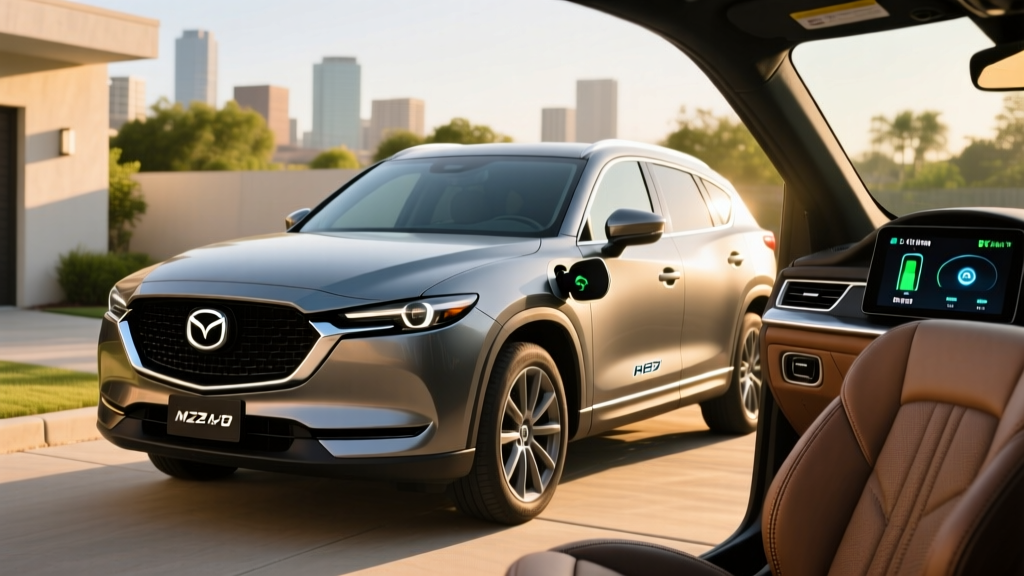
The 2026 Mazda CX-90 is offered exclusively as a plug-in hybrid (PHEV) in the U.S. market — there is no conventional hybrid (HEV) variant. If you've been searching for a mazda cx90 hybrid, you're looking at the CX-90 PHEV, which pairs a 2.5-liter four-cylinder engine with an electric motor and a 17.8 kWh battery pack. The result: 26 miles of electric-only driving, 25 MPG combined once the battery is depleted, and 327 combined horsepower in a three-row SUV that starts around $41,000 before incentives.
It's a compelling package for families who want electric commuting during the week and gas-powered road-trip flexibility on weekends — without the range anxiety of a full battery-electric vehicle. But the CX-90 PHEV has real trade-offs: no DC fast charging, a modest electric range compared to rivals like the Toyota RAV4 Prime, and a third row that's best reserved for children.
CX-90 Powertrain: HEV vs. PHEV — What Mazda Actually Offers
Before diving into specs, it's critical to clarify what Mazda sells. The CX-90 lineup includes two electrified powertrains:
| Attribute | CX-90 PHEV (Plug-In Hybrid) | CX-90 Mild-Hybrid Turbo |
|---|---|---|
| Powertrain Type | Plug-in Hybrid (PHEV) | Mild-Hybrid (MHEV) — not a true hybrid |
| Plug-In Capable? | Yes — J1772 / Type 1 connector | No — regenerative braking only |
| Electric-Only Range | 26 miles (EPA) | 0 miles |
| Battery | 17.8 kWh lithium-ion | 0.3 kWh (mild-hybrid assist) |
| Combined HP | 327 hp / 369 lb-ft | 280 hp / 332 lb-ft (premium fuel) |
| Engine | 2.5L 4-cyl + electric motor | 3.3L inline-6 turbo + 48V MHEV |
| EPA MPG (combined) | 25 MPG (gas) / 56 MPGe (with charge) | 25 MPG combined |
| Federal Tax Credit | Eligible — up to $3,750 (§30D) | Not eligible |
The mild-hybrid inline-six is technically electrified, but its tiny 0.3 kWh battery only smooths stop-start transitions and provides minor torque fill. It cannot drive on electric power alone. For buyers specifically seeking a mazda cx90 hybrid with meaningful electric capability, the PHEV is the only option.
Fuel Economy: EPA Numbers and Real-World MPG
The CX-90 PHEV's efficiency story depends entirely on how often you charge it.
| Driving Mode | City | Highway | Combined |
|---|---|---|---|
| Charge-Sustaining (gas only, battery depleted) | 24 MPG | 27 MPG | 25 MPG |
| Charge-Depleting (full battery, mixed) | 56 MPGe (EPA) | ||
| Electric-Only Efficiency | 2.8 kWh/mile (approx. 89 MPGe equivalent) | ||
Real-world expectations: According to fueleconomy.gov, owners who plug in nightly and commute under 26 miles will burn almost no gasoline during the work week. On a long highway trip with a depleted battery, expect charge-sustaining fuel economy to land between 23–26 MPG depending on speed, terrain, and temperature. Cold weather (below 40°F) reduces both electric range and gas-side efficiency by roughly 10–15%.
Battery, Charging, and Electric-Only Range
The CX-90 PHEV's 17.8 kWh lithium-ion battery pack provides its 26-mile electric envelope. Here's what you need to know about keeping it charged:
| Charging Method | Power | Time (0–100%) | Availability |
|---|---|---|---|
| Level 1 (120V household outlet) | ~1.2 kW | ~14 hours | Any standard outlet |
| Level 2 (240V home/public) | ~3.3 kW (onboard charger limit) | ~4.5 hours | Home wallbox or public Level 2 |
| DC Fast Charging | Not supported | N/A | N/A |
The 3.3 kW onboard charger is the CX-90 PHEV's biggest charging limitation. Even at a public Level 2 station delivering 7.2 or 11.5 kW, the CX-90 will only accept 3.3 kW, capping its charge speed. This means you cannot meaningfully top up at a shopping-center charger during a 30-minute errand — you'll add roughly 1.5 kWh, or about 4 miles of range.
For daily use, most PHEV owners charge overnight on Level 1 or Level 2. A standard 120V outlet adds roughly 4–5 miles of range per hour of charging, which may be sufficient if your daily commute is under 20 miles and the car is parked for 8+ hours. A 240V Level 2 home installation (typically $500–$1,500 for equipment and electrician) ensures a full battery every morning.
Performance and Driving Dynamics
| Specification | 2026 Mazda CX-90 PHEV |
|---|---|
| Combined Horsepower | 327 hp |
| Combined Torque | 369 lb-ft |
| Engine | 2.5L DOHC 4-cylinder + AC electric motor |
| Transmission | 8-speed automatic (no torque converter — clutch-based) |
| Drivetrain | All-wheel drive (i-Activ AWD) |
| 0–60 mph | ~6.1 seconds (est.) |
| Towing Capacity | 3,500 lbs |
| Curb Weight | ~5,057 lbs |
The PHEV powertrain delivers confident acceleration, particularly in EV mode where the electric motor provides instant torque from a stop. Mazda's 8-speed automatic eschews a traditional torque converter for a multi-clutch design, which improves efficiency but can occasionally feel slightly hesitant during low-speed maneuvers. In EV mode, the cabin is remarkably quiet — a preview of what full electrification feels like, limited to 26 miles at a time.
Pricing, Trims, and Tax Credit Eligibility
The 2026 CX-90 PHEV is available in multiple trims. Pricing starts in the low $40,000s:
| Trim | MSRP (est.) | Key Features |
|---|---|---|
| PHEV Preferred | ~$41,475 | Leatherette, heated front seats, power liftgate |
| PHEV Premium | ~$47,275 | Nappa leather, 12.3" infotainment, panoramic roof |
| PHEV Premium Plus | ~$52,475 | Second-row captain's chairs, ventilated seats, 360° camera |
Federal tax credit (§30D): The CX-90 PHEV qualifies for a partial federal tax credit. Under current IRS §30D rules, the credit amount depends on battery sourcing and critical-mineral compliance. As of the 2026 tax year, the CX-90 PHEV has been eligible for up to $3,750 (the critical-minerals half of the credit), though exact eligibility can shift as supply chains change. Key requirements include:
- MSRP cap: SUVs must be under $80,000 — all CX-90 trims qualify
- Buyer income cap: AGI under $150,000 (single) / $300,000 (joint)
- Battery sourcing: Critical-mineral and battery-component thresholds must be met — verify current eligibility at purchase
- Point-of-sale transfer: You can transfer the credit to the dealer for an immediate price reduction at purchase
Always confirm eligibility with your tax professional and the dealer at the time of purchase. State incentives may stack on top — check your state's energy office for local rebates.
Battery Warranty, Reliability, and Replacement Costs
PHEV battery degradation is generally modest because the system never fully charges or fully depletes the pack — Mazda's battery management system maintains a buffer at both ends to prolong cell life. Based on data from similar PHEV systems across the industry, expect 5–10% capacity loss over 8 years of typical use. This would reduce electric range from 26 miles to roughly 23–25 miles — noticeable but not debilitating.
Battery replacement cost: Out-of-warranty replacement for the CX-90 PHEV battery pack is estimated at $6,000–$9,000 including parts and labor, based on comparable PHEV pack pricing. However, given the 8-year/100,000-mile warranty coverage and the moderate degradation profile of PHEV packs, most owners will never face this expense.
According to IIHS, the CX-90 has earned strong safety ratings, which supports long-term ownership confidence. Mazda's overall brand reliability has trended upward in recent years, though the PHEV powertrain is relatively new to the CX-90 nameplate.
Who Should Choose the CX-90 PHEV vs. a Full EV or Gas SUV?
Choose the CX-90 PHEV if:
- Your daily commute is under 25 miles and you can charge at home overnight
- You regularly take road trips exceeding 300 miles and don't want to plan around DC fast chargers
- You need three rows for family hauling but want some electric efficiency
- You're not ready for a full EV but want to reduce gas consumption
- You value Mazda's premium interior and driving dynamics over maximum efficiency
Choose a full EV (like the Kia EV9 or Tesla Model X) if:
- You have reliable home charging and your daily driving rarely exceeds 200 miles
- You want zero tailpipe emissions and minimal maintenance (no oil changes, no gas engine)
- You qualify for the full $7,500 federal EV tax credit on eligible models
Choose the CX-90 mild-hybrid (inline-6 turbo) if:
- You cannot charge at home (apartment, no garage outlet access)
- You prefer the smoother, more powerful inline-six engine
- You don't want to manage plug-in charging habits
Pros
- Premium interior materials rival European luxury SUVs
- 26-mile electric range covers most daily commutes
- 327 hp provides confident highway merging and passing
- Eligible for partial federal tax credit (up to $3,750)
- Strong safety ratings from IIHS
- 3,500-lb towing capacity with AWD standard
Cons
- 3.3 kW onboard charger limits Level 2 charging speed
- No DC fast charging capability
- Third row is tight — best for children only
- Electric range drops significantly in cold weather
- Fewer trims offer PHEV powertrain vs. mild-hybrid
- Heavier curb weight impacts handling vs. non-PHEV CX-90
Frequently Asked Questions
How many MPG does the Mazda CX-90 hybrid get?
The CX-90 PHEV achieves 25 MPG combined (24 city / 27 highway) in charge-sustaining mode — that is, after the battery is depleted and you're running on gasoline alone. When the battery is fully charged, the EPA rates it at 56 MPGe for combined electric-and-gas driving. Real-world results vary: owners who charge nightly and drive under 26 miles daily may use almost no gasoline during the week.
How far can the CX-90 PHEV go on electric only?
The EPA rates the CX-90 PHEV at 26 miles of electric-only range. In real-world conditions with climate control and mixed driving, expect 20–24 miles in mild weather and 16–20 miles in freezing temperatures. Highway-speed electric driving depletes the battery faster than city driving due to aerodynamic drag.
Does the Mazda CX-90 hybrid qualify for a tax credit?
Yes, the CX-90 PHEV qualifies for a partial federal tax credit under IRS §30D — typically up to $3,750 depending on battery-sourcing compliance at the time of purchase. Eligibility also requires meeting income caps ($150K single / $300K joint AGI) and the $80,000 MSRP cap for SUVs (which all CX-90 trims satisfy). The credit can be transferred to the dealer at point of sale for an immediate price reduction. Consult a tax professional and verify current eligibility on irs.gov.
Is the CX-90 PHEV reliable, and what does battery replacement cost?
Mazda covers the high-voltage battery for 8 years / 100,000 miles. PHEV batteries generally experience mild degradation (5–10% over 8 years) due to built-in charge buffers. Out-of-warranty replacement is estimated at $6,000–$9,000, though most owners will never need it. Mazda's overall brand reliability has improved, and the PHEV system is less complex than a full EV powertrain in some respects — there's no single point of failure for propulsion.
Can the CX-90 PHEV charge at a DC fast charger?
No. The CX-90 PHEV does not support DC fast charging. It uses a J1772 connector for Level 1 (120V) and Level 2 (240V) charging only, with a maximum onboard charger rate of 3.3 kW. A full charge on Level 2 takes approximately 4.5 hours.
Hybrid vs. PHEV vs. EV — which is right for me?
If you can charge at home and your commute is under 25 miles, the CX-90 PHEV offers the best of both worlds: electric weekday driving and gas-powered weekend freedom. A conventional hybrid (HEV) requires no plugging in but offers no electric-only range. A full EV eliminates gasoline entirely but requires charging infrastructure planning for long trips. The PHEV is the pragmatic middle ground — especially for households with one vehicle that must do everything.