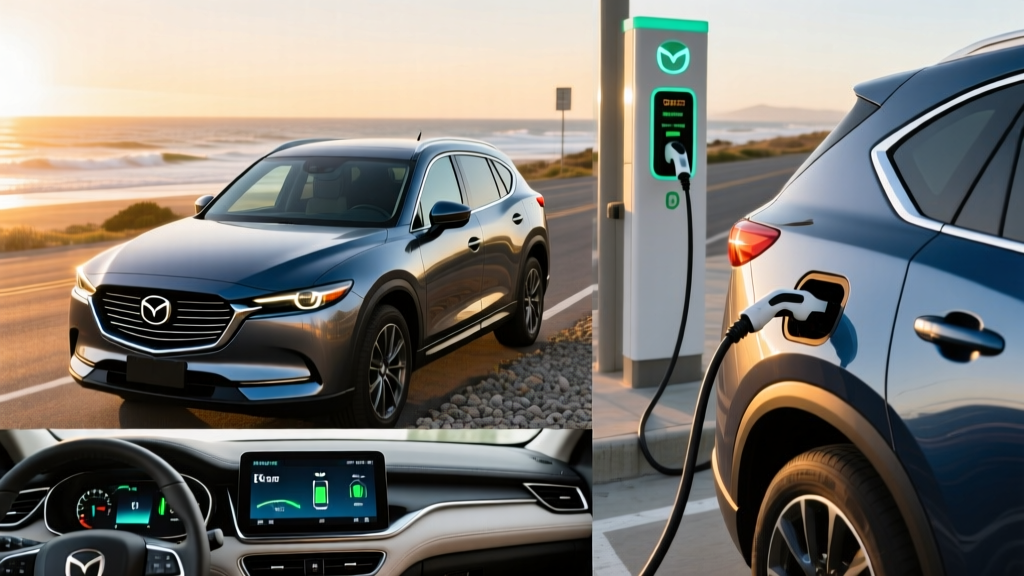
The Mazda CX-90 Plug-In Hybrid occupies a specific niche: a three-row luxury SUV that can handle daily commutes on electricity alone while retaining a gas engine for road trips. For buyers researching Mazda CX-90 PHEV MPG figures, the numbers tell a nuanced story that depends heavily on whether you charge regularly. Let's break down the EPA estimates, real-world expectations, and ownership economics to determine if this PHEV fits your driving pattern.
Mazda CX-90 PHEV Fuel Economy: EPA Numbers and Real-World Results
The EPA rates the 2025 Mazda CX-90 PHEV at 56 MPGe combined when operating in electric mode and 25 MPG combined once the battery is depleted and the gasoline engine takes over. Here's the full breakdown:
| Mode | City | Highway | Combined |
|---|---|---|---|
| Electric (MPGe) | 56 MPGe | 57 MPGe | 56 MPGe |
| Gas-Only (MPG) | 24 MPG | 27 MPG | 25 MPG |
Source: fueleconomy.gov
Real-World MPG Expectations
EPA Combined: 56 MPGe (electric) / 25 MPG (gas-only)
What to expect: Owners who charge nightly and drive under 26 miles daily will rarely use gas, achieving effective "MPG" well over 100 MPGe. On highway road trips with a depleted battery, expect 23-25 MPG at 70 mph. Cold weather reduces electric range by 15-25%, making the gas engine kick in sooner.
Electric-Only Range: How Far Can the CX-90 PHEV Go Without Gas?
The EPA rates the CX-90 PHEV at 26 miles of electric-only range. This figure assumes moderate temperatures, flat terrain, and speeds under 50 mph. In real-world driving:
- City commuting (30-45 mph): 24-28 miles achievable
- Highway driving (65-75 mph): 18-22 miles before engine engagement
- Cold weather (below 40°F): 19-22 miles due to battery chemistry limitations and cabin heating demands
The 17.8 kWh lithium-ion battery pack (14.2 kWh usable) powers a single electric motor integrated into the transmission. Once depleted, the 2.5-liter four-cylinder engine seamlessly engages. Total combined range—electric plus gas—exceeds 440 miles, eliminating range anxiety for road trips.
Charging the CX-90 PHEV: Times, Connectors, and Home Setup
Unlike full EVs, the CX-90 PHEV uses a smaller battery that charges relatively quickly on Level 2 power. However, it does not support DC fast charging—a common limitation among PHEVs due to battery size and cost trade-offs.
| Charging Level | Power | 0-100% Time | Connector |
|---|---|---|---|
| Level 1 (120V outlet) | 1.4 kW | ~11 hours | J1772 |
| Level 2 (240V home charger) | 7.2 kW | ~2.5 hours | J1772 |
| DC Fast Charging | Not supported | N/A | N/A |
Most PHEV owners charge overnight at home using a Level 2 wallbox (typically $500-$800 for equipment, plus $500-$2,000 for electrician installation depending on panel capacity and wiring distance). A standard 120V outlet works but is slow—adequate only if you drive under 15 miles daily and have 12+ hours to charge.
Powertrain Specs: Combining Electric and Gasoline Power
The CX-90 PHEV pairs a 2.5-liter inline-four engine with an electric motor integrated into the eight-speed automatic transmission. Combined output reaches 323 horsepower and 369 lb-ft of torque—making it the most powerful CX-90 variant.
| Engine | 2.5L inline-4 + electric motor |
|---|---|
| Combined Horsepower | 323 hp |
| Combined Torque | 369 lb-ft |
| Transmission | 8-speed automatic (no torque converter) |
| Drivetrain | All-wheel drive (standard) |
| Battery Capacity | 17.8 kWh total / 14.2 kWh usable |
| Electric-Only Range | 26 miles (EPA) |
| 0-60 mph | ~6.3 seconds |
| Towing Capacity | 3,500 lbs |
The PHEV powertrain delivers smooth acceleration and refined power delivery. The transition between electric and gas modes is nearly imperceptible—a hallmark of Mazda's engineering. However, the four-cylinder engine sounds coarse under hard acceleration compared to the available inline-six mild-hybrid variants.
HEV vs PHEV vs EV: Which Powertrain Fits Your Life?
Understanding Your Options
Conventional Hybrid (HEV): Self-charging via regenerative braking and the gas engine. No plug required. Typical efficiency: 35-50 MPG combined. Best for: drivers without home charging access, those who want zero behavior change.
Plug-In Hybrid (PHEV) like the CX-90: Larger battery provides 20-40 miles electric-only range. Plugs in to recharge. Gas engine extends range indefinitely. Best for: households with home charging and short-to-moderate daily commutes who also take road trips.
Battery Electric Vehicle (EV): No gas engine. 200-400+ mile range. Requires charging infrastructure. Best for: drivers with reliable home/workplace charging, predominantly local driving, and willingness to plan road-trip charging stops.
Choose the CX-90 PHEV If:
- You have home Level 2 charging (or can install it)
- Your daily commute is under 30 miles round-trip
- You take road trips 4+ times per year and dislike planning EV charging stops
- You need three rows but want to minimize gas consumption on weekdays
Consider a Full EV (e.g., Tesla Model X, Rivian R1S) If:
- Your daily driving exceeds 40 miles
- You have access to reliable DC fast charging on road trips
- You want zero tailpipe emissions and minimal maintenance
Consider a Conventional Hybrid (e.g., Toyota Highlander Hybrid) If:
- You cannot install home charging
- You want lower upfront cost (typically $5,000-$8,000 less than PHEV)
- Your driving pattern is consistent city/highway mix without short-commute advantage
Pricing, Trims, and Federal Tax Credit Eligibility
The 2025 Mazda CX-90 PHEV starts at $49,945 MSRP (including destination) for the Preferred Plus trim. Higher trims include:
- Preferred Plus: $49,945
- Premium Plus: $55,950
- Premium Plus (with Captain's Chairs): $56,525
These prices position the CX-90 PHEV competitively against the Toyota Highlander Hybrid ($40,000-$52,000) and below the Volvo XC90 Recharge ($73,000+).
Federal Tax Credit Status (§30D)
As of 2025, the Mazda CX-90 PHEV does not qualify for the federal §30D New Clean Vehicle Credit. Reasons:
- Battery components and critical minerals do not meet the sourcing requirements (the credit phases based on foreign entity of concern restrictions)
- The vehicle's MSRP is under the $80,000 cap for SUVs, so price is not the barrier
- Buyer income limits ($150,000 single / $300,000 joint) would apply if the vehicle were eligible
Always verify current eligibility at irs.gov, as battery sourcing compliance changes periodically. Some states offer additional PHEV incentives—check your local DMV or energy office.
Battery Warranty, Reliability, and Long-Term Ownership Costs
Mazda CX-90 PHEV Battery Warranty
Hybrid/EV Battery Coverage: 8 years / 100,000 miles (whichever comes first)
Capacity Retention Threshold: Mazda warrants the battery against defects and excessive degradation, though specific capacity-loss thresholds are not published. Industry standard is typically 70% capacity retention over the warranty period.
Powertrain Warranty: 5 years / 60,000 miles
Bumper-to-Bumper: 3 years / 36,000 miles
PHEV battery replacement costs are significantly lower than full EVs due to smaller pack size. If out-of-warranty replacement becomes necessary (typically after 12-15 years based on current lithium-ion degradation curves), expect $4,000-$7,000 for parts and labor. For context, most PHEV owners will sell or trade the vehicle before battery replacement is needed.
Mazda's reliability reputation is strong, though the CX-90 is a new platform (introduced for 2024). Early model years carry some risk of teething issues. The inline-six mild-hybrid variants have drawn more attention, but the PHEV powertrain uses proven technology shared with the CX-60 (sold in other markets since 2022).
Who Should Buy the Mazda CX-90 PHEV?
Pros
- 26-mile electric range covers most daily commutes gas-free
- 323 hp provides confident acceleration and highway merging
- Three-row seating with premium interior materials
- Standard AWD handles snow and rain confidently
- No range anxiety on road trips—gas engine extends range to 440+ miles
- Refined ride quality and quiet cabin at highway speeds
Cons
- No DC fast charging—public charging impractical for quick top-ups
- 25 MPG gas-only is unimpressive for a hybrid this price
- Does not qualify for federal tax credit (as of 2025)
- Four-cylinder engine sounds coarse under hard acceleration
- Third row is tight for adults on longer trips
- $50,000 starting price is steep without tax incentives
The CX-90 PHEV makes sense for a specific buyer: someone with home charging, a sub-30-mile daily commute, and regular need for three rows and road-trip capability. If your driving pattern aligns, you'll use minimal gasoline on weekdays while retaining flexibility for weekend adventures. If your commute exceeds 35 miles or you lack home charging, the PHEV premium over a conventional hybrid or the complexity versus a full EV may not justify the cost.
Frequently Asked Questions
How many MPG does the Mazda CX-90 PHEV get?
The EPA rates it at 56 MPGe combined in electric mode and 25 MPG combined once the battery is depleted. Real-world gas-only MPG on highway trips averages 23-25 MPG at 70 mph.
How far can the CX-90 PHEV go on electric only?
The EPA rates it at 26 miles electric-only. Real-world range varies from 18 miles (highway, cold weather) to 28 miles (city, moderate temps).
Does the CX-90 PHEV qualify for the federal tax credit?
No. As of 2025, it does not meet the battery sourcing requirements for the §30D credit. Verify current status at irs.gov, as eligibility can change.
Can I charge the CX-90 PHEV at a DC fast charger?
No. The CX-90 PHEV supports only Level 1 (120V) and Level 2 (240V) AC charging via J1772 connector. DC fast charging is not available—a common PHEV limitation.
How long will the PHEV battery last?
Lithium-ion PHEV batteries typically last 12-15 years before significant degradation. Mazda covers the battery for 8 years/100,000 miles. Replacement cost (if needed out of warranty) is approximately $4,000-$7,000.
Is the CX-90 PHEV better than the gas-only CX-90?
If you can charge at home and drive under 30 miles daily, the PHEV saves significant fuel costs and provides smoother electric acceleration. If you lack charging or drive long distances daily, the inline-six mild-hybrid variants offer better gas-only efficiency and more power.