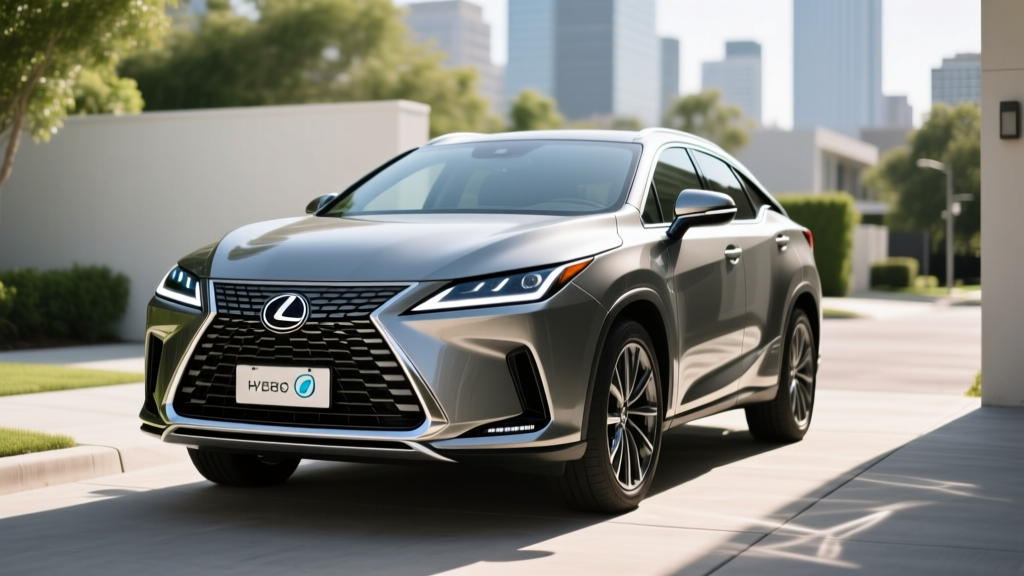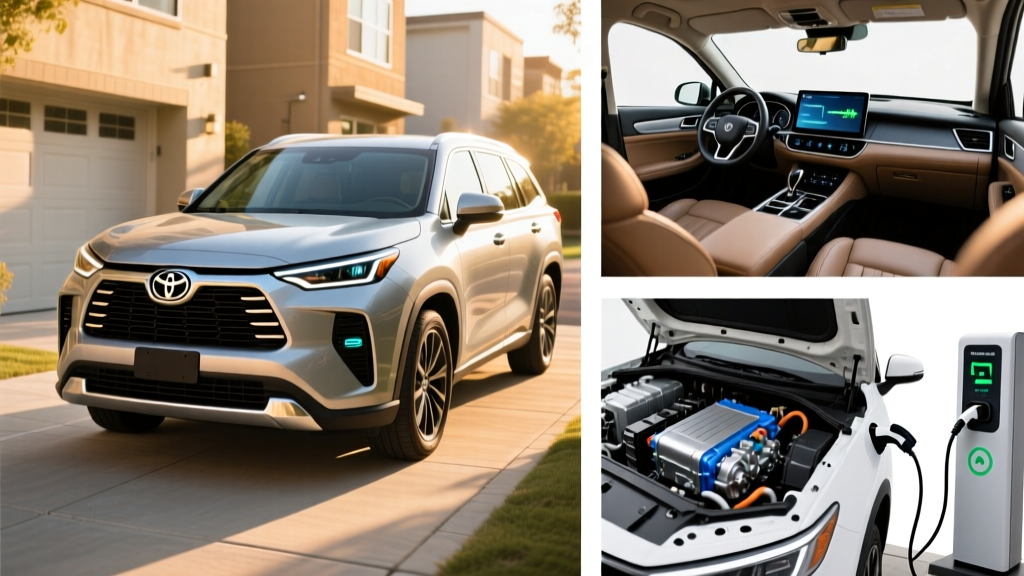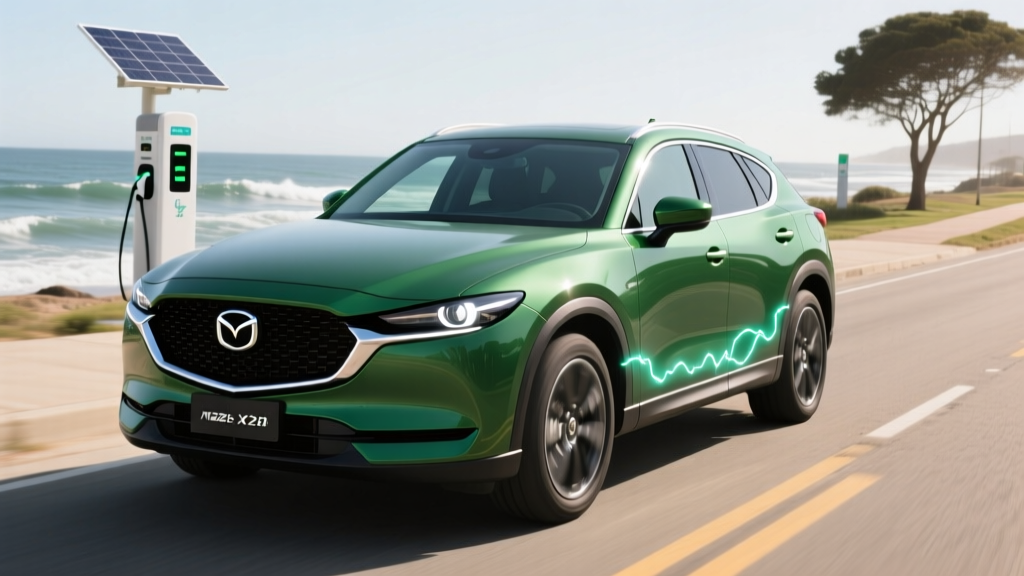
The Mazda CX-50 Hybrid slots into a crowded compact crossover segment with a distinct advantage: Toyota's proven hybrid powertrain wrapped in Mazda's premium interior and rugged styling. For 2026, the CX-50 Hybrid Preferred trim sits as the volume seller, offering buyers a no-plug-required hybrid that delivers strong fuel economy without the lifestyle changes a full EV demands. If you've been searching for the Mazda CX-50 Hybrid Preferred and wondering whether its 38 MPG EPA rating holds up in real driving, this guide breaks down every number that matters.
Hybrid, Not Plug-In: What the CX-50 Hybrid Actually Is
Before diving into specs, it's essential to understand what you're buying. The Mazda CX-50 Hybrid is a conventional hybrid electric vehicle (HEV), not a plug-in hybrid (PHEV). This distinction matters for your daily routine and your wallet.
HEV vs PHEV: The Key Difference
Conventional Hybrid (HEV) — like the CX-50 Hybrid: The gasoline engine and electric motor work together seamlessly. The small battery recharges through regenerative braking and the engine. You never plug it in. You simply fill up with gas and drive.
Plug-In Hybrid (PHEV): A larger battery (typically 12–20 kWh) provides 25–45 miles of electric-only range before the gas engine kicks in. You plug it in at home or at public chargers to maximize electric driving. Examples include the Toyota RAV4 Prime and Mitsubishi Outlander PHEV.
The CX-50 Hybrid is strictly an HEV. There is no plug, no electric-only range to manage, and no charging infrastructure required.
Powertrain Breakdown: Toyota Bones, Mazda Character
Mazda partnered with Toyota to develop the CX-50 Hybrid's powertrain, and the result is a system that pairs Toyota's hybrid reliability with Mazda's driving dynamics. Here's exactly what's under the hood:
| Specification | 2026 CX-50 Hybrid Preferred |
|---|---|
| Powertrain Type | Series-parallel hybrid (HEV) |
| Gas Engine | 2.5L 4-cylinder Atkinson cycle |
| Combined System Output | 219 hp |
| Electric Motors | Front motor (integrated in transaxle) + rear e-motor (eAWD) |
| Drivetrain | Electronic AWD (eAWD) standard |
| Transmission | eCVT (electronically controlled) |
| Hybrid Battery | ~1.6 kWh nickel-metal hydride (NiMH) |
| 0–60 mph | ~7.3 seconds |
| Towing Capacity | 3,500 lbs (with tow package) |
The 219-horsepower combined output puts the CX-50 Hybrid ahead of the base Honda CR-V Hybrid (204 hp) and close to the Toyota RAV4 Hybrid (219 hp). The eAWD system uses a dedicated rear electric motor rather than a mechanical driveshaft, giving the rear wheels torque instantly when slip is detected — a setup that feels responsive in rain and light snow without the efficiency penalty of a traditional AWD system.
Fuel Economy: EPA Ratings and Real-World MPG
This is the number that matters most to hybrid buyers. The 2026 Mazda CX-50 Hybrid carries the following EPA fuel economy ratings:
| Driving Cycle | EPA MPG | Real-World Expectation |
|---|---|---|
| City | 39 MPG | 38–42 MPG |
| Highway | 37 MPG | 34–37 MPG |
| Combined | 38 MPG | 36–40 MPG |
Real-World MPG Insight
Toyota-sourced hybrid systems are notorious for exceeding EPA city ratings in stop-and-go traffic, where regenerative braking is most active. Expect 40+ MPG on suburban commutes with frequent stops. Highway driving at sustained 75+ mph will pull numbers closer to 34–35 MPG, especially with the CX-50's boxier, less aerodynamic profile compared to the RAV4. In cold weather (below 30°F), expect a 5–10% reduction as the engine runs more frequently to provide cabin heat.
With a 15.9-gallon fuel tank, the CX-50 Hybrid Preferred delivers roughly 600 miles of total range in mixed driving — enough to stretch between fill-ups to once every two weeks for most commuters.
Pricing, Trim Positioning, and Tax Credit Eligibility
The 2026 Mazda CX-50 Hybrid is offered in three trims: Preferred, Premium, and Premium Plus. The Preferred is the entry point and the volume play.
| Trim | MSRP (incl. destination) | Key Equipment |
|---|---|---|
| Preferred | $35,995 | 17" wheels, heated front seats, power liftgate, 10.25" display |
| Premium | $39,595 | Panoramic roof, Bose audio, leatherette, wireless CarPlay |
| Premium Plus | $42,395 | Ventilated seats, head-up display, 360° camera, Nappa leather |
Does the CX-50 Hybrid Qualify for a Federal Tax Credit?
No. The Mazda CX-50 Hybrid is a conventional HEV, not a plug-in vehicle. Under IRS §30D rules, only battery electric vehicles (BEVs) and plug-in hybrid electric vehicles (PHEVs) with sufficient battery capacity and qualifying battery sourcing are eligible for the federal clean vehicle credit of up to $7,500. Conventional hybrids like the CX-50 Hybrid do not qualify.
Some states offer modest rebates or HOV lane access for hybrids — check your state's energy office or department of environmental quality for local programs. However, these are generally smaller ($500–$1,500) and less common than EV incentives.
Reliability, Battery Warranty, and Long-Term Costs
The CX-50 Hybrid's Toyota-sourced hybrid system is one of the most proven in the industry. Toyota has sold millions of vehicles using this same fundamental architecture since the 1997 Prius, and failure rates are exceptionally low.
Hybrid Battery & Powertrain Warranty
- Hybrid Battery Warranty: 10 years / 150,000 miles (whichever comes first)
- Powertrain Warranty: 5 years / 60,000 miles
- Bumper-to-Bumper: 3 years / 36,000 miles
- Hybrid System Components: 8 years / 100,000 miles (covers inverter, e-motors, control module)
Mazda's hybrid battery warranty aligns with Toyota's extended coverage, providing peace of mind well past the typical ownership period.
What Does Hybrid Battery Replacement Cost?
If the hybrid battery fails outside of warranty — which real-world data suggests is rare before 200,000+ miles — replacement costs typically range from $2,500 to $4,500 including labor for a refurbished or new NiMH pack. Independent hybrid specialists can often perform the swap for less than a dealer. Given the 10-year/150,000-mile warranty, most original owners will never face this expense.
The NiMH chemistry used in the CX-50 Hybrid is deliberately chosen for longevity over energy density. Unlike the lithium-ion packs in EVs and PHEVs, NiMH cells degrade very slowly and tolerate thousands of shallow charge-discharge cycles without significant capacity loss. This is why 15-year-old Toyota Prius vehicles are still running on original batteries.
CX-50 Hybrid Preferred vs. the Competition
The compact hybrid SUV segment is stacked. Here's how the CX-50 Hybrid Preferred stacks up against its most direct rivals on the numbers that matter:
| Spec | Mazda CX-50 Hybrid Pref. | Toyota RAV4 Hybrid XLE | Honda CR-V Hybrid Sport |
|---|---|---|---|
| Combined MPG | 38 | 39 | 40 |
| Combined HP | 219 | 219 | 204 |
| AWD | Standard | Standard | Standard |
| Starting MSRP | $35,995 | $34,795 | $36,695 |
| Cargo (rear seats up) | 31.4 cu ft | 37.6 cu ft | 36.3 cu ft |
| Towing | 3,500 lbs | 1,750 lbs | 1,000 lbs |
| Battery Warranty | 10 yr / 150k mi | 10 yr / 150k mi | 8 yr / 100k mi |
The CX-50 Hybrid gives up 1–2 MPG to its rivals and sacrifices cargo volume, but it counters with significantly higher towing capacity (3,500 lbs vs. the RAV4's 1,750 lbs), a more upscale interior, and Mazda's typically sharper steering feel. If cargo space is paramount, the RAV4 Hybrid wins. If you need to tow a small trailer or boat, the CX-50 Hybrid is the clear choice in this segment.
Pros and Cons: The CX-50 Hybrid Preferred at a Glance
Pros
- Proven Toyota hybrid system with 10-yr/150k-mi battery warranty
- 3,500-lb towing — best in hybrid compact SUV class
- Premium interior materials at a mainstream price
- Standard eAWD with dedicated rear e-motor
- No plug-in required — zero lifestyle adjustment from gas cars
- ~600 miles of total range per tank
Cons
- Cargo volume (31.4 cu ft) trails RAV4 and CR-V hybrids
- No federal tax credit eligibility (HEV, not PHEV/BEV)
- Slightly lower MPG than Honda CR-V Hybrid (38 vs 40 combined)
- eCVT can drone under hard acceleration
- No plug-in hybrid variant available in the CX-50 lineup
- 10.25" infotainment screen feels dated vs. competitors' 12"+ displays
Hybrid vs. PHEV vs. EV: Which Powertrain Fits Your Life?
Choosing between a conventional hybrid, plug-in hybrid, and full electric vehicle comes down to your daily routine, home charging access, and driving patterns. Here's a practical decision framework:
Choose the CX-50 Hybrid (HEV) If:
- You cannot install a home charger (apartment, street parking, no garage)
- You want maximum simplicity — fill up with gas and go
- You take frequent long road trips and don't want to plan around charging
- You want to reduce fuel costs by ~30% vs. a gas-only CX-50 without any routine changes
Consider a PHEV Instead If:
- You can charge at home (Level 2, 240V) and your daily commute is under 35 miles
- You want to drive on electricity most days but keep gas for road trips
- You want potential federal tax credit eligibility (up to $7,500 under IRS §30D)
Consider a Full EV If:
- You have reliable home charging (Level 2) and your daily driving is under 250 miles
- You want the lowest per-mile "fuel" cost and minimal maintenance
- You want to maximize federal/state incentives and never visit a gas station
Frequently Asked Questions
How many MPG does the Mazda CX-50 Hybrid Preferred get?
The 2026 CX-50 Hybrid Preferred is EPA-rated at 39 MPG city, 37 MPG highway, and 38 MPG combined. In real-world suburban driving with frequent stops, owners commonly see 40+ MPG. Sustained highway driving above 75 mph may drop to 34–35 MPG. Cold weather reduces economy by 5–10%.
Does the CX-50 Hybrid need to be plugged in?
No. The CX-50 Hybrid is a conventional hybrid (HEV). Its small battery recharges through regenerative braking and the gasoline engine. You never plug it in — just fill the 15.9-gallon tank with regular unleaded and drive normally.
Is there a plug-in hybrid version of the CX-50?
As of the 2026 model year, Mazda does not offer a PHEV variant of the CX-50. If you want a Mazda with plug-in capability, you'd need to look at a different brand's PHEV or consider a full EV. The CX-50 Hybrid is HEV-only.
How reliable is the CX-50 Hybrid's powertrain?
Very reliable. The hybrid system is sourced from Toyota, which has decades of hybrid production experience with millions of units on the road. The NiMH battery chemistry is specifically chosen for longevity, and failures before 150,000 miles are uncommon. Mazda backs the hybrid battery with a 10-year/150,000-mile warranty.
What does it cost to replace the CX-50 Hybrid battery?
Out-of-warranty hybrid battery replacement typically costs $2,500–$4,500 including labor, depending on whether you use a new OEM pack, a refurbished unit, or an independent hybrid specialist. Given the 10-year/150,000-mile warranty and the proven longevity of NiMH cells, most owners will never need a replacement.
Does the Mazda CX-50 Hybrid qualify for any tax credit?
The CX-50 Hybrid does not qualify for the federal §30D clean vehicle credit, which is reserved for plug-in vehicles (BEVs and PHEVs) meeting battery sourcing and MSRP/income requirements. Some states may offer small hybrid rebates — check your state energy office. There is no federal incentive for conventional HEVs.
How does the CX-50 Hybrid compare to the gas-only CX-50?
The gas-only CX-50 (2.5L turbo or non-turbo) gets 24–28 MPG combined depending on the engine. The hybrid's 38 MPG combined represents roughly a 35–50% improvement in fuel economy, translating to approximately $500–$800 per year in fuel savings for a driver covering 15,000 miles annually at $3.50/gallon. The hybrid also comes standard with AWD, while the gas version charges extra for it.
Sources: EPA Fuel Economy (fueleconomy.gov), IRS Clean Vehicle Credits, Mazda USA specifications.