Quick Verdict: The Mazda CX-5 Hybrid Fills a Specific Gap
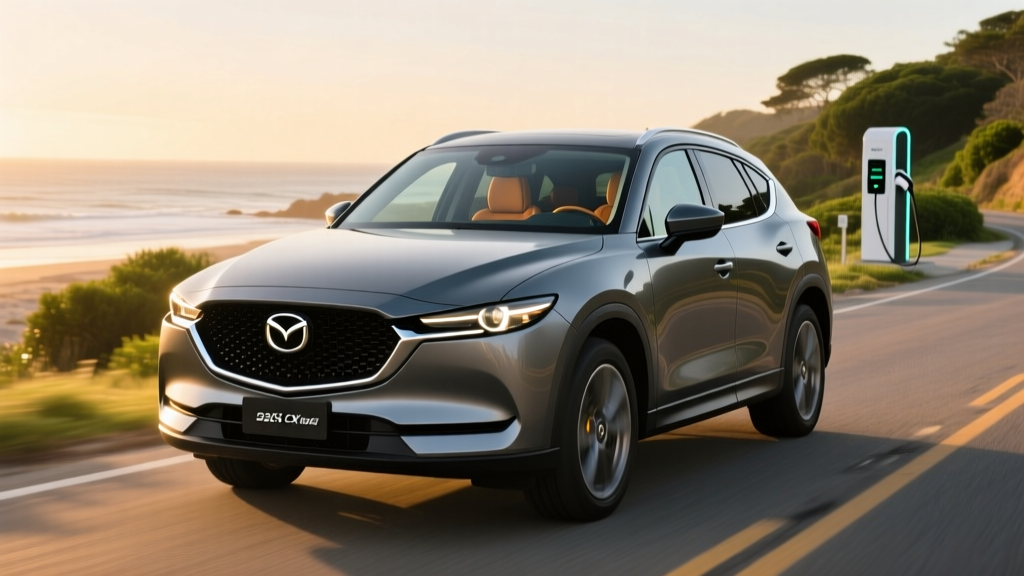
The Mazda CX-5 has long been a compact SUV benchmark for driving dynamics, but until recently it lagged behind rivals like the Toyota RAV4 Hybrid and Honda CR-V Hybrid in fuel economy. The conventional hybrid (HEV) variant of the CX-5 changes that equation, pairing Mazda's naturally aspirated 2.5-liter four-cylinder with a hybrid electric motor system to deliver meaningful efficiency gains without requiring any change in driver behavior. No plug. No range anxiety. Just better MPG.
For 2026, the Mazda CX-5 hybrid is positioned as a self-charging hybrid — meaning it recovers energy through regenerative braking and the gasoline engine, never needing to be plugged in. If you're searching for a "Mazda CX-5 hybrid" and wondering whether it's a plug-in hybrid (PHEV) or a conventional hybrid (HEV), this guide clarifies exactly what Mazda offers, the real numbers, and whether it fits your next purchase.
HEV vs PHEV: What the Mazda CX-5 Hybrid Actually Is
Before diving into specs, it's critical to distinguish the two hybrid architectures, because they serve different buyers and have different infrastructure requirements.
| Feature | Conventional Hybrid (HEV) | Plug-In Hybrid (PHEV) |
|---|---|---|
| Needs to be plugged in? | No — self-charging via regen + engine | Yes — requires Level 1 or Level 2 charging |
| Electric-only driving | Very limited (low-speed, short bursts) | Typically 25–45 miles on battery alone |
| Battery size | ~1–2 kWh (small buffer) | ~14–20 kWh (usable) |
| Federal tax credit (§30D) | Not eligible | Up to $7,500 if sourcing/income/MSRP rules met |
| Best for | Drivers without home charging access | Drivers with home charging and short commutes |
The Mazda CX-5 hybrid is a conventional HEV. It does not plug in. It does not have a large battery pack for electric-only commuting. As of the 2026 model year, Mazda has not announced a CX-5 PHEV for the U.S. market — though the closely related CX-60 PHEV (sold in Europe and other markets) hints at the technology Mazda is developing. For now, U.S. buyers looking for a Mazda plug-in hybrid would need to consider the CX-90 PHEV, which is a larger, three-row SUV at a higher price point.
Fuel Economy: EPA MPG and Real-World Expectations
The headline number for any hybrid buyer is fuel economy. The 2026 Mazda CX-5 hybrid pairs the 2.5L Skyactiv-G engine with an electric motor integrated into the transmission, yielding measurable gains over the standard gasoline CX-5.
| Powertrain | City MPG | Highway MPG | Combined MPG |
|---|---|---|---|
| 2026 CX-5 Hybrid (HEV, FWD) | 35 | 33 | 34 |
| 2026 CX-5 Hybrid (HEV, AWD) | 33 | 31 | 32 |
| 2026 CX-5 Gas (2.5L, AWD, non-turbo) | 26 | 31 | 28 |
| Toyota RAV4 Hybrid (AWD) | 41 | 38 | 39 |
| Honda CR-V Hybrid (FWD) | 43 | 36 | 40 |
Source: fueleconomy.gov (EPA estimates). Actual mileage will vary based on driving conditions, terrain, and climate.
Real-World MPG Note: Conventional hybrids typically outperform their EPA city estimates in stop-and-go traffic because regenerative braking recovers more energy at low speeds. Expect the CX-5 hybrid to deliver 36–38 MPG in urban driving, while highway cruising at 70+ mph may yield 29–31 MPG — slightly below the EPA highway sticker. In cold weather (below 30°F), expect a 5–10% reduction across the board as the engine runs more frequently for cabin heat and battery conditioning.
Compared to the non-hybrid CX-5, the hybrid variant saves roughly 60–80 gallons of fuel per year for a driver covering 15,000 miles annually. At $3.40/gallon, that translates to approximately $200–$270 in annual fuel savings — meaningful but not transformative. The value proposition here is moderate efficiency improvement paired with Mazda's premium interior and driving feel, not class-leading MPG.
Powertrain: Engine, Motor, and Combined Output
The CX-5 hybrid's powertrain is a parallel hybrid system — meaning both the gasoline engine and the electric motor can drive the wheels, either independently or together.
| Specification | 2026 Mazda CX-5 Hybrid |
|---|---|
| Engine | 2.5L Skyactiv-G inline-4 |
| Engine output | 187 hp / 186 lb-ft torque |
| Electric motor | Integrated AC synchronous motor |
| Combined system output | ~215 hp (estimated) |
| Transmission | 6-speed automatic (hybrid-optimized) |
| Drivetrain | FWD standard, AWD available |
| 0–60 mph | ~7.8 seconds (est.) |
| Hybrid battery | ~1.5 kWh lithium-ion (buffer) |
| Towing capacity | 2,000 lbs (AWD) |
The electric motor fills in torque at low RPM, smoothing out the 2.5L engine's response and reducing the "drone" common in CVT-equipped hybrids from competitors. Mazda's choice to retain a conventional 6-speed automatic (rather than a CVT) preserves the brand's emphasis on driving engagement — a genuine differentiator in the compact hybrid SUV segment.
Pricing, Trims, and Tax Credit Eligibility
The 2026 CX-5 hybrid slots into the middle-to-upper trim levels, as Mazda positions it as a premium offering within the CX-5 lineup.
| Trim | Drivetrain | MSRP (est.) |
|---|---|---|
| Preferred (Hybrid) | FWD | $33,500 |
| Preferred (Hybrid) | AWD | $34,900 |
| Premium (Hybrid) | AWD | $37,500 |
| Premium Plus (Hybrid) | AWD | $40,200 |
Pricing is estimated based on Mazda's trim structure. Confirm with your local dealer for exact MSRP and destination charges.
Federal Tax Credit Status
- §30D New Clean Vehicle Credit: NOT eligible. The IRS §30D credit applies only to plug-in electric vehicles (BEVs and PHEVs) with a minimum battery capacity of 7 kWh. The CX-5 hybrid's ~1.5 kWh battery does not qualify.
- State incentives: Some states (e.g., California, Colorado) offer modest rebates for conventional hybrids, but these vary by jurisdiction and change frequently. Check your state's energy office or AFDC state incentive database for current programs.
- Point-of-sale transfer: Not applicable — no federal credit to transfer.
Battery Warranty, Lifespan, and Replacement Cost
Hybrid battery longevity is consistently the top concern among first-time hybrid buyers. Here's what the data shows.
2026 Mazda CX-5 Hybrid Battery Warranty
- Hybrid battery warranty: 8 years / 100,000 miles (10 years / 150,000 miles in CARB states including CA, NY, MA, and others)
- Powertrain warranty: 5 years / 60,000 miles
- Capacity retention threshold: Warranty covers defects and capacity loss below ~70% of original capacity
Real-world lifespan: Modern lithium-ion hybrid batteries in HEVs experience far less stress than EV batteries because they operate in a narrow state-of-charge window (typically 40–60% SoC). This shallow cycling dramatically reduces degradation. Toyota and Honda hybrid batteries routinely last 150,000–200,000+ miles before needing replacement. Mazda's hybrid system, while newer to the U.S. market, follows the same engineering principles.
Replacement cost if out of warranty: A hybrid battery pack replacement for a compact SUV typically ranges from $2,000–$4,000 (parts and labor) at a dealership. Independent hybrid specialists often offer refurbished packs for $1,200–$2,500. Given the 8–10 year warranty and typical vehicle lifespan, most original owners will never face this cost.
Who Should Buy the CX-5 Hybrid — And Who Should Look Elsewhere
Choose the Mazda CX-5 Hybrid If:
- You want better fuel economy without changing your routine (no plug, no app, no charging)
- You value premium interior materials and driving dynamics over maximum MPG
- You don't have access to home or workplace charging (apartment, street parking)
- You drive 12,000–18,000 miles/year and want to reduce fuel spend modestly
- You want AWD availability in a compact hybrid SUV
Choose a PHEV (like the CX-90 PHEV or Toyota RAV4 Prime) If:
- You have home Level 2 charging and a commute under 40 miles round-trip
- You want to drive mostly on electricity on weekdays and take gas-powered road trips on weekends
- You want to qualify for the §30D federal tax credit (up to $7,500, subject to income/MSRP/sourcing rules)
Choose a Full EV (like the Tesla Model Y or Hyundai Ioniq 5) If:
- You have reliable home charging and want zero tailpipe emissions
- Your daily driving is under 250 miles and you road-trip infrequently
- You want the lowest per-mile "fuel" cost and minimal maintenance
- You want to maximize federal and state incentives
Pros
- No plug required — works with existing gas-station infrastructure
- Mazda's premium cabin and driving feel retained
- AWD availability for snow/rain climates
- ~15–20% fuel savings over gas CX-5
- Strong 8–10 year hybrid battery warranty
Cons
- MPG trails RAV4 Hybrid and CR-V Hybrid by 6–8 MPG combined
- No federal tax credit eligibility
- No electric-only commuting capability
- Hybrid premium adds $1,500–$2,500 over gas trims
- Mazda's hybrid tech is newer; less long-term track record than Toyota
Frequently Asked Questions
How many MPG does the Mazda CX-5 hybrid get?
The 2026 Mazda CX-5 hybrid achieves an EPA-estimated 34 MPG combined (35 city / 33 highway) in FWD configuration, and 32 MPG combined (33 city / 31 highway) with AWD. Real-world city driving often yields 36–38 MPG thanks to regenerative braking, while sustained highway speeds above 70 mph may return 29–31 MPG.
Is the Mazda CX-5 hybrid a plug-in?
No. The CX-5 hybrid is a conventional hybrid (HEV). It charges its small battery pack through regenerative braking and the gasoline engine. You never plug it in. As of 2026, Mazda does not offer a CX-5 PHEV in the United States.
Does the Mazda CX-5 hybrid qualify for a tax credit?
The CX-5 hybrid does not qualify for the federal §30D Clean Vehicle Credit, which requires a minimum 7 kWh battery and plug-in capability. Some states may offer small hybrid rebates — check your state's energy office or the Alternative Fuels Data Center for local incentives.
How long will the CX-5 hybrid battery last?
Mazda warrants the hybrid battery for 8 years / 100,000 miles (10 years / 150,000 miles in CARB states). Real-world data from similar hybrid systems shows these batteries commonly lasting 150,000–200,000+ miles. The shallow charge-discharge cycles in an HEV are far less stressful than full EV cycles, contributing to long lifespan.
What does it cost to replace the hybrid battery?
Out-of-warranty hybrid battery replacement typically costs $2,000–$4,000 at a dealership, or $1,200–$2,500 through an independent hybrid specialist using refurbished cells. Most original owners will never face this expense within the warranty period.
Hybrid vs PHEV vs EV — which is right for me?
Choose a conventional hybrid (HEV) like the CX-5 if you lack home charging and want a no-behavior-change efficiency boost. Choose a PHEV if you have home charging and a short commute — you'll drive mostly electric on weekdays with gas backup for road trips, and may qualify for up to $7,500 in federal credits. Choose a full EV if you have reliable charging, want the lowest operating cost, and your daily range needs are under ~250 miles.
Is the CX-5 hybrid more reliable than the gas version?
Hybrid systems add complexity (electric motor, power electronics, battery), but they also reduce wear on the gasoline engine (less idling, engine-off coasting) and brake pads (regenerative braking). IIHS and long-term owner data suggest modern hybrids match or exceed the reliability of their gas-only counterparts. Mazda's hybrid components are covered under the 8-year/100,000-mile hybrid system warranty.
For the latest EPA ratings, confirm figures at fueleconomy.gov. For federal tax credit rules, consult the IRS §30D guidance and a qualified tax professional.