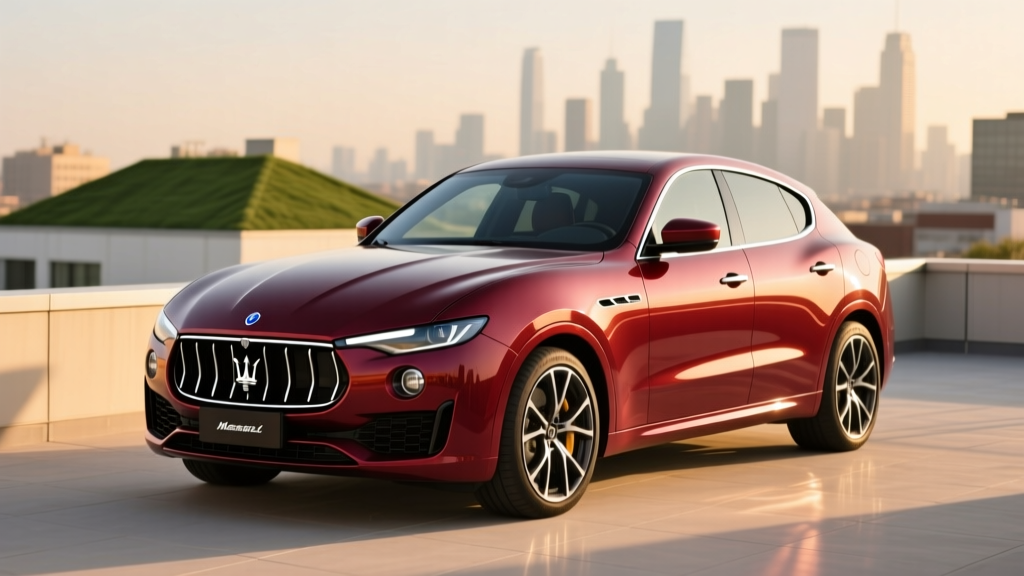
Luxury compact SUVs with electrified powertrains occupy a narrow lane, and the Maserati Grecale hybrid sits squarely in it. For 2026, Maserati offers the Grecale in two electrified flavors: the GT trim with a 48-volt mild-hybrid system and the Folgore plug-in hybrid (PHEV) variant. Neither is a full battery-electric vehicle, and neither is a conventional Toyota-style hybrid. Understanding the distinction matters — especially when you're spending upward of $67,000 and evaluating fuel savings, charging logistics, and federal tax credit eligibility.
This guide dissects the 2026 Maserati Grecale hybrid lineup with the numbers buyers actually need: EPA MPG, electric-only range, battery chemistry and capacity, charging times, powertrain output, and real-world ownership economics. We'll also address the questions that dominate forums and dealership conversations — reliability, battery warranty, and whether a PHEV Grecale makes more sense than going full EV or sticking with gas.
HEV vs PHEV vs Mild-Hybrid: What the Grecale Actually Is
Before examining specs, it's critical to define what Maserati is selling, because the terminology gets murky.
Grecale GT: Mild-Hybrid (MHEV)
The Grecale GT pairs a 2.0-liter turbocharged inline-four with a 48-volt belt-driven starter-generator (B-SG) and a small lithium-ion battery (under 1 kWh). This system recovers energy during braking and provides brief torque-fill during acceleration. It cannot drive on electric power alone. You never plug it in. Think of it as a slightly more efficient gas car, not a true hybrid in the Prius sense.
Grecale Folgore: Plug-In Hybrid (PHEV)
The Folgore variant pairs a turbocharged engine with a larger electric motor and a high-voltage battery pack (approximately 15.5 kWh usable). It can drive roughly 30+ miles on electricity alone before the gas engine engages. You plug it in to recharge the battery — ideally at home overnight on a Level 2 charger. Once the battery depletes, it operates as a conventional hybrid.
Neither variant is a self-charging full hybrid (HEV) like a Toyota RAV4 Hybrid, which uses a larger battery than a mild-hybrid but smaller than a PHEV, and never plugs in. Maserati does not currently offer a traditional HEV Grecale.
Grecale GT Mild-Hybrid: Fuel Economy and Powertrain
| Specification | 2026 Grecale GT (Mild-Hybrid) |
|---|---|
| Powertrain | 2.0L turbo I-4 + 48V B-SG mild-hybrid |
| Combined Output | 296 hp / 332 lb-ft torque |
| Transmission | 8-speed automatic, AWD |
| 0–60 mph | 5.3 seconds |
| EPA City MPG | 22 mpg |
| EPA Highway MPG | 29 mpg |
| EPA Combined MPG | 25 mpg |
| Battery | 48V lithium-ion, sub-1 kWh |
| Plug-In Required? | No |
| Base MSRP | ~$67,000 |
How Many MPG Does the Grecale GT Mild-Hybrid Get?
The EPA rates the 2026 Grecale GT mild-hybrid at 25 mpg combined (22 city / 29 highway), per fueleconomy.gov. In real-world driving, mild-hybrid systems tend to deliver their greatest benefit in stop-and-go city traffic, where regenerative braking recovers energy frequently. Expect real-world city MPG to track close to or slightly above the 22 mpg sticker. Highway cruising at 75+ mph will likely return 26–28 mpg — the 48V system provides minimal assistance at steady speeds.
For context, a non-hybrid luxury competitor like the BMW X3 xDrive30i achieves 25 mpg combined. The mild-hybrid system's efficiency advantage here is modest — roughly 1–2 mpg over an equivalent non-hybrid powertrain. The real benefit is smoother stop-start operation and reduced turbo lag, not dramatic fuel savings.
Grecale Folgore PHEV: Electric Range, Charging, and Specs
| Specification | 2026 Grecale Folgore (PHEV) |
|---|---|
| Powertrain | 2.0L turbo I-4 + electric motor |
| Combined Output | ~360 hp (estimated) |
| Transmission | 8-speed automatic, AWD |
| 0–60 mph | ~5.0 seconds (estimated) |
| Battery Capacity (usable) | ~15.5 kWh lithium-ion (NMC) |
| EPA Electric-Only Range | ~31 miles (estimated) |
| Total Combined Range | ~380+ miles (gas + electric) |
| EPA Combined MPG (hybrid mode) | ~28 mpg (estimated, after battery depletion) |
| MPGe (electric + gas combined) | ~55 MPGe (estimated) |
| Level 2 Charging (240V) | ~2.5 hours (0–100%) |
| DC Fast Charging | Not supported |
| Plug-In Required? | Yes (for EV range benefit) |
| Base MSRP | ~$75,000 (estimated) |
Real-World Electric Range vs. EPA
The Grecale Folgore PHEV is estimated at roughly 31 miles of electric-only range on the EPA cycle. In practice, expect 25–28 miles in mixed driving with moderate climate control use. Cold weather (below 40°F) can reduce that to 20–22 miles, as the battery's available capacity drops and cabin heating draws additional energy. Highway speeds above 70 mph also deplete the battery faster — plan for 22–24 miles of EV range on the interstate.
How Far Can the Grecale PHEV Go on Electric Only?
With approximately 31 miles of EPA-rated electric range, the Grecale Folgore covers most daily commutes and errands without burning fuel — provided you charge at home or work. The average American drives roughly 37 miles per day, according to FHWA data, so this PHEV will handle the majority of weekday driving electrically if you plug in nightly.
Once the battery is depleted, the gas engine engages seamlessly, and the vehicle operates as a conventional hybrid, returning an estimated 28 mpg combined. Total combined range (full battery + full tank) exceeds 380 miles, eliminating range anxiety on road trips.
Charging the Grecale Folgore PHEV
| Charging Level | Power (kW) | Time (0–100%) | Practical Use |
|---|---|---|---|
| Level 1 (120V household) | ~1.4 kW | ~11 hours | Overnight trickle; not ideal for daily use |
| Level 2 (240V home/public) | ~7.2 kW | ~2.5 hours | Recommended for daily charging |
| DC Fast Charge | N/A | N/A | Not supported on Grecale PHEV |
The Grecale Folgore PHEV charges via a standard J1772 connector (Level 1 and Level 2). It does not support DC fast charging — a common limitation among PHEVs, whose smaller batteries don't justify the cost and weight of DC hardware. A Level 2 home charger (roughly $500–$1,200 installed) will replenish the battery in about 2.5 hours, meaning you can top off during the workday or between errands if you have access to a Level 2 outlet.
kW vs kWh reminder: kW (kilowatts) measures charging power — how fast energy flows into the battery. kWh (kilowatt-hours) measures battery capacity — how much energy the battery stores. The Grecale PHEV's ~15.5 kWh battery charged at 7.2 kW takes roughly 2.2 hours mathematically (15.5 ÷ 7.2), with some overhead for charging inefficiency bringing it to ~2.5 hours.
Pricing, Tax Credits, and Ownership Economics
The 2026 Grecale GT mild-hybrid starts around $67,000, while the Folgore PHEV is expected at approximately $75,000 before options and destination charges. These figures place the Grecale in competition with the Porsche Macan, BMW X3, and Genesis GV70.
Does the Maserati Grecale Hybrid Qualify for a Federal Tax Credit?
Under IRS §30D New Clean Vehicle Credit rules for 2026:
- Grecale GT (Mild-Hybrid): Does NOT qualify. The §30D credit requires a minimum battery capacity of 7 kWh and plug-in capability. The 48V mild-hybrid system does not meet either threshold.
- Grecale Folgore (PHEV): Potentially qualifies for up to $7,500, but eligibility depends on several conditions:
- Battery components and critical minerals must meet North American sourcing thresholds (phased percentages increase annually through 2030).
- Vehicle MSRP must not exceed $80,000 for SUVs (the Grecale qualifies as an SUV under IRS classification).
- Buyer modified adjusted gross income must not exceed $150,000 (single) or $300,000 (joint).
- The vehicle must be assembled in North America — verify the Grecale's VIN origin, as Maserati manufactures the Grecale in Italy, which would disqualify it from the new-vehicle credit.
- Point-of-sale transfer: If eligible, the credit can be transferred to the dealer at purchase, reducing your out-of-pocket cost immediately rather than waiting for tax filing.
Critical note: Because the Grecale is built at Maserati's Cassino plant in Italy, it fails the North American final-assembly requirement under §30D. As of current 2026 IRS rules, this means the Grecale Folgore PHEV does not qualify for the federal new clean vehicle credit, regardless of battery sourcing. Always verify current eligibility on irs.gov or consult a tax professional before purchase.
Some states offer separate rebates for PHEVs (e.g., California's CVRP program, Colorado's state tax credit). These vary by jurisdiction and income — check your state's energy or DMV website for current programs.
| 5-Year Cost Factor | Grecale GT (Mild-Hybrid) | Grecale Folgore (PHEV) |
|---|---|---|
| Purchase Price (est.) | $67,000 | $75,000 |
| Federal Tax Credit | $0 | $0 (Italian assembly) |
| Fuel/Energy (15k mi/yr) | ~$12,500 (gas only) | ~$8,200 (gas + electricity) |
| Insurance (est.) | ~$14,000 | ~$15,500 |
| Maintenance (est.) | ~$4,500 | ~$4,000 |
| 5-Year Depreciation (est.) | ~$28,000 | ~$32,000 |
| Estimated 5-Year Total | ~$98,000 | ~$102,700 |
The PHEV saves roughly $4,300 in fuel over five years (assuming 60% of driving falls within electric range and home charging at $0.15/kWh), but the higher purchase price and steeper depreciation offset those savings. The Grecale PHEV makes financial sense primarily for buyers who value the electric-driving experience and reduced tailpipe emissions, not pure cost optimization.
Battery Warranty, Reliability, and Replacement Cost
Maserati Hybrid/PHEV Battery Warranty
- Grecale GT (48V mild-hybrid): Maserati's hybrid battery components are covered under the standard powertrain warranty — 4 years / 50,000 miles.
- Grecale Folgore (PHEV high-voltage battery): The high-voltage traction battery is covered for 8 years / 100,000 miles, consistent with industry norms for PHEV and EV batteries. This warranty typically guarantees the battery will retain at least 70% of its original capacity during the coverage period.
Is the Maserati Grecale Hybrid Reliable?
Maserati's reliability reputation has historically trailed Japanese and German luxury competitors. J.D. Power and Consumer Reports have rated Maserati below average in dependability studies in recent years, though the Grecale (introduced for 2024) is too new for long-term reliability data. The 2.0-liter turbocharged engine is shared with other Stellantis vehicles and is generally well-proven. The 48V mild-hybrid system adds modest complexity — a belt-driven starter-generator and small lithium battery — with fewer failure points than a full hybrid or PHEV system.
The Folgore PHEV's high-voltage battery and electric motor introduce additional components, but PHEV systems from established manufacturers have proven durable. Toyota, BMW, and Volvo PHEV batteries routinely last 150,000+ miles with minimal degradation.
What Does a Grecale Hybrid Battery Replacement Cost?
Grecale GT (48V): The small 48V lithium battery is relatively inexpensive to replace — estimated at $800–$1,500 if needed out of warranty. This battery is similar in size and cost to a conventional 12V starter battery replacement.
Grecale Folgore (PHEV): High-voltage PHEV battery replacement costs typically range from $8,000 to $14,000 for a pack of this size (~15.5 kWh). However, PHEV batteries rarely require full replacement within the first 10–15 years. Individual cell modules can sometimes be replaced for less. Given the 8-year/100,000-mile warranty, most owners will never face this expense.
Who Should Buy the Grecale Hybrid — And Who Shouldn't
Choose the Grecale GT Mild-Hybrid If:
- You want a luxury Italian SUV with mild electrification and no plug-in hassle
- Your daily driving exceeds 40 miles and home charging isn't available
- You prioritize driving dynamics and brand prestige over maximum fuel savings
- You want the lowest entry price in the Grecale lineup
Skip the Grecale GT Mild-Hybrid If:
- You expect Prius-level fuel economy — 25 mpg combined is modest
- You want electric-only driving for silent, zero-emission neighborhood trips
- You're motivated by tax incentives — the mild-hybrid qualifies for none
Choose the Grecale Folgore PHEV If:
- You can charge at home (Level 2) and your commute is under 30 miles round-trip
- You want electric daily driving with gas-engine flexibility for road trips
- You value reduced tailpipe emissions without full EV range commitment
- You want the most powerful Grecale variant
Skip the Grecale Folgore PHEV If:
- You lack reliable home or workplace charging access
- You expected the $7,500 federal credit — Italian assembly disqualifies it
- You'd be better served by a full EV like the Tesla Model Y, BMW iX, or Maserati's own Grecale Folgore BEV (if/when available)
- Total cost of ownership is your primary decision driver
Hybrid vs PHEV vs Full EV: Which Fits Your Lifestyle?
| Factor | Grecale GT (Mild-Hybrid) | Grecale Folgore (PHEV) | Full EV (e.g., BMW iX) |
|---|---|---|---|
| Plug-In Required | No | Yes (for EV benefit) | Yes (always) |
| Electric-Only Range | 0 miles | ~31 miles | 300+ miles |
| Home Charging Needed | No | Strongly recommended | Essential |
| Fuel Cost (15k mi/yr) | ~$2,500 | ~$1,640 | ~$600 |
| Tailpipe Emissions | Standard | Reduced (EV mode) | Zero |
| Road-Trip Convenience | Gas stations | Gas stations + EV range | DC fast chargers required |
The decision framework is straightforward:
- No home charging, long commute, want simplicity: Grecale GT mild-hybrid.
- Home charging available, short commute, want gas backup: Grecale Folgore PHEV.
- Home charging available, want lowest running costs and zero emissions: Consider a full EV competitor instead.
Frequently Asked Questions
How many MPG does the Maserati Grecale hybrid get?
The Grecale GT mild-hybrid achieves an EPA-estimated 25 mpg combined (22 city / 29 highway). The Folgore PHEV is estimated at approximately 28 mpg combined in hybrid mode after the battery is depleted, with an overall MPGe rating around 55 MPGe when factoring in electric driving.
How far can the Grecale PHEV go on electric only?
The Grecale Folgore PHEV provides an estimated 31 miles of EPA-rated electric-only range. Real-world range varies from 22–28 miles depending on temperature, speed, and climate control usage.
Does the Maserati Grecale hybrid qualify for a tax credit?
The Grecale GT mild-hybrid does not qualify for any federal EV/PHEV tax credit. The Grecale Folgore PHEV would potentially qualify under §30D rules, but because it is assembled in Italy, it fails the North American final-assembly requirement and is ineligible for the $7,500 federal new clean vehicle credit as of 2026. State-level incentives may still apply.
Is the Grecale hybrid battery reliable and expensive to replace?
The PHEV high-voltage battery is warrantied for 8 years / 100,000 miles and is expected to last well beyond that with gradual capacity loss. Replacement cost, if needed out of warranty, is estimated at $8,000–$14,000. The mild-hybrid's 48V battery is far cheaper (~$800–$1,500) and covered under the 4-year/50,000-mile powertrain warranty.
Does the Grecale PHEV support DC fast charging?
No. Like most PHEVs, the Grecale Folgore supports Level 1 (120V) and Level 2 (240V) AC charging only, via a J1772 connector. A full Level 2 charge takes approximately 2.5 hours.
Should I buy the Grecale hybrid or a full EV?
If you can charge at home and your daily driving stays under 30 miles, the Grecale PHEV offers a compelling blend of electric commuting and gas-engine road-trip range. However, if you want maximum fuel savings, zero tailpipe emissions, and access to the federal tax credit, a full EV like the BMW iX or Tesla Model Y may be a stronger choice — and will likely cost less to operate over five years.