The Invention That Started It All
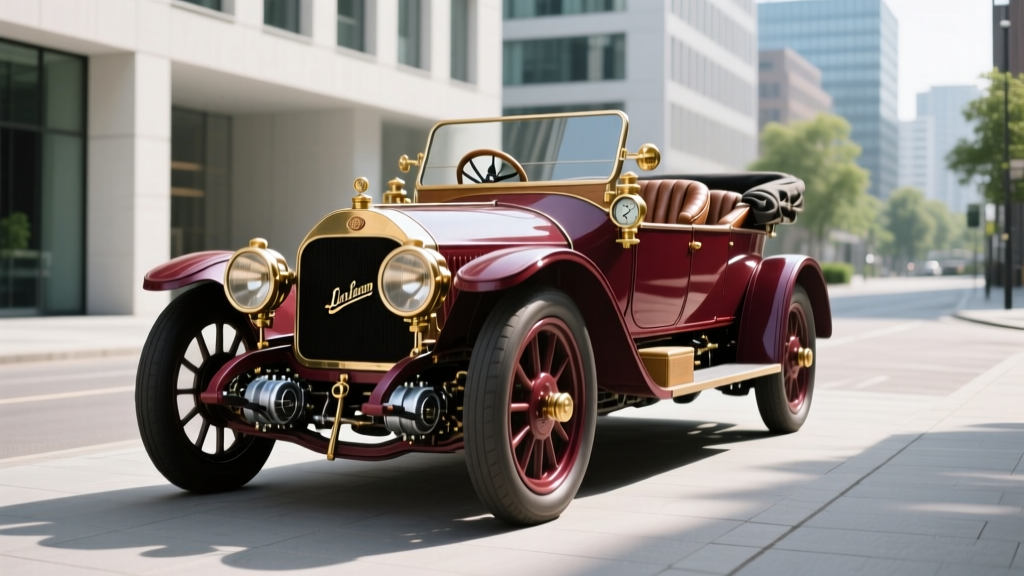
More than a century before Toyota sold its first Prius and decades before the term "hybrid" entered the automotive lexicon, a 25-year-old engineer named Ferdinand Porsche built the world's first hybrid-electric vehicle. The Lohner-Porsche hybrid, produced between 1900 and 1905 in Vienna, Austria, wasn't just a curiosity — it was a remarkably sophisticated machine that combined a gasoline engine with electric wheel-hub motors in a series-hybrid configuration that engineers still use today.
For modern EV shoppers researching the lineage of hybrid technology, the Lohner-Porsche is essential context. The architecture Ferdinand Porsche pioneered — using an internal combustion engine as a generator to feed electricity to electric drive motors — is the exact same series-hybrid (or range-extended EV) layout found in vehicles like the BMW i3 REx and the upcoming Ram Ramcharger EREV. Understanding this origin story clarifies why modern hybrids and plug-in hybrids work the way they do.
How the Lohner-Porsche Hybrid Worked
The Lohner-Porsche system was developed in partnership with the Viennese carriage builder Ludwig Lohner & Co. Ferdinand Porsche, then working at electrical firm Béla Egger (later part of ABB), had already built the "Lohner-Porsche Electromobile" — a pure battery-electric vehicle with electric motors integrated directly into the front wheel hubs. These wheel-hub motors (Radnabenmotoren) produced roughly 2.5 horsepower each and eliminated the need for a mechanical drivetrain, gearbox, or differential.
The pure-electric version debuted at the 1900 Paris World's Fair (Exposition Universelle) and won a Grand Prix. But it suffered from the same limitation that plagued every early EV: heavy lead-acid batteries and limited range. The vehicle carried up to 410 kg (904 lbs) of batteries and could travel approximately 30 miles (48 km) on a single charge at speeds up to 31 mph (50 km/h).
Porsche's solution was the Mixte variant — a series-hybrid configuration:
- A Daimler gasoline engine (later a De Dion-Bouton engine) mounted in the chassis
- The engine drove a generator (dynamo) that produced electricity
- That electricity powered the wheel-hub electric motors directly or charged a smaller battery buffer
- The vehicle could run on battery alone for short distances or use the engine-generator for extended range
This is functionally identical to what we now call a series hybrid or extended-range electric vehicle (EREV). The gasoline engine never mechanically drives the wheels — it only generates electricity. The wheels are always driven by electric motors.
Series Hybrid vs. Parallel Hybrid vs. PHEV — Then and Now
| Architecture | How It Works | Historical Example | Modern Example |
|---|---|---|---|
| Series Hybrid | Engine generates electricity only; motors drive wheels | Lohner-Porsche Mixte (1900) | BMW i3 REx, Ram Ramcharger EREV |
| Parallel Hybrid (HEV) | Engine and motor can both drive wheels mechanically | N/A (developed later) | Toyota Prius, Honda Accord Hybrid |
| Plug-in Hybrid (PHEV) | Larger battery + plug-in charging; engine as backup or assist | N/A | Toyota RAV4 Prime, Jeep Wrangler 4xe |
| Pure BEV | Battery + electric motor only; no engine | Lohner-Porsche Electromobile (1900) | Tesla Model Y, Hyundai Ioniq 5 |
Lohner-Porsche Specifications: What We Know
Historical records from the Porsche Newsroom and automotive archives provide the following specifications for the Lohner-Porsche Mixte:
| Specification | Lohner-Porsche Mixte (1900–1905) |
|---|---|
| Powertrain Type | Series hybrid (engine-generator + electric wheel-hub motors) |
| Gasoline Engine | Daimler 2-cylinder / De Dion-Bouton, ~10–14 HP |
| Electric Motors | Wheel-hub motors, ~2.5 HP each (front wheels) |
| Total System Power | ~7–14 HP (depending on variant and engine) |
| Battery Type | Lead-acid cells |
| Battery Weight | Up to 410 kg (904 lbs) in EV version; smaller in Mixte |
| Electric-Only Range | ~30 miles / 48 km (pure EV version) |
| Top Speed | ~31–37 mph (50–60 km/h) |
| Vehicle Weight | ~1,200–1,800 kg (2,645–3,968 lbs) |
| Production Years | 1900–1905 |
| Units Produced | ~300 (all variants combined) |
| Original Price | ~14,000–30,000 Austro-Hungarian Kronen (very expensive for the era) |
For context, 14 HP may sound trivial, but in 1900 most horse-drawn carriages had zero horsepower, and the average automobile produced 5–15 HP. The Lohner-Porsche was competitive with its contemporaries.
Fuel Economy and Efficiency — In Historical Context
There are no EPA ratings for a 1905 vehicle, and the concept of "miles per gallon" as a standardized metric didn't exist in Ferdinand Porsche's era. However, historical accounts suggest the Mixte's Daimler engine consumed fuel at roughly the rate of contemporary automobiles — approximately 10–15 miles per gallon under the operating conditions of the time.
What made the Lohner-Porsche hybrid notable wasn't fuel economy in the modern sense. It was the flexibility of the powertrain:
- Electric-only mode for quiet, zero-local-emission city driving (charged from stationary power sources)
- Engine-generator mode for extended range beyond the battery's capacity
- Regenerative capability — some accounts suggest Porsche experimented with using the motors as generators during braking, a precursor to modern regenerative braking
This dual-mode flexibility is the same value proposition that modern PHEVs offer: electric driving for daily commutes, with a gasoline engine for longer trips where charging infrastructure is unavailable.
Why the Lohner-Porsche Matters to Modern EV Buyers
You can't buy a Lohner-Porsche in 2026. So why does a 125-year-old vehicle matter to someone researching a Toyota RAV4 Prime or a Ford Escape PHEV today?
Because the engineering decisions Ferdinand Porsche made in 1900 are still shaping the vehicles you're considering:
The Series-Hybrid Revival
After decades of parallel-hybrid dominance (led by Toyota's power-split system), the series-hybrid architecture is returning. The BMW i3 REx used a small gasoline engine purely as a generator. The Ram Ramcharger (announced for 2026) uses a 3.6L V6 as a range-extending generator with no mechanical connection to the wheels. These are direct descendants of the Mixte's architecture.
Wheel-Hub Motors: Still the Future?
Porsche's wheel-hub motor concept eliminates the need for driveshafts, differentials, and axles. Companies like Lordstown Motors (now defunct) and REE Automotive have attempted to commercialize wheel-hub motors for modern EVs. The concept remains compelling for packaging efficiency, though unsprung-weight challenges persist.
The Range Problem Is 125 Years Old
The Lohner-Porsche was invented because pure battery-electric vehicles in 1900 had insufficient range — exactly the concern that drives PHEV adoption today. Battery energy density has improved by a factor of roughly 50× since lead-acid cells, but the fundamental trade-off between battery weight, cost, and range remains.
Modern Hybrid & PHEV Comparison: What You Can Buy in 2026
| Vehicle | Type | EPA Combined MPG / MPGe | Electric-Only Range | Combined HP | Base MSRP (2026) |
|---|---|---|---|---|---|
| Toyota Prius | HEV | 57 MPG combined | N/A | 196 HP | ~$29,500 |
| Toyota Prius Prime | PHEV | 52 MPG / 127 MPGe | 44 miles | 220 HP | ~$34,500 |
| Toyota RAV4 Prime | PHEV | 38 MPG / 94 MPGe | 42 miles | 302 HP | ~$44,500 |
| Honda Accord Hybrid | HEV | 48 MPG combined | N/A | 204 HP | ~$34,000 |
| Ford Escape PHEV | PHEV | 40 MPG / 105 MPGe | 37 miles | 210 HP | ~$39,500 |
| Hyundai Tucson PHEV | PHEV | 35 MPG / 80 MPGe | 33 miles | 261 HP | ~$38,500 |
Sources: fueleconomy.gov, manufacturer specifications. Prices are approximate MSRP and may vary by model year and trim.
Hybrid vs. PHEV vs. EV: Which Powertrain Fits You?
The Lohner-Porsche offered two modes: battery-electric and engine-generator. Modern buyers face a similar but more granular choice. Here's a decision framework:
Choose a Conventional Hybrid (HEV) If:
- You cannot charge at home or at work (no outlet access)
- You want maximum MPG with zero behavioral change from a gas car
- Your budget is under $35,000
- You drive mostly in city traffic (hybrids often exceed EPA city MPG in real-world stop-and-go driving thanks to regenerative braking)
Choose a Plug-in Hybrid (PHEV) If:
- You can charge at home (Level 1 or Level 2) and your daily commute is under 40 miles round-trip
- You want electric-only daily driving but need a gas engine for road trips
- You want to reduce fuel consumption by 60–80% without range anxiety
- You may qualify for the federal §30D tax credit (up to $7,500, subject to battery-sourcing, MSRP, and income requirements — see IRS guidelines)
Choose a Full Battery EV (BEV) If:
- You have reliable home Level 2 charging and/or access to public DC fast chargers
- Your daily driving is under 250 miles and you take road trips infrequently (or are willing to plan charging stops)
- You want the lowest per-mile energy cost and zero tailpipe emissions
- You qualify for the full $7,500 federal tax credit and any state incentives
Tax Credits and Incentives for Modern Hybrids and PHEVs
The Lohner-Porsche obviously didn't come with tax incentives, but the policy landscape for modern hybrids and PHEVs is complex and worth understanding before you buy.
Under current IRS §30D rules for the Clean Vehicle Credit:
- Conventional HEVs (like the Toyota Prius): Do NOT qualify for the federal §30D credit. The credit applies only to plug-in vehicles with a battery capacity of at least 7 kWh.
- PHEVs: May qualify for up to $7,500, split between a critical-minerals component ($3,750) and a battery-components component ($3,750). Eligibility depends on where battery minerals and components are sourced, and these rules have tightened significantly since 2024.
- MSRP caps: Vans, SUVs, and pickups must be under $80,000 MSRP; sedans under $55,000.
- Income caps: Modified adjusted gross income must not exceed $300,000 (joint), $225,000 (head of household), or $150,000 (single).
- Point-of-sale transfer: Since 2024, buyers can transfer the credit to the dealer for an upfront price reduction rather than waiting for a tax refund.
Always verify current eligibility on fueleconomy.gov and consult a tax professional, as sourcing requirements and eligible vehicle lists change frequently.
Reliability, Battery Longevity, and Ownership Costs
There are no J.D. Power reliability scores for a 1905 Lohner-Porsche, but modern hybrid and PHEV battery longevity is one of the most common buyer concerns. Here's what the data shows:
Hybrid & PHEV Battery Warranties (2026 Models)
- Federal mandate: All hybrid and EV batteries must carry a minimum warranty of 8 years / 100,000 miles (10 years / 150,000 miles in CARB states including California, New York, and others).
- Toyota: 10 years / 150,000 miles on hybrid batteries for all 2020+ models.
- Hyundai/Kia: 10 years / 100,000 miles on hybrid and PHEV batteries.
- Ford: 8 years / 100,000 miles on hybrid and PHEV battery packs.
The warranty typically guarantees the battery will retain at least 60–70% of original capacity over the warranty period. In practice, modern nickel-metal-hydride (HEV) and lithium-ion (PHEV) hybrid batteries routinely last 150,000–200,000+ miles before significant degradation.
Replacement cost: If a hybrid battery does fail out of warranty, replacement costs range from approximately $2,000–$4,000 for a Toyota Prius HEV battery to $5,000–$8,000 for a larger PHEV battery pack (e.g., RAV4 Prime). Refurbished and aftermarket options are increasingly available at lower prices.
Frequently Asked Questions
Was the Lohner-Porsche the first hybrid car ever made?
Yes. The Lohner-Porsche Mixte, produced starting in 1900, is widely recognized by automotive historians and the Porsche company itself as the world's first hybrid-electric vehicle. It predated the Toyota Prius by 97 years.
How did the Lohner-Porsche charge its battery?
The pure-electric version was charged from stationary electrical sources (the electrical grid was in its infancy). The Mixte hybrid version used its onboard gasoline engine-driven generator to charge the battery while driving — the same principle as a modern series hybrid or EREV.
Can I buy a Lohner-Porsche today?
No. Only about 300 units were produced between 1900 and 1905, and very few survive. One is held in the Porsche Museum collection in Stuttgart. The Lohner-Porsche is not available for purchase and is relevant only as a historical reference for hybrid technology.
Does a conventional hybrid (HEV) need to be plugged in?
No. Conventional hybrids like the Toyota Prius, Honda Accord Hybrid, and Hyundai Sonata Hybrid never need to be plugged in. They generate all their electricity internally through regenerative braking and the gasoline engine. Only plug-in hybrids (PHEVs) and battery EVs (BEVs) require external charging.
What modern car is closest to the Lohner-Porsche concept?
The closest modern equivalent is a series-hybrid EREV (extended-range electric vehicle) like the BMW i3 REx (discontinued) or the announced Ram Ramcharger, where a gasoline engine serves solely as a generator and never mechanically drives the wheels. The wheel-hub motor concept has also been revisited by companies like REE Automotive in commercial vehicle platforms.
How many MPG does a modern hybrid get compared to the Lohner-Porsche?
The Lohner-Porsche Mixte achieved roughly 10–15 MPG by modern estimates. A 2026 Toyota Prius achieves an EPA-rated 57 MPG combined (57 city / 56 highway) — a roughly 4× improvement in fuel efficiency over 125 years of hybrid development. Real-world city MPG in hybrids often exceeds the EPA estimate because regenerative braking recovers energy in stop-and-go traffic.
Do PHEVs qualify for the $7,500 federal tax credit?
Some do, but eligibility is restricted by battery-sourcing requirements, MSRP caps, and buyer income limits under IRS §30D rules. Check the current eligible vehicle list on fueleconomy.gov and consult a tax professional. Conventional hybrids (HEVs) do not qualify for the federal credit.
The Bottom Line: What 1900 Teaches Us About 2026
Ferdinand Porsche solved the range problem in 1900 the same way automakers are solving it in 2026: by combining the energy density of liquid fuel with the efficiency and smoothness of electric drive. The Lohner-Porsche hybrid wasn't a dead end — it was a blueprint that took a century for battery technology and power electronics to catch up with.
If you're choosing between a hybrid, PHEV, or full EV today, the core trade-off is unchanged from Vienna in 1900: batteries give you quiet, efficient, zero-emission driving, but range is limited by weight and cost. A gasoline engine extends range at the cost of complexity and emissions. The right answer depends on your driving patterns, charging access, and budget — not on which technology is "better" in the abstract.
Hybrid / PHEV Advantages (vs. Full EV)
- No range anxiety — gas engine as backup
- No dependence on charging infrastructure for long trips
- Lower upfront cost (HEVs especially)
- Proven long-term reliability (20+ years of Prius data)
- HEVs require no charging behavior change
Hybrid / PHEV Limitations (vs. Full EV)
- Higher maintenance (oil changes, engine components)
- Tailpipe emissions when engine runs
- PHEVs have smaller EV-only range (30–44 miles typical)
- Less eligible for federal tax credits than BEVs
- Two powertrains = more complexity than a pure EV