Lincoln's Electrified SUV Strategy in 2026
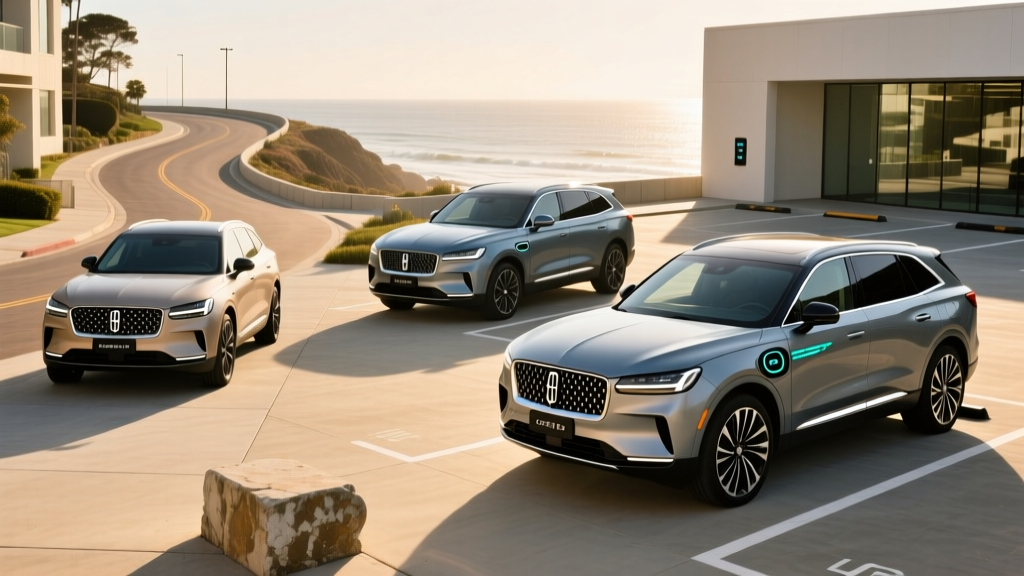
Lincoln approaches electrification differently than most luxury brands. Rather than rushing to full battery-electric vehicles, the automaker has invested heavily in plug-in hybrid and conventional hybrid powertrains across its SUV lineup. For buyers searching for a Lincoln SUV hybrid, the 2026 model year offers two distinct paths: the Corsair Grand Touring plug-in hybrid (PHEV) for short electric commutes with gas-engine backup, and the Aviator hybrid for three-row luxury with improved fuel economy.
This guide breaks down every Lincoln SUV hybrid option available in 2026, with exact EPA efficiency data, electric-only range figures, powertrain specifications, pricing, and federal tax credit eligibility. We'll also separate conventional hybrid (HEV) technology from plug-in hybrid (PHEV) systems — a distinction that fundamentally changes how you fuel, charge, and drive.
HEV vs PHEV: Understanding Lincoln's Two Hybrid Approaches
Conventional Hybrid (HEV)
A conventional hybrid pairs a gasoline engine with a small electric motor and battery (typically 1–2 kWh). The battery recharges through regenerative braking and engine power — you never plug it in. The electric motor assists during acceleration and enables brief electric-only driving at low speeds, but the gas engine does most of the work. Think of it as a more efficient gas car.
Plug-In Hybrid (PHEV)
A plug-in hybrid carries a substantially larger battery (10–20+ kWh) that you charge by plugging into a wall outlet or Level 2 charger. This enables 20–40 miles of genuine electric-only driving at highway speeds before the gas engine engages. Once the battery depletes, it operates like a conventional hybrid. A PHEV is essentially an EV for short trips and a hybrid for long ones.
Lincoln currently offers the Corsair Grand Touring as a PHEV and has historically offered the Aviator with a hybrid powertrain. Let's examine each in detail.
2026 Lincoln Corsair Grand Touring PHEV: Range, MPG, and Specs
The Corsair Grand Touring is Lincoln's compact luxury PHEV, competing with the BMW X3 xDrive30e, Volvo XC60 Recharge, and Lexus NX 450h+. It pairs a turbocharged engine with a powerful electric motor for meaningful electric-only commuting capability.
| Specification | Value |
|---|---|
| Powertrain | 2.5L Atkinson-cycle 4-cyl + electric motor (PHEV) |
| Combined Horsepower | 266 hp |
| Battery Capacity | 14.4 kWh (usable, lithium-ion NMC) |
| EPA Electric-Only Range | 28 miles |
| Total Combined Range | ~430 miles (gas + electric) |
| EPA MPGe (electric + gas) | 78 MPGe |
| EPA MPG (gas-only, charge-depleted) | 33 city / 32 highway / 33 combined |
| Level 1 Charging (120V) | ~10–12 hours (0–100%) |
| Level 2 Charging (240V) | ~3.5 hours (0–100%) |
| DC Fast Charging | Not supported |
| 0–60 mph | ~7.0 seconds |
| Drivetrain | eAWD (electric rear axle) |
| Starting MSRP | ~$53,500 |
| Battery Warranty | 8 years / 100,000 miles |
Real-World Electric Range vs. EPA
The EPA rates the Corsair Grand Touring at 28 miles of electric-only range. In real-world driving, expect 22–26 miles in mixed conditions. Cold weather (below 40°F) can reduce electric range by 15–25%, dropping it to roughly 20–23 miles. Highway-speed driving at 70+ mph also depletes the battery faster than the EPA city-heavy test cycle suggests. For a daily commute under 20 miles round-trip, most owners will rarely visit a gas station during the week.
Charging the Corsair PHEV at Home
The Corsair Grand Touring does not support DC fast charging — this is typical for PHEVs in this class. The relatively small 14.4 kWh battery makes Level 2 home charging practical: a standard 240V outlet (like a dryer outlet) or a dedicated Level 2 wallbox will fully recharge the battery in roughly 3.5 hours. Many PHEV owners simply plug in overnight and wake up to a full battery every morning. A standard 120V household outlet works but takes 10–12 hours — adequate for overnight charging if your daily electric needs are modest.
2026 Lincoln Aviator Hybrid: Three-Row Efficiency
The Aviator is Lincoln's midsize three-row SUV, and its hybrid variant (historically badged as the Aviator Grand Touring PHEV or available as a conventional hybrid depending on model year) addresses the fuel-economy pain point of large luxury SUVs. For 2026, Lincoln has streamlined the Aviator lineup, with the hybrid powertrain remaining a key option for buyers who need three rows but want to reduce fuel costs.
| Driving Condition | EPA MPG |
|---|---|
| City | 23 MPG |
| Highway | 24 MPG |
| Combined | 23 MPG |
For comparison, the gas-only Aviator with its twin-turbo V6 achieves roughly 17 city / 24 highway / 20 combined MPG. The hybrid system's biggest gain comes in city driving, where the electric motor handles low-speed acceleration and the engine shuts off at stops — exactly where conventional gas engines waste the most fuel.
Real-World MPG: What Owners Actually See
Hybrid SUVs frequently exceed their EPA city ratings in real-world stop-and-go traffic because regenerative braking recaptures energy that a gas car would waste as heat. Aviator hybrid owners who do predominantly city and suburban driving often report 24–26 MPG combined. Highway-heavy drivers at sustained 75+ MPH speeds will see figures closer to the EPA rating or slightly below, since the electric motor provides less benefit at constant high speed. In cold weather, expect a 1–3 MPG drop due to increased engine idling for cabin heat and reduced battery efficiency.
Lincoln Hybrid Battery Longevity and Warranty Coverage
Lincoln Hybrid & PHEV Battery Warranty
Coverage: 8 years or 100,000 miles (whichever comes first)
What's covered: Battery capacity loss below a defined threshold (typically 60–70% of original capacity), manufacturing defects, and hybrid system components including the electric motor and power inverter.
Replacement cost (out of warranty): Lincoln PHEV battery replacement typically ranges from $5,000 to $8,000 including labor, depending on the model. Conventional hybrid battery replacement is generally $2,500–$4,500.
Real-world longevity: Modern lithium-ion hybrid batteries with active thermal management routinely last 150,000–200,000+ miles before significant degradation. Ford/Lincoln's hybrid systems have been in production since the early 2000s, and widespread premature battery failures are rare. Source: Ford/Lincoln Warranty Guide.
Battery anxiety is the top concern for first-time hybrid buyers. The data is reassuring: hybrid batteries are far less stressed than full EV batteries because they operate in a narrow state-of-charge window (typically 20–80%), avoiding the deep cycles that accelerate degradation. The 8-year/100,000-mile federal mandate for hybrid battery warranty coverage (EPA Green Vehicles) means most owners will never face an out-of-pocket battery replacement.
Pricing and Federal Tax Credit Eligibility
Lincoln's hybrid SUVs carry a price premium over their gas-only counterparts, but the fuel savings and potential tax incentives can offset the difference.
| Model | Starting MSRP | Gas Equivalent MSRP | Premium |
|---|---|---|---|
| Corsair Grand Touring (PHEV) | ~$53,500 | ~$40,000 (Corsair base) | ~$13,500 |
| Aviator Hybrid | ~$60,000 | ~$55,000 (Aviator base) | ~$5,000 |
Does a Lincoln Hybrid Qualify for the Federal Tax Credit?
Under IRS §30D rules for 2026, plug-in hybrid vehicles may qualify for up to $7,500 in federal tax credits, but eligibility depends on several requirements that change frequently:
- MSRP cap: SUVs must have an MSRP at or below $80,000 (Lincoln models typically qualify).
- Buyer income cap: Modified adjusted gross income must not exceed $150,000 (single), $225,000 (head of household), or $300,000 (joint).
- Battery sourcing: A percentage of critical minerals and battery components must be sourced from the U.S. or free-trade-agreement countries — this requirement tightens annually.
- Point-of-sale transfer: As of 2024, eligible buyers can transfer the credit to the dealer at purchase, reducing the upfront price rather than waiting for a tax refund.
The Corsair Grand Touring PHEV, as a plug-in hybrid with a sufficiently large battery, has historically been eligible for a partial or full credit depending on the model year's sourcing compliance. Conventional hybrids (non-plug-in) do not qualify for the §30D credit. Always verify current eligibility on IRS.gov's clean vehicle credits page before purchasing, as battery component sourcing rules evolve yearly.
Who Should Buy a Lincoln SUV Hybrid?
Reasons to Choose a Lincoln Hybrid
- Daily commute under 25 miles (Corsair PHEV can cover it entirely on electricity)
- No reliable access to public DC fast charging in your area
- Want luxury and quietness without full EV range commitment
- Regularly take road trips exceeding 300 miles (no charging stops needed)
- Live in a cold climate where EV range loss is a concern
- Want lower fuel costs without changing your driving or fueling habits significantly
Reasons to Consider a Full EV Instead
- Have home Level 2 charging and want zero gasoline purchases
- Daily commute exceeds PHEV electric range (a full EV's 250+ mi range covers it easily)
- Want maximum federal and state incentives (full EVs qualify more broadly)
- Prioritize lowest per-mile fuel cost (electricity is typically $0.04–$0.06/mi vs. $0.12–$0.18/mi for gas hybrids)
- Want minimal drivetrain maintenance (no oil changes, no transmission fluid)
The Decision Framework
Choose the Corsair Grand Touring PHEV if: You want a compact luxury SUV with genuine electric commuting (22–28 mi), can charge at home nightly, and regularly take longer trips where a full EV would require planning charging stops.
Choose the Aviator Hybrid if: You need three rows, tow occasionally, and want better city MPG than the gas Aviator without any change to your fueling routine (no plug-in needed for conventional hybrid trims).
Choose a full EV (like the Lincoln Star, when available) if: You have reliable home charging, your daily driving is under 250 miles, and you want the lowest operating cost and strongest tax incentives.
Frequently Asked Questions
How many MPG does a Lincoln SUV hybrid get?
The 2026 Lincoln Corsair Grand Touring PHEV achieves 33 MPG combined when operating on gasoline (after the battery is depleted), and 78 MPGe when factoring in electric driving. The Aviator hybrid achieves approximately 23 MPG combined. Both represent meaningful improvements over their gas-only counterparts, particularly in city driving where the electric motor does the most work.
How far can the Lincoln Corsair PHEV go on electric only?
The EPA rates the Corsair Grand Touring at 28 miles of electric-only range. Real-world results vary: expect 22–26 miles in mild weather with mixed driving, and 18–22 miles in cold weather or at sustained highway speeds. For most commuters with a sub-25-mile round trip, this covers daily driving entirely on electricity.
Do Lincoln hybrids need to be plugged in?
Only the Corsair Grand Touring PHEV needs (and benefits from) being plugged in. If you don't plug it in, it still drives like a conventional hybrid using its gasoline engine — but you lose the electric-only range and the fuel-cost savings that make a PHEV worthwhile. Conventional hybrid versions of Lincoln SUVs (if available by trim) never require plugging in.
Is the Lincoln hybrid system reliable?
Lincoln's hybrid systems are derived from Ford's extensively proven hybrid architecture, which has been in continuous production since the early 2000s (the Ford Escape Hybrid was one of the first hybrid SUVs). The hybrid battery carries an 8-year/100,000-mile warranty, and real-world data shows these batteries commonly last 150,000+ miles. The Corsair and Aviator use a planetary gearset e-CVT rather than a traditional multi-speed automatic, which eliminates many mechanical wear points. Reliability is a strength of this powertrain.
Does a Lincoln hybrid qualify for a tax credit?
The Corsair Grand Touring PHEV may qualify for a federal tax credit of up to $7,500 under IRS §30D, subject to buyer income limits, MSRP caps, and battery sourcing requirements that change annually. Conventional (non-plug-in) hybrids do not qualify for the federal EV credit. State-level incentives vary — check your state's energy office or fueleconomy.gov's incentives tool for local programs. Always confirm current eligibility with a tax professional before relying on credit availability.
What is the cost to replace a Lincoln hybrid battery?
Out-of-warranty replacement for a Lincoln PHEV battery typically costs $5,000–$8,000 including labor. Conventional hybrid batteries are less expensive at $2,500–$4,500. However, modern hybrid batteries with thermal management systems routinely last the life of the vehicle (150,000–200,000+ miles), and the 8-year/100,000-mile warranty provides substantial coverage. Premature failure is uncommon based on Ford/Lincoln's long hybrid production history.