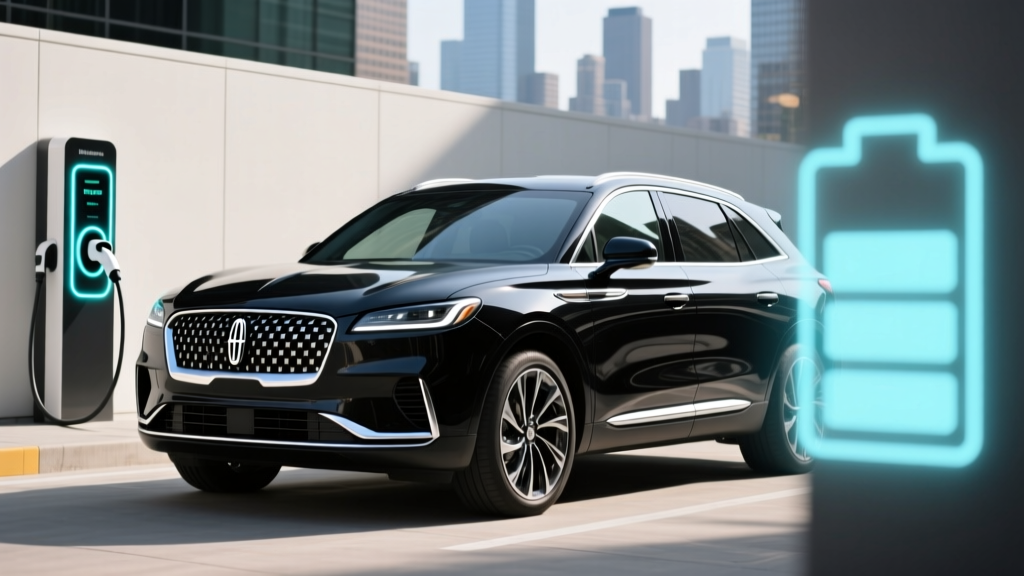
The Lincoln Nautilus stands apart in the luxury midsize SUV segment by offering only a hybrid powertrain — no conventional gas-only option exists. For the 2026 model year, the Nautilus pairs a 2.0-liter turbocharged four-cylinder engine with an electric motor in a conventional hybrid (HEV) configuration. There is no plug-in hybrid (PHEV) variant and no full-electric version. This makes the Nautilus a compelling pick for luxury buyers who want hybrid efficiency without ever plugging in, but it also means understanding exactly what this powertrain delivers — and where its limits lie.
HEV vs PHEV: Where the Nautilus Fits
Before examining specs, it's essential to clarify the distinction, because Lincoln's naming can confuse first-time hybrid shoppers:
| Feature | Nautilus Hybrid (HEV) | Plug-In Hybrid (PHEV) — e.g., BMW X5 xDrive50e |
|---|---|---|
| Plug-in charging required? | No — self-charging via regen and engine | Yes — plug in for electric-only miles |
| Electric-only range | None (motor assists engine only) | Typically 30–40 miles |
| Battery size | ~1.1 kWh (small, not plug-accessible) | 15–25 kWh usable |
| Federal tax credit (§30D) | Not eligible | Up to $7,500 if sourcing/income/MSRP rules met |
| Best for | Drivers without home charging access | Drivers with home/workplace charging |
The Nautilus is a conventional hybrid. It recovers energy during braking and deceleration, stores it in a small battery, and uses the electric motor to assist the gas engine during acceleration and low-speed driving. You never plug it in. You fuel it like any other vehicle at a gas station. If you're looking for electric-only commuting in a Lincoln, the Nautilus is not that vehicle — you'd need to look at a PHEV from another brand or wait for Lincoln's future EV plans.
Powertrain Specs: 310 HP From Turbo + Electric
The 2026 Nautilus uses Lincoln's hybrid powertrain built around a 2.0-liter turbocharged inline-four mated to an electric motor integrated into the power-split eCVT transmission. Here's the full breakdown:
| Specification | 2026 Lincoln Nautilus Hybrid |
|---|---|
| Engine | 2.0L turbocharged I-4 |
| Electric motor | Integrated AC synchronous motor |
| Combined horsepower | 310 HP |
| Combined torque | 290 lb-ft (engine) + motor assist |
| Transmission | eCVT (power-split hybrid) |
| Drivetrain | AWD (standard on all trims) |
| 0–60 mph | ~6.8 seconds (est.) |
| Towing capacity | Not rated for towing |
The 310 HP combined output gives the Nautilus confident passing power and smooth acceleration from stops, where the electric motor provides instant torque fill before the turbo spools up. The eCVT avoids the rubber-band feel of older hybrid transmissions, and Lincoln has tuned the powertrain for quietness over sportiness — consistent with the brand's luxury positioning.
Fuel Economy: EPA Ratings vs Real-World MPG
For a luxury midsize SUV, the Nautilus hybrid delivers solid efficiency. Here are the EPA figures as published on fueleconomy.gov:
| Driving Condition | EPA MPG |
|---|---|
| City | 23 MPG |
| Highway | 25 MPG |
| Combined | 24 MPG |
Real-world expectations: Hybrid powertrains typically outperform their EPA city ratings in stop-and-go traffic because regenerative braking recovers energy that a gas-only vehicle wastes as heat. Expect 25–27 MPG in mixed suburban driving. On sustained highway trips at 75+ mph, efficiency drops closer to 22–23 MPG as aerodynamic drag dominates and the electric motor contributes less. In cold weather (below 32°F), expect a 2–4 MPG reduction as the engine runs longer to heat the cabin and the battery operates less efficiently.
Compared to a gas-only competitor like the Genesis GV70 2.5T (24 MPG combined), the Nautilus hybrid is in the same ballpark — but the Nautilus achieves its numbers with standard AWD and 310 HP. The BMW X5 xDrive40 (non-hybrid) rates at 25 MPG combined but costs significantly more to enter.
Pricing, Trims, and Tax Credit Eligibility
The 2026 Nautilus is offered in three trims, all with the hybrid powertrain and AWD as standard:
| Trim | Starting MSRP | Key Features |
|---|---|---|
| Premiere | $54,265 | 48-inch panoramic display, Lincoln Co-Pilot360, heated seats |
| Reserve | $60,765 | Leather, 21-inch wheels, BlueCruise hands-free driving (1-year trial) |
| Black Label | $71,165 | Exclusive materials, 4-year concierge service, Revel Ultima audio |
Federal Tax Credit: Not Eligible
The Lincoln Nautilus hybrid is a conventional HEV, not a plug-in hybrid or battery-electric vehicle. Under IRS §30D rules, only PHEVs and BEVs with sufficient battery capacity and compliant battery/mineral sourcing qualify for the federal clean vehicle credit. The Nautilus does not qualify. Some states may offer small rebates for conventional hybrids — check your state energy office for current programs.
For context, if the tax credit is a priority, a PHEV like the BMW X5 xDrive50e (~$69,000 MSRP) may qualify for up to $7,500 depending on your income, the vehicle's battery sourcing, and MSRP caps — but you'll need home charging access to actually benefit from its electric-only range.
Battery Warranty, Reliability, and Replacement Costs
Hybrid battery longevity is the single most common concern among first-time hybrid buyers. Here's what Lincoln provides:
| Component | Warranty Coverage |
|---|---|
| Hybrid battery pack | 8 years / 100,000 miles |
| Hybrid system components (motor, eCVT, inverter) | 8 years / 100,000 miles |
| Powertrain (engine) | 6 years / 70,000 miles |
| Bumper-to-bumper | 4 years / 50,000 miles |
The Nautilus uses a relatively small nickel-metal hydride (NiMH) or lithium-ion hybrid battery — approximately 1.1 kWh — that operates within a narrow state-of-charge window managed by the vehicle's software. Unlike EV batteries, which degrade through full charge/discharge cycles, hybrid batteries experience shallow cycling, which dramatically extends their lifespan. Toyota and Ford hybrid systems (Ford supplies the Nautilus platform partner) have demonstrated 150,000–200,000+ mile battery longevity in real-world fleets.
Replacement cost if out of warranty: Based on comparable Ford/Lincoln hybrid battery packs, expect $2,000–$3,500 for a replacement hybrid battery — a fraction of EV battery replacement costs ($10,000–$20,000+). The eCVT transmission, which has no traditional clutch packs or bands, is also notably durable.
Reliability outlook: The Nautilus shares its platform and powertrain architecture with the Ford Edge hybrid lineage. Lincoln as a brand scores mid-pack in J.D. Power dependability studies, but the hybrid powertrain itself is one of the most proven configurations in the industry. The primary risk areas are electronics (the 48-inch display, sensor suites) rather than the hybrid drivetrain.
Nautilus Hybrid vs Full EV vs Gas: Decision Framework
Choose the Nautilus Hybrid if:
- You don't have reliable access to home or workplace Level 2 charging
- You want a luxury midsize SUV with AWD and low-maintenance electrified efficiency
- You take frequent road trips and don't want to plan around DC fast-charging stops
- You prefer a quiet, comfortable ride with adequate (not sporty) performance
Choose a PHEV (e.g., BMW X5 xDrive50e) if:
- You can install a Level 2 home charger (240V / 32A+)
- Your daily commute is under 35 miles and you want electric-only driving most days
- You want to reduce fuel consumption to near-zero on weekdays while keeping gas range for weekends
- You may qualify for the $7,500 federal tax credit
Choose a full EV (e.g., BMW iX, Rivian R1S) if:
- You have home charging and want zero tailpipe emissions
- You want the lowest per-mile fuel cost (~$0.04–$0.06/mile on residential electricity vs ~$0.18/mile on gas at 24 MPG)
- You're comfortable with 250–320 miles of range and DC fast-charging on road trips
- You want the lowest long-term maintenance cost (no oil changes, no engine)
The Nautilus hybrid occupies a specific niche: luxury buyers who want hybrid efficiency with zero lifestyle change. No plug, no range anxiety, no charging-app frustrations. You simply drive it and fuel it like any conventional SUV — just fewer stops at the pump.
Pros and Cons at a Glance
Pros
- No plug-in required — works with existing gas-station infrastructure
- 310 HP with standard AWD provides confident all-weather capability
- 24 MPG combined is competitive for the luxury midsize SUV class
- 8-year/100,000-mile hybrid battery warranty reduces long-term risk
- 48-inch panoramic display and BlueCruise (Reserve/Black Label) are class-leading tech
- Quiet, composed ride quality consistent with Lincoln's luxury positioning
Cons
- No PHEV or EV variant available — no electric-only driving option
- No federal tax credit eligibility for the conventional hybrid
- 23 city / 25 highway MPG is only marginally better than some gas-only rivals
- Not rated for towing — limits utility for trailer/boat owners
- Starting MSRP of $54,265 is steep for a hybrid with modest fuel savings
- Real-world highway MPG drops to ~22 at sustained 75+ mph speeds
Frequently Asked Questions
How many MPG does the Lincoln Nautilus hybrid get?
The EPA rates the 2026 Nautilus hybrid at 23 city / 25 highway / 24 combined MPG. In real-world suburban driving with moderate stop-and-go traffic, owners typically see 25–27 MPG. Sustained highway driving at higher speeds reduces this to 22–23 MPG.
Does the Nautilus hybrid need to be plugged in?
No. The Nautilus is a conventional hybrid (HEV), not a plug-in hybrid. It charges its small battery through regenerative braking and the gas engine. You fuel it exclusively at gas stations.
Can the Nautilus hybrid drive on electric power alone?
Only at very low speeds for short distances (typically under 1 mile at parking-lot speeds). The electric motor primarily assists the gas engine rather than powering the vehicle independently. There is no meaningful electric-only range.
Is the Nautilus hybrid reliable?
The hybrid powertrain architecture is one of the most proven in the industry, sharing lineage with Ford's extensively deployed hybrid systems. The hybrid battery and components are covered by an 8-year/100,000-mile warranty. Based on comparable platforms, the hybrid battery should last 150,000+ miles with normal use.
What does a Nautilus hybrid battery replacement cost?
If the hybrid battery fails outside the 8-year/100,000-mile warranty, expect approximately $2,000–$3,500 for replacement — significantly less than an EV traction battery. The small battery size and shallow cycling design contribute to both longevity and affordable replacement.
Does the Lincoln Nautilus qualify for any tax credit?
The Nautilus hybrid does not qualify for the federal §30D clean vehicle credit, which is limited to plug-in hybrids and battery-electric vehicles. Some states may offer small hybrid rebates — check your state energy office. The IRS §30D page details current federal eligibility rules.
How does the Nautilus hybrid compare to a full EV for road trips?
The Nautilus has a clear road-trip advantage: its ~500-mile total range (approximately 18-gallon tank × 24 MPG + reserve) means you can drive 6+ hours between fuel stops with no route planning for chargers. A full EV with 300 miles of range requires DC fast-charging stops every 3–4 hours on long trips, adding 20–30 minutes per stop depending on the charging network.
Is BlueCruise self-driving?
No. Lincoln's BlueCruise is an SAE Level 2 driver-assistance system. On pre-qualified divided highways, it allows hands-off driving, but the driver must remain attentive and ready to take over immediately. A driver-facing camera monitors engagement. This is fundamentally different from Level 4 autonomous services like Waymo, which operate without a driver.