Quick Verdict: A Discontinued Hybrid Worth Buying Used
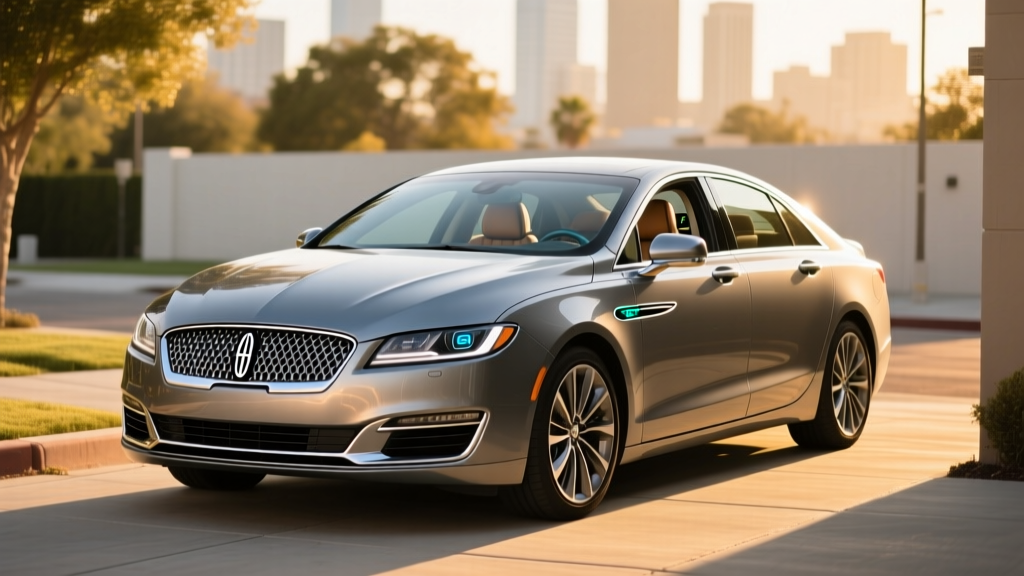
The Lincoln MKZ Hybrid sedan ended production after the 2020 model year, but it remains one of the most fuel-efficient luxury sedans available on the used market. Built on Ford's CD4 platform alongside the Ford Fusion Hybrid, the MKZ Hybrid pairs a 2.0-liter Atkinson-cycle four-cylinder engine with an electric motor for a combined 188 horsepower and an EPA-rated 42 MPG combined. Because Lincoln never produced a plug-in hybrid (PHEV) version of the MKZ in the U.S. market, every MKZ Hybrid is a conventional hybrid electric vehicle (HEV) — no plug, no range anxiety, no charging infrastructure required.
If you're shopping for a luxury hybrid sedan and want to avoid the premium pricing of a Lexus ES 300h, the used MKZ Hybrid is a compelling value play. Here's everything you need to know about fuel economy, reliability, battery longevity, and total ownership costs.
HEV vs PHEV: Understanding the MKZ Hybrid's Powertrain
Conventional Hybrid (HEV) — Lincoln MKZ Hybrid: The battery recharges through regenerative braking and the gasoline engine. You never plug it in. The electric motor assists the gas engine during acceleration and enables low-speed electric-only driving for short distances (typically under 1 mile at low speeds). Fuel economy improves dramatically in city driving.
Plug-In Hybrid (PHEV) — Not Available for MKZ: A PHEV has a larger battery (typically 10-20 kWh) that you charge via a wall outlet or charging station, providing 20-40 miles of electric-only range before the gas engine engages. Lincoln offered a Fusion Energi PHEV (the MKZ's corporate cousin), but never badged a PHEV MKZ for the U.S. market. If you want plug-in capability from Lincoln, you'd need to look at the Corsair Grand Touring PHEV (discontinued after 2024) or shop a different brand.
The distinction matters because it sets expectations: the MKZ Hybrid will not drive 30 miles on electricity alone. It will, however, deliver consistently strong fuel economy without any change to your fueling habits.
Fuel Economy: EPA Ratings and Real-World MPG
The EPA rated the 2017–2020 Lincoln MKZ Hybrid at 42 MPG city / 39 MPG highway / 41 MPG combined. For the earlier 2013–2016 generation, the rating was slightly lower at 38 MPG combined. These figures come from fueleconomy.gov, the official source for EPA fuel-economy data.
| Model Year | City MPG | Highway MPG | Combined MPG |
|---|---|---|---|
| 2017–2020 MKZ Hybrid | 42 | 39 | 41 |
| 2013–2016 MKZ Hybrid | 41 | 36 | 38 |
| 2020 Toyota Camry Hybrid (comparison) | 51 | 53 | 52 |
| 2020 Lexus ES 300h (comparison) | 43 | 44 | 44 |
Real-world expectations: Hybrid sedans typically exceed their EPA city ratings in stop-and-go traffic because regenerative braking recaptures energy that a gas car wastes as heat. Owners on fuel-tracking platforms regularly report 43–46 MPG in mixed suburban driving. Highway driving at sustained 70+ MPH speeds tends to fall slightly below the EPA highway rating — expect 37–39 MPG on long interstate trips. Cold weather (below 35°F) reduces fuel economy by roughly 5–10% as the engine runs more frequently to provide cabin heat.
Powertrain and Performance Specifications
| Specification | 2017–2020 Lincoln MKZ Hybrid |
|---|---|
| Engine | 2.0L Atkinson-cycle I4 |
| Electric Motor | Permanent-magnet AC synchronous |
| Combined Horsepower | 188 hp |
| Engine HP | 141 hp @ 6,000 rpm |
| Motor HP | 120 hp (88 kW) |
| Transmission | eCVT (planetary gearset) |
| Hybrid Battery | 1.4 kWh lithium-ion (usable ~1.0 kWh) |
| 0–60 MPH | ~8.5 seconds |
| Drivetrain | Front-wheel drive |
| Curb Weight | ~3,870 lbs |
| Fuel Tank | 13.5 gallons |
| Total Range | ~553 miles (EPA combined) |
The MKZ Hybrid uses Ford's hybrid synergy drive system — a planetary eCVT that seamlessly blends engine and motor power without the rubber-band feeling of a traditional belt-driven CVT. Acceleration is adequate for merging and passing but not sporty; this is a luxury cruiser optimized for efficiency, not a performance sedan. The 1.4 kWh battery is small by PHEV or BEV standards (a Tesla Model 3 carries 60–82 kWh), but it's appropriately sized for a conventional hybrid that only needs to buffer energy for regenerative braking and short electric-assist bursts.
Battery Warranty, Lifespan, and Replacement Cost
Original Warranty: Lincoln covered the MKZ Hybrid's high-voltage battery for 8 years or 100,000 miles (whichever comes first). In states that adopted California Air Resources Board (CARB) emissions standards — including California, New York, Massachusetts, and several others — the hybrid battery warranty extended to 10 years or 150,000 miles.
Current Status (2026): For a 2017 model year MKZ Hybrid, the standard 8-year/100,000-mile warranty has expired as of 2025. A 2018 model's warranty expires in 2026. Only 2019–2020 models remain under the original 8-year factory hybrid battery warranty, and only if mileage is under 100,000.
Replacement Cost: A new OEM hybrid battery pack from Lincoln/Ford runs approximately $3,500–$5,000 including installation at a dealership. Independent hybrid-battery specialists offer refurbished packs for $1,800–$3,000. Individual cell replacement is sometimes possible for $800–$1,500 if only a few cells have degraded.
Longevity data: Ford's hybrid system has proven durable. The Fusion Hybrid and MKZ Hybrid share the same powertrain, and fleet data from taxi and ride-share use shows these batteries commonly reaching 150,000–200,000 miles with minimal capacity loss. Unlike a full EV battery, the MKZ's 1.4 kWh pack undergoes shallow charge-discharge cycles (the system keeps the battery between roughly 40% and 60% state of charge), which dramatically reduces degradation. Hybrid battery failure before 150,000 miles is uncommon.
Pricing: Used Market Values and Tax Credit Eligibility
Because the MKZ Hybrid is no longer in production, you'll find it exclusively on the used market. As of early 2026, pricing ranges approximately:
- 2017–2018 models (60,000–90,000 miles): $14,000–$18,500
- 2019–2020 models (30,000–60,000 miles): $18,000–$24,000
- Low-mileage 2020 examples (under 30,000 miles): $22,000–$27,000
Federal tax credit: The MKZ Hybrid does not qualify for the federal §30D new clean vehicle credit — that credit applies only to new plug-in vehicles (BEVs and PHEVs with at least 7 kWh of battery capacity). The MKZ's 1.4 kWh battery and HEV configuration make it ineligible. The IRS §30D rules are clear: conventional hybrids do not qualify.
The used clean vehicle credit (up to $4,000 or 30% of sale price, whichever is lower) also requires the vehicle to be a plug-in EV or fuel-cell vehicle. The MKZ Hybrid is not eligible for this credit either. You're purchasing this car on its fuel-economy merits and luxury value alone — no federal incentive applies.
Some states offer their own incentives for hybrid purchases, but these are increasingly focused on plug-in vehicles. Check your state's energy office or DMV for current programs.
Reliability, Maintenance, and Ownership Costs
The MKZ Hybrid benefits from Ford's mature hybrid technology, which has been in continuous production since the 2005 Escape Hybrid. The eCVT transmission has no belts, no clutches, and no torque converter — it's a simple planetary gearset with very few wear components. There's no traditional 12V starter motor (the hybrid traction motor starts the engine), and the regenerative braking system significantly extends brake pad life. Many owners report original brake pads lasting 80,000–100,000 miles.
Maintenance advantages vs. gas-only MKZ:
- Brake pads last 2–3× longer due to regenerative braking
- No starter motor to replace
- No alternator to replace
- Engine runs less often, potentially extending oil life
- Transmission fluid changes are infrequent (eCVT is sealed and simple)
Maintenance costs to budget for:
- Standard oil changes every 7,500–10,000 miles (~$50–$80)
- Hybrid system coolant flush at 100,000 miles (~$150–$250)
- Inverter coolant service per maintenance schedule
- Hybrid battery air filter inspection (keep the rear-seat vent clear)
Insurance costs are generally in line with other midsize luxury sedans. The MKZ Hybrid doesn't carry the insurance surcharge that some full EVs do, since repair costs and parts availability are well-established.
Pros, Cons, and the Decision Framework
Pros
- 42 MPG combined (41 EPA) without plugging in
- Luxury interior with Lincoln's quiet cabin tuning
- Proven, reliable Ford hybrid powertrain
- No charging infrastructure needed
- Strong value on the used market vs. Lexus ES 300h
- Regenerative braking extends brake life significantly
- Smooth eCVT with no gear-shift shock
Cons
- Discontinued — no new models available
- 188 hp is modest for a luxury sedan
- No plug-in hybrid option was ever offered
- Factory warranty expiring on older model years
- Infotainment system (SYNC 3) feels dated vs. 2026 competitors
- Rear-seat headroom is tight for taller passengers
- No all-wheel-drive option
Choose the Lincoln MKZ Hybrid if: You want a quiet, comfortable luxury sedan with excellent city fuel economy, you don't have access to home or workplace charging, and you're comfortable buying used. It's ideal for commuters with stop-and-go traffic who value refinement over performance.
Choose a PHEV (e.g., Toyota Prius Prime, Hyundai Tucson PHEV) if: You have reliable home charging and a short commute (under 30 miles). A PHEV lets you drive most daily miles on electricity while keeping the gas engine for longer trips.
Choose a full BEV (e.g., Tesla Model 3, Hyundai Ioniq 6) if: You have home Level 2 charging, want to eliminate gasoline entirely, and your daily driving plus road-trip habits align with current DC fast-charging infrastructure in your region.
Choose a gas-only sedan if: You drive primarily highway miles at high speeds (where the hybrid advantage shrinks), you want the lowest possible purchase price, and fuel cost savings wouldn't offset a hybrid premium in your ownership timeline.
Frequently Asked Questions
How many MPG does the Lincoln MKZ Hybrid get?
The 2017–2020 Lincoln MKZ Hybrid is EPA-rated at 42 MPG city, 39 MPG highway, and 41 MPG combined. Real-world owners commonly report 43–46 MPG in mixed suburban driving. Highway-only driving at 75+ MPH typically yields 37–39 MPG. Earlier 2013–2016 models are rated at 38 MPG combined.
Can the MKZ Hybrid drive on electric power only?
Only for very short distances at low speeds — typically under 1 mile at under 25 MPH, such as creeping through a parking lot or residential street. This is a conventional hybrid (HEV), not a plug-in hybrid (PHEV). The small 1.4 kWh battery is designed for electric assist and regenerative braking, not sustained electric-only driving. Lincoln never offered a plug-in MKZ in the U.S.
Is the Lincoln MKZ Hybrid reliable?
Yes. The MKZ Hybrid uses Ford's second-generation hybrid system, which has been in production since 2013 with incremental improvements. The eCVT transmission is mechanically simple and durable. The hybrid battery is designed for shallow cycling and commonly lasts 150,000–200,000+ miles. Common complaints are minor — typically related to SYNC infotainment glitches rather than powertrain issues. Check NHTSA recall data for specific model-year service campaigns.
What does it cost to replace the MKZ Hybrid battery?
A new OEM battery from a Lincoln dealer runs $3,500–$5,000 installed. Refurbished batteries from independent hybrid specialists cost $1,800–$3,000. In many cases, only individual cells need replacement ($800–$1,500). The battery is covered by an 8-year/100,000-mile warranty (10-year/150,000-mile in CARB states), though this has expired for 2017 and earlier models as of 2025–2026.
Does the Lincoln MKZ Hybrid qualify for any tax credit?
No. Federal tax credits under IRS §30D apply only to new plug-in electric vehicles (BEVs and PHEVs with sufficient battery capacity). The MKZ Hybrid is a conventional HEV with a 1.4 kWh battery and no plug-in capability. It does not qualify for the new vehicle credit or the used clean vehicle credit. No federal incentive is available for this model.
Hybrid vs PHEV vs EV — which should I choose?
A conventional hybrid like the MKZ is best if you lack reliable charging access and want maximum simplicity. A PHEV is the sweet spot if you can charge at home and have a commute under 30 miles — you'll drive most days on electricity but keep the gas engine for road trips. A full BEV makes sense if you have home charging, want zero tailpipe emissions, and your driving patterns align with available range and charging infrastructure. The MKZ Hybrid occupies the "no lifestyle change required" end of the spectrum.
How does the MKZ Hybrid compare to the Lexus ES 300h?
The Lexus ES 300h offers slightly better fuel economy (44 MPG combined) and a more refined interior, but commands a significant price premium on the used market — typically $8,000–$15,000 more than a comparable MKZ Hybrid. If value is the priority, the MKZ delivers similar luxury and nearly identical fuel economy at a lower entry price. If resale value and brand prestige matter more, the Lexus wins.