Quick Verdict: The Aviator Plug-In Hybrid in 2026
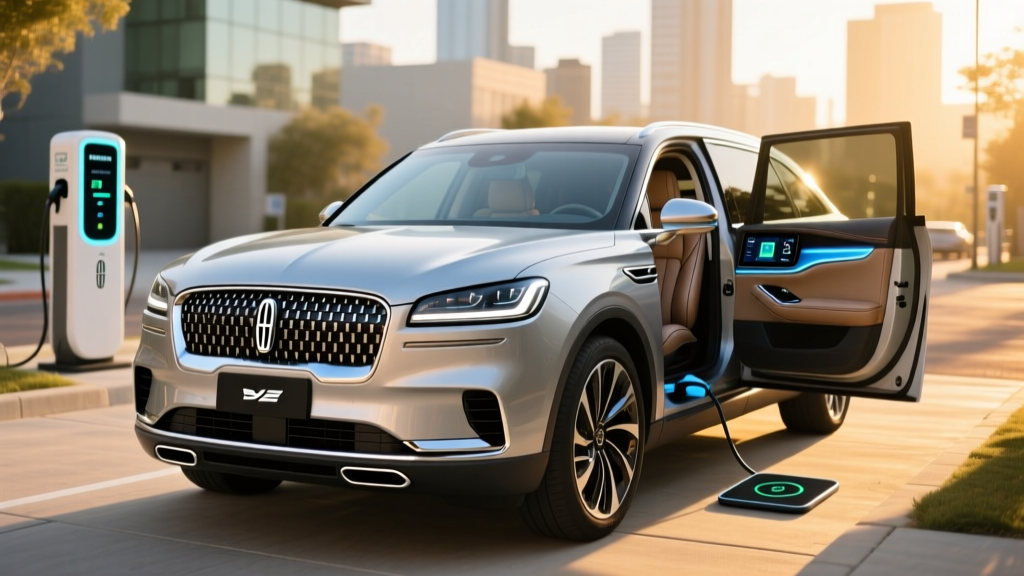
The Lincoln Aviator Grand Touring — the nameplate Lincoln uses for its plug-in hybrid (PHEV) variant — remains one of the few luxury three-row SUVs that lets you do school runs on electricity and cross-country road trips on gasoline. For the 2026 model year, the Aviator PHEV pairs a twin-turbo V6 with an electric motor for a combined 480 horsepower, an EPA-estimated 21 miles of electric-only range, and 56 MPGe when the battery is charged. If you can plug in nightly and your daily driving stays under 20 miles, this SUV effectively operates as a daily EV with a 430-hp gas safety net.
But if you can't charge at home, the math changes. As a conventional hybrid once the battery depletes, the Aviator returns around 23 MPG combined — respectable for a 5,300-pound luxury hauler, but not dramatically better than some non-hybrid competitors. This review breaks down exactly what the Aviator plug-in hybrid delivers, where it falls short, and whether it's the right electrified choice for your household.
HEV vs PHEV: What Lincoln Actually Offers
Lincoln does not sell a conventional hybrid (HEV) Aviator — the kind that recharges its small battery through regenerative braking and never needs a plug. The only electrified Aviator is the Grand Touring PHEV, which carries a larger battery pack you charge from a wall outlet or public charger.
Conventional Hybrid (HEV) vs Plug-In Hybrid (PHEV)
| Feature | HEV (Not Available on Aviator) | PHEV (Aviator Grand Touring) |
|---|---|---|
| Plug-in charging | No — self-charging via regen | Yes — plug in to access electric range |
| Electric-only range | Typically <2 miles at low speed | EPA 21 miles (2026 Aviator) |
| Battery size | ~1–2 kWh | 13.1 kWh usable (2026 Aviator) |
| Tax credit eligibility | None | Up to $7,500 (subject to §30D rules) |
| Best for | Drivers without home charging | Drivers who can plug in daily |
If you specifically need a conventional hybrid three-row SUV — no plug required — you'd need to look at the Toyota Grand Highlander Hybrid (36 MPG combined) or Kia Sorento Hybrid (34 MPG combined). The Aviator's electrified proposition is strictly plug-in.
Fuel Economy: EPA Numbers and Real-World MPG
The EPA rates the 2026 Lincoln Aviator Grand Touring PHEV at 56 MPGe (miles per gallon equivalent) when operating on a full battery, blending electric and gasoline driving. Once the battery is depleted and the SUV runs as a hybrid, it returns an EPA-estimated 23 MPG combined.
| Driving Mode | City | Highway | Combined |
|---|---|---|---|
| Charge-depleting (PHEV mode, battery full) | 56 MPGe (blended electric + gas) | ||
| Charge-sustaining (hybrid mode, battery depleted) | 22 MPG | 25 MPG | 23 MPG |
| Gas-only Aviator (non-PHEV, AWD) | 17 MPG | 24 MPG | 19 MPG |
Real-world expectations: In mixed suburban driving with regular plug-in charging, owners commonly report achieving 26–30 MPG overall because the electric motor handles low-speed stop-and-go — the exact conditions where gas engines are least efficient. On a pure highway road trip with no charging stops, expect the PHEV to settle around 24–25 MPG, which is a modest improvement over the gas-only model's 24 MPG highway. The PHEV advantage is greatest in city driving and short commutes where the battery covers most or all of the trip.
Total Range Reality
EPA electric-only range: 21 miles
Gas tank: 18.0 gallons
Total combined range (full battery + full tank): approximately 430 miles
Cold-weather note: Expect electric-only range to drop 20–30% in freezing temperatures (roughly 15–17 miles), as the battery loses efficiency and cabin heating draws additional power.
Powertrain: 480 Horsepower from Twin-Turbo V6 + Electric Motor
The Aviator Grand Touring's powertrain is genuinely potent. Lincoln pairs a 3.0-liter twin-turbocharged V6 (producing 400 hp and 415 lb-ft of torque on its own) with an electric motor integrated into the 10-speed automatic transmission. Combined output: 480 hp and 630 lb-ft of torque.
| Specification | 2026 Aviator Grand Touring PHEV |
|---|---|
| Engine | 3.0L twin-turbo V6 + electric motor |
| Combined horsepower | 480 hp |
| Combined torque | 630 lb-ft |
| Transmission | 10-speed automatic |
| Drivetrain | AWD (standard on Grand Touring) |
| 0–60 mph | ~5.5 seconds (est.) |
| Battery (usable) | 13.1 kWh, lithium-ion (NMC) |
| EPA electric range | 21 miles |
| Level 1 charging (120V) | ~10–12 hours (full charge) |
| Level 2 charging (240V, 32A) | ~3.5–4 hours (full charge) |
| DC fast charging | Not supported |
| Towing capacity | 5,600 lbs (with Class IV hitch) |
| Curb weight | ~5,350 lbs |
Charging reality: The Aviator PHEV uses a J1772 connector for Level 1 and Level 2 AC charging. There is no DC fast charging capability — this is typical for PHEVs, whose smaller batteries don't justify the cost and weight of DC hardware. On a standard 240V Level 2 home charger (the kind most EV owners install), a full charge takes roughly 3.5 to 4 hours. Overnight charging on a standard 120V household outlet is feasible but slow, requiring 10+ hours for a full battery.
Pricing, Trims, and Federal Tax Credit Eligibility
The 2026 Lincoln Aviator Grand Touring starts at approximately $70,995 (including destination), with the Black Label Grand Touring reaching roughly $89,000. The PHEV premium over the gas-only Aviator Reserve AWD is approximately $10,000–$12,000 depending on equipment.
Federal §30D Tax Credit — Current Rules
- Maximum credit: Up to $7,500 for qualifying PHEVs (must have ≥4 kWh battery capacity; the Aviator's 13.1 kWh qualifies)
- MSRP cap: SUVs must be ≤$80,000 — the Reserve Grand Touring qualifies; the Black Label Grand Touring (~$89,000) does NOT
- Buyer income cap: AGI ≤$150,000 (single), ≤$225,000 (head of household), ≤$300,000 (joint)
- Battery sourcing: Critical minerals and battery components must meet phased-in domestic/F TA content thresholds per IRS §30D rules — verify current-year compliance on the IRS eligible vehicle list before purchase
- Point-of-sale transfer: Eligible buyers can transfer the credit to the dealer at purchase, reducing the out-of-pocket price immediately
Always confirm eligibility with a tax professional and check the latest IRS eligible vehicle list before committing, as sourcing requirements tighten annually.
Battery Warranty, Reliability, and Replacement Cost
PHEV battery longevity is the single most common concern among hybrid shoppers. Lincoln covers the Aviator Grand Touring's high-voltage battery with an 8-year/100,000-mile warranty (extended to 10 years/150,000 miles in California Air Resources Board states). The warranty guarantees the battery will retain a minimum capacity threshold — typically 60–70% of original capacity — during the coverage period.
Battery & Powertrain Coverage
High-voltage battery: 8 years / 100,000 miles (10 years / 150,000 miles in CARB states)
Hybrid components (motor, inverter, controller): 8 years / 100,000 miles
Powertrain (engine, transmission): 6 years / 70,000 miles
Bumper-to-bumper: 4 years / 50,000 miles
Estimated out-of-warranty battery replacement: $8,000–$14,000 (parts + labor, based on comparable Ford/Lincoln PHEV packs)
Reliability context: Lincoln's corporate parent Ford has accumulated extensive PHEV experience with the Escape PHEV and Explorer PHEV platforms. The Aviator shares its D6 architecture with the Ford Explorer, and the 3.0L twin-turbo V6 is a proven engine family. The main reliability risk is the added complexity of the hybrid system — more components means more potential failure points compared to the gas-only model. However, PHEV batteries in modern luxury vehicles rarely require full replacement within the warranty period; gradual capacity loss (degradation) is the norm, typically reducing electric range by 10–15% over 8–10 years rather than failing outright.
Who Should Choose the Aviator PHEV vs a Full EV or Gas Car
Decision Framework
Choose the Aviator PHEV if:
- You have Level 2 home charging and a daily commute under 25 miles
- You need three rows and ~5,600-lb towing but want to reduce fuel consumption
- You take 2+ road trips per year where charging infrastructure is uncertain
- You want 480 hp without the range-anxiety trade-off of a full EV
Choose a full EV (e.g., Rivian R1S, Tesla Model X) if:
- You have reliable home charging and rarely exceed 250 miles between stops
- You want zero tailpipe emissions and the lowest per-mile fuel cost (~$0.04–0.06/mi on home electricity vs ~$0.14–0.18/mi on gas)
- You prefer minimal maintenance (no oil changes, no transmission fluid)
Choose the gas-only Aviator if:
- You cannot install a home charger and lack convenient public Level 2 access
- Your daily drives regularly exceed 30+ miles, negating the PHEV's electric advantage
- The $10,000–$12,000 PHEV premium doesn't pencil out against your fuel savings over 5 years
Pros
- 480 hp / 630 lb-ft — genuinely quick for a three-row luxury SUV
- 21 miles of electric range covers most daily errands emission-free
- No range anxiety — 430+ miles total range with gas engine backup
- Premium Lincoln interior with available 30-way Perfect Position seats
- Up to $7,500 federal tax credit (on qualifying trims/buyers)
- 5,600-lb towing with electric torque assist
Cons
- No DC fast charging — public charging limited to slow Level 2
- 21-mile electric range is short vs newer PHEVs (Toyota RAV4 Prime: 42 mi)
- $70,995+ starting price; Black Label exceeds $80K tax-credit MSRP cap
- 23 MPG hybrid mode is only a 4 MPG improvement over gas-only model
- Heavy curb weight (5,350 lbs) affects handling and tire wear
- Third row is tight for adults on longer trips
Frequently Asked Questions
How many MPG does the Lincoln Aviator hybrid get?
The 2026 Aviator Grand Touring PHEV is rated at 56 MPGe when the battery is charged (blended electric and gas operation). Once the battery is depleted, it operates as a conventional hybrid returning 23 MPG combined (22 city / 25 highway). Real-world suburban driving with regular charging often yields 26–30 MPG overall.
How far can the Aviator PHEV go on electric only?
The EPA rates the Aviator Grand Touring at 21 miles of electric-only range. In real-world conditions — particularly in cold weather (below 32°F) or at sustained highway speeds — expect 15–18 miles before the gas engine engages. This is sufficient for short commutes and errands but not for longer daily drives.
Does the Lincoln Aviator hybrid qualify for a tax credit?
The Aviator Grand Touring PHEV may qualify for up to $7,500 under the federal §30D clean vehicle credit, provided the buyer meets income limits (≤$300,000 joint), the vehicle MSRP is ≤$80,000 (excluding the Black Label trim), and the battery meets current-year critical mineral and component sourcing requirements. Always verify on the IRS eligible vehicle list before purchase. State and local incentives may also apply — check your state energy office or AFDC state incentive database.
Is the Aviator PHEV reliable, and what does battery replacement cost?
The Aviator PHEV uses proven Ford/Lincoln powertrain components. The high-voltage battery is warranted for 8 years/100,000 miles (10 years/150,000 miles in CARB states). Out-of-warranty battery replacement is estimated at $8,000–$14,000 based on comparable Ford PHEV platforms, though most PHEV batteries experience gradual degradation rather than outright failure. Regular maintenance includes standard engine service plus periodic hybrid-system diagnostics.
Can I charge the Aviator PHEV at a DC fast charger?
No. The Aviator Grand Touring PHEV only supports AC charging via a J1772 connector — Level 1 (120V, ~10–12 hours for a full charge) or Level 2 (240V, ~3.5–4 hours). DC fast charging is not available on this vehicle, which is standard for PHEVs with smaller battery packs.
Is the Aviator available as a conventional hybrid without a plug?
No. Lincoln only offers the Aviator as a gasoline-only model or as the Grand Touring plug-in hybrid. There is no self-charging HEV variant. If you want a three-row conventional hybrid without plug-in capability, consider the Toyota Grand Highlander Hybrid or Kia Sorento Hybrid.
How does the Aviator PHEV compare to a full electric SUV?
Compared to the Rivian R1S (EPA 352–410 miles range, $79,900+) or Tesla Model X (EPA 311–348 miles, $79,990+), the Aviator PHEV offers far less electric range but eliminates charging-dependency for long trips. Per-mile fuel costs are higher (~$0.12–0.16/mi blended vs ~$0.04–0.06/mi on home electricity for a full EV), and maintenance costs are higher due to the internal combustion engine. The Aviator PHEV makes sense if you need towing capability, three rows, and the flexibility to drive 400+ miles without charging stops.