Quick Verdict: The Lexus UX 300h Hybrid at a Glance
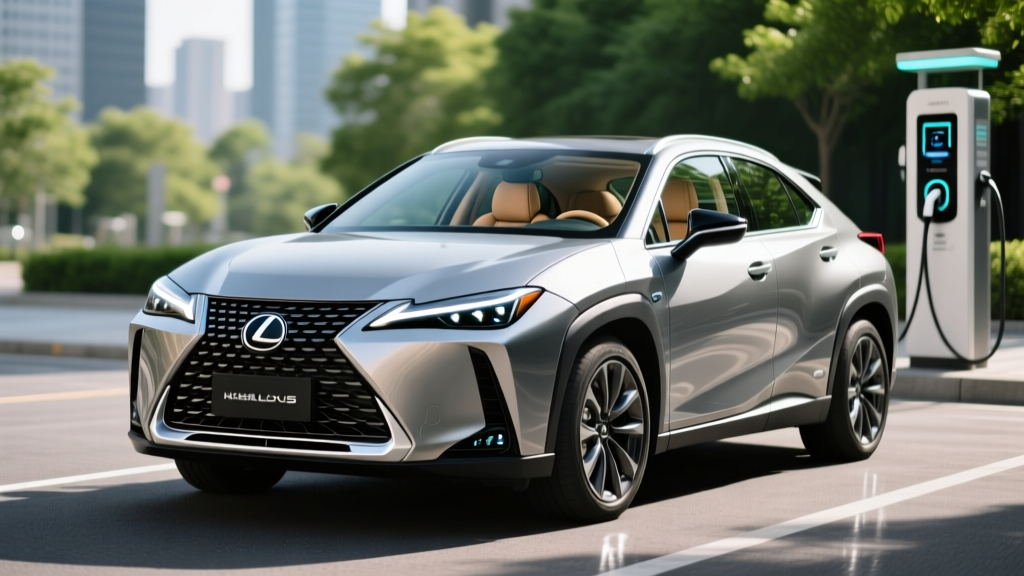
The 2026 Lexus UX 300h occupies a specific niche: a luxury subcompact crossover that sips fuel without ever needing a plug. It is a conventional hybrid electric vehicle (HEV), not a plug-in hybrid (PHEV), meaning you simply fill it with gas and let the powertrain optimize efficiency automatically. For urban commuters who want Lexus refinement, all-wheel drive, and EPA-rated 42 MPG combined — without the lifestyle change of home charging — the UX 300h remains one of the most efficient luxury crossovers available.
But the subcompact luxury hybrid segment has thinned out. BMW discontinued the X1 xDrive25e plug-in option for the US market, and Audi's Q3 PHEV never arrived stateside. That leaves the UX 300h as the default choice for buyers wanting electrified luxury below $45,000. The question is whether its efficiency gains justify its modest power output and tight rear seat.
| Spec | 2026 Lexus UX 300h |
|---|---|
| Powertrain | 2.0L 4-cyl + 2 electric motors (AWD) |
| Combined Horsepower | 181 HP (net system) |
| EPA Fuel Economy | 43 city / 41 highway / 42 combined MPG |
| Fuel Tank | 10.6 gallons |
| Total Range | ~445 miles |
| 0–60 MPH | 7.8 seconds |
| Drivetrain | Electronic AWD (E-Four) |
| Hybrid Battery | ~1.4 kWh NiMH (self-charging) |
| Starting MSRP | $38,150 (Premium FWD) |
| Federal Tax Credit | Not eligible (§30D requires plug-in) |
| Hybrid Battery Warranty | 10 years / 150,000 miles |
HEV vs PHEV: Why the Lexus UX Hybrid Does Not Plug In
A common point of confusion: the UX 300h is a conventional hybrid (HEV), not a plug-in hybrid (PHEV). This distinction matters for your expectations and your wallet.
| Feature | HEV (UX 300h) | PHEV (e.g., Toyota RAV4 Prime) |
|---|---|---|
| Plugs in? | No — regenerative braking + engine charge the battery | Yes — Level 1/Level 2 charging |
| Electric-only driving | Brief low-speed EV mode (~1 mile) | 30–42 miles on battery alone |
| Battery size | ~1.4 kWh NiMH | 18–20 kWh lithium-ion |
| Federal tax credit | Not eligible | Up to $7,500 (if §30D criteria met) |
| Home charger needed? | No | Yes (recommended for daily EV miles) |
| Best for | Apartment dwellers, no-charger households | Homeowners with short commutes |
The UX 300h recovers energy through regenerative braking and uses its gasoline engine to keep the small hybrid battery topped up. You never think about charging — you just drive and refuel at any gas station. The trade-off is that you cannot do your daily commute on electricity alone the way a PHEV owner can.
Real-World MPG: Does the UX 300h Hit 42 MPG Outside the Lab?
The EPA rates the 2026 UX 300h AWD at 43 city / 41 highway / 42 combined MPG per fueleconomy.gov. These are strong numbers for a luxury AWD crossover, but real-world results depend heavily on your driving pattern.
EPA Rating: 43 city / 41 highway / 42 combined MPG
Real-World Expectation: City drivers often see 44–47 MPG thanks to frequent regen braking. Highway cruising at 75+ MPH typically yields 37–40 MPG. Cold-weather operation (below 30°F) can drop combined figures to 36–38 MPG as the engine runs more often for cabin heat.
Toyota's hybrid synergy drive system — which underpins the Lexus UX 300h — excels in stop-and-go traffic. The electric motor handles initial acceleration, the engine kicks in seamlessly at higher loads, and regenerative braking recaptures energy at every stop light. Owners in dense urban environments consistently report beating EPA city estimates by 2–5 MPG.
Highway efficiency is where the physics works against it. At sustained 70–80 MPH speeds, the 2.0-liter Atkinson-cycle engine carries most of the load with less electric assist. The relatively small battery cannot contribute meaningfully at cruise. If your commute is 90% highway, expect combined figures closer to 38–40 MPG — still excellent for the class, but below the sticker number.
| Driving Scenario | Expected MPG | Notes |
|---|---|---|
| City (stop-and-go) | 44–47 | Regen-heavy; EV mode at low speeds |
| Suburban mixed | 40–43 | Closest to EPA combined |
| Highway (65–70 MPH) | 39–41 | Engine-dominant cruise |
| Highway (75+ MPH) | 36–38 | Aero drag + higher RPM |
| Cold weather (combined) | 35–38 | Engine runs for cabin heat |
Powertrain Details: 181 HP With Two Electric Motors
The UX 300h pairs a 2.0-liter inline-four Atkinson-cycle engine (146 HP, 139 lb-ft torque) with two electric motor-generators — one on the front axle and one on the rear for the E-Four electronic AWD system. Combined net system output is 181 horsepower.
The front motor handles primary propulsion assist and regenerative braking. The rear motor is smaller and engages only when the system detects slip or during hard acceleration from low speeds, providing torque-vectoring stability rather than brute power. This is not a mechanical AWD system with a driveshaft — it's fully electronic, which reduces weight and parasitic loss.
The 0–60 MPH time of 7.8 seconds is adequate for merging and passing but won't thrill anyone coming from a turbocharged rival. Throttle response off the line is brisk thanks to instant electric torque, but the continuously variable transmission (CVT) creates the characteristic drone under hard acceleration that Toyota/Lexus hybrids are known for. Around town, the powertrain is smooth, quiet, and unobtrusive — exactly what a luxury hybrid buyer wants.
Pricing, Trims, and Tax Credit Reality for 2026
The 2026 Lexus UX 300h starts at $38,150 for the Premium trim with front-wheel drive, and $39,550 for AWD. The F SPORT Handling trim with AWD starts at approximately $44,750. With popular options (technology package, premium audio, panoramic roof), a well-equipped UX 300h typically lands between $42,000 and $47,000.
Federal Tax Credit (§30D): The UX 300h does not qualify for the federal EV tax credit. Under current IRS rules, the §30D credit applies only to plug-in electric vehicles (BEVs and PHEVs) with battery capacities of at least 7 kWh. The UX 300h's ~1.4 kWh self-charging hybrid battery does not meet this threshold.
- No federal purchase incentive for conventional HEVs
- Some states offer hybrid rebates — check your state energy office
- Insurance discounts for hybrid vehicles may apply (check your provider)
- Employer commuter benefits sometimes include hybrid parking incentives
The absence of a federal credit is the most common sticker-shock moment for shoppers cross-researching PHEVs. A Toyota RAV4 Prime (PHEV) can qualify for up to $7,500 under §30D if all sourcing and income requirements are met, effectively narrowing the price gap with a larger, more powerful vehicle. The UX 300h's value proposition rests on its luxury badge, low running costs, and Lexus reliability — not on tax incentives.
Hybrid Battery Warranty, Lifespan, and Replacement Cost
Lexus Hybrid Battery Warranty: 10 years or 150,000 miles (whichever comes first) for the hybrid battery pack, per Lexus USA. This covers defects and capacity loss below a functional threshold. The 12-volt auxiliary battery carries a separate 4-year/50,000-mile warranty.
The UX 300h uses a nickel-metal hydride (NiMH) hybrid battery pack — a proven, conservative chemistry that Toyota and Lexus have deployed across millions of vehicles since the original Prius in 1997. Unlike the lithium-ion packs in full EVs, this small ~1.4 kWh battery operates within a narrow state-of-charge window (roughly 40–80%), which dramatically reduces stress and degradation.
Expected lifespan: Real-world data from Toyota/Lexus hybrids suggests the hybrid battery typically lasts 150,000–200,000+ miles before any significant capacity loss. Many first-generation Prius packs exceeded 250,000 miles. Because the UX 300h battery is small and the system never deeply cycles it, failure before 150,000 miles is uncommon.
Replacement cost if out of warranty: A Lexus hybrid battery replacement runs approximately $2,500–$4,000 for the battery module itself, plus $500–$1,000 in labor, depending on your market and whether you choose an OEM or refurbished unit. This is a fraction of a full EV battery replacement ($8,000–$20,000+) and comparable to replacing a conventional car's transmission. Independent hybrid specialists in major metro areas often offer refurbished packs at the lower end of that range.
Who Should Choose the UX 300h Hybrid vs a PHEV or Full EV?
Choose the Lexus UX 300h (HEV) if:
- You live in an apartment or condo with no charging access
- Your daily driving is mixed city/highway with no consistent routine
- You want luxury features and AWD below $45K without behavioral changes
- You drive 12,000–15,000 miles/year and want minimal cost-per-mile
- You prioritize long-term reliability data over maximum acceleration
Choose a PHEV (e.g., RAV4 Prime, Tucson PHEV) if:
- You can install a Level 2 charger at home
- Your daily commute is under 35 miles (you'd rarely use gas)
- You want federal tax credit eligibility to offset a higher purchase price
- You need more cargo space and rear-seat room than the UX offers
Choose a full EV (e.g., Tesla Model Y, Hyundai Ioniq 5) if:
- You have reliable home or workplace charging
- You want the lowest possible cost-per-mile (electricity vs. gas)
- You want instant torque, one-pedal driving, and zero tailpipe emissions
- You're comfortable planning road-trip charging stops
The UX 300h is fundamentally a convenience-first electrified vehicle. It asks nothing of you — no plug, no app, no charging planning, no range calculations. You drive it exactly like a gas car, and it rewards you with 42 MPG instead of 25. For the buyer who views a car as transportation rather than a technology statement, that simplicity has real value.
Pros
- 42 MPG combined EPA — top of the luxury subcompact class
- No charging infrastructure needed whatsoever
- Lexus reliability and 10-year/150K hybrid battery warranty
- Standard AWD available across trims
- Quiet, refined ride quality for the segment
- Strong resale value typical of Lexus nameplate
Cons
- Tight rear seat — uncomfortable for adults on longer trips
- Modest 181 HP; CVT drone under hard acceleration
- No federal tax credit (unlike PHEV competitors)
- Cargo volume (17.1 cu ft) trails rivals significantly
- Infotainment system improved but still behind German rivals
- AWD rear motor provides traction, not performance
Frequently Asked Questions
How many MPG does the Lexus UX hybrid get?
The EPA rates the 2026 UX 300h AWD at 43 city / 41 highway / 42 combined MPG. Real-world city driving often yields 44–47 MPG thanks to regenerative braking, while sustained highway driving at 75+ MPH typically returns 36–38 MPG. Cold weather reduces combined efficiency to roughly 35–38 MPG.
Does the Lexus UX hybrid need to be plugged in?
No. The UX 300h is a conventional hybrid (HEV), not a plug-in. The hybrid battery charges itself through regenerative braking and the gasoline engine. You never plug it in — you simply refuel at any gas station.
Is there a plug-in hybrid (PHEV) version of the Lexus UX?
As of the 2026 model year, Lexus does not offer a PHEV variant of the UX in the United States. The UX is available as the UX 300h (hybrid) and previously as the UX 200 (gas-only, discontinued). If you want a Lexus PHEV, the RX 500h+ and NX 450h+ are the current options, both at significantly higher price points ($55K–$65K+).
Does the Lexus UX 300h qualify for any tax credit?
The UX 300h does not qualify for the federal §30D clean vehicle tax credit, which requires a plug-in vehicle with at least 7 kWh of battery capacity. Some states and municipalities offer smaller hybrid incentives or HOV lane access — check your state's energy office for current programs.
How long will the Lexus UX hybrid battery last?
Lexus covers the hybrid battery for 10 years or 150,000 miles. Based on decades of Toyota/Lexus hybrid data, these NiMH packs routinely last 150,000–200,000+ miles. Out-of-warranty replacement costs approximately $3,000–$5,000 including labor — far less than an EV battery replacement.
Is the UX 300h reliable compared to other luxury crossovers?
Lexus consistently ranks at or near the top of J.D. Power and Consumer Reports reliability studies. The hybrid powertrain in the UX 300h uses proven, fourth-generation Toyota hybrid components with millions of real-world miles of data. The main reliability concerns are typical luxury-car items (infotainment glitches, sensor calibration) rather than powertrain issues.
How does the UX 300h compare to a full EV for daily commuting?
For a 20-mile daily commute, a full EV like the Hyundai Ioniq 5 costs roughly $0.04–$0.06 per mile in electricity (home charging), while the UX 300h at 42 MPG and $3.50/gallon gas costs about $0.08 per mile. The EV saves approximately $400–$600 per year in fuel for a 12,000-mile driver, but requires home charging access and a higher upfront purchase price. The UX 300h wins on convenience and upfront cost; the EV wins on per-mile operating cost.