Quick Verdict: The Lexus TX Hybrid Lineup Explained
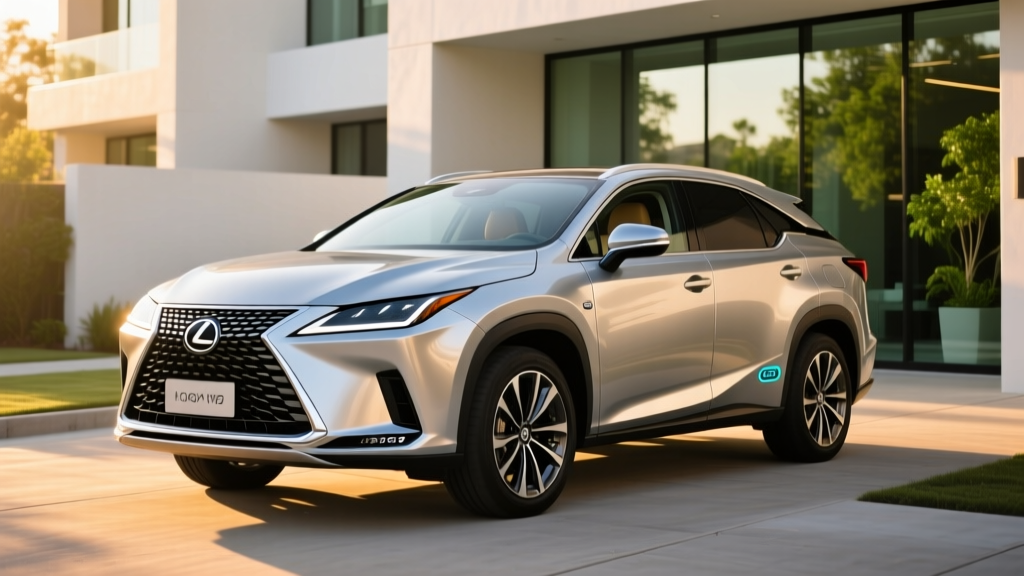
If you've been searching for a Lexus TX 350 hybrid, here's the clarification you need right away: Lexus does not offer a hybrid version of the TX 350 trim. The TX 350 is exclusively a turbocharged gas model. The hybrid powertrains in the TX family are reserved for the TX 500h F SPORT Performance (a conventional hybrid, or HEV) and the TX 550h+ Luxury (a plug-in hybrid, or PHEV). Both are three-row luxury SUVs built on the same platform, but their powertrains, efficiency, and pricing diverge significantly.
This guide breaks down both hybrid variants of the 2026 Lexus TX, with a focus on real-world MPG, electric-only range for the PHEV, ownership costs, battery longevity, and whether either model qualifies for federal tax incentives. If you're cross-shopping a large luxury SUV and want to avoid the charging dependency of a full EV, these are among the most compelling options on the market.
A conventional hybrid (HEV) like the TX 500h uses a small battery recharged by the engine and regenerative braking. You never plug it in. A plug-in hybrid (PHEV) like the TX 550h+ has a larger battery you can charge from a wall outlet or public charger, giving you a pure electric driving range before the gas engine kicks in. Once that electric range is depleted, it operates like a regular hybrid.
Powertrain Specs: TX 500h vs TX 550h+ Side by Side
| Specification | TX 500h F SPORT Performance (HEV) | TX 550h+ Luxury (PHEV) |
|---|---|---|
| Engine | 2.4L turbo 4-cyl + hybrid system | 3.5L V6 + plug-in hybrid system |
| Combined Horsepower | 366 hp | 404 hp |
| Drivetrain | AWD (DIRECT4) | AWD (E-Four) |
| Transmission | 6-speed automatic | e-CVT |
| Battery Type | Nickel-metal hydride / Li-ion (small) | Lithium-ion, ~18.1 kWh usable |
| Plug-In Capable | No | Yes (Level 1 / Level 2) |
| DC Fast Charging | N/A | No |
| 0–60 mph | 5.9 seconds | 5.7 seconds |
| Towing Capacity | 5,000 lbs | 5,000 lbs |
| Seating | 6 or 7 passengers | 6 passengers |
The TX 500h pairs Lexus's turbocharged 2.4-liter four-cylinder with a hybrid electric system routed through a traditional six-speed automatic — a choice that gives it a more conventional, linear driving feel compared to the drone-heavy CVTs in many competitors. The TX 550h+ steps up to a naturally aspirated 3.5-liter V6 paired with a larger battery pack and more powerful electric motors, yielding 404 combined horsepower and the ability to drive roughly 33 miles on electricity alone.
Fuel Economy: EPA MPG and Real-World Expectations
| Metric | TX 500h (HEV) | TX 550h+ (PHEV) | TX 350 (Gas Baseline) |
|---|---|---|---|
| EPA City | 27 MPG | 64 MPGe (EV mode) | 20 MPG |
| EPA Highway | 28 MPG | 66 MPGe (EV mode) | 26 MPG |
| EPA Combined | 27 MPG | 65 MPGe / 27 MPG (hybrid mode) | 23 MPG |
| Electric-Only Range | N/A | ~33 miles | N/A |
| Total Combined Range | ~475 miles | ~420+ miles (EV + gas) | ~450 miles |
Source: EPA Fuel Economy
Hybrids like the TX 500h tend to match or slightly exceed their EPA city rating because regenerative braking captures energy in stop-and-go traffic. On the highway, however, expect fuel economy to drop 2–4 MPG below the EPA combined figure, particularly at sustained speeds above 70 mph or when the cabin is loaded with passengers and cargo. In mixed suburban driving, owners typically report 26–28 MPG in the TX 500h. For the TX 550h+, your real-world efficiency depends heavily on how often you recharge. Drivers with short commutes who plug in nightly may use very little gasoline at all.
Charging the TX 550h+ PHEV: What You Need to Know
The TX 550h+ can be charged via Level 1 (standard 120V household outlet) or Level 2 (240V home charger or public station). Lexus estimates a full Level 2 charge in approximately 3 hours using a 240V, 32-amp source. On a standard 120V outlet, expect a full charge to take roughly 10–12 hours — adequate for overnight replenishment.
| Charging Level | Power (kW) | 0–100% Charge Time | Typical Use Case |
|---|---|---|---|
| Level 1 (120V) | ~1.4 kW | 10–12 hours | Overnight at home (no install needed) |
| Level 2 (240V) | ~6.6 kW | ~3 hours | Home wall charger or public Level 2 |
| DC Fast Charge | Not supported | N/A | N/A |
The absence of DC fast charging is a deliberate trade-off in most PHEVs: the battery is small enough that Level 2 fully replenishes it quickly, and adding DC fast-charge hardware would increase cost and weight for minimal practical benefit. If you need rapid public charging on road trips, the TX 500h conventional hybrid sidesteps the question entirely — it never needs to be plugged in.
Pricing, Trims, and Tax Credit Eligibility
For the 2026 model year, the Lexus TX hybrid lineup is positioned as follows:
- TX 500h F SPORT Performance: Starting MSRP approximately $72,000–$74,000 depending on options.
- TX 550h+ Luxury: Starting MSRP approximately $78,000–$80,000 before destination and options.
- TX 350 (gas baseline): Starting MSRP approximately $57,000–$62,000.
The TX 550h+ PHEV may qualify for a federal tax credit of up to $7,500 under IRS §30D, but eligibility depends on multiple conditions that change periodically:
- MSRP cap: SUVs must be at or below $80,000 MSRP. The TX 550h+ sits near this threshold — options could push it over.
- Buyer income cap: Modified AGI must not exceed $150,000 (single), $225,000 (head of household), or $300,000 (joint filers).
- Battery sourcing: Critical minerals and battery components must meet phased-in domestic/FAT-sourcing percentages per IRS guidance.
- Point-of-sale transfer: Eligible buyers can transfer the credit to the dealer at purchase for an immediate price reduction.
The TX 500h conventional hybrid does not qualify for the §30D new EV credit (it is not a plug-in vehicle). Always verify current eligibility at IRS.gov before purchasing, as battery sourcing rules tighten annually.
Reliability, Battery Warranty, and Replacement Costs
Lexus covers the hybrid battery in both the TX 500h and TX 550h+ for 10 years or 150,000 miles (whichever comes first) under the hybrid system warranty. The broader powertrain warranty covers 6 years/70,000 miles, and the basic new-vehicle warranty is 4 years/50,000 miles. This is consistent with Toyota/Lexus's long-standing hybrid battery coverage and among the best in the luxury segment.
Lexus (and parent company Toyota) has the deepest track record in hybrid powertrain reliability of any automaker, with over 25 years of hybrid production since the original Prius. The TX 500h's 2.4L turbo hybrid system is a proven architecture shared across the Lexus lineup. The TX 550h+ V6 PHEV system is also derived from Toyota's well-established hybrid synergy drive, adapted for plug-in duty.
If the hybrid battery does need replacement outside of warranty, expect costs in the range of $3,000–$6,000 depending on the specific pack and labor rates. However, Toyota/Lexus hybrid batteries have historically shown strong longevity — many first-generation Prius batteries lasted 150,000+ miles with minimal degradation. The larger PHEV battery in the TX 550h+ may carry a higher replacement cost if needed, but its liquid-cooled thermal management system and conservative state-of-charge buffer are designed to extend cycle life.
For reliability ratings, check IIHS crash-test performance and NHTSA safety data as they become available for the current model year.
Who Should Choose the TX Hybrid vs a Full EV or Gas SUV?
Choose the TX 500h (HEV) If:
- You want 27 MPG combined without ever plugging in
- You lack home charging access (apartment, street parking)
- You take frequent long road trips and don't want charging stops
- You want hybrid efficiency with zero lifestyle change
- Your budget is in the low-to-mid $70K range
Choose the TX 550h+ (PHEV) If:
- Your daily commute is under 30 miles round-trip
- You have reliable Level 2 home charging
- You want EV-mode school runs and errands with gas-engine road-trip backup
- You may qualify for the §30D tax credit (check income + MSRP rules)
- You want 404 hp and the smoothest powertrain in the TX lineup
Choose a full EV instead if you have reliable home and workplace charging, rarely drive more than 250 miles in a single day, and want to eliminate gasoline purchases entirely. Vehicles like the Rivian R1S, Tesla Model X, or upcoming three-row electric SUVs offer zero tailpipe emissions and lower per-mile fueling costs — but at the trade-off of requiring charging infrastructure planning for longer trips.
Stick with the gas TX 350 if your budget is closer to $60K, your annual mileage is low, and fuel cost savings from a hybrid wouldn't offset the price premium within your ownership timeline.
Pros and Cons at a Glance
Pros
- Class-leading hybrid reliability pedigree (Toyota/Lexus)
- 10-year/150,000-mile hybrid battery warranty
- TX 500h needs no plug-in infrastructure
- TX 550h+ offers 33 miles of silent electric commuting
- Strong towing capacity (5,000 lbs) for the segment
- Three-row seating in a luxury package
- Smooth, quiet powertrain operation in both variants
Cons
- No hybrid option on the lower-priced TX 350 trim
- TX 550h+ MSRP may exceed the $80K §30D credit cap when optioned
- No DC fast charging on the PHEV
- Highway MPG drops noticeably above 70 mph
- Premium fuel recommended for both hybrid powertrains
- Third row is best suited for children on longer trips
Frequently Asked Questions
How many MPG does the Lexus TX hybrid get?
The TX 500h conventional hybrid is EPA-rated at 27 MPG combined (27 city / 28 highway). The TX 550h+ PHEV achieves 65 MPGe in electric mode and approximately 27 MPG combined once the battery is depleted and it operates as a hybrid. For comparison, the gas-only TX 350 returns 23 MPG combined.
How far can the TX 550h+ drive on electric power only?
The EPA-estimated electric-only range is approximately 33 miles. Real-world results vary: gentle suburban driving in mild weather may yield 35+ miles, while aggressive acceleration, cold temperatures, or highway speeds can reduce this to 25–28 miles. This range comfortably covers most daily commutes and school runs.
Does the Lexus TX hybrid qualify for a federal tax credit?
The TX 550h+ plug-in hybrid may qualify for up to $7,500 under the IRS §30D clean vehicle credit, subject to MSRP caps (≤$80,000 for SUVs), buyer income limits, and battery sourcing requirements. The TX 500h conventional hybrid does not qualify for §30D because it is not a plug-in vehicle. Always confirm current eligibility at IRS.gov and consult a tax professional.
Is the Lexus TX hybrid reliable, and what does battery replacement cost?
Lexus and Toyota have the longest-running hybrid production history of any automaker, and the hybrid system architecture in the TX is derived from proven, high-volume components. The hybrid battery is warranted for 10 years or 150,000 miles. Out-of-warranty replacement costs typically range from $3,000 to $6,000, though many Toyota/Lexus hybrid batteries last well beyond 150,000 miles with proper thermal management.
Should I get the TX 500h hybrid, the TX 550h+ PHEV, or a full EV?
If you can charge at home and your daily driving is under 30 miles, the TX 550h+ PHEV gives you EV-like commuting with gas-engine flexibility for road trips. If you can't charge at home or prefer zero plug-in hassle, the TX 500h HEV delivers strong MPG with no lifestyle change. If you have reliable charging and rarely exceed 250 miles per day, a full EV will offer lower running costs and zero tailpipe emissions — but the TX hybrids remain the safer choice for charging-infrastructure-limited buyers.