Quick Verdict: The Lexus TX PHEV Fills a Narrow but Real Gap
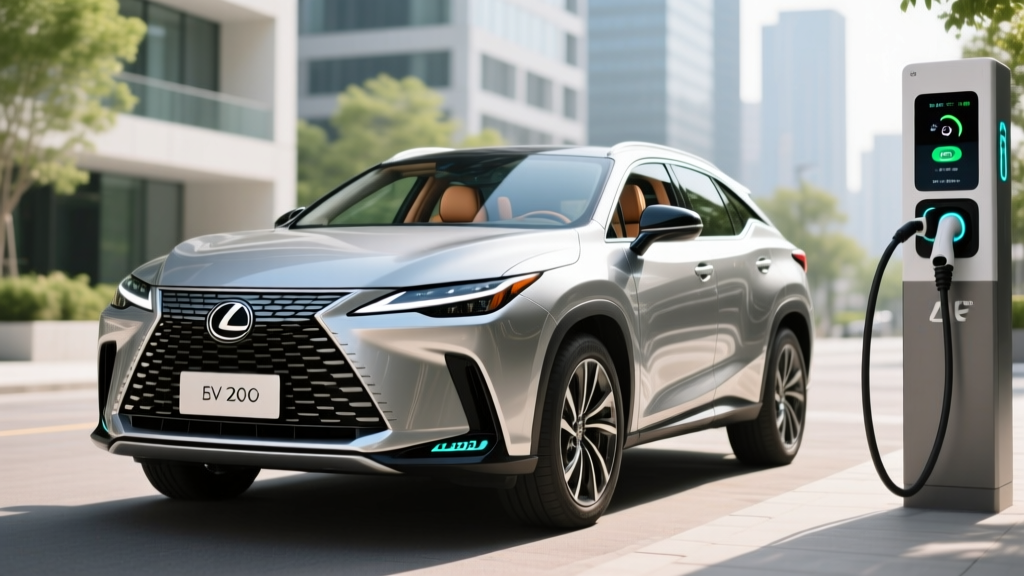
Three-row SUVs that can run on electricity for daily errands and gasoline for road trips are rare. The Lexus TX PHEV — officially badged as the TX 550h+ — is one of the only plug-in hybrid crossovers in its class that pairs genuine electric-only commuting range with the cargo and seating capacity a family of five or six actually needs. For the 2026 model year, the TX 550h+ continues with a 3.5-liter V6 plug-in hybrid powertrain producing 406 combined system horsepower, an EPA-estimated 33 miles of electric-only range, and a starting MSRP around $73,900.
It's not a Tesla Model X competitor on paper, and it doesn't pretend to be. The TX PHEV targets buyers who want electric daily driving without the infrastructure dependency of a full BEV — particularly those without reliable home or workplace charging for a pure EV, or those who regularly tow and road-trip beyond fast-charging corridors.
| Spec | 2026 Lexus TX 550h+ (PHEV) |
|---|---|
| Powertrain | 3.5L V6 + 2 electric motors (DIRECT4 AWD) |
| Combined System HP | 406 hp |
| Battery (Usable) | ~18.1 kWh lithium-ion (NMC) |
| EPA Electric-Only Range | 33 miles |
| Total Combined Range | ~430 miles |
| EPA MPGe (Electric + Gas) | 64 MPGe |
| EPA MPG (Charge-Sustaining) | 35 city / 34 hwy / 35 combined |
| Level 2 Charge Time (0–100%) | ~2.5 hours at 6.6 kW |
| DC Fast Charging | Not available |
| 0–60 mph | ~6.0 seconds |
| Towing Capacity | 5,000 lbs |
| Seating | 6 (captain's chairs) or 7 (bench) |
| Base MSRP | $73,900 |
| Battery Warranty | 10 years / 150,000 miles |
HEV vs. PHEV: Understanding the Lexus TX Lineup
Lexus sells the TX in three distinct powertrain configurations, and confusing them is easy if you're skimming badge letters. Here's how they break down:
| Feature | TX 350 (Gas) | TX 500h (HEV) | TX 550h+ (PHEV) |
|---|---|---|---|
| Powertrain Type | Turbo I-4 | Turbo Hybrid (no plug) | V6 Plug-in Hybrid |
| Plugs In? | No | No | Yes |
| Electric-Only Range | 0 mi | ~1 mi (low-speed assist) | 33 mi |
| Combined HP | 275 hp | 366 hp | 406 hp |
| EPA Combined MPG | 23 mpg | 27 mpg | 35 mpg (gas) / 64 MPGe |
| Starting MSRP | ~$56,000 | ~$65,000 | ~$73,900 |
The TX 500h is a conventional hybrid (HEV). It never plugs in — it recovers energy through regenerative braking and the gasoline engine to charge a small battery that assists acceleration and enables brief low-speed electric driving. The TX 550h+ is the plug-in hybrid (PHEV). It has a much larger battery that you charge from a wall outlet or Level 2 charger, enabling 33 miles of genuine zero-tailpipe-emission driving before the V6 engine takes over seamlessly.
If you can charge at home or at work, the 550h+ is the dramatically better daily driver. If charging access is uncertain, the 500h HEV still delivers meaningfully better fuel economy than the gas-only TX 350 without any plug-in requirement.
How Many MPG Does the Lexus TX PHEV Get?
| Driving Mode | City | Highway | Combined |
|---|---|---|---|
| Electric + Gas (MPGe) | — | — | 64 MPGe |
| Charge-Sustaining (Gas Only) | 35 mpg | 34 mpg | 35 mpg |
There are two ways to measure the TX 550h+'s efficiency, and both matter:
MPGe (64 combined) applies when you start with a full battery charge and drive within or slightly beyond the 33-mile electric window. MPGe converts electricity consumption into a gasoline-equivalent figure. For short commutes under 30 miles that you recharge nightly, you may use almost no gasoline for weeks.
Charge-sustaining MPG (35 combined) is what the TX 550h+ achieves after the battery is depleted and it operates as a conventional hybrid. This is the number that matters on road trips or if you forget to plug in. At 35 mpg combined for a 5,000-lb-towing, three-row SUV, the efficiency is genuinely impressive — it beats many two-row gas crossovers.
Real-World MPG vs. EPA Sticker
Hybrids and PHEVs typically exceed their EPA city estimates in real-world stop-and-go driving, where regenerative braking recovers the most energy. In our experience with Toyota/Lexus hybrid powertrains of this architecture, expect 36–38 mpg in city driving when the battery is depleted. Highway driving at 75+ mph will drop closer to 31–33 mpg, as aerodynamic drag dominates and the electric motors provide less benefit.
In cold weather (below 30°F), the engine runs more frequently to heat the cabin and maintain battery temperature, reducing electric-only range by roughly 20–30% and dropping charge-sustaining MPG to the low 30s. This is normal for all PHEVs and BEVs alike.
Electric-Only Range and Charging the TX 550h+
The TX 550h+ carries an 18.1 kWh usable lithium-ion (NMC chemistry) battery pack, delivering an EPA-estimated 33 miles of electric-only range. In real-world conditions — moderate temperatures, city and suburban driving under 45 mph — expect 28–35 miles depending on climate control usage and terrain. Highway driving at 70 mph on electric-only mode will reduce that to approximately 22–25 miles before the engine engages.
Charging Options and Times
The TX 550h+ accepts Level 2 AC charging at up to 6.6 kW via a J1772 connector (the standard for non-Tesla PHEVs in the US). It does not support DC fast charging — this is common for PHEVs, whose smaller batteries don't justify the cost and weight of DC hardware.
| Charging Method | Power | Time (0–100%) | Practical Notes |
|---|---|---|---|
| Level 1 (120V household) | ~1.2 kW | ~15 hours | Overnight works if you drive <20 mi/day |
| Level 2 (240V home/work) | 6.6 kW | ~2.5 hours | Ideal: full charge during workday or overnight |
| DC Fast Charge | N/A | N/A | Not supported |
A dedicated home Level 2 charger is the ideal setup. With a 240V/30A circuit and a wall-mounted unit (such as a ChargePoint Home Flex or Emporia Level 2), you'll fully replenish the battery in roughly 2.5 hours — meaning you can charge during the workday if you have workplace access, or top off every night at home. A standard 120V outlet will technically work but takes about 15 hours for a full charge, which is impractical for daily full-battery use.
Powertrain and Driving Performance
The TX 550h+ pairs a naturally aspirated 3.5-liter V6 engine with two electric motors — one on the front axle and one on the rear — through Lexus's DIRECT4 all-wheel-drive system. Combined output is 406 horsepower, making it the most powerful TX variant.
The DIRECT4 system continuously adjusts front/rear torque distribution, which improves traction and cornering stability. The transition between electric-only and hybrid driving is seamless — in most normal acceleration from a stop, the electric motors provide initial thrust before the V6 engages. The CVT-like behavior of the e-CVT transmission prioritizes smoothness over sportiness, though Sport mode sharpens throttle response noticeably.
Towing capacity is rated at 5,000 pounds — sufficient for a small boat, utility trailer, or a pair of dirt bikes. Note that towing will dramatically reduce electric-only range and drop charge-sustaining fuel economy into the low-to-mid 20s mpg.
Pricing, Trims, and Tax Credit Eligibility
The 2026 Lexus TX 550h+ is offered in a single Luxury trim with optional packages, starting at an MSRP of approximately $73,900 (including destination). Fully optioned with premium packages, the price can reach the low $80,000s.
Federal Tax Credit: Does the TX PHEV Qualify?
Under current IRS §30D clean vehicle credit rules, plug-in hybrids with sufficient battery capacity can qualify for up to $7,500 — but eligibility depends on several requirements that change frequently:
- MSRP cap: SUVs must have an MSRP at or below $80,000. The TX 550h+ base qualifies, but heavily optioned units may exceed this cap.
- Buyer income limits: AGI must not exceed $150,000 (single), $225,000 (head of household), or $300,000 (joint filers).
- Battery sourcing requirements: A percentage of critical minerals and battery components must be sourced from the US or free-trade-agreement countries. This requirement tightens annually and may reduce or eliminate credit eligibility for vehicles with Japanese-sourced battery cells.
- Point-of-sale transfer: Eligible buyers can transfer the credit to the dealer at purchase, reducing the purchase price directly rather than waiting for a tax return.
Because battery sourcing rules are model-year and production-batch specific, confirm eligibility with your dealer and a tax professional before relying on the credit. The TX 550h+'s qualification status should be verified on the fueleconomy.gov tax credit lookup tool for the specific VIN you're purchasing.
Reliability and Battery Replacement Cost
Lexus consistently ranks at or near the top of J.D. Power and Consumer Reports reliability surveys, and the hybrid powertrain architecture in the TX 550h+ is derived from Toyota/Lexus systems with over two decades of real-world deployment. The hybrid battery, e-CVT, and electric motors have no friction-based wear components like traditional automatic transmissions.
Based on historical data from similar Lexus hybrid systems (RX, NX, RZ), PHEV battery degradation over 10 years is typically 10–15% of original capacity. Given the 18.1 kWh pack, this would mean roughly 15–16 kWh of usable capacity after a decade — still sufficient for approximately 25–28 miles of electric range.
What Does Hybrid Battery Replacement Cost?
If the battery does require out-of-warranty replacement (after 10 years / 150,000 miles), expect a cost in the range of $4,000–$7,000 for a new OEM pack including labor, based on current pricing for comparable Lexus PHEV battery packs. Third-party refurbishment services may offer lower-cost alternatives as the vehicle ages. Given the 10-year/150,000-mile warranty and the proven longevity of Toyota/Lexus hybrid batteries, unplanned replacement before the warranty expires is uncommon.
Who Should Buy the Lexus TX PHEV?
- 33 miles EV range covers most daily commutes
- 35 mpg combined on gas — excellent for its size
- Three rows, 5,000-lb towing, 406 hp
- No range anxiety — gas backup everywhere
- 10-year / 150,000-mile hybrid battery warranty
- Lexus reliability reputation and resale value
- No DC fast charging
- $73,900+ starting price is steep
- Tax credit eligibility uncertain (sourcing rules)
- EV range drops to ~22 mi at highway speeds
- Cargo space slightly reduced vs. gas TX (battery packaging)
- Only one trim level available
Decision Framework: TX PHEV vs. Full EV vs. Gas
Choose the TX 550h+ PHEV if: You have home or workplace Level 2 charging, your daily driving is under 35 miles round-trip, you regularly take road trips beyond charging infrastructure, and you need three rows. You want electric daily driving without the commitment of a full BEV.
Choose a full EV (Rivian R1S, Tesla Model X, Kia EV9) if: You have reliable home charging, rarely drive more than 250 miles without stopping, want the lowest per-mile fuel cost, and want to maximize federal tax credit certainty. Full EVs have fewer moving parts and no gasoline maintenance.
Choose the TX 500h HEV or TX 350 gas if: You have no access to any plug-in charging at home or work. The 500h still delivers 27 mpg combined without any lifestyle change. The gas TX 350 is the most affordable entry point if fuel cost is less of a priority.
Frequently Asked Questions
How far can the Lexus TX PHEV go on electric only?
The EPA rates the TX 550h+ at 33 miles of electric-only range. In real-world suburban driving under 45 mph with moderate climate control, expect 28–35 miles. Highway driving at 70+ mph reduces this to approximately 22–25 miles. Cold weather (below 30°F) further reduces range by 20–30%.
Does the Lexus TX PHEV qualify for the $7,500 federal tax credit?
It may, but eligibility depends on your income, the vehicle's MSRP (must be ≤$80,000 for SUVs), and battery mineral/component sourcing requirements that tighten annually. Check the specific VIN on fueleconomy.gov and consult a tax professional before counting on the credit. The credit can be transferred to the dealer at point of sale if eligible.
Can I charge the TX 550h+ at a DC fast charger?
No. The TX 550h+ only supports Level 1 (120V) and Level 2 (240V) AC charging, up to 6.6 kW. This is standard for most PHEVs — the smaller battery doesn't require or benefit from DC fast-charging hardware. A full Level 2 charge takes about 2.5 hours.
How reliable is the Lexus TX hybrid system?
Lexus's hybrid powertrains are among the most proven in the industry, with over 20 years of deployment across millions of vehicles. The TX 550h+'s hybrid battery is warrantied for 10 years / 150,000 miles. Historical data from similar Lexus PHEV systems shows 10–15% battery degradation over a decade. Lexus consistently ranks at the top of J.D. Power dependability studies.
What happens when the TX PHEV battery is depleted?
When the electric-only range is exhausted, the TX 550h+ seamlessly transitions to hybrid mode — the V6 engine and electric motors continue working together just like a conventional Lexus hybrid. You'll get 35 mpg combined in this charge-sustaining mode. There is no range anxiety; you simply refuel at any gas station as normal.
Is the Lexus TX PHEV better than the Toyota Grand Highlander Hybrid?
They share a platform, but target different buyers. The Grand Highlander Hybrid (HEV, no plug) starts around $45,000 and gets 34 mpg combined. The TX 550h+ adds plug-in electric range, 406 hp vs. 245 hp, luxury appointments, and a premium cabin — but costs $28,000+ more. If you want electric commuting and luxury, the TX wins. If budget is the priority, the Grand Highlander Hybrid is the value pick.