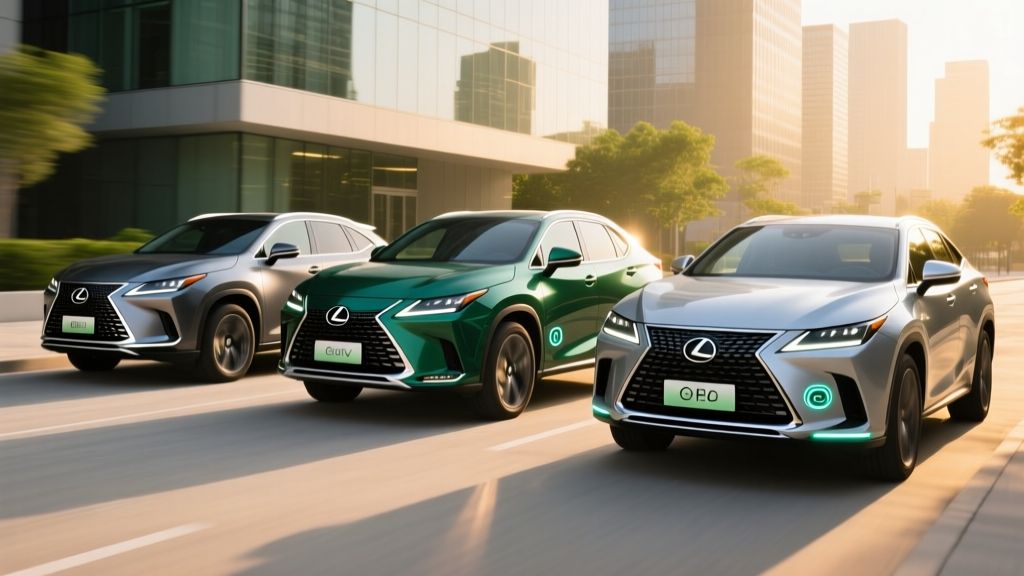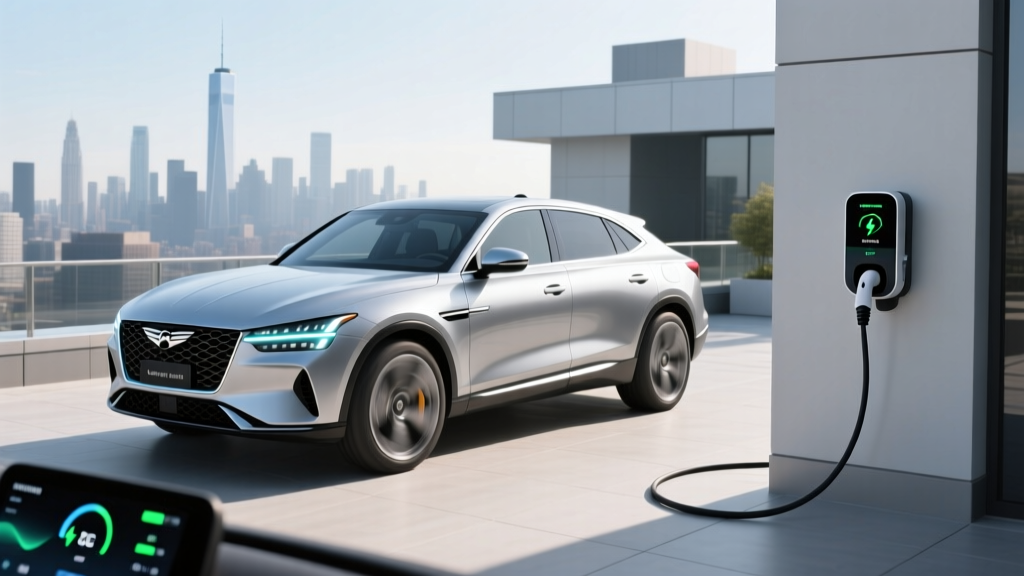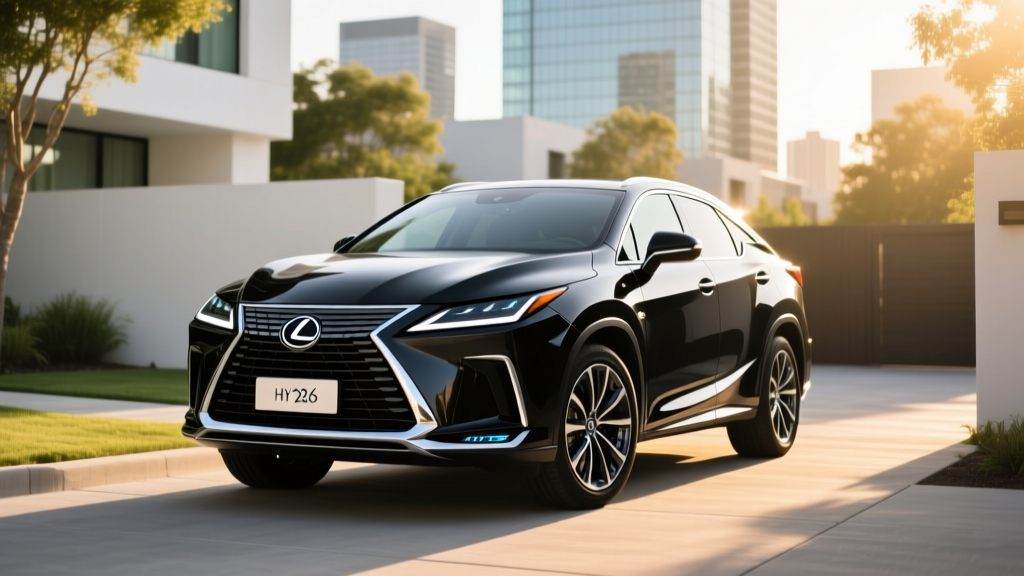
The Lexus RX has defined the luxury midsize crossover segment for over two decades, and the current-generation RX 450h hybrid continues that legacy by pairing genuine efficiency with upscale refinement. For 2026, the RX 450h remains Lexus's volume hybrid play in the premium SUV space — a vehicle that asks nothing of your routine (no plugging in required) while delivering meaningful fuel savings over its gas-only RX 350 sibling. But with the plug-in hybrid RX 500h+ also in the lineup and pure EVs like the BMW iX and Tesla Model X competing for the same buyers, where does the RX 450h fit?
This guide covers every number that matters: EPA fuel economy, real-world MPG expectations, powertrain specs, pricing by trim, battery warranty details, and tax credit eligibility. Whether you're cross-shopping hybrids, PHEVs, or full EVs, you'll have the data to decide.
RX 450h vs RX 500h+: HEV or PHEV?
Before diving into specs, it's critical to understand that Lexus offers the RX in two distinct electrified forms for 2026. They serve different use cases:
| Feature | RX 450h (HEV) | RX 500h+ (PHEV) |
|---|---|---|
| Type | Conventional Hybrid | Plug-in Hybrid |
| Needs to plug in? | No — self-charging via engine and regenerative braking | Yes — for electric-only driving benefits |
| Electric-only range | N/A (motor assists engine at all speeds) | ~37 miles (EPA est.) |
| Battery capacity | ~1.7 kWh (small buffer) | 18.1 kWh usable |
| Combined horsepower | 366 hp | 406 hp |
| EPA combined MPG/MPGe | 36 MPG | 35 MPG (gas) / 83 MPGe (electric) |
| Starting MSRP | ~$53,350 | ~$65,500 |
| Federal tax credit | Not eligible (§30D requires plug-in) | Up to $7,500 (subject to eligibility) |
Bottom line: The RX 450h is the simpler, more affordable choice for drivers who want hybrid efficiency without changing their fueling habits. The RX 500h+ suits those with home charging access and short commutes who want EV-like daily driving with a gas backup for longer trips.
Fuel Economy: EPA Ratings and Real-World MPG
The headline number for the 2026 Lexus RX 450h is its EPA-estimated fuel economy. Here's the full breakdown from fueleconomy.gov:
| Driving Condition | EPA Estimate | Real-World Expectation |
|---|---|---|
| City | 37 MPG | 35–39 MPG (hybrids often beat EPA city) |
| Highway | 34 MPG | 30–33 MPG (sustained high speeds reduce hybrid advantage) |
| Combined | 36 MPG | 33–36 MPG |
Why the real-world variance? Toyota/Lexus hybrid systems (this one uses a 2.4-liter turbocharged inline-4 paired with front and rear electric motors) excel in stop-and-go traffic where regenerative braking recaptures energy and the electric motor handles low-speed propulsion. On sustained highway runs above 70 mph, the gasoline engine carries most of the load, narrowing the gap with the non-hybrid RX 350 (which returns about 25 MPG combined).
In mixed suburban driving with moderate stoplights and 45–55 mph roads, owners frequently report matching or slightly exceeding the 36 MPG combined sticker. Cold weather (below 35°F) typically costs 2–4 MPG due to increased engine runtime for cabin heat and reduced battery efficiency. If your commute is mostly highway, expect closer to 31–33 MPG.
Powertrain and Performance Specs
| Specification | 2026 Lexus RX 450h |
|---|---|
| Engine | 2.4L turbocharged inline-4 |
| Electric motors | Front motor + rear motor (e-AWD) |
| Combined system output | 366 hp / 406 lb-ft torque |
| Transmission | 6-speed automatic |
| Drivetrain | Electronic all-wheel drive (standard) |
| 0–60 mph | ~7.4 seconds |
| Towing capacity | 3,500 lbs (when properly equipped) |
| Hybrid battery | ~1.7 kWh nickel-metal hydride (NiMH) |
| Curb weight | ~4,600 lbs |
The RX 450h uses Lexus's latest hybrid architecture, which pairs the turbocharged 2.4L engine with electric motors on both axles for standard electronic AWD. Unlike the RX 500h+ PHEV, there's no meaningful electric-only driving mode — the system seamlessly blends gas and electric power at all times. The rear motor activates on demand for traction, making this a competent all-weather vehicle without the fuel-economy penalty of a mechanical AWD system.
The 366 hp figure represents combined system output. In practice, the electric motors provide instant torque fill at low RPMs, making the RX 450h feel quicker off the line than its 7.4-second 0–60 time might suggest. Passing power on highway on-ramps is confident, and the powertrain transitions between electric and gas operation with minimal vibration — a Lexus hallmark.
Pricing, Trims, and Tax Credit Eligibility
The 2026 RX 450h is offered across several trim levels. Pricing (MSRP including destination):
- RX 450h Premium: ~$53,350
- RX 450h Premium+: ~$55,550
- RX 450h Luxury: ~$58,650
- RX 450h F SPORT Handling: ~$58,150
Federal tax credit: The RX 450h does not qualify for the IRS §30D Clean Vehicle Credit. This credit applies only to plug-in electric vehicles (PHEVs and BEVs) with a minimum battery capacity and specific critical-mineral and battery-component sourcing requirements. Since the RX 450h is a conventional hybrid that cannot be plugged in, it is ineligible regardless of buyer income or MSRP.
If the tax credit is a priority, the RX 500h+ PHEV (starting ~$65,500) may qualify for up to $7,500 under §30D, subject to current-year IRS rules on battery sourcing, buyer income caps ($150K single / $300K joint), and point-of-sale transfer availability. Always verify eligibility at irs.gov or with a tax professional before purchasing — sourcing requirements have tightened significantly since 2024, and qualifying vehicles can change quarter to quarter.
Some states offer separate incentives for hybrids, though these are increasingly rare as state programs shift toward PHEVs and BEVs. Check your state's energy or environmental agency for current programs.
Battery Longevity, Warranty, and Replacement Cost
2026 Lexus RX 450h Hybrid Battery Warranty
- Hybrid battery warranty: 10 years / 150,000 miles (whichever comes first)
- Powertrain warranty: 6 years / 70,000 miles
- Basic vehicle warranty: 4 years / 50,000 miles
- Free maintenance: 1 year / 10,000 miles (Lexus Care)
Lexus covers the hybrid battery for a full decade — one of the longest warranties in the luxury segment. This covers capacity loss below a specified threshold and component failure.
How long do Lexus hybrid batteries actually last? Toyota/Lexus hybrid systems have an exceptional longevity track record. The NiMH batteries used in the RX 450h are less energy-dense than lithium-ion but are proven durable — many first-generation RX 400h and RX 450h models have surpassed 200,000 miles on their original hybrid batteries. The system's conservative charge/discharge strategy (the battery never fully charges or fully depletes) significantly extends cycle life.
Replacement cost if out of warranty: A hybrid battery replacement for the RX 450h typically runs between $3,000 and $5,000 including labor at a Lexus dealer. Independent hybrid specialists may offer refurbished or reconditioned units for $1,500–$3,000. Given the 10-year/150,000-mile warranty and the system's reliability history, most owners will never face this cost.
Who Should Buy the RX 450h — and Who Should Look Elsewhere?
Choose the Lexus RX 450h if:
- You want 35+ MPG without plugging in or changing your routine
- You drive 12,000–18,000 miles per year and value fuel savings over EV credits
- You need AWD for snow/rain but don't want a mechanical system's efficiency penalty
- You plan to keep the vehicle 8+ years (the warranty and reliability record support this)
- You prefer Lexus build quality and dealer network over startup EV brands
Choose the RX 500h+ PHEV instead if:
- You have home Level 2 charging and a commute under 37 miles
- You want to drive mostly on electricity with gas backup for road trips
- You may qualify for the $7,500 federal tax credit (offsetting the higher MSRP)
Choose a full EV (e.g., BMW iX, Tesla Model X) instead if:
- You have reliable home charging and rarely drive more than 250 miles between stops
- You want zero tailpipe emissions and the lowest per-mile fuel cost
- You're willing to accept charging-infrastructure trade-offs on road trips
For the typical luxury SUV buyer who drives a mix of city and highway, doesn't have guaranteed home charging access, and wants a vehicle that will run reliably for 150,000+ miles with minimal powertrain drama, the RX 450h occupies a compelling middle ground. You'll save roughly $600–$900 per year in fuel costs versus the gas-only RX 350 (assuming 15,000 miles/year and $3.50/gallon), and you'll never think about charging, battery preconditioning, or range planning.
Pros and Cons at a Glance
Pros
- 36 MPG combined is excellent for a 4,600-lb luxury AWD SUV
- No plug-in required — zero lifestyle change vs. a gas car
- Standard electronic AWD with instant electric torque to both axles
- 10-year/150,000-mile hybrid battery warranty
- Proven long-term reliability from Lexus/Toyota hybrid architecture
- Quiet, refined cabin with strong build quality
Cons
- No federal tax credit eligibility (HEV, not PHEV)
- Highway MPG drops to ~30–33 in real-world sustained driving
- ~$7,000 premium over the gas RX 350 (payback takes 5–8 years at current fuel prices)
- Infotainment system (14-inch touchscreen) still lags rivals in responsiveness
- No DC fast charging capability (not applicable to HEVs, but a limitation vs. PHEV)
Frequently Asked Questions
How many MPG does the Lexus RX 450h hybrid get?
The 2026 Lexus RX 450h is EPA-rated at 37 MPG city, 34 MPG highway, and 36 MPG combined. In real-world mixed driving, most owners see 33–36 MPG combined, with city-heavy commutes potentially exceeding the EPA city estimate and sustained highway driving dropping to 30–33 MPG.
Does the RX 450h need to be plugged in?
No. The RX 450h is a conventional hybrid (HEV). Its small battery charges through regenerative braking and the gasoline engine. You fuel it exactly like a gas car — at the pump — and the hybrid system works automatically in the background.
Is the Lexus RX hybrid reliable?
Lexus/Toyota hybrid systems have one of the strongest reliability records in the industry. The hybrid battery is warranted for 10 years/150,000 miles, and many Lexus hybrids have exceeded 200,000 miles on original batteries. The RX 450h benefits from decades of hybrid system refinement with conservative charge management that extends battery life.
What does a Lexus RX hybrid battery replacement cost?
Out-of-warranty replacement runs $3,000–$5,000 at a Lexus dealer, or $1,500–$3,000 through independent hybrid specialists using refurbished units. However, given the 10-year/150,000-mile warranty and the system's proven longevity, the vast majority of owners never need a replacement.
Does the Lexus RX 450h qualify for any tax credit?
The RX 450h does not qualify for the federal §30D Clean Vehicle Credit because it is a conventional hybrid, not a plug-in vehicle. Only PHEVs and BEVs are eligible. Some states may offer minor hybrid incentives, but these are increasingly uncommon. Check irs.gov for current federal rules and your state energy office for local programs.
How does the RX 450h compare to the RX 500h+ PHEV?
The RX 500h+ offers ~37 miles of electric-only range, 406 hp, and potential federal tax credit eligibility — but starts at ~$65,500, roughly $12,000 more than the RX 450h. If you can charge at home and commute under 37 miles, the PHEV makes financial sense (especially with the credit). If you lack home charging or want a simpler ownership experience, the RX 450h is the more practical pick.
Hybrid vs PHEV vs EV — which is right for me?
Hybrid (HEV): Best if you want better fuel economy with zero routine changes. No plug, no range planning, no charging apps. Ideal for apartment dwellers or those without home charging.
Plug-in hybrid (PHEV): Best if you have home charging and a short commute but still take road trips. You get EV-like daily driving with a gas engine for longer trips.
Full EV (BEV): Best if you have reliable home charging, rarely exceed 250 miles between charging opportunities, and want the lowest per-mile operating cost and zero tailpipe emissions.