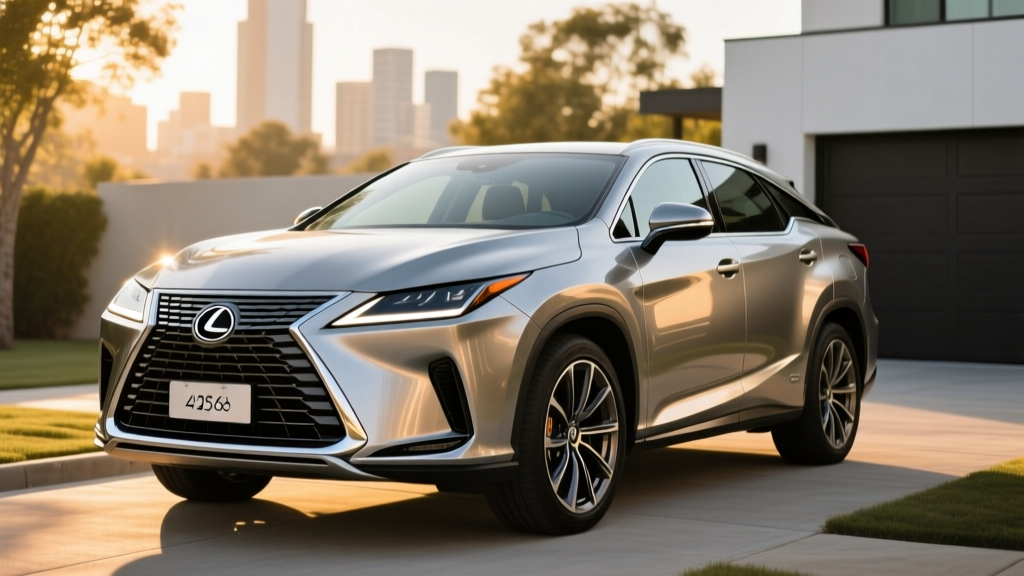
Quick Verdict: The Lexus RX 450h Hybrid at a Glance
The Lexus RX 450h occupies a rare sweet spot in the midsize luxury SUV segment: it pairs a turbocharged hybrid powertrain with standard electronic all-wheel drive while returning EPA-rated fuel economy that rivals compact crossovers. For the 2026 model year, the RX 450h continues with the 2.4-liter turbocharged four-cylinder hybrid system introduced with this generation, producing a combined 366 horsepower and achieving an EPA-estimated 36 MPG combined.
But the RX 450h is only half the story. Lexus also offers the RX 450h+ plug-in hybrid, which adds 37 miles of electric-only range and a larger battery for drivers with short commutes and home charging access. This guide covers both powertrains in detail — because choosing between a conventional hybrid (HEV) and a plug-in hybrid (PHEV) is the single most important decision in your RX purchase.
| Specification | RX 450h (HEV) | RX 450h+ (PHEV) |
|---|---|---|
| Powertrain | 2.4L turbo I-4 + hybrid system | 2.5L I-4 + plug-in hybrid system |
| Combined Horsepower | 366 hp | 302 hp |
| Drivetrain | AWD (e-AWD) | AWD (e-AWD) |
| EPA Combined MPG | 36 MPG | 35 MPG (hybrid mode) |
| Electric-Only Range | N/A | 37 miles |
| MPGe (EV mode) | N/A | 83 MPGe |
| Hybrid Battery | ~1.6 kWh (NiMH/Li-ion) | 18.1 kWh (Li-ion) |
| 0-60 mph | ~6.2 sec | ~7.4 sec |
| DC Fast Charging | N/A | No |
| Level 2 Charge Time | N/A | ~2.5 hours (240V) |
| Starting MSRP | ~$53,300 | ~$63,700 |
HEV vs PHEV: Which Lexus RX Hybrid Is Right for You?
Before diving into the numbers, it's essential to understand the fundamental difference between these two powertrains. They share a nameplate but serve different use cases.
| Factor | RX 450h (HEV) | RX 450h+ (PHEV) |
|---|---|---|
| Needs to be plugged in? | No — charges via regenerative braking and engine | Yes — plug in to access electric-only range |
| Electric-only driving | Limited to low-speed, short distances | Up to 37 miles at highway speeds |
| Ideal daily commute | Any distance; no behavior change needed | Under 35 miles round-trip with home charging |
| Fuel cost savings | Moderate (36 MPG vs ~22 MPG gas-only) | High if most driving is electric; moderate otherwise |
| Purchase price premium | Baseline hybrid price | ~$10,400 more than 450h |
| Federal tax credit (§30D) | Not eligible | Potentially up to $3,750* |
| Cargo impact | No battery space penalty | Slight floor height increase for larger battery |
*Federal tax credit eligibility for the RX 450h+ depends on battery sourcing requirements under IRS §30D rules. As of 2026, the critical minerals and battery component sourcing thresholds have tightened significantly, reducing or eliminating credits for many PHEVs. Check the latest IRS clean vehicle credit guidance before purchasing. State incentives may also apply — consult your state's energy office for current programs.
Fuel Economy: EPA Ratings and Real-World MPG
The headline number for the RX 450h is its EPA-estimated 36 MPG combined. Here's the full breakdown from fueleconomy.gov:
| Driving Cycle | EPA Rating |
|---|---|
| City | 37 MPG |
| Highway | 34 MPG |
| Combined | 36 MPG |
For the RX 450h+ PHEV, the EPA rates it at 83 MPGe when operating in electric mode and 35 MPG combined once the battery is depleted and the gasoline engine takes over. The 37-mile electric-only range covers the majority of American daily commutes — the U.S. Census Bureau reports the average one-way commute at approximately 26 miles.
Real-World MPG: What to Actually Expect
Lexus hybrids historically perform well against their EPA ratings in mixed driving, and the RX 450h is no exception. In real-world conditions:
- City/suburban driving: Expect 35-38 MPG. Toyota/Lexus hybrid systems excel in stop-and-go traffic, where regenerative braking recaptures energy and the electric motor handles low-speed propulsion. Many owners report slightly exceeding the 37 MPG city estimate in warm-weather urban driving.
- Highway cruising (70-80 mph): Expect 30-33 MPG. Hybrids lose their advantage at sustained high speeds, where aerodynamic drag dominates and the engine runs continuously. The turbocharged 2.4L in the 450h works harder at highway speeds than a naturally aspirated hybrid system would.
- Cold weather (below 32°F): Expect 28-32 MPG combined. The engine runs more frequently to maintain cabin heat and battery temperature. This 10-15% winter efficiency penalty is typical for all hybrids.
- Towing: The RX 450h is rated for 3,500 lbs of towing capacity. Expect fuel economy to drop to the low-to-mid 20s when towing near maximum capacity.
For the RX 450h+ PHEV, real-world electric range depends heavily on temperature and driving style. In mild conditions at moderate speeds, 37 miles is achievable. In cold weather or aggressive highway driving, expect 28-32 miles of electric-only range before the engine engages.
Powertrain Deep Dive: 366 HP Meets Hybrid Efficiency
The RX 450h uses Lexus's DIRECT4 all-wheel-drive system paired with a turbocharged 2.4-liter inline-four engine and a hybrid electric motor array. The combined system output of 366 horsepower and 406 lb-ft of torque makes this one of the more powerful hybrid SUVs in its class — substantially more than the previous-generation RX 450h's 308 hp.
The rear axle is driven entirely by electric motors (e-AWD), meaning there is no mechanical driveshaft connecting the engine to the rear wheels. This allows instantaneous torque vectoring to the rear axle when traction demands it, improving both efficiency and handling.
The RX 450h+ uses a different powertrain: a naturally aspirated 2.5-liter four-cylinder with a plug-in hybrid system producing 302 combined horsepower. It trades peak performance for electric-only capability and a larger 18.1 kWh lithium-ion battery pack. The 0-60 mph time stretches to approximately 7.4 seconds versus the 450h's brisk 6.2 seconds.
Charging the RX 450h+ PHEV
The RX 450h+ accepts Level 2 AC charging (240V) and replenishes its 18.1 kWh battery in approximately 2.5 hours. Notably, the RX 450h+ does not support DC fast charging — this is common among PHEVs, whose smaller batteries make DC infrastructure investment impractical for manufacturers. For PHEV owners, a Level 2 home charger is the practical solution: plug in when you arrive home, and the battery is full by morning.
A standard 120V household outlet (Level 1) will charge the RX 450h+ in roughly 10-12 hours — workable for overnight charging if you don't have a 240V circuit installed.
Pricing, Trims, and Tax Credit Eligibility
The 2026 Lexus RX 450h starts at approximately $53,300 (including destination) in base Premium trim. Higher trims — Luxury, F SPORT Handling — push the price into the low-to-mid $60,000 range.
The RX 450h+ PHEV starts at approximately $63,700, a roughly $10,400 premium over the conventional 450h. That gap narrows somewhat if you qualify for federal or state incentives.
Federal Tax Credit: The §30D Reality Check
The conventional RX 450h (HEV) does not qualify for the federal §30D clean vehicle tax credit. This credit is reserved for plug-in vehicles (BEVs and PHEVs) that meet specific battery capacity, sourcing, MSRP, and buyer income requirements.
For the RX 450h+ PHEV, eligibility is nuanced under current 2026 IRS rules:
- MSRP cap: SUVs must be at or below $80,000 — the RX 450h+ clears this.
- Buyer income cap: Modified adjusted gross income must not exceed $300,000 (joint), $225,000 (head of household), or $150,000 (single).
- Battery sourcing: As of 2026, 100% of critical minerals must be sourced from the U.S. or free-trade-agreement countries, and 100% of battery components must be manufactured or assembled in North America. Vehicles with any battery components from a "foreign entity of concern" are disqualified.
- Credit amount: Up to $3,750 if critical minerals requirements are met; up to an additional $3,750 if battery component requirements are also met (max $7,500). Due to tightening sourcing rules, many PHEVs qualify for only the partial $3,750 credit or none at all.
- Point-of-sale transfer: Eligible buyers can transfer the credit to the dealer at purchase, reducing the purchase price directly rather than waiting for a tax refund.
Always verify current eligibility on the fueleconomy.gov tax credit page and consult a tax professional before relying on credit assumptions.
Battery Longevity, Warranty, and Replacement Costs
Battery lifespan is consistently the top concern for hybrid buyers — and it's where Toyota/Lexus has the strongest track record in the industry.
Lexus Hybrid Battery Warranty
Hybrid Battery: 10 years / 150,000 miles (whichever comes first) — covers repair or replacement if the battery fails or drops below a specified capacity threshold.
Hybrid System Components: 8 years / 100,000 miles — covers the inverter, electric motors, and related control systems.
Transferability: The hybrid battery warranty is fully transferable to subsequent owners, which supports resale value.
Real-World Battery Degradation
The RX 450h's small hybrid battery (~1.6 kWh) operates within a narrow state-of-charge window — typically between 40% and 80%. This shallow cycling is the primary reason Toyota/Lexus hybrid batteries last so long. Unlike a full EV battery that cycles from 10% to 90%+ regularly, the hybrid battery is babied by the powertrain management system.
Based on long-term data from previous-generation Lexus RX 450h models and Toyota Camry Hybrids, hybrid battery packs routinely exceed 150,000-200,000 miles before requiring replacement. Many first-generation Prius and RX hybrid batteries have surpassed 250,000 miles with acceptable performance.
If replacement is eventually needed out of warranty:
- RX 450h (HEV): Approximately $2,500-$4,000 for a replacement hybrid battery pack (remanufactured units are available for less).
- RX 450h+ (PHEV): Approximately $8,000-$12,000 for the larger 18.1 kWh lithium-ion pack, though pricing will depend on availability and market conditions at the time of replacement.
Reliability and Ownership Costs
Lexus consistently ranks at or near the top of J.D. Power Vehicle Dependability Studies and Consumer Reports reliability rankings. The RX line specifically has been a staple of the Lexus lineup since 1999, and the hybrid variant since 2006 — giving the brand nearly two decades of hybrid-specific reliability data on this platform.
Key ownership cost considerations:
- Maintenance: Hybrids require the same basic maintenance as gas vehicles (oil changes, brake fluid, tire rotations) but with less brake wear thanks to regenerative braking. Many RX hybrid owners report original brake pads lasting 80,000+ miles.
- Insurance: Expect insurance premiums roughly on par with the gas-only RX 350, though some insurers charge a modest 3-5% premium for hybrid/PHEV variants due to higher repair costs for battery-related collision damage.
- Resale value: Lexus RX models hold their value well. Hybrid variants have seen strong residual values as fuel prices fluctuate and buyer demand for electrified vehicles remains steady.
- Fuel savings vs gas RX 350: At 36 MPG combined versus the RX 350's ~25 MPG combined, and assuming $3.50/gallon fuel and 15,000 miles/year, the 450h saves approximately $815 per year in fuel costs.
Who Should Choose the RX 450h, the 450h+, or a Full EV?
The Decision Framework
Choose the RX 450h (HEV) if:
- You want maximum efficiency with zero change to your fueling habits
- You don't have access to home or workplace charging
- You take frequent road trips and don't want to plan around charging
- You want the most powerful RX hybrid (366 hp)
- You're buying on budget and want the lower entry price
Choose the RX 450h+ (PHEV) if:
- Your daily commute is under 35 miles round-trip
- You have reliable Level 2 home charging (garage or driveway 240V outlet)
- You want to drive mostly on electricity during the week but need gas flexibility for weekends and road trips
- You qualify for federal or state PHEV incentives that narrow the price gap
- You want to reduce your carbon footprint without committing to a full EV
Choose a full EV (like the Lexus RZ 450e) if:
- You have home charging and your daily driving is under 200 miles
- You want zero tailpipe emissions and minimal maintenance
- You qualify for the full $7,500 federal EV tax credit
- You're comfortable with public DC fast charging for road trips
- You want the quietest, smoothest driving experience
Pros and Cons: 2026 Lexus RX 450h Hybrid
Pros
- 36 MPG combined with 366 hp — rare combination of efficiency and power
- Standard e-AWD with no mechanical penalty
- Proven Lexus/Toyota hybrid reliability with 10yr/150k-mile battery warranty
- No plug-in required — zero behavior change from a gas vehicle
- Quiet, refined cabin with Lexus Safety System+ 3.0 standard
- Strong resale value and brand loyalty
Cons
- Highway MPG drops to ~30-33 at 75+ mph
- No DC fast charging option (450h+ PHEV)
- Premium fuel recommended for optimal performance
- PHEV variant carries a ~$10,400 price premium
- Federal tax credit eligibility for 450h+ is uncertain under 2026 sourcing rules
- Infotainment learning curve for first-time Lexus users
Frequently Asked Questions
How many MPG does the Lexus RX 450h hybrid get?
The EPA rates the 2026 RX 450h at 37 MPG city, 34 MPG highway, and 36 MPG combined. In real-world driving, expect 35-38 MPG in city and suburban conditions, dropping to 30-33 MPG on sustained highway trips at 70-80 mph. Cold weather typically reduces combined MPG by 10-15%.
How far can the RX 450h+ go on electric only?
The EPA rates the RX 450h+ PHEV at 37 miles of electric-only range. In mild weather at moderate speeds, this is achievable. In cold weather or aggressive highway driving, expect 28-32 miles before the gasoline engine activates. Once the battery is depleted, the 450h+ operates as a conventional hybrid at approximately 35 MPG combined.
Do I need to plug in the Lexus RX 450h?
No. The RX 450h is a conventional hybrid (HEV) — it charges its small battery entirely through regenerative braking and the gasoline engine. You fuel it like any other car. Only the RX 450h+ plug-in hybrid benefits from being plugged in to a Level 2 or Level 1 charger.
Is the Lexus RX 450h hybrid reliable?
Yes. Lexus and Toyota have the longest track record in hybrid vehicle manufacturing, dating to the 2000 Prius and 2006 RX 400h. The hybrid battery is warrantied for 10 years/150,000 miles, and real-world data shows these batteries commonly lasting 150,000-200,000+ miles. Lexus consistently ranks first or second in J.D. Power dependability studies and Consumer Reports reliability surveys.
What does it cost to replace the Lexus RX hybrid battery?
For the RX 450h (HEV), replacement hybrid battery costs range from approximately $2,500 to $4,000 (remanufactured units are less). For the RX 450h+ (PHEV), the larger 18.1 kWh pack could cost $8,000-$12,000 out of warranty. However, given Lexus's 10-year/150,000-mile warranty and the proven longevity of Toyota hybrid batteries, most owners will never face an out-of-pocket replacement.
Does the Lexus RX 450h qualify for a tax credit?
The conventional RX 450h (HEV) does not qualify for the federal §30D clean vehicle tax credit — only plug-in vehicles are eligible. The RX 450h+ (PHEV) may qualify for up to $3,750 depending on 2026 battery sourcing requirements under IRS rules. Buyer income caps ($150K single / $300K joint) and the $80,000 SUV MSRP cap also apply. Always verify current eligibility on irs.gov before purchasing.
Hybrid vs PHEV vs EV — which Lexus RX should I buy?
If you lack home charging or drive long distances regularly, the RX 450h (HEV) is the pragmatic choice — excellent MPG with no infrastructure needs. If you have home charging and a short commute, the RX 450h+ (PHEV) lets you drive on electricity daily while keeping gas flexibility. If you're ready to eliminate gasoline entirely and have charging access, consider the all-electric Lexus RZ 450e instead. Your charging situation and daily mileage are the two factors that should drive this decision.