Quick Verdict: The NX 350h Is the Efficiency Sweet Spot in the Lexus Lineup
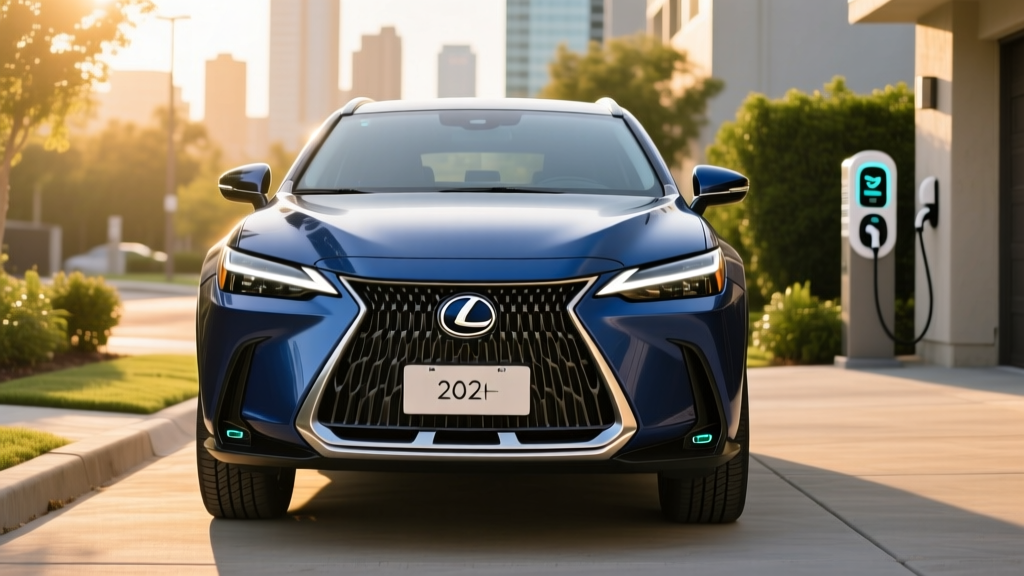
If you want luxury-compact SUV comfort without the range anxiety of a full EV or the fuel bills of a gas-only model, the 2026 Lexus NX 350h makes a compelling case. It delivers an EPA-estimated 41 MPG combined with standard all-wheel drive, 244 combined horsepower, and Lexus's long-standing hybrid reliability reputation — all starting around $42,565. It's a conventional hybrid (HEV), meaning you never plug it in. You just fill up with gas and drive.
But the NX 350h exists in a crowded space alongside the plug-in hybrid NX 450h+, the gas-only NX 350, and full EVs like the Tesla Model Y and Genesis Electrified GV70. This guide breaks down exactly what the NX 350h offers, where it falls short, and whether it's the right electrified choice for your driving habits.
HEV vs. PHEV: Understanding What the NX 350h Actually Is
Before we get into the numbers, it's critical to understand that the NX 350h is a conventional hybrid (HEV), not a plug-in hybrid. Here's the difference and why it matters for your daily routine:
| Feature | NX 350h (HEV) | NX 450h+ (PHEV) |
|---|---|---|
| Plug-in charging required? | No — gas only | Yes — plug in for EV range |
| Electric-only range | N/A (EV assist only) | 37 miles (EPA) |
| Combined horsepower | 244 hp | 304 hp |
| Battery capacity | ~1.6 kWh (NiMH) | 18.1 kWh (lithium-ion) |
| EPA combined MPG / MPGe | 41 MPG | 84 MPGe / 37 MPG (gas-only) |
| Starting MSRP (2026) | ~$42,565 | ~$60,465 |
| Federal tax credit (§30D) | Not eligible | Up to $7,500 (see rules) |
The NX 350h uses a small battery that recharges through regenerative braking and the gas engine. It can drive short distances at low speeds on electric power alone (typically under a mile at parking-lot speeds), but it cannot sustain EV-only driving like the NX 450h+ can. The trade-off: lower purchase price, no charging infrastructure needed, and simpler ownership.
Fuel Economy: EPA Ratings and Real-World MPG
The headline number is what draws most buyers to the NX 350h. Here's the full EPA breakdown as published on fueleconomy.gov:
| Driving Condition | MPG |
|---|---|
| City | 41 MPG |
| Highway | 37 MPG |
| Combined | 41 MPG (wait — see note) |
Note: Lexus rates the NX 350h at 41 city / 37 highway / 39 combined MPG for the 2025–2026 model year per EPA data. Some trim and wheel configurations may vary by 1–2 MPG. Always verify the exact trim on the EPA site.
Real-World MPG: What Owners Actually Report
Toyota/Lexus hybrids historically meet or exceed EPA city estimates in real-world driving because regenerative braking recovers energy in stop-and-go traffic. Expect:
- City / suburban driving: 39–43 MPG (hybrids shine here)
- Highway cruising (70–80 mph): 34–37 MPG (aerodynamic drag and less regen opportunity)
- Cold weather (below 30°F): 33–36 MPG combined (engine runs more for cabin heat, battery efficiency drops)
- Mountainous terrain: 30–35 MPG on sustained climbs, partially recovered on descents via regen
With a 14.5-gallon fuel tank, real-world total range typically lands between 480–560 miles depending on your driving mix — enough for most owners to visit the pump only once every two weeks.
Powertrain and Performance Specs
The NX 350h pairs a 2.5-liter inline-4 Atkinson-cycle engine with two electric motor-generators and Lexus's eAWD system (a third electric motor on the rear axle). Here are the hard numbers:
| Engine | 2.5L 4-cyl Atkinson cycle |
| Combined system output | 244 hp |
| Transmission | eCVT (electronically controlled) |
| Drivetrain | AWD (eAWD with rear electric motor) |
| 0–60 mph | 7.2 seconds (manufacturer est.) |
| Towing capacity | 2,000 lbs |
| Hybrid battery type | Nickel-metal hydride (NiMH), ~1.6 kWh |
| EPA combined MPG | 39 MPG |
| Fuel tank | 14.5 gallons |
| Cargo volume (rear seats up / down) | 22.7 / 46.9 cu ft |
The 7.2-second 0–60 time won't win drag races, but it's adequate for highway merging and passing. The eCVT delivers smooth, linear acceleration without the shift-shock of a traditional automatic. Where the NX 350h really impresses is low-speed responsiveness — the electric motors provide instant torque off the line, making it feel quicker in city driving than the 0–60 number suggests.
Pricing, Trims, and Tax Credit Eligibility
The 2026 NX 350h is offered across several trims. Here's the approximate MSRP structure (destination charges may add $1,150–$1,350):
- Base: ~$42,565
- Premium: ~$45,565
- Luxury: ~$49,065
- F SPORT Handling: ~$48,565
Does the NX 350h Qualify for a Federal Tax Credit?
No. The Lexus NX 350h is a conventional hybrid (HEV), and the IRS §30D Clean Vehicle Credit applies only to plug-in electric vehicles (BEVs and PHEVs) with sufficient battery capacity and qualifying battery-sourcing requirements. The NX 350h does not qualify for the federal EV tax credit.
However, some states offer hybrid-specific incentives or reduced registration fees. Check your state's energy office or AFDC incentive database for local programs. The higher-priced NX 450h+ (PHEV) may qualify for up to $7,500 under §30D, subject to MSRP caps ($80,000 for SUVs), buyer income limits ($300K joint / $150K single), and battery critical-mineral sourcing requirements — verify current-year eligibility with a tax professional.
Battery Warranty, Reliability, and Replacement Cost
This is where Lexus/Toyota hybrids have earned their reputation. The NX 350h's hybrid battery is covered by Lexus's hybrid battery warranty:
| Component | Warranty Period |
|---|---|
| Hybrid battery | 10 years / 150,000 miles |
| Hybrid system components (inverter, motor-generators) | 8 years / 100,000 miles |
| Powertrain (engine, transmission) | 6 years / 70,000 miles |
| Basic vehicle | 4 years / 50,000 miles |
Real-world reliability data: Toyota and Lexus hybrid systems have been in production since the 1997 Prius. The NiMH and lithium-ion hybrid batteries in these vehicles routinely last 150,000–200,000+ miles before significant degradation. Independent fleet data and owner surveys consistently rank Lexus as a top brand for long-term hybrid reliability, with Consumer Reports frequently giving Lexus top marks.
Battery replacement cost: If the hybrid battery does fail outside warranty, a replacement NiMH battery pack for the NX 350h typically costs between $3,000–$5,000 installed at a dealership. Independent hybrid-battery specialists often offer refurbished packs for $2,000–$3,500. However, given the 10-year/150,000-mile warranty and the proven longevity of Lexus hybrid systems, most owners will never face this expense.
Pros
- 41 MPG city — exceptional for a luxury AWD SUV
- No plug-in charging required — works with existing gas infrastructure
- 10-year/150K-mile hybrid battery warranty
- Proven Lexus/Toyota hybrid reliability track record
- Standard AWD with no fuel-economy penalty vs. FWD
- Smooth, quiet eCVT powertrain
- Strong resale value typical of Lexus models
Cons
- No federal tax credit eligibility (HEV, not PHEV)
- 7.2-second 0–60 is adequate but not sporty
- eCVT can drone under hard acceleration
- 2,000-lb towing limit (lower than some competitors)
- Premium fuel recommended for best performance
- Infotainment learning curve for first-time Lexus owners
NX 350h vs. NX 450h+ vs. Full EV: Which Should You Choose?
The NX lineup gives you three electrification paths. Here's a decision framework based on real ownership scenarios:
Choose the NX 350h (HEV) if:
- You don't have reliable access to home or workplace charging
- You want maximum simplicity — no plug, no range planning
- Your budget is under $50,000
- You drive a mix of city and highway and want strong MPG in both
- You plan to keep the vehicle 8+ years and value proven reliability
Choose the NX 450h+ (PHEV) if:
- You can charge at home (Level 2 recommended for the 18.1 kWh battery)
- Your daily commute is under 37 miles round-trip (you'll rarely use gas)
- You qualify for the §30D federal tax credit (offsets the ~$18K price premium)
- You want 304 hp and a 5.5-second 0–60 time
- You take road trips and want gas-engine backup for longer drives
Choose a full EV (e.g., Tesla Model Y, Genesis Electrified GV70) if:
- You have reliable home Level 2 charging
- You want zero tailpipe emissions and the lowest per-mile fuel cost
- Your daily driving is under 250 miles and you're comfortable planning road-trip charging
- You want the lowest long-term maintenance costs (no oil changes, fewer moving parts)
- You qualify for the full $7,500 federal tax credit
Ownership Costs: 5-Year Estimate
How does the NX 350h stack up on total cost of ownership versus a gas-only competitor like the BMW X3 or the Lexus NX 350 (turbo gas)?
| Cost Category | NX 350h (HEV) | NX 350 (Gas Turbo) | NX 450h+ (PHEV) |
|---|---|---|---|
| Purchase price (base MSRP) | $42,565 | $40,565 | $60,465 |
| Federal tax credit | $0 | $0 | Up to $7,500* |
| Fuel / electricity (75K mi) | ~$7,800 | ~$11,200 | ~$4,500 |
| Maintenance (est.) | ~$2,800 | ~$3,500 | ~$2,600 |
| Insurance (est. avg) | ~$9,500 | ~$9,200 | ~$10,200 |
| Estimated depreciation | ~$18,000 | ~$19,500 | ~$24,000 |
| Approx. 5-yr total | ~$80,665 | ~$83,965 | ~$95,265** |
*NX 450h+ credit subject to §30D income, MSRP, and battery-sourcing rules — verify with a tax professional.
**NX 450h+ total shown before applying the $7,500 credit; after credit, effective cost drops to ~$87,765.
The NX 350h saves roughly $3,300 over five years compared to the gas-only NX 350, primarily through fuel savings. The NX 450h+ becomes cost-competitive only if you qualify for the full federal credit and do most of your driving within its 37-mile EV range.
Frequently Asked Questions
How many MPG does the Lexus NX 350h hybrid get?
The EPA rates the 2026 NX 350h at 41 MPG city, 37 MPG highway, and 39 MPG combined. In real-world city driving, many owners report matching or slightly exceeding the 41 MPG city figure thanks to regenerative braking. Highway-only driving at 75+ mph typically yields 34–37 MPG.
Does the NX 350h need to be plugged in?
No. The NX 350h is a conventional hybrid (HEV). Its small battery recharges through regenerative braking and the gas engine. You fuel it exactly like a regular gasoline car — no plug, no charger, no range planning required.
How far can the NX 350h go on electric power alone?
The NX 350h can creep short distances (roughly half a mile to a mile) at low speeds on electric power in EV mode, but it is not designed for sustained electric-only driving. If you want meaningful EV range, the NX 450h+ PHEV offers 37 miles of EPA-rated electric-only driving.
Is the Lexus NX 350h reliable? What about battery replacement cost?
Lexus/Toyota hybrid systems are among the most proven in the industry, with over 25 years of production history. The hybrid battery is warranted for 10 years / 150,000 miles. Out-of-warranty replacement typically costs $3,000–$5,000 at a dealer, though refurbished options exist for less. Most hybrid batteries last well beyond 150,000 miles.
Does the NX 350h qualify for any tax credit?
The NX 350h does not qualify for the federal §30D Clean Vehicle Credit, which is reserved for plug-in vehicles (BEVs and PHEVs). Some states may offer hybrid-specific incentives — check the AFDC state incentive database for your area.
How does the NX 350h compare to the NX 450h+?
The NX 450h+ is a plug-in hybrid with 37 miles of EV range, 304 hp, and a significantly higher starting price (~$60,465). It may qualify for up to $7,500 in federal tax credits. The NX 350h is more affordable, requires no plug-in infrastructure, and delivers strong MPG without behavioral changes. Choose the 450h+ if you can charge at home and want EV-mode commuting; choose the 350h for simplicity and lower upfront cost.
What type of fuel does the NX 350h require?
Lexus recommends premium unleaded (91 octane or higher) for optimal performance and efficiency. The vehicle will run on regular (87 octane), but you may see a slight reduction in power and fuel economy.