Quick Verdict: The NX 350h Is Lexus's Efficiency Sweet Spot
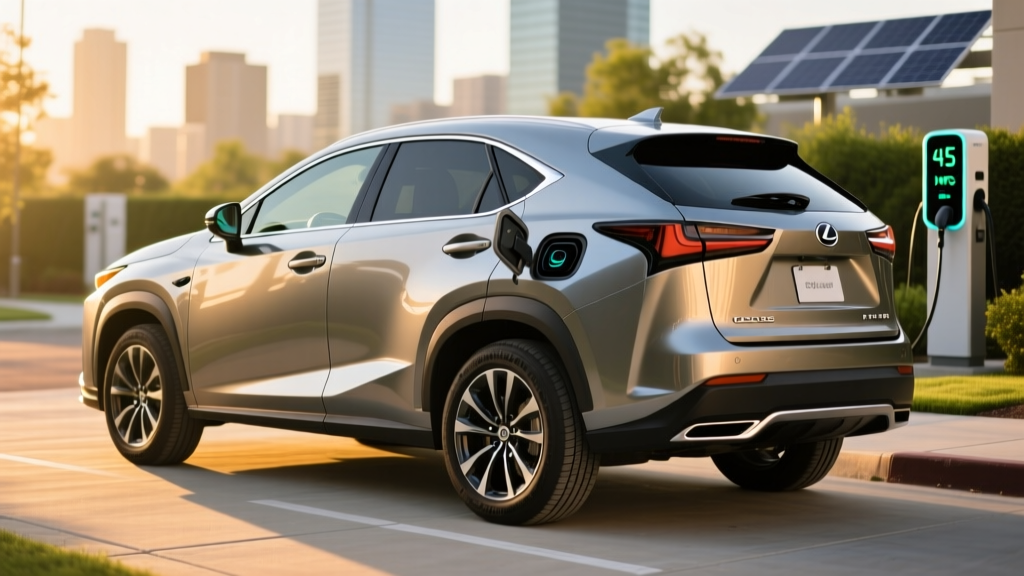
The 2026 Lexus NX 350h occupies a specific niche in the luxury compact SUV segment: genuine hybrid fuel economy without the price premium or plug-in complexity of the NX 450h+ PHEV. With an EPA-estimated 41 MPG city and 37 MPG highway, the NX 350h delivers numbers that rival much smaller vehicles while maintaining Lexus refinement, standard all-wheel drive, and a starting MSRP near $43,000. For buyers who want electrified efficiency but lack home charging access—or simply want a vehicle that works without behavior changes—this conventional hybrid (HEV) makes a compelling case.
This is not a plug-in hybrid. The NX 350h never needs to be plugged in. Its 1.6 kWh nickel-metal hydride battery recharges through regenerative braking and the gasoline engine. If you want 37 miles of electric-only range and the ability to plug in, you're looking for the NX 450h+, which is a different vehicle with a different price tag (and potential tax credit eligibility).
| Specification | 2026 Lexus NX 350h |
|---|---|
| Powertrain Type | Conventional Hybrid (HEV), no plug-in required |
| Engine | 2.5L 4-cylinder Atkinson-cycle + 3 electric motors |
| Combined Horsepower | 240 hp (net system output) |
| Drivetrain | AWD (electronic, rear motor-driven) |
| EPA MPG (City / Hwy / Combined) | 41 / 37 / 39 |
| Hybrid Battery | 1.6 kWh NiMH (self-charging) |
| 0–60 mph | 7.2 seconds |
| Cargo Volume (rear seats up/down) | 22.7 / 46.9 cu ft |
| Base MSRP (Premium trim) | $42,965 |
| Hybrid Battery Warranty | 10 years / 150,000 miles |
HEV vs PHEV: NX 350h vs NX 450h+ Explained
Lexus offers two electrified NX variants, and buyers frequently confuse them. The distinction matters for your daily routine, your wallet, and your tax situation.
| Feature | NX 350h (HEV) | NX 450h+ (PHEV) |
|---|---|---|
| Plug-in Required? | No — self-charging | Yes — 18.1 kWh battery, plugs into 120V or 240V |
| Electric-Only Range | ~1 mile at low speed | 37 miles (EPA) |
| Total Combined Range | ~540 miles | ~550 miles (electric + gas) |
| Combined Horsepower | 240 hp | 304 hp |
| EPA Combined MPG/MPGe | 39 MPG | 84 MPGe (electric+gas) / 37 MPG (gas only) |
| 0–60 mph | 7.2 sec | 6.0 sec |
| Base MSRP | $42,965 | $60,455 |
| Federal Tax Credit (§30D) | Not eligible | Up to $7,500 (subject to income, sourcing, MSRP caps) |
| DC Fast Charging | N/A | No — Level 1/2 AC only (~4 hours on Level 2) |
The practical difference: The NX 350h is for drivers who want better fuel economy without changing their refueling habits. The NX 450h+ is for drivers with home charging who want to do most daily driving on electricity while keeping a gas engine for road trips. The $17,500 price gap narrows to roughly $10,000 after the federal tax credit—if you qualify—but only if you can charge at home regularly.
Fuel Economy: EPA Numbers and Real-World MPG
The EPA rates the 2026 NX 350h at 41 MPG city, 37 MPG highway, and 39 MPG combined, according to fueleconomy.gov. These are strong numbers for a 4,000-pound luxury AWD SUV, but real-world results depend heavily on your driving mix.
| Driving Scenario | Expected MPG | Notes |
|---|---|---|
| City / stop-and-go | 39–43 MPG | Hybrids excel here — regen braking recovers energy, engine shuts off at stops |
| Suburban mixed | 37–40 MPG | Close to EPA combined estimate |
| Highway (70–80 mph) | 33–36 MPG | Aerodynamic drag dominates; hybrid advantage diminishes at sustained high speed |
| Cold weather (below 30°F) | 33–37 MPG | Engine runs longer to heat cabin and warm catalytic converter; battery efficiency drops |
| Mountain / steep grades | 28–34 MPG | Climbing consumes fuel; regen recovers some on descent |
Real-world expectation: Most NX 350h owners report 37–41 MPG in mixed driving, with city-heavy commuters occasionally exceeding the EPA city estimate. Highway-dominant drivers should plan for 34–36 MPG. This is typical Toyota/Lexus hybrid behavior: the system is optimized for urban efficiency, and highway fuel economy falls below the sticker. For comparison, the non-hybrid NX 250 FWD achieves 26 MPG combined, and the turbocharged NX 350 AWD manages 24 MPG combined—making the 350h roughly 50% more efficient than its gasoline siblings.
Powertrain: How 240 HP and 39 MPG Coexist
The NX 350h pairs a 2.5-liter Atkinson-cycle four-cylinder engine (181 hp on its own) with three electric motors integrated into the hybrid transaxle and rear axle. The rear motor enables electronic AWD without a mechanical driveshaft—Lexus calls this E-Four. Net system output is 240 horsepower.
The Atkinson cycle sacrifices low-RPM torque for thermal efficiency; the electric motors fill that torque gap instantly. The result is smooth, responsive acceleration from a stop (0–60 in 7.2 seconds) without the fuel consumption penalty of a conventional 240-hp powertrain. The 1.6 kWh nickel-metal hydride (NiMH) battery is small by EV standards—it stores roughly the energy of a single mile of electric driving—but it buffers regen energy and enables brief electric-only operation at low speeds.
Why NiMH instead of lithium-ion? Lexus has used NiMH in its conventional hybrids for over two decades. The chemistry is proven, thermally stable, and cost-effective for small-capacity applications where cycle life matters more than energy density. You won't see range degradation concerns here the way you might in a BEV—the battery's job is power buffering, not range storage.
Pricing, Trims, and Tax Credit Reality
The 2026 NX 350h is offered in three trims:
- Premium: $42,965 — includes Lexus Safety System+ 3.0, 9.8-inch touchscreen, wireless Apple CarPlay/Android Auto, heated front seats
- Premium Plus: $46,065 — adds panoramic moonroof, power-folding rear seats, head-up display
- Luxury: $50,615 — adds semi-aniline leather, 14-inch touchscreen, heated/ventilated rear seats, 360-degree camera
All prices include destination. Popular options (technology package, cold weather package, panoramic roof on lower trims) typically push transaction prices $3,000–$6,000 above base.
Federal Tax Credit: Not Eligible
The NX 350h is a conventional hybrid (HEV), which means it does not qualify for the IRS §30D Clean Vehicle Credit. That credit applies only to plug-in electric vehicles (BEVs and PHEVs) with sufficient battery capacity. If a salesperson suggests the NX 350h qualifies for the $7,500 federal credit, they are incorrect.
Some states offer their own hybrid incentives—check your state's energy office or department of environmental quality. These are typically modest ($500–$1,500 rebates) and vary significantly by jurisdiction. Consult your state's official incentive database or a tax professional for current eligibility.
Hybrid Battery Warranty & Replacement Cost
Lexus covers the NX 350h hybrid battery for 10 years or 150,000 miles, whichever comes first. This warranty guarantees the battery will retain sufficient capacity to operate the hybrid system. If the battery fails within this period, Lexus replaces it at no cost.
Out-of-warranty replacement cost: Based on current Lexus hybrid battery pricing, expect $3,000–$4,500 for a new OEM NiMH battery pack plus installation. However, real-world failure rates on Toyota/Lexus NiMH hybrid batteries are low—many units last well beyond 200,000 miles. Third-party refurbishment services exist for $1,500–$2,500 if needed post-warranty.
Reliability: What Two Decades of Lexus Hybrids Tell Us
The NX 350h benefits from Toyota's hybrid synergy drive architecture, which has been refined since the 2001 Prius. The 2.5L A25A-FXS engine is naturally aspirated (no turbo complexity), the planetary gearset transaxle has no conventional clutch packs or torque converter to wear, and the AWD system uses a simple rear electric motor rather than mechanical linkages.
Lexus consistently ranks at or near the top in J.D. Power Vehicle Dependability Studies, and the hybrid powertrain is among the brand's most reliable offerings. The NiMH battery chemistry is less prone to thermal runaway than lithium-ion and doesn't suffer the same calendar degradation as large EV batteries. Common high-mileage service items are the same as any vehicle: brakes (which last longer thanks to regen), suspension components, and the 12V auxiliary battery.
The hybrid system itself has few wear items. The inverter and electric motors have no brushes or consumable parts. The engine operates under lighter load than in a conventional vehicle because the electric motors assist during high-demand situations, reducing long-term mechanical stress.
Who Should Buy the NX 350h (And Who Shouldn't)
Choose the NX 350h If:
- You want 39+ MPG without plugging in or changing habits
- You lack home charging access (apartment, street parking, no garage)
- You drive a city-heavy or suburban commute where hybrid efficiency shines
- You want AWD for weather but don't want the fuel penalty of a conventional AWD SUV
- You prioritize long-term reliability and low maintenance costs
- You want a luxury badge without the $60K+ PHEV price
Look Elsewhere If:
- You want electric-only daily driving — consider the NX 450h+ PHEV or a full BEV
- Your commute is 90%+ highway at 75+ mph — the hybrid advantage narrows significantly
- You want maximum acceleration — the NX 450h+ (6.0 sec 0–60) or NX 350 turbo (6.6 sec) are quicker
- You qualify for the full $7,500 federal credit and have home charging — the NX 450h+ may pencil out similarly after incentives
- You want the latest EV tech (V2L, OTA powertrain updates, one-pedal driving) — this is a traditional driving experience
Hybrid vs PHEV vs Full EV: Which Fits You?
The NX lineup offers all three powertrains, making it a useful decision framework:
Conventional Hybrid (NX 350h): Best for drivers who want efficiency gains without infrastructure dependency. You fuel up at gas stations as before. No charging equipment, no range planning, no behavior change. Trade-off: you still burn gasoline, and you'll never achieve zero tailpipe emissions on any trip.
Plug-in Hybrid (NX 450h+): Best for drivers with home charging who want electric daily driving (37 miles covers most commutes) plus gas-engine flexibility for road trips. More expensive upfront, but the federal tax credit narrows the gap. Trade-off: you need to plug in regularly to realize the efficiency benefit; if you never plug in, you're carrying 400+ pounds of unused battery.
Full Electric (e.g., Tesla Model Y, BMW iX): Best for drivers with reliable home charging who want zero tailpipe emissions, minimal maintenance, and the lowest per-mile energy cost. Trade-off: road trips require DC fast-charging planning, and cold-weather range loss (15–30%) is real.
The honest answer for most luxury compact SUV buyers: if you can charge at home and your daily driving is under 35 miles, the PHEV or BEV will save you more money over five years. If you can't charge at home, or you regularly drive 300+ miles in a day, the NX 350h HEV is the pragmatic choice that still delivers meaningful fuel savings.
Frequently Asked Questions
How many MPG does the Lexus NX 350h get?
The EPA rates the 2026 NX 350h at 41 MPG city, 37 MPG highway, and 39 MPG combined. Real-world results typically fall between 34 and 43 MPG depending on driving conditions. City-heavy drivers often match or exceed the EPA city estimate, while highway-dominant driving at 75+ mph yields 33–36 MPG.
Does the NX 350h need to be plugged in?
No. The NX 350h is a conventional hybrid (HEV). Its 1.6 kWh battery recharges through regenerative braking and the gasoline engine. You never plug it in. If you want a plug-in Lexus NX, the 450h+ is the PHEV variant with 37 miles of electric-only range.
How far can the NX 350h go on electric only?
Essentially zero meaningful distance. The NX 350h can creep at very low speeds (under 25 mph) for roughly one mile on battery power alone, but the system is designed to seamlessly blend electric and gasoline operation. It is not an electric vehicle. For 37 miles of genuine electric-only driving, you need the NX 450h+ PHEV.
Does the NX 350h qualify for any tax credit?
The NX 350h does not qualify for the federal §30D Clean Vehicle Credit, which applies only to plug-in vehicles. Some states offer modest hybrid rebates ($500–$1,500), but these vary by jurisdiction. Check your state's energy office or consult a tax professional for local incentive availability.
Is the Lexus hybrid battery reliable and what does replacement cost?
Lexus covers the hybrid battery for 10 years or 150,000 miles. Toyota/Lexus NiMH hybrid batteries have demonstrated low failure rates, with many lasting 200,000+ miles. Out-of-warranty replacement costs $3,000–$4,500 for a new OEM pack, or $1,500–$2,500 through third-party refurbishment services. For context, this is less than a single timing-belt service interval on many conventional vehicles.
How does the NX 350h compare to the non-hybrid NX 250 and NX 350?
The NX 250 FWD achieves 26 MPG combined at $39,415; the turbo NX 350 AWD achieves 24 MPG combined at $43,515. The NX 350h AWD at $42,965 delivers 39 MPG combined—roughly 50% better fuel economy—with comparable or better acceleration than the NX 250. The price premium over the NX 250 is $3,550, which typical fuel savings recover in 3–5 years depending on mileage and gas prices.
Can the NX 350h tow?
The NX 350h is rated for 2,000 pounds of towing capacity when properly equipped. This is adequate for a small utility trailer or a pair of dirt bikes, but not for a boat or camper. The turbocharged NX 350 tows the same 2,000 pounds; neither variant is a serious tow vehicle.