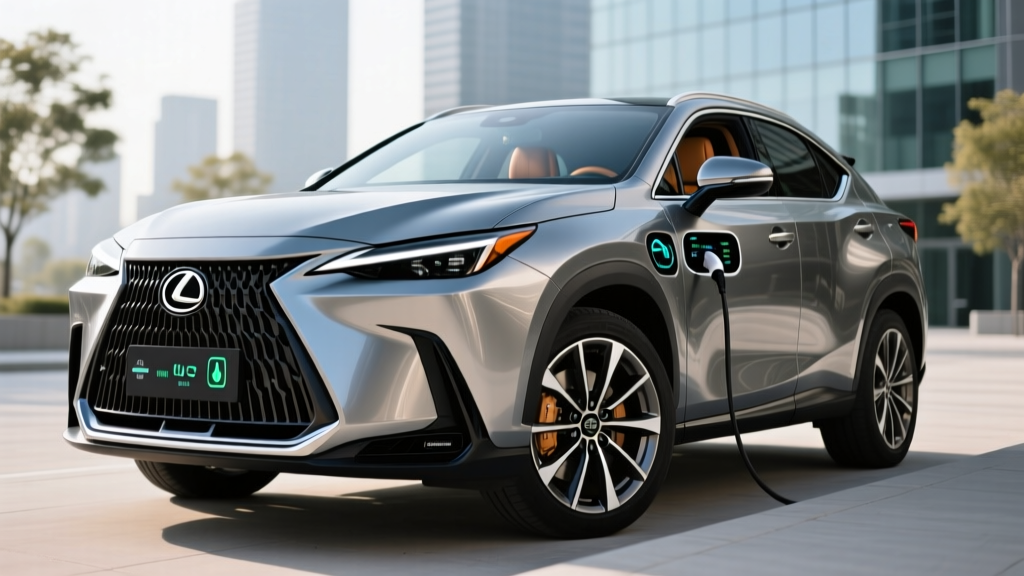
Quick Verdict: The Lexus NX 450h+ for PHEV Buyers Who Want It All
The Lexus NX plug-in hybrid — officially the NX 450h+ — occupies a specific niche that few competitors fill well: a luxury compact SUV that delivers meaningful electric-only range for daily commuting while eliminating range anxiety entirely. With an EPA-rated 37 miles of all-electric driving and a combined 84 MPGe, the NX 450h+ lets you treat it like an EV on short trips and a conventional hybrid on road trips. For 2026, Lexus continues the formula with the same 18.1 kWh battery pack, 304 combined horsepower, and all-wheel drive standard across both trims.
But at a starting MSRP around $49,500 before destination, the NX 450h+ carries a substantial premium over the conventional NX 350h hybrid. This review breaks down whether the plug-in math works for your commute, what you'll actually see at the pump (and the outlet), and how the NX PHEV compares to going full EV or sticking with a conventional hybrid.
HEV vs PHEV: Understanding the NX Lineup
Lexus offers the NX in three powertrain flavors, and the distinction matters for your wallet and your daily routine:
- NX 250 (gas): 2.5L four-cylinder, 203 hp, no electrification. EPA 28 combined MPG.
- NX 350h (HEV): Conventional hybrid — charges itself via regenerative braking and the engine. No plug. EPA 39 combined MPG. Smaller ~1.6 kWh battery.
- NX 450h+ (PHEV): Plug-in hybrid with an 18.1 kWh battery you charge externally. Can drive 37 miles on electricity alone before the engine kicks in. EPA 84 MPGe (electric+gas), 36 MPG combined once the battery is depleted.
The conventional hybrid (HEV) never needs to be plugged in — it captures energy from braking and the gasoline engine to keep its small battery charged. The plug-in hybrid (PHEV) has a much larger battery that you charge from a wall outlet or charging station, giving you an electric-only driving buffer before the gasoline engine takes over.
If you can charge at home and your daily round-trip commute is under 35 miles, the NX 450h+ can function almost entirely as an EV on weekdays, only burning gasoline on longer weekend trips. If you lack home charging access, the PHEV premium is harder to justify — you'll still get 36 MPG combined as a hybrid, but you're carrying extra battery weight and paying for capability you can't fully use.
Fuel Economy: EPA Numbers and Real-World MPG
| Metric | NX 450h+ (PHEV) | NX 350h (HEV) | NX 250 (Gas) |
|---|---|---|---|
| EPA Combined MPGe (with charge) | 84 MPGe | N/A | N/A |
| EPA Combined MPG (gas only) | 36 MPG | 39 MPG | 28 MPG |
| EPA City MPG (gas only) | 38 MPG | 41 MPG | 26 MPG |
| EPA Highway MPG (gas only) | 33 MPG | 37 MPG | 33 MPG |
| Electric-Only Range | 37 miles | 0 (not a PHEV) | 0 |
| Total Combined Range | ~550 miles | ~570 miles | ~460 miles |
The EPA's official fuel economy page for the NX 450h+ confirms the 84 MPGe figure, which blends electric and gasoline operation during the charge-depleting phase. Once the 37-mile electric buffer is used up, the vehicle operates as a conventional hybrid returning 36 MPG combined.
Real-World MPG vs. EPA Sticker
In mixed real-world driving, Lexus hybrids tend to match or slightly exceed their EPA city figures because regenerative braking recovers more energy in stop-and-go traffic. Expect to see 37-42 MPG in city driving once the battery is depleted, and 30-34 MPG at sustained highway speeds (70-80 mph). Cold weather reduces both the electric-only range (expect 28-32 miles in freezing temperatures due to cabin heating demands and battery chemistry limitations) and gas-mode efficiency by roughly 5-10%.
Owners who charge nightly and drive less than 35 miles daily report using only a few gallons of gasoline per month. If that's your pattern, your effective "MPG" is essentially infinite for daily driving — you're measuring electricity cost per mile instead.
Powertrain and Performance Specs
| Specification | NX 450h+ AWD |
|---|---|
| Engine | 2.5L 4-cylinder Atkinson-cycle |
| Combined System Horsepower | 304 hp |
| Electric Motors | Front + rear (eAWD) |
| 0-60 mph | 6.0 seconds |
| Battery Capacity | 18.1 kWh (lithium-ion) |
| EV-Only Range (EPA) | 37 miles |
| EV-Only Top Speed | ~84 mph |
| Drivetrain | Electronic AWD (eAWD) |
| Transmission | eCVT (planetary gearset) |
| Towing Capacity | 2,000 lbs |
The 304 combined horsepower figure makes the NX 450h+ the quickest variant in the NX lineup. The 2.5L Atkinson-cycle engine prioritizes efficiency over raw power, but the twin electric motors fill in torque instantly off the line. The result is a 6.0-second 0-60 mph time that feels responsive in everyday merging and passing situations.
The eAWD system uses a dedicated rear electric motor rather than a mechanical driveshaft, which means rear-wheel torque is available instantly and independently. This improves traction in rain and light snow without the parasitic loss of a traditional AWD system.
Charging: Battery, Times, and the DC Fast-Charging Limitation
The NX 450h+ carries an 18.1 kWh lithium-ion battery pack mounted beneath the floor. Here's what you need to know about keeping it charged:
| Charging Method | Power Rate | 0-100% Time | Notes |
|---|---|---|---|
| Level 1 (120V household outlet) | ~1.4 kW | ~12 hours | Emergency/trickle only |
| Level 2 (240V, home or public) | 3.3 kW (onboard charger limit) | ~5.5 hours | Primary charging method |
| DC Fast Charging | Not supported | N/A | No CCS or CHAdeMO port |
This is a critical detail many buyers overlook: the NX 450h+ cannot DC fast charge. The onboard AC charger is capped at 3.3 kW, meaning even if you plug into a 7.2 kW or 11.5 kW Level 2 station, the car will only draw 3.3 kW. A full charge from empty takes approximately 5.5 hours on Level 2.
For most PHEV owners, this isn't a dealbreaker. The 37-mile battery depletes over a day of driving, and you replenish it overnight while sleeping — 5.5 hours is well within that window. But if you were hoping to top up at a public fast charger during a road trip to recapture EV range, that's not an option here. Once the battery is depleted on a long trip, you're running on the hybrid system at 36 MPG until you reach your destination and plug in.
Home Charging Setup
Most NX 450h+ owners will install a 240V Level 2 home charger on a dedicated 20-amp circuit. Given the 3.3 kW onboard charger limitation, you don't need an expensive 48-amp hardwired unit — a 16-amp or 20-amp Level 2 EVSE (like the ChargePoint Home Flex or Emporia Vue) is sufficient and costs $300-$550 for the equipment. Professional installation typically adds $400-$1,200 depending on panel proximity and local permitting. Because the NX PHEV draws relatively low power, a panel upgrade is almost never required for this vehicle alone.
Pricing, Trims, and Tax Credit Eligibility
The 2026 Lexus NX 450h+ is offered in two trims:
- NX 450h+ Premium: ~$49,500 MSRP (before $1,195 destination)
- NX 450h+ Luxury: ~$56,000 MSRP (before destination)
For comparison, the conventional NX 350h Premium starts around $44,000 — a roughly $5,500 gap that you'd need to recoup through fuel savings or tax incentives to justify the PHEV upgrade.
Federal Tax Credit: Does the NX 450h+ Qualify?
§30D Clean Vehicle Credit — Current Rules: Under the federal tax credit program, qualifying new PHEVs can receive up to $7,500. However, eligibility depends on multiple factors that change frequently:
- MSRP cap: SUVs must be under $80,000 (both NX 450h+ trims qualify)
- Buyer income cap: Modified AGI must not exceed $150,000 (single), $225,000 (head of household), or $300,000 (joint)
- Battery sourcing: Critical minerals and battery components must meet escalating domestic-content thresholds
- Point-of-sale transfer: Eligible buyers can transfer the credit to the dealer for an immediate price reduction
Check the latest eligibility details on the IRS §30D guidance page and confirm with your tax professional before purchasing. Credit availability for the NX 450h+ specifically depends on whether Lexus's battery supply chain meets current-year sourcing requirements — this has varied by model year.
If you qualify for the full $7,500 credit, the NX 450h+ Premium effectively drops to around $43,195 — making it comparable to (or even cheaper than) the conventional NX 350h Premium while offering dramatically lower operating costs. This is where the PHEV math works best. If you don't qualify due to income limits or if the specific model fails sourcing requirements, the payback period stretches considerably.
Battery Warranty, Reliability, and Long-Term Costs
Hybrid battery longevity is consistently the top concern for PHEV buyers. Here's what Lexus provides:
- Hybrid Battery Warranty: 10 years / 150,000 miles (whichever comes first)
- Hybrid System Components: 8 years / 100,000 miles
- Basic Vehicle Warranty: 4 years / 50,000 miles
- Powertrain Warranty: 6 years / 70,000 miles
- Estimated Battery Replacement Cost (out of warranty): $6,000–$9,000 including labor
Lexus and parent company Toyota have the longest track record in hybrid technology of any automaker, with millions of hybrid vehicles on the road since the 2000 Prius. Real-world data from Toyota/Lexus hybrid owners shows that most hybrid batteries last well beyond their warranty periods — 150,000 to 200,000+ miles is common. The PHEV battery is larger and operates in a shallower state-of-charge window than a pure EV, which generally reduces degradation stress.
Lexus consistently ranks at or near the top of J.D. Power Vehicle Dependability Studies, and the NX specifically has performed well in reliability surveys. The eCVT transmission is a planetary gearset with no clutch packs or bands to wear — it's one of the most durable transmission designs in the industry.
Maintenance Cost Advantage
The NX 450h+ requires no maintenance that a conventional NX doesn't — same oil change intervals (10,000 miles), same brake service (actually less frequent due to regenerative braking extending pad life), same coolant and filter schedules. The electric motors and battery are sealed, maintenance-free components. Over a 5-year ownership period, PHEV owners typically save $2,000-$4,000 on fuel (depending on electricity rates and driving patterns) while spending roughly the same on maintenance.
NX 450h+ vs. Full EV vs. Conventional Hybrid: Which Fits You?
NX 450h+ (PHEV) Pros
- 37-mile EV range covers most daily commutes gasoline-free
- No range anxiety — 550+ mile total range for road trips
- Standard eAWD with 304 hp, quickest NX variant
- 10-year/150,000-mile hybrid battery warranty
- No public charging dependency — home outlet is sufficient
- Lexus reliability and resale value
NX 450h+ (PHEV) Cons
- $5,500 premium over conventional NX 350h
- 3.3 kW onboard charger is slow; no DC fast charging
- 36 MPG gas-only is lower than NX 350h's 39 MPG (extra battery weight)
- Federal tax credit eligibility uncertain — depends on sourcing rules
- Smaller cargo area than some competitors (battery packaging)
- EV range drops to ~28-32 miles in cold weather
Decision Framework
Choose the NX 450h+ (PHEV) if:
- You can charge at home (even a standard 120V outlet works overnight for partial replenishment)
- Your daily round-trip commute is under 35 miles
- You want EV-like daily driving but frequently take road trips over 200 miles
- You qualify for the federal tax credit, closing the price gap with the NX 350h
- You live in an area with limited public DC fast-charging infrastructure
Choose the NX 350h (conventional HEV) if:
- You cannot charge at home (apartment, street parking, no garage outlet)
- You want maximum MPG without any plug-in routine
- The $5,500 PHEV premium doesn't pencil out given your driving mileage
- You don't qualify for the federal tax credit
Choose a full EV (like the Lexus RZ 450e or Tesla Model Y) if:
- You want zero gasoline expenses and zero oil changes
- You have reliable home Level 2 charging
- Your daily driving is under 200 miles and you're comfortable planning road-trip charging stops
- You want maximum federal tax credit certainty (many EVs have clearer eligibility)
Frequently Asked Questions
How many MPG does the Lexus NX plug-in hybrid get?
The NX 450h+ achieves 84 MPGe when operating with a charged battery (blending electric and gasoline miles). Once the 37-mile electric range is depleted, it operates as a conventional hybrid returning 36 MPG combined (38 city / 33 highway). In real-world city driving with frequent regenerative braking, expect 37-42 MPG in gas-only mode.
How far can the Lexus NX 450h+ go on electric only?
The EPA rates the NX 450h+ at 37 miles of all-electric range. In warm weather with moderate speeds, some owners report 38-40 miles. In cold weather (below freezing), expect 28-32 miles due to battery efficiency loss and cabin heating demands. At highway speeds above 70 mph, electric range also decreases to roughly 30-33 miles.
Does the Lexus NX 450h+ qualify for a federal tax credit?
It may qualify for up to $7,500 under the §30D Clean Vehicle Credit, but eligibility depends on your income (must be under $150K single / $300K joint), the vehicle's battery sourcing compliance with current-year critical mineral and component thresholds, and the MSRP being under $80,000 (both trims qualify). Credit rules change periodically — verify current eligibility on irs.gov and with your tax advisor before purchase. If eligible, you can transfer the credit to the dealer at point of sale for an immediate price reduction.
Is the Lexus NX plug-in hybrid reliable, and what does battery replacement cost?
Lexus has an industry-leading reliability track record, and the hybrid powertrain is among the most proven in automotive history. The hybrid battery is warrantied for 10 years or 150,000 miles. Real-world data shows Toyota/Lexus hybrid batteries commonly lasting 150,000-200,000+ miles. Out-of-warranty replacement costs approximately $6,000-$9,000 including labor, but most owners never reach this point before selling or trading the vehicle.
Can the NX 450h+ DC fast charge?
No. The NX 450h+ only accepts AC charging via its J1772 port, with a maximum onboard charger rate of 3.3 kW. A full Level 2 charge takes about 5.5 hours. There is no DC fast-charging capability — this is common for PHEVs, which rely primarily on overnight home charging rather than public fast-charging networks.
How does the NX 450h+ compare to the NX 350h conventional hybrid?
The NX 350h gets better gas-only fuel economy (39 vs. 36 MPG combined), costs about $5,500 less, and doesn't require any charging routine. The NX 450h+ offers 37 miles of electric-only range, 304 hp vs. 244 hp (1.3 seconds quicker to 60 mph), and lower operating costs if you charge regularly and qualify for the tax credit. If you can charge at home and commute under 35 miles daily, the PHEV is the stronger value — especially with the tax credit applied.
What's the total range of the NX 450h+?
Combining the 37-mile electric buffer with the approximately 13.2-gallon fuel tank and 36 MPG gas-only operation, the NX 450h+ delivers roughly 550 miles of total range before needing both fuel and electricity. This eliminates range anxiety entirely — you can drive cross-country refueling at any gas station, just as you would with a conventional vehicle.