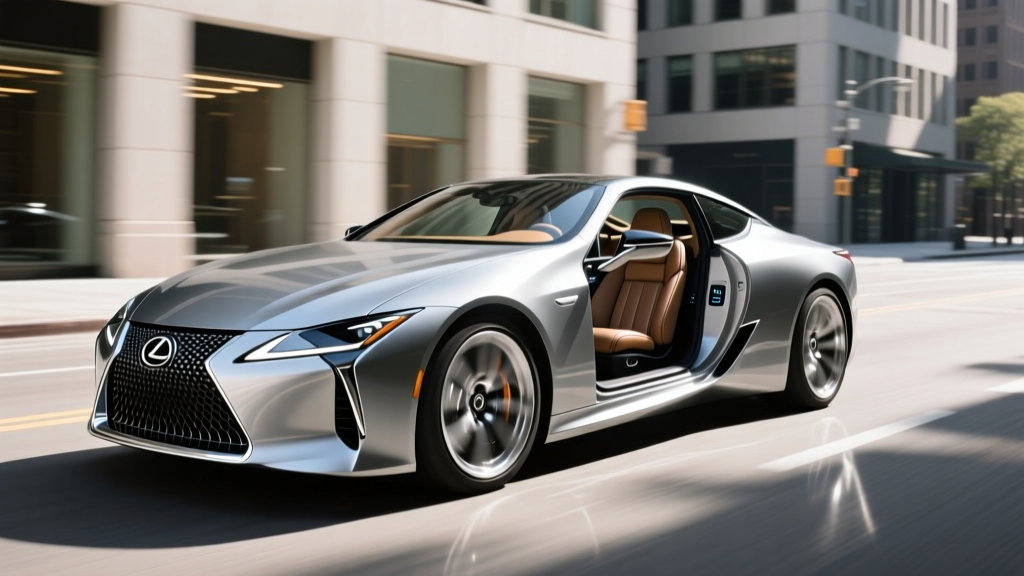
The Lexus LC 500h occupies a rare lane in the luxury grand-touring segment: a flagship coupe that pairs a 3.5-liter V6 with a multi-stage hybrid system to deliver both 354 combined horsepower and genuinely respectable fuel economy. For 2026, the LC Hybrid remains Lexus's halo hybrid coupe — a car designed for buyers who want the emotional appeal and handcrafted interior of a six-figure grand tourer without the fuel bills of a traditional V8. But does the real-world efficiency match the EPA sticker, and is this conventional hybrid the right electrified choice over a plug-in or full EV?
2026 Lexus LC 500h: Powertrain and Performance Specs
The LC 500h uses Lexus's Multi-Stage Hybrid System, which pairs a 3.5-liter V6 gasoline engine (295 hp) with two electric motor-generators routed through a unique four-speed automatic transmission that simulates a 10-speed stepped gearbox. Combined system output is 354 horsepower. This is not a plug-in hybrid — the small 1.1 kWh lithium-ion battery recharges exclusively through regenerative braking and engine power. You never plug it in.
| Specification | Value |
|---|---|
| Powertrain Type | Conventional Hybrid (HEV) — no plug-in required |
| Gasoline Engine | 3.5L V6, 295 hp / 257 lb-ft |
| Electric Motor Output | 131 kW (176 hp) via two motor-generators |
| Combined System Output | 354 hp |
| Transmission | Multi-Stage Hybrid (4-speed auto + simulated 10-speed) |
| Drivetrain | Rear-wheel drive |
| 0–60 mph | 4.7 seconds (manufacturer estimate) |
| Battery Chemistry / Capacity | Lithium-ion / 1.1 kWh |
| Plug-In Required | No — self-charging via regen and engine |
| Base MSRP (2026) | ~$103,000 |
The multi-stage transmission is the engineering differentiator here. Unlike the continuously variable transmissions (CVTs) found in most Toyota/Lexus hybrids, the LC 500h's gearbox provides physical gear ratios that eliminate the rubber-band feeling typical of CVT hybrid acceleration. The result is a driving experience that feels more like a traditional performance coupe, with distinct shift points under hard acceleration and genuine engagement in the Sport+ drive mode.
Fuel Economy: EPA Ratings vs. Real-World MPG
For a 4,300-pound luxury coupe with a V6, the LC 500h's fuel economy is genuinely impressive. Here is the official EPA breakdown per fueleconomy.gov:
| Driving Cycle | EPA MPG |
|---|---|
| City | 26 MPG |
| Highway | 33 MPG |
| Combined | 29 MPG |
Real-world expectations: In mixed driving, owners and testers consistently report 27–30 MPG combined. Highway cruising at moderate speeds (65–70 mph) can push toward 34–35 MPG thanks to the hybrid system's ability to shut off the engine during light-load coasting and use electric-only propulsion at steady state on gentle grades. City driving with frequent stops often exceeds the EPA city rating — hybrids benefit enormously from stop-and-go traffic where regenerative braking recaptures energy that a gas-only car wastes as heat. Expect 28–30 MPG in urban commuting.
For comparison, the gas-only LC 500 with its 5.0-liter V8 (471 hp) returns an EPA 16 city / 25 highway / 19 combined. The hybrid powertrain delivers a 53% improvement in combined fuel economy while sacrificing only the top-end rush of a naturally aspirated V8. The LC 500h is also rated for premium unleaded (91 octane minimum), which narrows the per-fill-up savings somewhat versus regular-grade vehicles.
The Lexus LC 500h is a conventional hybrid (HEV), not a plug-in hybrid (PHEV). It has no electric-only range to speak of (the small battery provides brief electric assist at low speeds, not sustained EV driving). You cannot plug it in. If you want 30+ miles of electric-only commuting before the gas engine starts, you need a PHEV like the BMW XM or Porsche Cayenne E-Hybrid — neither of which competes directly with the LC in the coupe segment. The LC 500h trades electric-only capability for simplicity: no charging infrastructure needed, no range degradation to worry about, and a lighter overall package.
Hybrid Battery Warranty and Long-Term Reliability
Hybrid battery longevity is the top concern for any HEV buyer, and Lexus's track record here is among the best in the industry. The LC 500h's hybrid battery and related components are covered under Lexus's Hybrid System Warranty:
• Hybrid battery: 10 years / 150,000 miles (whichever comes first)
• Hybrid system components (inverter, motor-generators, control module): 8 years / 100,000 miles
• Basic vehicle warranty: 4 years / 50,000 miles
• Powertrain warranty: 6 years / 70,000 miles
Lexus and parent company Toyota have built millions of hybrids since the 1997 Prius, and their hybrid battery failure rates are remarkably low. The LC 500h's 1.1 kWh battery is small and operates within a conservative state-of-charge window (the system never fully depletes or fully charges the pack), which dramatically reduces degradation stress. Real-world data from Lexus LS 500h owners — which shares the same Multi-Stage Hybrid architecture — shows negligible capacity loss even past 100,000 miles.
Battery replacement cost: If a hybrid battery does fail outside warranty, a replacement unit for the LC 500h is estimated at $3,000–$5,000 including labor at a Lexus dealer. Independent hybrid specialists can often refurbish or replace individual cells for $1,500–$2,500. Given the 10-year/150,000-mile warranty and Lexus's reliability history, this is a low-probability expense, but it's worth budgeting for if you plan to keep the car past the warranty period.
Pricing, Trims, and Tax Credit Eligibility
The 2026 Lexus LC 500h is available in a single well-equipped trim with optional packages. Pricing breaks down as follows:
| Configuration | MSRP (approx.) |
|---|---|
| LC 500h Coupe (base) | $103,000 |
| With Inspiration Series package | $106,000–$108,000 |
| With Mark Levinson audio + head-up display | +$1,500–$2,200 |
Federal tax credit: The LC 500h does not qualify for the IRS §30D Clean Vehicle Credit. The §30D credit of up to $7,500 applies only to plug-in electric vehicles (BEVs and PHEVs) meeting battery-sourcing, MSRP cap ($55,000 for sedans/coupes), and buyer income requirements. As a conventional hybrid with no plug-in capability, the LC 500h is ineligible. Some states may offer small hybrid incentives — check your state's energy office for current programs, but do not expect significant purchase subsidies.
The total cost of ownership picture is more nuanced. Over five years and 75,000 miles of driving at $4.00/gallon premium fuel, the LC 500h would consume roughly 2,586 gallons (~$10,344 in fuel). The gas-only LC 500 V8 would consume approximately 3,947 gallons (~$15,788). That's roughly $5,400 in fuel savings over five years with the hybrid — a meaningful offset against the LC 500h's premium pricing, even without a tax credit.
Driving Experience: Where the Hybrid System Shines
The LC 500h is not trying to be a sports car. It's a grand tourer — designed to cover long distances in isolation and comfort while offering enough performance to make back roads interesting. The hybrid system contributes to this mission in specific ways:
- Silent low-speed operation: In EV mode at parking-lot speeds or in stop-and-go traffic, the LC 500h can creep on electric power alone. It's brief — typically under a mile at very low speeds — but it makes the car eerily quiet in situations where a gas V8 would be thrumming at idle.
- Torque fill: The electric motor-generators provide instant torque at low RPMs, eliminating the lag you'd feel waiting for the V6 to spool up. This makes the LC 500h feel more responsive from a stoplight than its 295-hp gas engine alone would suggest.
- Seamless stop-start: The engine shuts off at stops and restarts imperceptibly — far smoother than the jarring stop-start systems in non-hybrid vehicles.
- Regenerative braking: Braking feel is linear and well-modulated, with the transition between regenerative and friction braking nearly undetectable — a common weakness in lesser hybrid systems that Lexus has largely solved.
Where the LC 500h falls short versus the V8 LC 500 is top-end drama. The V6 hybrid doesn't deliver the visceral soundtrack or the linear power surge of a 5.0-liter V8 above 5,000 RPM. If emotional engine note and 471-hp urgency are your priorities, the hybrid is the wrong choice. If you want a refined, efficient daily-driver grand tourer that still looks like a concept car, the 500h is the smarter pick.
Who Should Choose the Lexus LC Hybrid?
- You want a luxury coupe with genuine fuel efficiency (29 MPG combined) without needing any charging infrastructure
- You drive 15,000+ miles per year and want to reduce fuel costs on a grand tourer
- You value refinement, silence, and smooth powertrain operation over raw V8 performance
- You don't have access to home or workplace charging and a PHEV/BEV isn't practical
- You want Lexus's proven hybrid reliability with a 10-year/150,000-mile battery warranty
- You want electric-only commuting range — no current luxury coupe PHEV exists, but consider a BMW i4 or Porsche Taycan for full EV grand touring
- You prioritize 0–60 times and track performance — the LC 500 V8 or a Porsche 911 GTS delivers more visceral speed
- You need back seats or cargo practicality — the LC's rear seats are decorative and the trunk is small (5.4 cu ft)
- You're seeking federal tax credits — only BEVs and PHEVs qualify for the §30D credit
Lexus LC 500h vs. Alternatives: Hybrid, PHEV, or Full EV?
The LC 500h doesn't have a direct hybrid rival in the luxury coupe segment. Here's how it compares to adjacent options buyers cross-shop:
| Vehicle | Type | Combined MPG / MPGe | Electric Range | 0–60 mph | Base Price |
|---|---|---|---|---|---|
| Lexus LC 500h | HEV | 29 MPG | N/A (self-charging) | 4.7 sec | ~$103,000 |
| BMW 840i Gran Coupe | Gas | 25 MPG | N/A | 4.6 sec | ~$90,000 |
| BMW XM (PHEV SUV) | PHEV | 14 MPGe / 46 MPGe | ~30 mi electric | 4.1 sec | ~$160,000 |
| Porsche Taycan 4S | BEV | 79 MPGe | ~246 mi (EPA) | 3.8 sec | ~$107,000 |
| Mercedes-AMG GT 55 | Gas | 21 MPG | N/A | 3.9 sec | ~$135,000 |
The Taycan offers dramatically lower running costs if you can charge at home, but it's a four-door sedan with a different form factor entirely. The BMW XM is a PHEV but it's a massive, heavy SUV — nothing like a coupe. The LC 500h's closest value proposition is actually internal: versus the LC 500 V8, it saves roughly $1,000/year in fuel while offering a quieter, more refined daily-driving experience at a similar price point.
Frequently Asked Questions
How many MPG does the Lexus LC Hybrid get?
The 2026 Lexus LC 500h achieves an EPA-rated 26 MPG city, 33 MPG highway, and 29 MPG combined. Real-world testing shows 27–30 MPG combined in mixed driving, with city driving often exceeding the EPA city rating thanks to regenerative braking efficiency in stop-and-go traffic.
Can the Lexus LC 500h drive on electric power only?
Only at very low speeds for very short distances (under ~1 mile at parking-lot speeds). The LC 500h is a conventional hybrid (HEV), not a plug-in hybrid. It has a small 1.1 kWh battery designed for torque assist and efficiency, not sustained electric-only driving. If you need 20–40 miles of electric-only commuting, you need a PHEV — and no luxury coupe PHEV currently exists on the market.
Is the Lexus LC Hybrid reliable?
Lexus's hybrid systems have an industry-leading reliability record, built on decades of Toyota hybrid engineering. The LC 500h's Multi-Stage Hybrid system shares architecture with the LS 500h sedan, which has demonstrated minimal battery degradation past 100,000 miles in owner reports. Lexus covers the hybrid battery for 10 years / 150,000 miles, providing long-term peace of mind.
What does it cost to replace the LC 500h hybrid battery?
A full hybrid battery replacement at a Lexus dealer is estimated at $3,000–$5,000 including labor. Independent hybrid specialists can often repair or refurbish the pack for $1,500–$2,500. Given the 10-year/150,000-mile warranty and Lexus's low failure rates, most owners will never face this cost.
Does the Lexus LC 500h qualify for any tax credits?
No. The federal §30D Clean Vehicle Credit applies only to plug-in vehicles (BEVs and PHEVs) meeting specific battery-sourcing, MSRP, and buyer-income requirements. As a conventional hybrid with no plug-in capability, the LC 500h is not eligible. Check your state energy office for any local hybrid incentives, though these are increasingly rare as programs shift toward plug-in vehicles.
Should I buy the LC 500h or the LC 500 V8?
If you prioritize fuel efficiency, daily-driver refinement, and lower operating costs, the LC 500h is the rational choice — 29 MPG combined versus 19 MPG is a meaningful difference for a high-mileage grand tourer. If you prioritize V8 soundtrack, emotional engagement, and maximum acceleration feel, the LC 500 V8 is worth the fuel penalty. Both share the same stunning exterior design and exceptional interior quality.