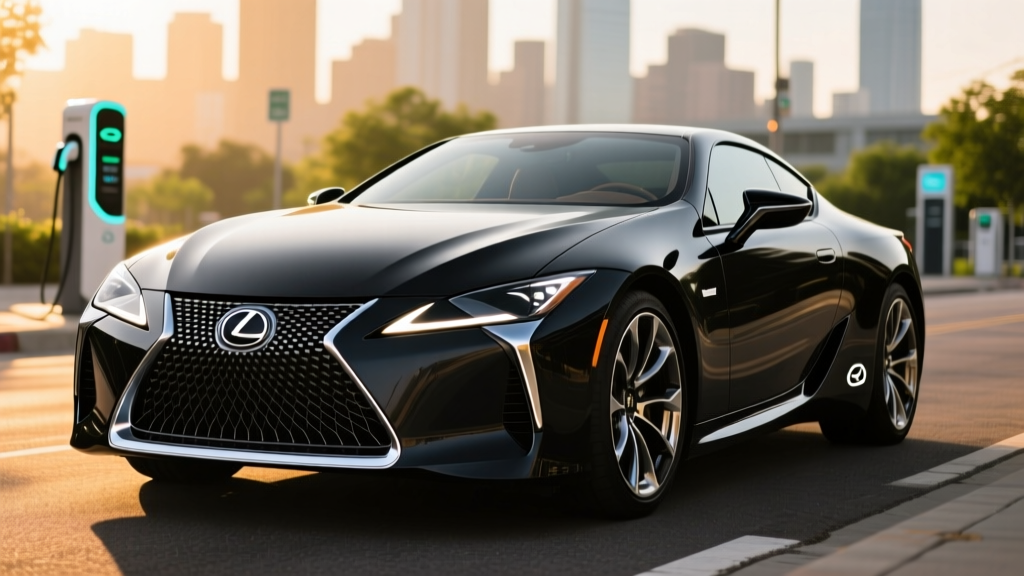
The Lexus LC 500h occupies a rare niche: a grand-touring luxury coupe that pairs a naturally aspirated V6 with a sophisticated hybrid powertrain to deliver both performance and genuine fuel efficiency. For 2026, the LC 500h continues to prove that hybrid technology isn't limited to economy cars — it can enhance a sports coupe's character while shaving visits to the gas station. If you've been searching for an LC hybrid, here's everything you need to know about real-world MPG, powertrain specs, reliability, and whether this electrified grand tourer fits your garage.
HEV vs PHEV: Where the LC 500h Fits
The Lexus LC 500h is a conventional hybrid electric vehicle (HEV), not a plug-in hybrid (PHEV). This is a critical distinction that affects how you own and operate the car.
Conventional Hybrid (HEV) — LC 500h
- No plug required: The battery recharges through regenerative braking and the gasoline engine
- Smaller battery: ~1.1 kWh lithium-ion pack — assists the engine but cannot drive the car on electric power alone for meaningful distances
- No electric-only range to manage: You simply drive; the system handles energy recuperation automatically
- No federal EV tax credit: HEVs do not qualify under IRS §30D clean vehicle credit rules
Plug-In Hybrid (PHEV) — Not the LC
- Requires plug-in charging (Level 1 or Level 2)
- Larger battery (typically 10–20 kWh) enabling 20–50 miles of electric-only driving
- May qualify for up to $7,500 federal tax credit under §30D (subject to MSRP caps, income limits, and battery sourcing rules)
The LC 500h asks nothing of you beyond filling it with premium fuel. The hybrid system works invisibly, optimizing power delivery and efficiency without any change to your driving routine.
Fuel Economy: EPA Ratings and Real-World MPG
The headline number for the LC 500h is its ability to return roughly 30 MPG combined in a luxury performance coupe that hits 60 mph in under five seconds. Here's the official EPA breakdown from fueleconomy.gov:
| Metric | LC 500h (2026 EPA) |
|---|---|
| City MPG | 26 MPG |
| Highway MPG | 35 MPG |
| Combined MPG | 30 MPG |
| Fuel Tank Capacity | 13.2 gallons |
| Total Estimated Range | ~396 miles |
| Annual Fuel Cost (EPA est.) | ~$2,550 (15,000 mi/yr) |
Real-World MPG vs. EPA Sticker
Hybrids typically outperform their EPA ratings in city driving because stop-and-go traffic maximizes regenerative braking opportunities. Expect 28–32 MPG in mixed city commuting. Highway driving, where the electric motor contributes less, tends to land closer to the EPA figure or slightly below — plan for 30–33 MPG on flat interstate cruises at 70 mph.
In colder climates (below 40°F), expect a 5–10% efficiency drop as the engine runs more frequently to heat the cabin and maintain battery temperature. That said, the LC 500h's efficiency penalty in cold weather is far less severe than a full EV's range loss, since the gasoline engine provides waste heat for cabin warming.
Powertrain and Performance Specs
Lexus calls its system the Multi-Stage Hybrid System, which pairs a 3.5-liter V6 engine with two electric motor-generators and a unique 4-speed automatic transmission that works in concert with a simulated 10-speed gearset. The result is a driving experience that feels more like a traditional performance car than a typical CVT-equipped hybrid.
| Specification | 2026 Lexus LC 500h |
|---|---|
| Engine | 3.5L V6 naturally aspirated (295 hp) |
| Electric Motors | Two motor-generators (177 hp combined electric) |
| Total System Horsepower | 354 hp |
| Total System Torque | ~350 lb-ft |
| 0–60 mph | 4.7 seconds |
| Top Speed | 155 mph (electronically limited) |
| Transmission | Multi-Stage Hybrid (4-speed auto + simulated 10-speed) |
| Drivetrain | Rear-wheel drive |
| Curb Weight | ~4,425 lbs |
| Hybrid Battery | ~1.1 kWh lithium-ion |
The Multi-Stage system's key advantage over simpler hybrid setups is its ability to hold engine RPM in the power band during spirited driving, eliminating the rubber-band sensation associated with older CVT hybrids. In Sport+ mode, the LC 500h delivers genuinely engaging acceleration with a satisfying engine note — a rarity in the hybrid world.
Pricing and Tax Credit Eligibility
The 2026 Lexus LC 500h carries a premium price reflective of its grand-touring positioning and hand-assembled build quality.
| Trim | MSRP (2026 est.) |
|---|---|
| LC 500h Coupe (base) | ~$103,100 |
| LC 500h Coupe w/ Luxury Pkg | ~$108,500 |
| LC 500h Inspiration Series | ~$106,000 |
Federal and State Tax Credits
Because the LC 500h is a conventional hybrid (HEV), it does not qualify for the IRS §30D Clean Vehicle Credit (up to $7,500 for new PHEVs/EVs). The §30D credit requires a plug-in vehicle with a battery capacity of at least 7 kWh — the LC 500h's ~1.1 kWh pack falls well short of this threshold. See current rules at IRS.gov §30D.
Some states offer modest incentives for hybrid vehicles through reduced registration fees or HOV lane access, but these vary by jurisdiction. Check your state's DMV or energy office for current programs.
Battery Warranty, Reliability, and Replacement Costs
Hybrid battery longevity is the single most common concern among first-time hybrid buyers. Lexus addresses this with strong warranty coverage and a proven track record.
LC 500h Hybrid Battery Warranty
- Hybrid Battery Coverage: 10 years / 150,000 miles (whichever comes first)
- Hybrid System Components: 8 years / 100,000 miles
- Basic New Vehicle Warranty: 4 years / 50,000 miles
- Powertrain Warranty: 6 years / 70,000 miles
Lexus's hybrid battery warranty is among the longest in the industry, reflecting Toyota Motor Corporation's decades of hybrid experience since the original Prius in 1997.
Real-World Battery Lifespan
Toyota/Lexus hybrid batteries routinely last 150,000–200,000+ miles before significant degradation. The LC 500h's relatively small battery pack (~1.1 kWh) operates in a shallow state-of-charge window — typically between 40% and 80% — which dramatically reduces cell stress compared to a full EV battery cycling from 10% to 90%.
Battery Replacement Cost
If replacement is needed outside warranty, a Lexus hybrid battery pack for the LC 500h typically costs $3,000–$5,000 including labor at a dealership. Independent hybrid specialists may offer refurbished packs for $2,000–$3,500. Given the 10-year/150,000-mile warranty and typical hybrid battery lifespan, most original owners will never face this expense.
Overall Reliability
Lexus consistently ranks at or near the top of J.D. Power and Consumer Reports reliability studies. The LC 500h's naturally aspirated V6 avoids turbocharger complexity, and the hybrid system has fewer wear components than a conventional automatic transmission (no torque converter, simplified gearset). According to IIHS, the LC platform has demonstrated strong crashworthiness in testing.
Who Should Choose the LC Hybrid vs. a Full EV or Gas Car?
Choose the LC 500h Hybrid If:
- You want a luxury grand tourer with genuine 30 MPG efficiency without changing your fueling habits
- You don't have reliable access to home or workplace EV charging
- You take frequent long road trips where charging infrastructure gaps remain a concern
- You value Lexus reliability and dealer support
- You want hybrid efficiency without the price premium of a PHEV or the range planning of a full EV
Choose a Full EV (e.g., Porsche Taycan, BMW i4) If:
- You can install a Level 2 home charger and want near-zero daily fuel costs
- You want instant torque, silent operation, and the lowest per-mile energy cost
- You qualify for the $7,500 federal EV tax credit and your state offers additional incentives
- Your daily commute is under 250 miles and you rarely drive into charging deserts
Choose the Gas-Only LC 500 (V8) If:
- You prioritize V8 sound and throttle response over fuel economy (the LC 500 V8 returns ~19 MPG combined)
- You want a lighter car — the V8 LC 500 weighs roughly 200 lbs less than the 500h
- You drive primarily on weekends and low annual mileage makes fuel savings negligible
Pros
- 30 MPG combined in a 354-hp luxury coupe — genuinely impressive
- Multi-Stage Hybrid system feels engaging, not numb
- 10-year / 150,000-mile hybrid battery warranty
- No charging infrastructure needed — just fill up and drive
- Exquisite interior build quality and ride comfort
- Strong long-term reliability record (Lexus/Toyota hybrid heritage)
Cons
- $103,000+ starting price with no federal tax credit offset
- Only ~1.1 kWh battery — no meaningful electric-only driving mode
- Heavier than the V8 LC 500 (hybrid system adds ~200 lbs)
- Rear seats are essentially unusable for adults
- Infotainment system still lags behind German rivals in responsiveness
- Premium fuel required (91+ octane)
LC Hybrid Ownership Costs: 5-Year Estimate
How does the LC 500h compare to its V8 sibling on fuel alone? Assuming 12,000 miles per year and $4.20/gallon premium fuel:
| Cost Factor (5 yr / 60k mi) | LC 500h (30 MPG) | LC 500 V8 (19 MPG) |
|---|---|---|
| Fuel Cost | ~$8,400 | ~$13,260 |
| Fuel Savings vs. V8 | LC 500h saves ~$4,860 over 5 years | |
| Estimated Maintenance | ~$3,500 | ~$4,000 |
| Insurance (avg.) | ~$12,000 | ~$12,500 |
The hybrid saves roughly $5,000+ in fuel and slightly lower maintenance over five years. While this doesn't offset the LC 500h's higher MSRP compared to the V8 LC 500, it narrows the gap — and the hybrid's efficiency advantage grows as fuel prices rise.
Frequently Asked Questions
How many MPG does the Lexus LC 500h hybrid get?
The 2026 Lexus LC 500h is EPA-rated at 26 MPG city, 35 MPG highway, and 30 MPG combined. Real-world mixed driving typically yields 28–32 MPG, with city-heavy commutes sometimes exceeding the EPA city rating thanks to regenerative braking.
Does the LC 500h need to be plugged in?
No. The LC 500h is a conventional hybrid (HEV), not a plug-in hybrid. Its small battery recharges through regenerative braking and the gasoline engine. You never plug it in — you simply drive it like any other car and refuel at gas stations.
Can the LC 500h drive on electric power only?
Only for very brief, low-speed moments (e.g., creeping in a parking lot). The ~1.1 kWh battery is too small to provide meaningful electric-only range. Unlike a PHEV with 20–40 miles of EV range, the LC 500h's hybrid system is designed to assist the V6 engine, not replace it.
Is the LC hybrid reliable, and what does battery replacement cost?
Lexus/Toyota hybrids are among the most reliable electrified vehicles on the road, backed by decades of hybrid engineering since 1997. The LC 500h's hybrid battery is warrantied for 10 years/150,000 miles, and real-world data shows Toyota/Lexus hybrid packs routinely lasting 150,000–200,000+ miles. Out-of-warranty replacement runs approximately $3,000–$5,000.
Does the LC 500h qualify for any federal tax credit?
No. The federal §30D Clean Vehicle Credit requires a plug-in vehicle with at least 7 kWh of battery capacity. The LC 500h's ~1.1 kWh pack classifies it as a conventional hybrid, which is ineligible. Check your state's energy office for any local hybrid incentives, as these vary by jurisdiction.
How does the LC 500h compare to the V8 LC 500?
The V8 LC 500 produces 471 hp and returns ~19 MPG combined. The LC 500h produces 354 hp but delivers 30 MPG combined — a 58% efficiency advantage with 25% less power. The V8 sounds better and weighs less; the hybrid is more efficient and offers smoother low-speed driving. For daily grand touring, the hybrid's efficiency and torque fill make it the more practical choice.
Is the LC hybrid a good choice for long road trips?
Yes. With ~396 miles of total range and no need to plan charging stops, the LC 500h is an excellent road-trip car. You'll stop for fuel roughly as often as any conventional car — perhaps less, given its 30 MPG combined rating. The comfortable ride and quiet cabin make it well-suited to interstate touring.