The Hybrid Lux Benchmark: Why Lexus Still Sets the Standard
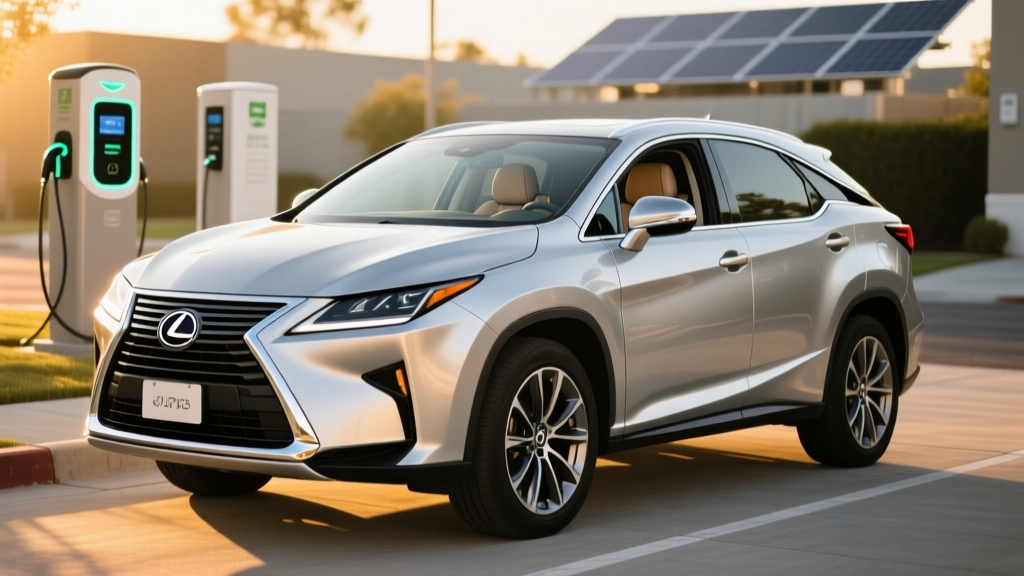
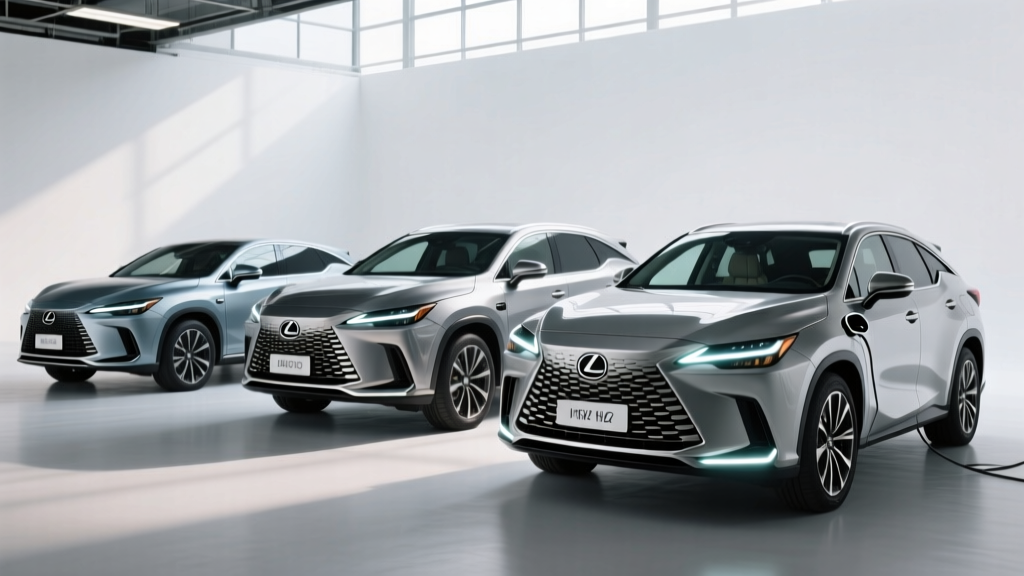
Lexus has built its luxury hybrid lineup around a clear philosophy: electrification without compromise. For 2026, the brand fields three distinct hybrid luxury SUVs that target different buyer needs — the midsize RX 500h performance hybrid, the three-row TX 500h family hauler, and the compact NX 450h+ plug-in hybrid. Each takes a different approach to blending electric motors with gasoline engines, and the differences in real-world efficiency, electric-only capability, and ownership economics are substantial.
If you're researching the hybrid lux segment — where premium materials meet electrified powertrains — this guide breaks down exact EPA figures, real-world MPG behavior, battery warranty details, and tax-credit eligibility so you can choose the right Lexus hybrid for your driving pattern.
HEV vs PHEV: Understanding the Lexus Hybrid Lineup
Conventional Hybrid (HEV) — RX 500h & TX 500h
These models use a gasoline engine paired with electric motors and a small battery (typically 1.5–3 kWh). The battery charges through regenerative braking and engine operation — you never plug them in. The electric motor assists during acceleration and enables brief low-speed electric driving, but the engine remains the primary power source. The benefit: zero behavior change from a gas car, with 25–35% better fuel economy.
Plug-In Hybrid (PHEV) — NX 450h+
The NX 450h+ carries a much larger battery (18.1 kWh usable) that you charge by plugging in. It delivers 37 miles of EPA-rated electric-only range before the gasoline engine engages. Once the battery depletes, it operates as a conventional hybrid. The benefit: most daily commutes run entirely on electricity, with a gas engine for road trips.
The distinction matters enormously for your fuel budget. An HEV saves fuel passively; a PHEV can eliminate gasoline for daily driving if you charge regularly.
Fuel Economy & Electric-Only Range: Exact EPA Numbers
| Model | Type | City MPG | Highway MPG | Combined MPG | EV-Only Range | Total Range |
|---|---|---|---|---|---|---|
| 2026 Lexus RX 500h F SPORT Performance | HEV | 27 | 28 | 27 | N/A | ~480 mi |
| 2026 Lexus TX 500h F SPORT Premium | HEV | 27 | 27 | 27 | N/A | ~490 mi |
| 2026 Lexus NX 450h+ AWD | PHEV | 37 mi EV, then 84 MPGe / 36 MPG combined | 37 mi | ~440 mi | ||
Source: fueleconomy.gov — EPA estimates. Your mileage will vary based on driving conditions, temperature, and habits.
Real-World MPG vs. EPA Stickers
Toyota's hybrid synergy drive system — which underpins all Lexus hybrids — consistently delivers a unique real-world characteristic: city MPG often meets or exceeds the EPA estimate. This happens because city driving generates frequent regenerative braking opportunities, which recharge the battery and enable more electric-motor assist. On the RX 500h, owners routinely report 28–30 MPG in mixed city driving, slightly above the 27 MPG combined rating.
Highway driving tells a different story. At sustained 75–80 mph speeds, the electric motor contributes less and the turbocharged 2.4-liter four-cylinder does the heavy lifting. Expect 25–26 MPG on long highway trips in the RX 500h and TX 500h — roughly 1–2 MPG below the EPA highway figure. Cold weather (below 30°F) reduces efficiency by an additional 5–8% across all three models due to increased engine runtime for cabin heating.
For the NX 450h+ PHEV, the 37-mile electric-only range is achievable in moderate temperatures at speeds under 65 mph. In winter conditions or at sustained highway speeds, expect 30–33 miles before the engine fires. Once operating as a hybrid, the NX 450h+ achieves roughly 34–36 MPG combined — consistent with the EPA rating.
Powertrain Specs: Horsepower, Engines & Motors
| Specification | RX 500h | TX 500h | NX 450h+ |
|---|---|---|---|
| Powertrain Type | Turbo HEV | Turbo HEV | PHEV |
| Engine | 2.4L Turbo I-4 | 2.4L Turbo I-4 | 2.5L I-4 |
| Combined Horsepower | 366 hp | 366 hp | 304 hp |
| Combined Torque | 406 lb-ft | 406 lb-ft | 318 lb-ft |
| 0–60 mph | 5.7 sec | 5.9 sec | 6.0 sec |
| Drivetrain | DIRECT4 AWD | DIRECT4 AWD | E-Four AWD |
| Transmission | 6-speed AT | 6-speed AT | eCVT |
| Towing Capacity | 3,500 lb | 5,000 lb | 2,000 lb |
The RX 500h and TX 500h share the same turbocharged hybrid powertrain, which pairs a 2.4-liter turbo engine with front and rear electric motors through Lexus's DIRECT4 all-wheel-drive system. The result is 366 horsepower with seamless torque vectoring between axles. The six-speed automatic transmission — unusual for a hybrid — delivers more direct acceleration feel than the eCVT found in the NX 450h+.
The NX 450h+ uses a naturally aspirated 2.5-liter four-cylinder with a larger electric motor system and an 18.1 kWh lithium-ion battery. Its 304 combined horsepower is modest by performance standards, but the electric motor's instant torque makes it feel responsive in daily driving. The eCVT keeps engine RPMs low during cruising, contributing to its class-leading efficiency.
NX 450h+ Charging: Battery Size, Speed & Connector Details
The NX 450h+ is the only plug-in in this lineup, and understanding its charging profile is essential before purchase.
| Charging Spec | NX 450h+ Detail |
|---|---|
| Battery Capacity | 18.1 kWh usable (lithium-ion, NMC chemistry) |
| Level 1 (120V) Charge Time | ~12 hours (0–100%) |
| Level 2 (240V, 32A) Charge Time | ~4 hours (0–100%) |
| Max AC Charge Rate | 6.6 kW |
| DC Fast Charging | Not available |
| Charge Connector | J1772 (Level 2) |
| EPA Electric-Only Range | 37 miles |
A critical limitation: the NX 450h+ does not support DC fast charging. This is common among PHEVs — the battery is small enough that Level 2 charging refills it overnight, and manufacturers avoid the cost and weight of DC hardware. For the 18.1 kWh battery, a 6.6 kW Level 2 charger replenishes it fully in roughly 4 hours, which works well for home charging but means no quick top-ups on road trips.
If your commute falls within 30–35 miles round-trip and you can install a Level 2 home charger, the NX 450h+ effectively operates as an EV on weekdays, with the gas engine reserved for weekend trips. Without regular charging access, however, you're carrying 400+ pounds of battery and motor hardware you never use — at that point, the RX 500h HEV makes more financial sense.
Hybrid & PHEV Battery Warranty
All 2026 Lexus hybrid and plug-in hybrid models carry a hybrid battery warranty of 10 years / 150,000 miles (whichever comes first). This covers capacity loss below a manufacturer-defined threshold and defects. The standard new-vehicle warranty is 4 years / 50,000 miles, with powertrain coverage at 6 years / 70,000 miles. Lexus hybrid batteries have demonstrated strong longevity — it is common for Toyota/Lexus hybrid battery packs to exceed 200,000 miles before significant degradation.
Pricing, Trims & Tax-Credit Eligibility
| Model & Trim | Base MSRP (2026) | Federal Tax Credit | Effective Price (est.) |
|---|---|---|---|
| RX 500h F SPORT Performance | $63,250 | Not eligible (HEV) | $63,250 |
| RX 500h F SPORT Handling | $66,500 | Not eligible (HEV) | $66,500 |
| TX 500h F SPORT Premium | $73,650 | Not eligible (HEV) | $73,650 |
| TX 500h F SPORT Performance | $78,450 | Not eligible (HEV) | $78,450 |
| NX 450h+ Premium | $60,850 | Check §30D eligibility* | ~$53,350–$60,850 |
| NX 450h+ Luxury | $66,500 | Check §30D eligibility* | ~$59,000–$66,500 |
*PHEV tax credit eligibility under IRS §30D Clean Vehicle Credit depends on multiple factors that change periodically.
- MSRP cap: SUVs must have an MSRP at or below $80,000 to qualify
- Income limits: Modified AGI must not exceed $150,000 (single), $225,000 (head of household), or $300,000 (joint)
- Battery sourcing: Critical minerals and battery components must meet phased-in domestic-content requirements that tighten annually through 2032
- Point-of-sale transfer: Eligible buyers can transfer the credit to the dealer for an immediate price reduction at purchase
- Assembly: Vehicle must undergo final assembly in North America — the NX 450h+ is assembled in Japan, which may disqualify it from the new-vehicle credit; verify at fueleconomy.gov
The conventional hybrids (RX 500h, TX 500h) do not qualify for the §30D federal credit, which applies only to plug-in vehicles with batteries of at least 7 kWh. Some states offer separate incentives for hybrids — check your state energy office for current programs.
Reliability, Battery Lifespan & Replacement Costs
Lexus consistently ranks at or near the top of J.D. Power and Consumer Reports reliability studies, and the hybrid powertrain is a core part of that reputation. The eCVT transmission used in the NX 450h+ has no traditional friction clutches or torque converter — it's a planetary gearset with fewer wear components than a conventional automatic. The turbocharged 2.4L in the RX 500h and TX 500h adds complexity (turbo, intercooler, direct injection), but Toyota's hybrid system management reduces thermal stress on the engine by sharing load with the electric motors.
Hybrid battery replacement cost: If the hybrid battery fails outside warranty, expect $3,500–$5,500 for an RX 500h/TX 500h battery pack and $6,000–$8,500 for the larger NX 450h+ PHEV pack (parts and labor). However, Lexus hybrid batteries rarely require full replacement — individual module replacement or reconditioning is often possible at lower cost. Data from fleet operators and long-term owners shows Toyota/Lexus hybrid battery packs routinely lasting 150,000–250,000 miles with gradual capacity loss rather than sudden failure.
Pros
- Best-in-class luxury hybrid reliability record
- 10-year / 150,000-mile hybrid battery warranty
- Real-world city MPG meets or exceeds EPA estimates
- No charging infrastructure needed for HEV models
- NX 450h+ delivers 37 miles EV-only for daily commuting
- DIRECT4 AWD provides confident all-weather traction
- Strong resale value — Lexus hybrids depreciate slower than competitors
Cons
- NX 450h+ lacks DC fast charging capability
- HEV models ineligible for federal §30D tax credit
- NX 450h+ assembled in Japan — may not qualify for federal credit
- TX 500h pricing pushes past $78,000 at top trim
- Turbo HEV powertrain more complex than naturally aspirated hybrids
- Highway MPG trails EPA estimates by 1–2 MPG at 75+ mph
- PHEV battery adds ~400 lb, reducing cargo capacity slightly
Which Hybrid Lux Lexus Fits Your Driving Pattern?
Choose the RX 500h (HEV) if:
- You want a two-row luxury SUV with strong acceleration (366 hp, 5.7s 0–60)
- You don't have access to home or workplace charging
- Your driving is a mix of city and highway with no single dominant pattern
- You value simplicity — no charging cables, no range planning
Choose the TX 500h (HEV) if:
- You need three rows and up to 5,000 lb towing capacity
- You want hybrid efficiency in a large family SUV without plugging in
- Your priority is passenger space and cargo volume over sporty dynamics
Choose the NX 450h+ (PHEV) if:
- Your daily round-trip commute is under 35 miles
- You can install a Level 2 home charger (240V, 32A minimum recommended)
- You want to minimize gasoline consumption and emissions for daily driving
- You take road trips occasionally and need gas-engine range as backup
Choose a full EV (e.g., Lexus RZ 450e) instead if:
- You have reliable home and workplace charging
- Your longest regular trip is under 200 miles or you're willing to plan DC fast-charge stops
- You want zero tailpipe emissions and minimal drivetrain maintenance
Frequently Asked Questions
How many MPG does the Lexus RX 500h hybrid get?
The 2026 Lexus RX 500h is EPA-rated at 27 city / 28 highway / 27 combined MPG. In real-world driving, owners typically see 28–30 MPG in city-heavy commutes and 25–26 MPG on sustained highway trips. Cold weather reduces these figures by approximately 5–8%.
How far can the Lexus NX 450h+ go on electric only?
The NX 450h+ delivers 37 miles of EPA-rated electric-only range. Real-world range varies from 30 miles (cold weather, highway speeds) to 40 miles (moderate temperatures, city driving under 50 mph). Once the battery depletes, the vehicle continues as a conventional hybrid at 36 MPG combined.
Hybrid vs PHEV vs EV — which Lexus is right for me?
If you can charge at home and commute under 35 miles, the NX 450h+ PHEV offers the lowest operating cost. If you lack charging access but want better fuel economy than a gas-only SUV, the RX 500h or TX 500h HEV requires zero behavior change. If you have charging access and rarely drive more than 220 miles between stops, consider a full EV like the Lexus RZ 450e for zero tailpipe emissions and the lowest maintenance costs.
Is the Lexus hybrid system reliable and what does battery replacement cost?
Lexus hybrid systems are among the most reliable in the industry, backed by a 10-year / 150,000-mile hybrid battery warranty. Full battery replacement outside warranty costs $3,500–$8,500 depending on the model, but Toyota/Lexus hybrid packs routinely last 150,000–250,000 miles. Partial repairs (individual module replacement) can cost significantly less.
Do any Lexus hybrids qualify for the federal tax credit?
Conventional hybrids (RX 500h, TX 500h) do not qualify for the §30D Clean Vehicle Credit, which requires plug-in capability and a minimum 7 kWh battery. The NX 450h+ PHEV may qualify, but its Japan assembly may disqualify it under the North American final-assembly requirement. Always verify current eligibility at fueleconomy.gov before purchasing. Credit is also subject to buyer income caps and battery-sourcing rules per IRS §30D guidelines.
Do Lexus conventional hybrids need to be plugged in?
No. The RX 500h and TX 500h are self-charging hybrids — their batteries recharge through regenerative braking and engine operation. You fuel them like any gasoline vehicle and never need a charging cable or outlet. Only the NX 450h+ PHEV benefits from (and requires) plug-in charging to access its electric-only range.
What is the total range of these Lexus hybrid SUVs?
The RX 500h delivers approximately 480 miles of total range on a full tank. The TX 500h achieves roughly 490 miles. The NX 450h+ provides 37 miles electric-only plus approximately 400 miles on gasoline, for a combined total range of around 440 miles. These figures assume EPA-rated efficiency and will vary with driving conditions.