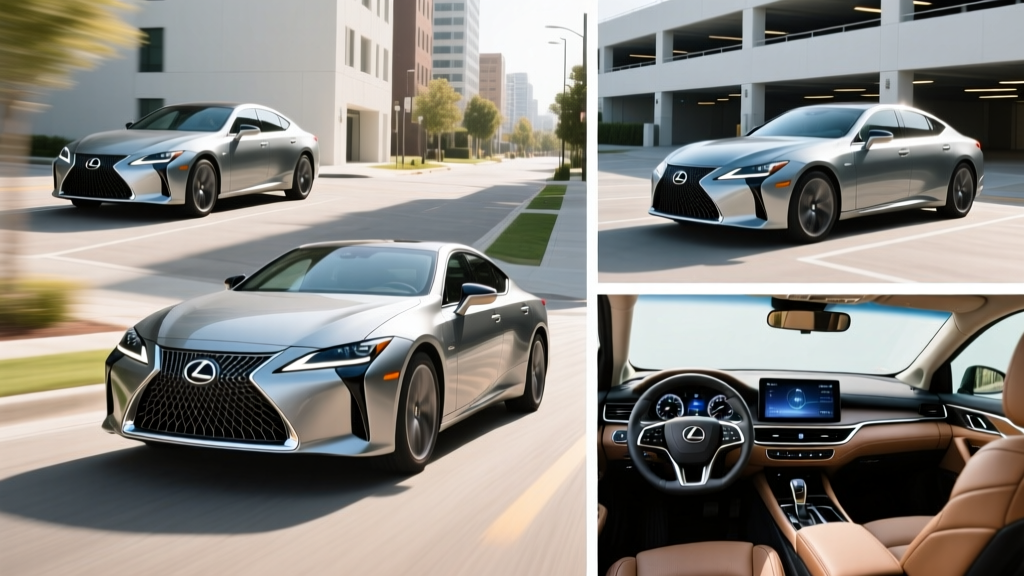
Lexus has quietly built one of the most comprehensive hybrid lineups in the luxury segment. While rivals lean heavily into full battery-electric vehicles, Lexus continues to refine its hybrid powertrains — offering conventional hybrids (HEVs) that never need a plug and plug-in hybrids (PHEVs) that deliver meaningful electric-only range. If you're researching Lexus hybrid gas mileage, you've landed in the right place. This guide breaks down the EPA ratings, real-world expectations, powertrain specs, and ownership economics for every current Lexus hybrid and PHEV.
HEV vs. PHEV: What Lexus Buyers Need to Know
Conventional Hybrid (HEV): Uses a small battery charged by the engine and regenerative braking. You never plug it in. The electric motor assists the gas engine, cutting fuel consumption — especially in city driving. Think of it as a gas car that sips fuel instead of gulping it.
Plug-in Hybrid (PHEV): Carries a larger battery you can charge from a wall outlet or public charger. It drives on electricity alone for a set range (typically 30-40 miles) before the gas engine takes over and it operates like a conventional hybrid. Best for drivers with short commutes and access to charging.
Lexus Hybrid Gas Mileage: Full 2026 Lineup
Below is the complete EPA fuel economy data for every Lexus hybrid and PHEV currently on sale, sourced from fueleconomy.gov. Note that Lexus offers both HEV and PHEV versions of several nameplates — the powertrain differences significantly affect efficiency and use cases.
| Model | Type | City MPG | Highway MPG | Combined MPG / MPGe | EV-Only Range | Combined HP | Base MSRP |
|---|---|---|---|---|---|---|---|
| UX 300h | HEV | 43 | 41 | 42 | — | 196 | $38,490 |
| NX 350h | HEV | 41 | 37 | 39 | — | 240 | $43,315 |
| NX 450h+ | PHEV | 38 (gas) / 84 MPGe | 37 (gas) / 84 MPGe | 37 (gas) / 84 MPGe | 37 mi | 304 | $51,415 |
| TX 500h | HEV | 27 | 28 | 27 | — | 371 | $62,490 |
| RX 350h | HEV | 37 | 34 | 36 | — | 250 | $53,210 |
| RX 450h+ | PHEV | 35 (gas) / 83 MPGe | 34 (gas) / 83 MPGe | 35 (gas) / 83 MPGe | 37 mi | 302 | $63,990 |
| ES 300h | HEV | 43 | 44 | 44 | — | 215 | $45,790 |
| LC 500h | HEV | 26 | 32 | 29 | — | 354 | $102,950 |
| LS 500h | HEV | 22 | 29 | 25 | — | 354 | $84,450 |
Real-World MPG: How Lexus Hybrids Perform Beyond the Sticker
EPA estimates are a useful baseline, but real-world Lexus hybrid gas mileage often diverges — usually in a favorable direction for city driving. Lexus's hybrid system (shared with Toyota's Hybrid Synergy Drive architecture) leans heavily on the electric motor at low speeds, meaning urban drivers frequently match or exceed EPA city figures.
Here's what to expect in practice:
- City driving (sub-45 mph, stop-and-go): Most Lexus HEVs deliver within 1-3 MPG of their EPA city rating, with some owners of the ES 300h and UX 300h reporting 44-46 MPG in warm-weather city commuting. The electric motor does the heavy lifting at low speeds.
- Highway driving (65-80 mph): Expect to fall 2-4 MPG below EPA highway estimates. At sustained high speeds, the gas engine carries nearly all the load, and aerodynamic drag penalizes larger models like the TX 500h more severely.
- Cold weather (below 35°F): Hybrid fuel economy drops 5-15% in winter. The engine runs more often to maintain cabin heat and battery temperature. The UX 300h might dip to 36-38 MPG combined in freezing conditions versus its 42 MPG EPA rating.
- PHEV electric-only driving: The NX 450h+ and RX 450h+ both carry 18.1 kWh lithium-ion batteries and are EPA-rated for 37 miles of electric range. Real-world EV range is typically 32-36 miles in mild weather, dropping to 26-30 miles in cold conditions or at highway speeds above 60 mph.
Battery Warranty and Longevity
Every 2026 Lexus hybrid and PHEV carries a 10-year/150,000-mile hybrid battery warranty (whichever comes first), up from the 8-year/100,000-mile coverage on pre-2020 models. This covers the high-voltage traction battery against defects and excessive capacity loss. Lexus hybrid batteries have demonstrated exceptional longevity in practice — Consumer Reports data and long-term owner surveys show most Lexus hybrid batteries last well beyond 150,000 miles without replacement. If a battery does need replacing out of warranty, expect to pay between $2,500 and $4,500 depending on the model, though refurbished units are increasingly available for $1,200-$2,000.
PHEV Charging: What NX 450h+ and RX 450h+ Owners Need to Know
The two Lexus PHEVs — the NX 450h+ and RX 450h+ — share an 18.1 kWh lithium-ion battery pack and a 2.5-liter four-cylinder engine paired with front and rear electric motors. Here's the charging breakdown:
| Charging Method | Power (kW) | 0-100% Time | Miles Added per Hour |
|---|---|---|---|
| Level 1 (120V household outlet) | ~1.4 kW | ~12 hours | ~3-4 miles |
| Level 2 (240V home/public) | ~3.3 kW (onboard charger limit) | ~5.5 hours | ~7-8 miles |
| DC Fast Charging | Not supported | — | — |
A critical limitation: neither Lexus PHEV supports DC fast charging. The onboard charger is capped at 3.3 kW, meaning even at a public Level 2 station, you'll need roughly 5.5 hours for a full charge. This is a deliberate engineering choice — Lexus prioritized cabin and cargo space over larger battery/charger hardware. For most PHEV owners, overnight Level 2 home charging is the intended use pattern, and 5.5 hours is more than adequate.
To maximize electric-only driving, install a 240V Level 2 charger at home. A basic Level 2 unit plus professional installation typically runs $800-$1,800, depending on your electrical panel's capacity and the distance from panel to parking spot.
Powertrain Specs: How Lexus Hybrids Deliver Efficiency and Power
Lexus uses several hybrid powertrain configurations across its lineup. Understanding them helps explain why a UX 300h gets 42 MPG combined while a TX 500h gets 27 MPG — it's not just weight, it's the fundamental powertrain architecture.
The Core Architectures
2.0L Inline-4 Hybrid (UX 300h): A 2.0-liter four-cylinder paired with two motor-generators and an electronically controlled CVT (eCVT). Combined output: 196 hp. All-wheel drive comes standard via a dedicated rear electric motor. This is Lexus's most efficient powertrain, optimized for low-speed electric assist and seamless engine transitions.
2.5L Inline-4 Hybrid (NX 350h, RX 350h, ES 300h): A larger 2.5-liter four-cylinder with a more powerful electric motor system. Output ranges from 215 hp (ES 300h) to 250 hp (RX 350h). The RX 350h uses a DIRECT4 all-wheel-drive system with a rear motor for torque vectoring. The ES 300h is front-wheel drive only — part of why it achieves an impressive 44 MPG combined for a midsize luxury sedan.
2.4L Turbo Hybrid MAX (TX 500h): A performance-oriented hybrid using a turbocharged 2.4-liter engine with a six-speed automatic (not an eCVT). Combined output: 371 hp and 406 lb-ft of torque. The DIRECT4 AWD system can send up to 70% of torque to the rear wheels. Efficiency takes a back seat to power here — 27 MPG combined is still commendable for a 5,000+ lb three-row SUV.
3.5L V6 Hybrid (LC 500h, LS 500h): A Multi Stage Hybrid system that pairs a 3.5-liter V6 with a four-speed automatic and an eCVT, creating a simulated 10-speed transmission. Output: 354 hp. This is Lexus's flagship hybrid architecture — smooth, powerful, and surprisingly efficient for its class, though fuel economy is the least of an LS 500h buyer's concerns.
2.5L PHEV System (NX 450h+, RX 450h+): The plug-in variant uses a 2.5-liter engine with higher-output electric motors and the 18.1 kWh battery. The NX 450h+ produces 304 hp combined; the RX 450h+ makes 302 hp. Both offer strong electric-only acceleration (0-60 mph in roughly 6.0 seconds on electric power alone) and seamlessly transition to hybrid mode once the battery depletes.
Tax Credits and Incentives: What Lexus Hybrids Qualify For
This is where the distinction between HEV and PHEV matters significantly for your wallet.
Conventional Hybrids (HEVs): No Federal Tax Credit
Under current IRS §30D rules, conventional hybrids like the UX 300h, NX 350h, RX 350h, ES 300h, TX 500h, LC 500h, and LS 500h do not qualify for the federal clean vehicle tax credit. The §30D credit requires a minimum battery capacity of 7 kWh and plug-in capability — criteria that only PHEVs and BEVs meet.
Plug-in Hybrids (PHEVs): Up to $7,500 — With Conditions
The NX 450h+ and RX 450h+ may qualify for the full $7,500 federal tax credit, but eligibility depends on several factors that change frequently:
- MSRP cap: SUVs (NX, RX) must have an MSRP below $80,000. Both PHEVs clear this threshold at their base trims, but loaded configurations may exceed it.
- Buyer income cap: Modified adjusted gross income must not exceed $150,000 (single), $225,000 (head of household), or $300,000 (joint filers).
- Battery sourcing: Critical minerals and battery components must meet progressively stricter domestic-sourcing percentages each year. As of 2026, these requirements are stringent, and some PHEV configurations may only qualify for the partial ($3,750) credit depending on supply-chain compliance at the time of purchase.
- Point-of-sale transfer: The credit can now be transferred to the dealer at purchase, reducing your out-of-pocket cost directly rather than waiting for a tax refund.
State incentives: Many states offer additional rebates or HOV lane access for PHEVs. California's Clean Fuel Reward, Colorado's EV tax credit, and New York's Drive Clean rebate are among the most generous. Check your state's energy or DMV website for current programs — these vary by jurisdiction and change frequently.
Hybrid vs. PHEV vs. Full EV: Which Lexus Fits Your Life?
Choosing between a Lexus HEV, a Lexus PHEV, and a full battery-electric vehicle (BEV) comes down to your daily routine, charging access, and driving patterns. Here's a practical decision framework:
Choose a Lexus HEV (UX 300h, NX 350h, RX 350h, ES 300h) if:
- You don't have access to home or workplace charging
- You want maximum fuel efficiency with zero behavior change
- Your commute is longer than 37 miles (exceeding PHEV electric range)
- You frequently take road trips and don't want to plan around charging
- You want a lower purchase price (HEVs cost $5,000-$8,000 less than PHEV equivalents)
Choose a Lexus PHEV (NX 450h+, RX 450h+) if:
- You can install a Level 2 charger at home
- Your daily commute is under 35 miles round-trip
- You want to drive on electricity most days but need gas flexibility for longer trips
- You qualify for the $7,500 federal tax credit (making the PHEV price premium negligible)
- You want the strongest performance in the NX or RX lineup (304/302 hp)
Choose a Full EV (Lexus RZ 450e or competitor) if:
- You have reliable home Level 2 charging
- Your daily driving is under 200 miles
- You want the lowest per-mile fuel cost and zero tailpipe emissions
- You're comfortable with public DC fast charging on road trips
- You want the full federal tax credit with no battery-sourcing ambiguity
Reliability and Long-Term Ownership Costs
Lexus consistently ranks at or near the top of J.D. Power Vehicle Dependability Studies and Consumer Reports reliability surveys. The hybrid powertrain is a core part of that reputation — the eCVT transmission has no traditional clutch packs or torque converter to fail, and regenerative braking significantly extends brake pad life (many Lexus hybrid owners report 80,000+ miles on original brake pads).
Estimated 5-year ownership costs for a Lexus NX 350h vs. a comparable gas-only luxury SUV:
- Fuel savings: ~$2,800-$3,500 over 5 years (at 15,000 miles/year, $3.50/gallon gas)
- Brake savings: ~$400-$600 (fewer pad replacements due to regen braking)
- Insurance: Typically $50-$150/year higher than a gas equivalent (varies by carrier)
- Maintenance: Comparable or slightly lower (no transmission fluid changes on eCVT, fewer brake jobs)
- Depreciation: Lexus hybrids hold value well — the RX and NX hybrids typically retain 55-62% of MSRP after 5 years, slightly above gas equivalents
Lexus Hybrid Advantages
- Class-leading fuel economy in luxury segment (up to 44 MPG combined)
- 10-year/150,000-mile hybrid battery warranty
- No plug-in required for HEVs — zero lifestyle change
- Standard AWD on most models via rear electric motor
- Proven long-term reliability and strong resale value
- Quiet, seamless powertrain transitions
Lexus Hybrid Limitations
- No DC fast charging on PHEVs (3.3 kW onboard charger only)
- HEVs do not qualify for federal tax credits
- EV-only range limited to 37 miles on PHEVs
- Premium fuel recommended on turbo Hybrid MAX (TX 500h)
- Infotainment system still trails German competitors in responsiveness
- Limited PHEV availability — only NX and RX offer plug-in variants
Frequently Asked Questions
How many MPG does a Lexus hybrid get?
It depends on the model. The most efficient Lexus hybrid is the ES 300h sedan at 44 MPG combined (43 city / 44 highway). The UX 300h subcompact SUV achieves 42 MPG combined. The popular RX 350h midsize SUV gets 36 MPG combined. The performance-oriented TX 500h three-row SUV gets 27 MPG combined. Real-world city MPG often matches or slightly exceeds EPA estimates, while highway MPG tends to run 2-4 MPG below the sticker.
How far can a Lexus PHEV go on electric only?
Both the NX 450h+ and RX 450h+ are EPA-rated for 37 miles of electric-only range. In real-world conditions, expect 32-36 miles in mild weather and 26-30 miles in cold weather or at highway speeds. Once the battery depletes, the vehicle seamlessly switches to hybrid mode and operates like a conventional NX 350h or RX 350h — you never get stranded.
Is a Lexus hybrid reliable, and what does battery replacement cost?
Lexus hybrids are among the most reliable vehicles on the road. The hybrid battery is covered by a 10-year/150,000-mile warranty, and real-world data shows most batteries last well beyond 150,000 miles. Out-of-warranty replacement costs $2,500-$4,500 for a new battery or $1,200-$2,000 for a refurbished unit. The eCVT transmission is simpler and more durable than a conventional automatic, and regenerative braking extends brake pad life significantly.
Does any Lexus hybrid qualify for a tax credit?
Conventional Lexus hybrids (HEVs) do not qualify for the federal §30D tax credit. The two Lexus plug-in hybrids — NX 450h+ and RX 450h+ — may qualify for up to $7,500, depending on MSRP (must be under $80,000 for SUVs), buyer income limits, and battery component/critical mineral sourcing requirements. The credit can be applied at the point of sale. State incentives may also apply — check your state's energy office for current programs.
Do I need to plug in a Lexus hybrid?
No — unless you choose one of the two PHEV models (NX 450h+ or RX 450h+). All other Lexus hybrids (UX 300h, NX 350h, RX 350h, ES 300h, TX 500h, LC 500h, LS 500h) are conventional HEVs that charge their battery through the engine and regenerative braking. You simply fill up with gas and drive. The PHEVs can be driven without plugging in too, but you'll miss out on the electric-only range and fuel savings that make the PHEV premium worthwhile.
Which Lexus hybrid has the best gas mileage?
The 2026 Lexus ES 300h sedan leads the lineup at 44 MPG combined (43 city / 44 highway). It's a front-wheel-drive midsize luxury sedan with 215 hp. If you need an SUV, the UX 300h is the most efficient at 42 MPG combined, followed by the NX 350h at 39 MPG combined.