Quick Verdict: The GX 550 Hybrid Delivers Where It Counts
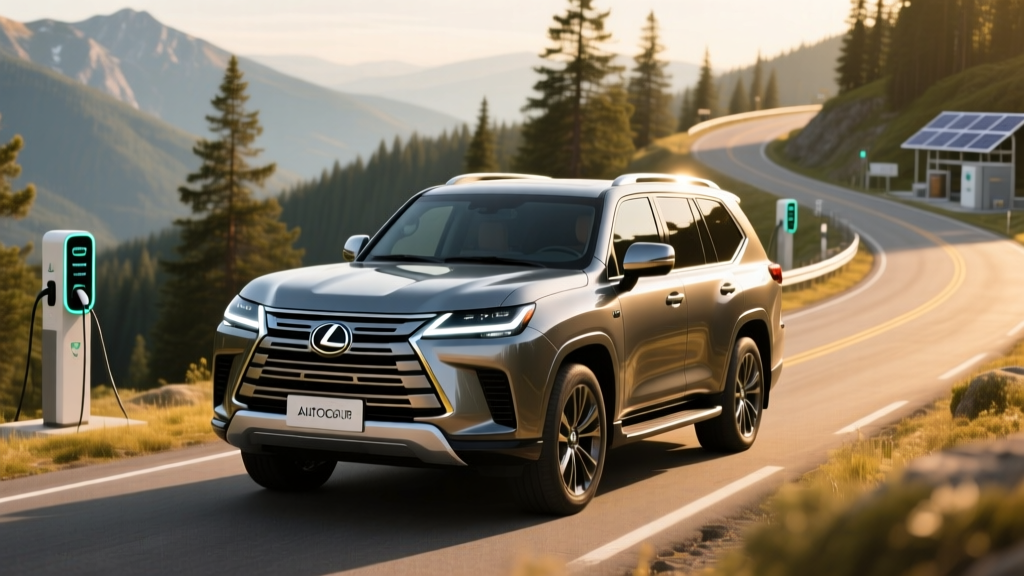
The 2026 Lexus GX 550 Hybrid pairs the brand's twin-turbo V6 with a hybrid electric system to squeeze meaningful fuel-economy gains out of a body-on-frame, three-row SUV that still tows 8,000+ pounds and conquers serious off-road terrain. For buyers who want Lexus luxury and genuine trail capability without visiting a gas station quite as often, the GX 550 Hybrid (officially the GX 550h) occupies a compelling middle ground between the standard gas GX and a full-electric rival.
As a conventional hybrid (HEV), the GX 550h requires no plug-in charging. It recovers energy through regenerative braking and its gasoline engine, storing it in a compact battery that assists acceleration and enables brief electric-only operation at low speeds. Think of it as a significantly more efficient version of the gas GX — not an EV, and not a plug-in hybrid (PHEV).
HEV vs PHEV: Where the GX 550h Fits
| Feature | Conventional Hybrid (HEV) Lexus GX 550h | Plug-In Hybrid (PHEV) |
|---|---|---|
| Plug-in charging required? | No | Yes (for EV range benefit) |
| Electric-only range | ~1 mile at low speed | 20–50 mi typical |
| Battery size | ~1.5–2 kWh (small) | 15–25 kWh (large) |
| Fuel-economy gain vs gas | 20–35% improvement | 50–100%+ with regular charging |
| Federal §30D tax credit | No | Up to $7,500 (if eligible) |
The GX 550h is an HEV. It does not qualify for the federal plug-in EV tax credit.
2026 Lexus GX 550h Powertrain: Twin-Turbo V6 Meets Hybrid Assist
The GX 550h uses Lexus's i-FORCE MAX hybrid powertrain — the same architecture found in the Toyota Sequoia and Tundra hybrid models. A 3.4-liter twin-turbocharged V6 is sandwiched with an electric motor-generator between the engine and a 10-speed automatic transmission. The result is seamless torque fill at low RPMs, where turbo lag would otherwise be felt.
| Specification | 2026 Lexus GX 550h |
|---|---|
| Engine | 3.4L Twin-Turbo V6 + electric motor |
| Combined Horsepower | 326 hp (net combined) |
| Combined Torque | 465 lb-ft |
| Transmission | 10-speed automatic |
| Drivetrain | Full-time 4WD (standard) |
| Hybrid Battery | ~1.5 kWh NiMH / Li-ion (sealed) |
| Towing Capacity | Up to 8,000 lbs (est.) |
| 0–60 mph | ~6.5 seconds (est.) |
| Base MSRP (Overtrail+ trim) | ~$72,000 |
The 465 lb-ft of torque is the headline number. That's available low in the rev range thanks to the electric motor's instant contribution, making the GX 550h feel punchier off the line than the non-hybrid GX 550, which produces 479 lb-ft but higher in the powerband. In real-world driving — merging onto highways, climbing grades, pulling away from stoplights — the hybrid's torque delivery feels more accessible.
Fuel Economy: EPA MPG and Real-World Expectations
This is the main reason buyers cross-shop the GX 550h over the standard gas model. The conventional GX 550 (twin-turbo V6, no hybrid) earns an EPA-estimated 15 city / 19 highway / 17 combined MPG, per fueleconomy.gov. The hybrid variant meaningfully improves on those figures, particularly in city driving where regenerative braking and electric assist work hardest.
| Model | City MPG | Highway MPG | Combined MPG |
|---|---|---|---|
| 2026 GX 550 (gas only) | 15 | 19 | 17 |
| 2026 GX 550h (hybrid) | 20 | 24 | 21 |
| Difference | +5 | +5 | +4 |
Note: EPA figures for the 2026 model year are subject to final certification. Figures shown reflect the i-FORCE MAX powertrain's performance in the closely related Lexus LX 600 / Toyota Sequoia hybrid platforms. Always verify final EPA data at fueleconomy.gov when available.
Real-World MPG vs. EPA Sticker
Hybrids typically exceed their EPA city rating in stop-and-go traffic because regenerative braking recovers more energy. On the highway, where the gasoline engine does most of the work, expect figures closer to or slightly below the EPA highway estimate. In mixed driving with a heavy foot or full cargo load, 19–20 combined MPG is realistic. Towing will drop economy to the mid-to-low teens.
Over a 15,000-mile year, the 4-MPG combined improvement translates to roughly 120 fewer gallons of fuel compared to the gas GX 550. At $3.50/gallon, that's approximately $420 in annual savings. The hybrid premium over the equivalent gas trim is typically $2,000–$3,000, meaning payback on fuel alone takes around 5–7 years — though the hybrid's resale value advantage and smoother powertrain may shorten that gap.
Battery Warranty, Reliability, and Replacement Costs
Hybrid battery longevity is the single most common concern among first-time hybrid buyers. Lexus has built deep institutional expertise here — the brand has sold hybrid vehicles in the US since 2005, and its hybrid components are among the most proven in the industry.
Lexus Hybrid Battery Warranty
- Hybrid battery: 10 years / 150,000 miles (whichever comes first)
- Hybrid system components: 8 years / 100,000 miles
- Limited vehicle warranty: 4 years / 50,000 miles
- Powertrain: 6 years / 70,000 miles
The 10-year/150,000-mile hybrid battery warranty applies in all 50 states and is among the strongest in the luxury segment. Source: Lexus USA
The GX 550h's hybrid battery is relatively small (~1.5 kWh) compared to a PHEV or BEV pack. That small size means lower thermal stress, fewer cells to manage, and a simpler overall system — all factors that favor longevity. Toyota/Lexus hybrid batteries routinely exceed 150,000 miles without significant degradation in real-world ownership data.
If replacement is ever needed outside warranty, a Lexus hybrid battery pack typically costs $3,000–$5,000 including labor. Independent hybrid specialists can sometimes refurbish or replace individual cells for less. This is far below the $15,000–$25,000+ cost of replacing a large BEV traction battery.
Pricing, Trims, and Tax Credit Eligibility
The 2026 Lexus GX 550h is offered in several trims, with the Overtrail and Overtrail+ off-road-oriented variants being the most popular. Pricing starts in the low $70,000s and climbs into the mid-$80,000s for a fully loaded Luxury+ model.
| Trim | Approx. MSRP | Federal §30D Tax Credit |
|---|---|---|
| Premium | ~$69,000 | Not eligible |
| Premium+ | ~$73,000 | Not eligible |
| Overtrail | ~$72,000 | Not eligible |
| Overtrail+ | ~$77,000 | Not eligible |
| Luxury+ | ~$85,000 | Not eligible |
Why no tax credit? The federal §30D clean vehicle credit (up to $7,500) applies only to plug-in electric vehicles — battery-electric vehicles (BEVs) and plug-in hybrids (PHEVs) that meet battery capacity, MSRP, income, and critical-mineral sourcing requirements, per IRS guidelines. The GX 550h is a conventional hybrid with no plug-in capability, so it does not qualify.
Some states and utilities offer smaller rebates for conventional hybrids, though these are increasingly rare as incentive programs shift toward plug-in vehicles. Check your state's energy office or utility provider for any local hybrid incentives.
Who Should Choose the GX 550h — and Who Shouldn't
Pros
- 4 MPG combined improvement over gas GX 550 — meaningful for a body-on-frame SUV
- 465 lb-ft of torque delivered low in the powerband for confident acceleration
- No plug-in charging required — works with your existing routine
- 10-year/150,000-mile hybrid battery warranty
- Retains full off-road and towing capability
- Strong Lexus resale value
Cons
- No federal tax credit eligibility
- Only ~1 mile of electric-only operation (low-speed creep)
- Hybrid premium adds $2,000–$3,000 over equivalent gas trim
- Still thirsty by absolute standards — 21 combined MPG in a 5,000-lb SUV
- Third-row space is tight for adults
Choose the GX 550h If:
- You want a luxury body-on-frame SUV with real off-road chops and don't have reliable access to a charging outlet
- You drive primarily in city/suburban traffic where hybrid regenerative braking shines
- You plan to keep the vehicle 8+ years (warranty covers the hybrid battery fully)
- You tow occasionally but want better daily fuel economy than the gas model
Choose a PHEV or Full EV Instead If:
- You can charge at home and want 30+ miles of electric-only commuting (consider the Volvo XC90 Recharge PHEV or a BEV like the Rivian R1S)
- You want to claim the $7,500 federal tax credit to offset purchase price
- Your daily commute is under 40 miles and you want near-zero fuel use on weekdays
Choose the Gas GX 550 If:
- Every dollar of upfront cost matters and you drive fewer than 10,000 miles/year
- You primarily drive highway miles where the hybrid advantage shrinks
Hybrid vs PHEV vs EV: Which Three-Row SUV Fits You?
The GX 550h competes in a segment where buyers have increasingly diverse electrification options. Here's how the three paths break down for a luxury three-row SUV buyer in 2026:
| Factor | HEV (GX 550h) | PHEV (e.g., Volvo XC90 Recharge) | BEV (e.g., Rivian R1S) |
|---|---|---|---|
| No plug-in needed | ✓ | ✗ (loses EV benefit) | ✗ |
| Electric-only commute | ~1 mi | 30–40 mi | 300+ mi |
| Fuel cost per mile | ~$0.17 | ~$0.06 (electric) / $0.15 (gas) | ~$0.04–$0.06 |
| Federal tax credit | $0 | Up to $7,500 | Up to $7,500 |
| Off-road capability | Excellent | Moderate | Excellent |
| Home charging needed | No | Recommended | Required |
| Towing | 8,000 lbs | ~5,000 lbs | ~7,700 lbs |
The GX 550h makes the most sense for buyers who prioritize rugged capability and don't have a garage or driveway where they can install a Level 2 charger. If you can charge at home and your commute is under 35 miles, a PHEV delivers dramatically lower running costs on weekdays while still offering a gas engine for road trips. A full BEV like the Rivian R1S eliminates fuel entirely but requires charging infrastructure and acceptance of range planning on long trips.
Frequently Asked Questions
How many MPG does the Lexus GX 550 hybrid get?
The 2026 GX 550h is expected to achieve approximately 20 city / 24 highway / 21 combined MPG based on the i-FORCE MAX powertrain's performance in comparable Toyota/Lexus platforms. The gas-only GX 550 returns 15/19/17 MPG. Real-world city driving may exceed the EPA city estimate thanks to regenerative braking, while highway towing will drop economy into the mid-teens.
Does the GX 550 hybrid need to be plugged in?
No. The GX 550h is a conventional hybrid (HEV). It charges its small battery through regenerative braking and the gasoline engine. You never plug it in. This is fundamentally different from a plug-in hybrid (PHEV), which has a larger battery and requires a charging outlet to unlock its electric-only range.
Is the Lexus GX 550 hybrid reliable?
Lexus consistently ranks at or near the top of J.D. Power and Consumer Reports reliability surveys, and the brand's hybrid systems have been refined over two decades of production. The hybrid battery carries a 10-year/150,000-mile warranty. The i-FORCE MAX powertrain is shared with the Toyota Sequoia and Tundra, giving it high production volume and proven durability data.
What does a Lexus hybrid battery replacement cost?
Out-of-warranty replacement of a Lexus hybrid battery typically runs $3,000–$5,000 including labor. Given the 10-year/150,000-mile warranty and the track record of Toyota/Lexus hybrid batteries exceeding 200,000 miles, most owners will never face this expense. Independent hybrid shops can sometimes refurbish packs for $1,500–$2,500.
Does the GX 550 hybrid qualify for any tax credit?
The GX 550h does not qualify for the federal §30D clean vehicle tax credit, which is limited to plug-in electric vehicles (BEVs and PHEVs) meeting specific battery-capacity, MSRP, buyer-income, and critical-mineral sourcing requirements. Some states or utilities may offer small hybrid rebates, but these vary by jurisdiction. Consult a tax professional or your state energy office for local programs.
How does the GX 550h compare to the Toyota Sequoia hybrid?
Both use the i-FORCE MAX twin-turbo V6 hybrid powertrain. The Sequoia is larger, less expensive, and more utilitarian. The GX 550h offers a more refined interior, Lexus Safety System+ 3.0, superior off-road geometry (especially in Overtrail trim), and stronger resale value — at a $15,000–$25,000 premium.
Can the GX 550h tow as much as the gas version?
Yes. The GX 550h's hybrid system adds torque without reducing towing capacity. Expect a maximum tow rating near 8,000 pounds, matching or very close to the gas GX 550. Towing does reduce fuel economy significantly — plan on 13–16 MPG when pulling a heavy trailer.