Quick Verdict: The Lexus ES 300h Hybrid at a Glance
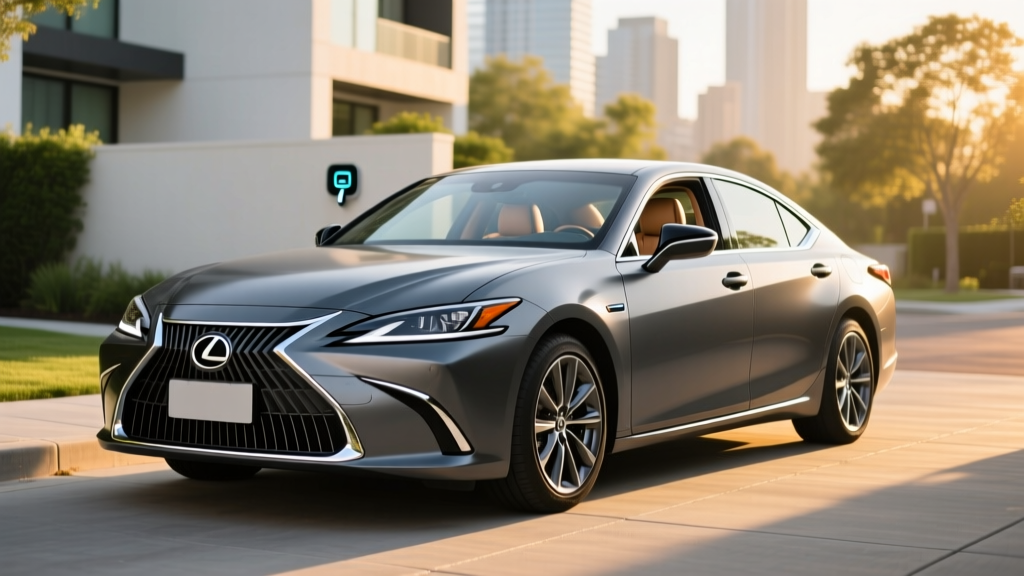
The 2026 Lexus ES 300h occupies a specific niche: a midsize luxury sedan that prioritizes fuel efficiency and refinement over outright performance. As a conventional hybrid (HEV), it requires no plug-in charging — the gasoline engine and regenerative braking handle all battery replenishment automatically. For buyers who want luxury-car comfort with compact-car fuel bills but aren't ready to commit to a full battery-electric vehicle, the ES 300h makes a compelling case.
This generation pairs a 2.5-liter four-cylinder engine with Toyota's fifth-generation hybrid system, producing a combined 215 horsepower. The EPA rates it at 44 MPG combined, and in real-world driving — particularly city and suburban use — owners frequently match or exceed that figure thanks to the hybrid system's regenerative braking advantage in stop-and-go traffic.
| Specification | Value |
|---|---|
| Powertrain | 2.5L 4-cyl + electric motor (HEV) |
| Combined Horsepower | 215 hp |
| EPA MPG (City / Highway / Combined) | 43 / 44 / 44 |
| Drivetrain | Front-wheel drive |
| 0–60 mph | ~7.7 seconds |
| Hybrid Battery | ~1.6 kWh nickel-metal hydride (NiMH) |
| Fuel Tank | 13.2 gallons |
| Total Range | ~580 miles |
| Base MSRP (ES 300h) | $45,490 |
| Federal EV Tax Credit | Not eligible (HEV, not PHEV/BEV) |
| Hybrid Battery Warranty | 10 years / 150,000 miles |
HEV vs. PHEV: Why the ES 300h Is a Conventional Hybrid
Before evaluating the ES 300h, it's critical to understand what it is — and what it isn't. The Lexus ES lineup includes only the ES 300h as its electrified option, and it is a conventional hybrid (HEV), not a plug-in hybrid (PHEV).
| Feature | HEV (ES 300h) | PHEV (e.g., Toyota RAV4 Prime) | BEV (e.g., Tesla Model 3) |
|---|---|---|---|
| Plug-in Charging | No — self-charging via engine + regen | Yes — Level 1/2 AC charging | Yes — Level 1/2/DC fast charging |
| Electric-Only Range | ~1 mile at low speed | 25–42 miles typical | 250–400+ miles |
| Fuel Economy | 44 MPG combined | 38–94 MPGe (electric) / 35–40 MPG (gas) | N/A (electric only) |
| Total Range | ~580 miles | 400–600+ miles | 250–400+ miles |
| Battery Size | ~1.6 kWh | 13–22 kWh | 50–100+ kWh |
| Federal Tax Credit (§30D) | Not eligible | Up to $7,500 (if eligible) | Up to $7,500 (if eligible) |
| Best For | No home charging access; want simplicity | Short commutes + road-trip flexibility | Home charging + lower operating cost |
The ES 300h's hybrid battery is small by design — roughly 1.6 kWh of nickel-metal hydride (NiMH) cells. This battery never plugs into a wall outlet. Instead, it charges through regenerative braking (capturing energy during deceleration) and by drawing surplus power from the gasoline engine during cruising. You simply drive it like any conventional car and let the hybrid system manage energy flow automatically.
If you're looking for a Lexus plug-in hybrid with electric-only driving range, the closest current option is the Lexus NX 450h+ PHEV crossover, which offers approximately 37 miles of electric-only range on a full charge. The ES sedan lineup does not currently include a PHEV variant.
Fuel Economy: EPA Ratings vs. Real-World MPG
The EPA rates the 2026 Lexus ES 300h at:
| Driving Cycle | EPA Rating |
|---|---|
| City | 43 MPG |
| Highway | 44 MPG |
| Combined | 44 MPG |
What stands out is how close the city and highway figures are — a hallmark of Toyota/Lexus hybrid systems. In a conventional gas car, city driving is always worse due to idling and stop-and-go inefficiency. In the ES 300h, regenerative braking recovers energy during deceleration, and the engine shuts off at stops, effectively neutralizing the city penalty.
Real-World MPG Expectations
Based on owner-reported data and independent testing, here's what to actually expect:
- City / suburban driving: 42–47 MPG. Many owners report exceeding the EPA city figure in warm weather with moderate traffic, where regen braking is most active.
- Highway cruising (70–80 mph): 38–43 MPG. Hybrids lose their advantage at sustained high speed, where the engine runs continuously and aerodynamic drag dominates.
- Cold weather (below 32°F): 36–40 MPG. The engine runs more often to provide cabin heat and reach operating temperature, reducing hybrid efficiency by roughly 10–15%.
- Mixed real-world average: 40–44 MPG for most drivers across seasons.
At 44 MPG combined and a national average of $3.30/gallon for regular unleaded, the ES 300h costs approximately $0.075 per mile in fuel — roughly half the per-mile fuel cost of a comparable non-hybrid luxury sedan getting 25 MPG combined.
Powertrain and Driving Dynamics
The ES 300h uses Lexus's latest hybrid synergy drive, pairing a 2.5-liter Atkinson-cycle four-cylinder engine (producing approximately 176 hp on its own) with a front-mounted electric motor. Combined system output is 215 horsepower, sent to the front wheels through an electronically controlled continuously variable transmission (eCVT).
The eCVT isn't a belt-and-pulley CVT like those in some competitors — it's a planetary gearset that blends engine and motor power seamlessly. There are no rubber-band rev surges; acceleration is linear and quiet, though not sporty. The 0–60 mph time of approximately 7.7 seconds places the ES 300h firmly in the "adequate but unhurried" category.
Driving modes include Eco, Normal, and Sport. Eco mode maximizes electric-motor assist and softens throttle response for efficiency. Sport mode sharpens throttle mapping and increases steering weight, but don't expect it to transform the car's character — this is a comfort-first sedan.
The EV mode button allows short, low-speed electric-only driving (roughly 1 mile at under 25 mph), useful for creeping through a parking garage or residential street. But unlike a PHEV, the battery depletes quickly, and the engine re-engages automatically.
Pricing, Trims, and Tax Credit Eligibility
The 2026 Lexus ES 300h is offered in several trim levels:
- ES 300h (base): ~$45,490 MSRP
- ES 300h Luxury: ~$49,500 MSRP
- ES 300h Ultra Luxury: ~$53,000 MSRP
- ES 300h F SPORT Handling: ~$50,500 MSRP
All trims include Lexus Safety System+ 3.0 (adaptive cruise control, lane-keeping assist, pre-collision braking, road-sign assist), a 12.3-inch touchscreen with wireless Apple CarPlay and Android Auto, and heated front seats.
Federal Tax Credit: Does the ES 300h Qualify?
No. The Lexus ES 300h does not qualify for the federal §30D Clean Vehicle Credit. Under current IRS rules, only plug-in electric vehicles (BEVs and PHEVs with a minimum battery capacity of 7 kWh) are eligible for the up-to-$7,500 credit. The ES 300h's ~1.6 kWh NiMH battery falls far below that threshold, and as a conventional HEV, it is classified as a fuel-efficient vehicle — not a clean vehicle under §30D.
Some states offer separate incentives for hybrid vehicles, but these are less common than EV incentives and vary by jurisdiction. Check your state's energy or environmental agency website for current programs. A few states have offered hybrid purchase rebates in the past, but most incentive funding has shifted toward plug-in vehicles.
Battery Warranty, Reliability, and Replacement Cost
Lexus Hybrid Battery Warranty
Coverage: 10 years or 150,000 miles (whichever comes first), transferable to subsequent owners.
What's covered: Hybrid battery pack, hybrid control module, and related hybrid-system components.
Capacity threshold: Lexus warrants the hybrid battery against defects and abnormal capacity loss. There is no published minimum State of Health (SoH) percentage — claims are evaluated case-by-case based on diagnostic testing.
Toyota and Lexus hybrid systems have one of the strongest reliability track records in the industry. The NiMH battery chemistry used in the ES 300h is mature and well-understood — it's the same basic chemistry that powered millions of Prius vehicles over two decades. Unlike the high-energy-density NMC or NCA lithium-ion packs in EVs, NiMH cells degrade slowly and predictably.
How Long Will the Hybrid Battery Last?
Based on long-term data from Lexus and Toyota hybrids:
- Typical lifespan: 12–15 years or 150,000–200,000+ miles before noticeable capacity loss.
- Failure rate: Well under 5% within the first 10 years for Toyota/Lexus hybrids, based on industry service data.
- Degradation pattern: Gradual. You'll notice slightly reduced electric-mode duration and marginally lower MPG over many years — not a sudden "cliff" failure.
Battery Replacement Cost
If the hybrid battery does fail outside of warranty:
- New OEM replacement: $2,500–$4,000 (parts + labor at a Lexus dealer)
- Refurbished/remanufactured pack: $1,500–$2,500
- Individual cell module replacement: $500–$1,200 (some independent hybrid specialists can replace only the failed modules within the pack)
Compared to EV traction battery replacements ($8,000–$20,000+), the ES 300h's hybrid battery is a fraction of the cost — a direct result of its much smaller capacity.
Who Should Choose the Lexus ES 300h?
Pros
- 44 MPG combined — exceptional for a luxury sedan
- No plug-in charging required; zero lifestyle change from a gas car
- Quiet, smooth ride with strong build quality
- 10-year / 150,000-mile hybrid battery warranty
- ~580-mile total range eliminates refueling stops on long trips
- Strong resale value and proven reliability record
Cons
- No federal tax credit eligibility
- 215 hp is adequate, not quick — 7.7-second 0–60
- No all-wheel-drive option (FWD only)
- No PHEV variant available for electric-only commuting
- NiMH battery is older technology vs. lithium-ion
- eCVT drone under hard acceleration
Choose the ES 300h If:
- You want luxury-sedan comfort with sub-compact fuel costs
- You lack access to home or workplace charging (apartment, street parking)
- You take frequent long road trips and don't want to plan around charging stations
- You value proven reliability and low maintenance costs over acceleration
- You plan to keep the car 8+ years and want the security of a long hybrid warranty
Look Elsewhere If:
- You want electric-only commuting — consider the Lexus NX 450h+ PHEV or a BEV like the Tesla Model 3 or BMW i4
- You want performance — the BMW 5 Series or Genesis Electrified G80 offer more power
- You need all-wheel drive — the ES 300h is FWD only; look at the Lexus RX 350h or a BMW i5 xDrive
- You want to claim the $7,500 federal tax credit — only PHEVs and BEVs qualify under §30D
Frequently Asked Questions
How many MPG does the Lexus ES 300h hybrid get?
The EPA rates the 2026 Lexus ES 300h at 43 MPG city, 44 MPG highway, and 44 MPG combined. In real-world driving, most owners average 40–44 MPG, with city driving sometimes exceeding the EPA figure thanks to regenerative braking. Cold weather and sustained highway speeds above 75 mph reduce efficiency to roughly 36–40 MPG.
Does the Lexus ES 300h need to be plugged in?
No. The ES 300h is a conventional hybrid (HEV), not a plug-in hybrid. It charges its own battery through regenerative braking and the gasoline engine. You never plug it in — just fill up with gas as you would with any conventional car.
Does the Lexus ES 300h qualify for any tax credit?
The ES 300h does not qualify for the federal §30D Clean Vehicle Credit, which is limited to plug-in vehicles (BEVs and PHEVs) with batteries of at least 7 kWh. Some states may offer minor incentives for hybrids, but these are increasingly rare. Check your state's energy agency for current programs.
How reliable is the Lexus ES 300h hybrid system?
Very reliable. Toyota/Lexus hybrid systems have been in production since 1997 (Prius) and are among the most proven electrified powertrains on the road. The NiMH battery degrades gradually over 12–15+ years, and the hybrid system has fewer wear components than a conventional automatic transmission (no torque converter, no traditional gear shifts). Lexus backs the hybrid battery with a 10-year / 150,000-mile warranty.
What does a Lexus ES 300h hybrid battery replacement cost?
A new OEM hybrid battery replacement runs $2,500–$4,000 including labor at a dealer. Refurbished packs cost $1,500–$2,500, and individual cell-module replacement at a hybrid specialist can be as low as $500–$1,200. Given the 10-year warranty and typical 12–15+ year battery lifespan, most original owners will never need a replacement.
Is the Lexus ES 300h a good choice vs. a full EV?
It depends on your charging access and driving patterns. If you have reliable home Level 2 charging, drive under 300 miles daily, and want the lowest per-mile energy cost, a BEV like the Tesla Model 3 or Hyundai Ioniq 6 will save more on fuel and qualify for the $7,500 federal credit. If you lack home charging, frequently drive 400+ mile trips, or live in an area with limited public charging infrastructure, the ES 300h gives you electrified efficiency with zero charging hassle and 580-mile total range.
Does the Lexus ES 300h have all-wheel drive?
No. The 2026 ES 300h is front-wheel drive only. If AWD is a priority, consider the Lexus RX 350h (hybrid crossover with AWD), the Lexus NX 350h, or look outside the brand to the BMW 530e xDrive PHEV.
Sources: fueleconomy.gov — EPA fuel economy data, IRS.gov — Clean Vehicle Credit (§30D) eligibility, Lexus USA — ES 300h specifications.