The Lexus ES 300h: Luxury Sedan Efficiency Done Right
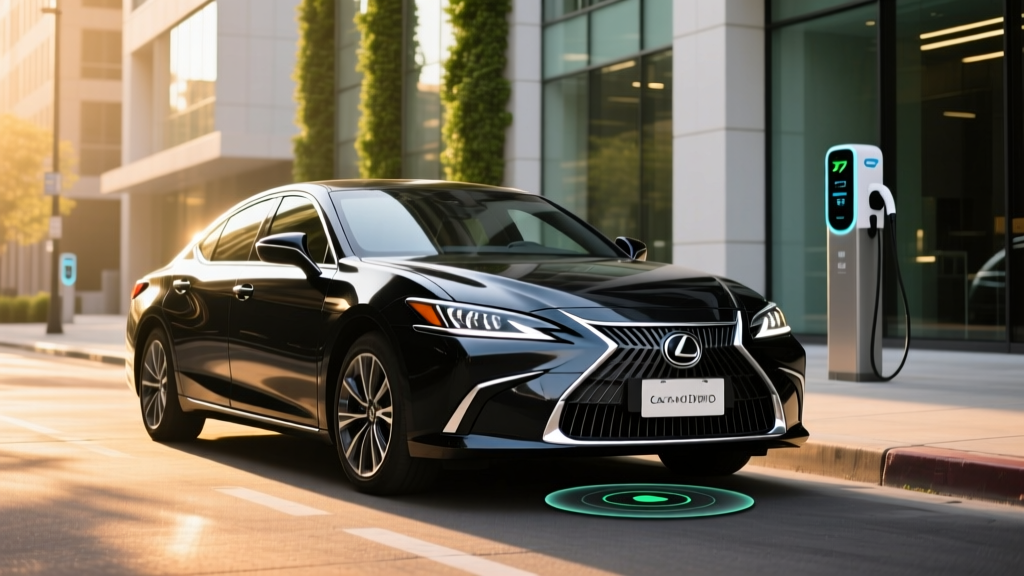
The 2026 Lexus ES 300h occupies a specific niche: a midsize luxury sedan that prioritizes comfort and fuel economy over sport-sedan dynamics. Under the hood sits Toyota's fourth-generation hybrid system paired with a 2.5-liter four-cylinder engine, delivering 215 combined horsepower and an EPA-estimated 44 MPG combined. For buyers cross-shopping the BMW 5 Series, Mercedes E-Class, or Genesis G80 but unwilling to accept 25 MPG, the ES hybrid remains the segment's efficiency benchmark.
This review covers the ES 300h as a conventional hybrid (HEV). Lexus does not currently offer a plug-in hybrid (PHEV) variant of the ES sedan. If plug-in capability is a priority, you'll need to look at competitors like the BMW 550e xDrive PHEV or consider stepping up to the Lexus RX 450h+ PHEV in the SUV segment.
HEV vs. PHEV: Where the ES 300h Fits
| Feature | Lexus ES 300h (HEV) | Typical PHEV Sedan |
|---|---|---|
| Plug-in charging required? | No — self-charging via regen + engine | Yes — for electric-only driving |
| Electric-only range | ~1 mile at low speed | 20–40 miles typical |
| Battery size | 1.6 kWh (NiMH) | 12–25 kWh (lithium-ion) |
| Federal tax credit (§30D) | Not eligible | Up to $7,500 if requirements met |
| Best for | No home charger access; long highway commutes | Home charging + short daily commutes |
Fuel Economy: EPA Ratings and Real-World MPG
The 2026 Lexus ES 300h carries EPA estimates of 43 MPG city / 44 MPG highway / 44 MPG combined, according to fueleconomy.gov. These figures place it among the most efficient vehicles in the luxury midsize segment — and notably, its city MPG nearly matches its highway figure, a hallmark of Toyota's hybrid synergy drive system that recaptures energy during stop-and-go driving.
| Driving Condition | EPA Estimate | Real-World Expectation |
|---|---|---|
| City | 43 MPG | 44–48 MPG (hybrids often exceed EPA in city) |
| Highway (70 mph cruise) | 44 MPG | 38–42 MPG (aerodynamic drag, less regen benefit) |
| Combined | 44 MPG | 40–44 MPG depending on route mix |
| Cold weather (below 30°F) | — | 36–40 MPG (engine runs more for cabin heat) |
Toyota's hybrid system excels in urban environments where regenerative braking frequently recharges the small battery pack. On sustained highway runs above 70 mph, the electric motor contributes less and the gasoline engine carries more load, which is why real-world highway figures tend to dip to 38–42 MPG. In cold climates, expect a 5–8 MPG reduction because the engine must run continuously to provide cabin heat — there's no heat pump in the ES 300h.
Powertrain and Performance Specifications
The ES 300h uses a 2.5-liter Atkinson-cycle inline-four engine producing 176 horsepower on its own, supplemented by a permanent-magnet electric motor for a combined system output of 215 horsepower. Power routes through an electronically controlled continuously variable transmission (eCVT) to the front wheels.
| Specification | 2026 Lexus ES 300h |
|---|---|
| Engine | 2.5L Atkinson-cycle I-4 |
| Engine output | 176 hp / 163 lb-ft |
| Electric motor output | 88 kW (118 hp) |
| Combined system output | 215 hp |
| Transmission | eCVT |
| Drivetrain | Front-wheel drive |
| 0–60 mph | 7.7 seconds (manufacturer est.) |
| Battery type | Nickel-metal hydride (NiMH) |
| Battery capacity | 1.6 kWh |
| Fuel tank | 13.2 gallons |
| EPA combined MPG | 44 MPG |
| Cargo volume | 13.9 cu ft |
The 7.7-second 0–60 time is adequate for highway merging but won't thrill anyone cross-shopping a BMW 540i. The eCVT is smooth and unobtrusive — there are no simulated gear shifts or rubber-band revving that plagued earlier CVTs. Lexus has refined this powertrain over multiple generations, and it shows in the seamless transitions between electric and gasoline power.
Battery Longevity, Warranty, and Replacement Cost
Hybrid Battery Warranty Coverage
- Federal emissions warranty: 8 years / 100,000 miles (hybrid battery and related components)
- California-emissions states (CARB): 10 years / 150,000 miles
- Capacity threshold: Warranty covers failure or significant capacity loss that triggers a diagnostic trouble code
Lexus uses a nickel-metal hydride (NiMH) battery pack in the ES 300h rather than the lithium-ion packs found in full EVs and PHEVs. NiMH chemistry is less energy-dense but has a proven track record for longevity in Toyota/Lexus hybrids — the Prius taxi fleet demonstrated these packs lasting 200,000+ miles with routine use.
Real-world data from Lexus and Toyota hybrid owners shows that battery degradation is minimal. The 1.6 kWh pack is small and never fully charged or fully depleted — the hybrid system maintains a state-of-charge window between roughly 40% and 80%, which dramatically extends cycle life. Most ES 300h owners will never need a battery replacement during ownership.
If replacement is needed out of warranty, expect to pay $3,000–$5,000 for a new OEM hybrid battery pack including labor at a Lexus dealer. Refurbished or aftermarket packs are available for $1,500–$2,500. Individual cell replacement (module-level repair) by a hybrid specialist can cost as little as $500–$1,200.
Pricing, Trims, and Tax Credit Eligibility
The 2026 Lexus ES 300h starts at an MSRP of approximately $44,590 (base trim, including destination). Available trims include the Premium, Luxury, and F SPORT Handling variants, with fully loaded examples reaching roughly $54,000–$57,000 depending on options and packages.
| Trim | Approx. MSRP | Key Additions |
|---|---|---|
| ES 300h (base) | $44,590 | Lexus Safety System+ 3.0, 12.3" display, heated front seats |
| ES 300h Premium | $47,200 | Power trunk, wood trim, ambient lighting |
| ES 300h Luxury | $51,800 | Semi-aniline leather, ventilated seats, 17-speaker Mark Levinson audio |
| ES 300h F SPORT Handling | $50,500 | Adaptive variable suspension, F SPORT seats, 19" wheels |
Federal Tax Credit Status
The Lexus ES 300h is a conventional hybrid (HEV), not a plug-in hybrid. Under current IRS §30D rules, only plug-in electric vehicles (BEVs and PHEVs) with sufficient battery capacity qualify for the federal clean vehicle credit. The ES 300h does not qualify for the $7,500 federal tax credit.
Some states offer modest hybrid incentives — check your state's energy office or AFDC state incentive database for local programs. These are typically $250–$1,000 and vary by jurisdiction.
Who Should Buy the Lexus ES 300h Hybrid?
Pros
- 44 MPG combined — best-in-class for luxury midsize sedans
- 580+ mile total range; no charging infrastructure needed
- Proven hybrid reliability with 8–10 year battery warranty
- Quiet, composed ride quality; excellent for long-distance cruising
- Strong resale value (Lexus/Toyota hybrid demand remains high)
- Lexus Safety System+ 3.0 standard across all trims
Cons
- No plug-in option — cannot drive on electric-only for meaningful distances
- No federal tax credit eligibility (HEV, not PHEV)
- 7.7-second 0–60 time is leisurely for the price point
- Front-wheel drive only — no AWD option
- eCVT lacks engagement for driving enthusiasts
- 13.9 cu ft trunk is smaller than some competitors
Choose the ES 300h If:
- You want luxury sedan comfort with 40+ MPG and no lifestyle changes (no charging needed)
- Your commute is a mix of city and highway driving
- You plan to keep the car 8+ years and value long-term reliability
- You don't have access to home or workplace charging for a PHEV or BEV
Look Elsewhere If:
- You want electric-only commuting → consider the BMW 550e xDrive PHEV or a full BEV like the BMW i5
- You need AWD → look at the Lexus ES 250 AWD (gas) or the Volvo S90 Recharge PHEV
- Performance is a priority → the Genesis G80 3.5T or BMW 540i offer significantly more power
ES 300h vs. Full EV vs. Gas Sedan: The Ownership Math
To put the ES 300h's value in context, consider a 5-year / 75,000-mile ownership scenario at $3.50/gallon regular fuel:
| Vehicle | Fuel/Energy Cost (5 yr) | Upfront Price | Tax Credit | Net 5-Yr Fuel + Purchase |
|---|---|---|---|---|
| Lexus ES 300h (44 MPG) | $5,966 | $44,590 | $0 | ~$50,556 |
| Lexus ES 250 gas (28 MPG) | $9,375 | $42,590 | $0 | ~$51,965 |
| BMW i5 eDrive40 (BEV) | $2,813 (electric) | $57,200 | $0–$7,500* | ~$52,513–$60,013 |
*BMW i5 eligibility for §30D credit depends on battery sourcing, buyer income caps ($150K single / $300K joint), and MSRP caps ($55K sedans). Verify current eligibility at fueleconomy.gov before purchase.
The ES 300h saves roughly $3,400 in fuel over the gas-only ES 250 across 75,000 miles — enough to offset its higher purchase price within the first few years. Compared to a BEV, the ES hybrid costs more in fuel but avoids the higher upfront price and eliminates any charging-access concerns.
Frequently Asked Questions
How many MPG does the Lexus ES hybrid get?
The 2026 Lexus ES 300h is EPA-rated at 43 MPG city, 44 MPG highway, and 44 MPG combined. In real-world city driving, owners frequently report 45–48 MPG thanks to frequent regenerative braking. Highway cruising at 75+ mph typically yields 38–42 MPG.
Is the Lexus ES available as a plug-in hybrid (PHEV)?
No. As of the 2026 model year, Lexus does not offer a plug-in hybrid version of the ES sedan. The ES 300h is a conventional hybrid (HEV) that never needs to be plugged in. If PHEV capability is essential, consider the BMW 550e xDrive or look at the Lexus RX 450h+ in the SUV lineup.
Is the Lexus ES hybrid reliable and what does a battery replacement cost?
Lexus hybrid systems are among the most reliable in the industry, with the NiMH battery pack typically lasting 200,000+ miles. The hybrid battery carries an 8-year/100,000-mile federal warranty (10 years/150,000 miles in CARB states). Out-of-warranty replacement costs $3,000–$5,000 for a new OEM pack, or $1,500–$2,500 for refurbished units.
Does the Lexus ES 300h qualify for any tax credit?
No. The federal §30D clean vehicle credit applies only to plug-in vehicles (BEVs and PHEVs) with battery packs of at least 7 kWh. The ES 300h's 1.6 kWh NiMH pack does not qualify. Some states may offer small hybrid rebates ($250–$1,000) — check your state's energy office for current programs.
Hybrid vs. PHEV vs. EV — which should I choose?
HEV (ES 300h): Best if you lack home charging access and want zero-lifestyle-change efficiency. No plug, no range anxiety, 44 MPG everywhere.
PHEV: Best if you have home charging and a commute under 30 miles — you'll drive mostly on electricity but keep a gas engine for road trips.
Full EV (BEV): Best if you have reliable home charging, want the lowest per-mile fuel cost ($0.04–$0.08/mile vs. $0.08–$0.10/mile for the ES hybrid), and don't mind planning around DC fast charging on long trips.
Does the ES 300h need to be plugged in?
No. The ES 300h is a self-charging conventional hybrid. Its small battery is recharged by the gasoline engine and through regenerative braking during deceleration. You simply drive it like a normal car and refuel at gas stations.