Quick Verdict: The Lexus ES 300h Hybrid at a Glance
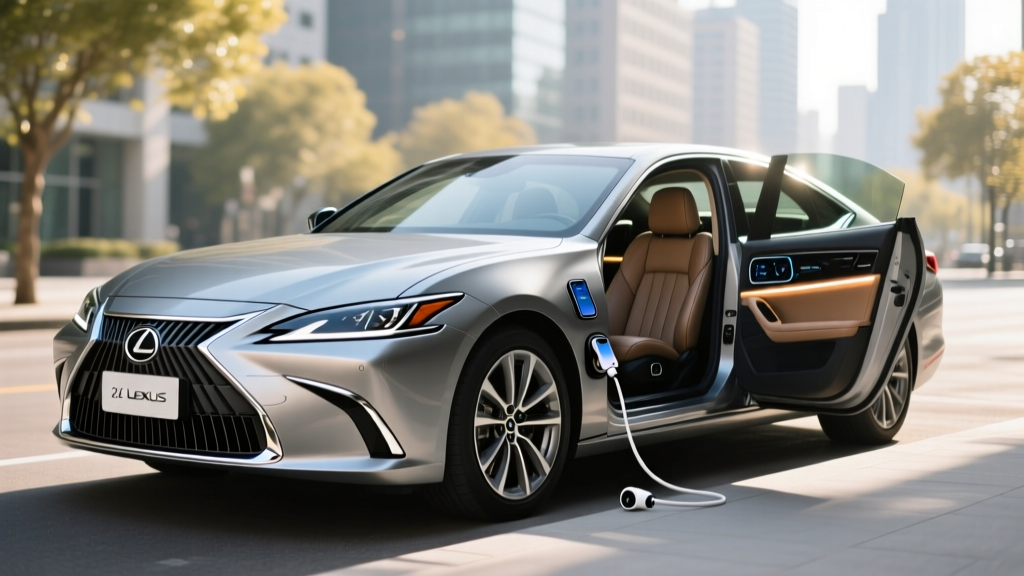
The 2026 Lexus ES 300h occupies a specific niche: a midsize luxury sedan that prioritizes fuel economy and refinement over performance. It is a conventional hybrid (HEV), not a plug-in hybrid (PHEV), meaning it never needs to be plugged in — the gasoline engine and regenerative braking recharge the small battery automatically. If you want a luxury daily driver that returns over 40 MPG without altering your fueling habits, the ES 300h is one of the strongest options on the market. If you need electric-only commuting or federal tax credit eligibility, you'll want to look at the PHEV alternatives we discuss below.
• EPA Combined: 44 MPG | City: 43 | Highway: 45
• Powertrain: 2.5L 4-cyl + electric motor, 215 hp combined
• Total Range: ~582 miles per tank
• Starting MSRP: ~$44,490 (base) | F Sport Design: ~$47,990 | Luxury: ~$50,490
• Federal Tax Credit: Not eligible (§30D applies to PHEVs/BEVs only)
HEV vs PHEV vs EV: Where Does the ES 300h Fit?
Before evaluating the ES 300h in isolation, it's worth understanding the three electrified powertrain categories and who each serves best.
Lexus ES 300h, Toyota Camry Hybrid
Uses a small battery recharged by the engine and regen braking. No plug needed. Best for drivers without home charging who want maximum fuel savings with zero behavior change.
BMW 330e, Toyota RAV4 Prime
Larger battery with 20-40 miles of electric-only range. Plugs in at home. When the battery depletes, operates as a conventional hybrid. Best for commuters with home charging and occasional long trips.
Tesla Model 3, BMW i4
No gasoline engine. 250-400+ mile range. Lowest operating cost if you have reliable home charging. Best for drivers with Level 2 home charging and predictable routes.
The ES 300h is firmly in the HEV column. Lexus does not offer a PHEV version of the ES sedan. This matters for two reasons: you will never drive on electric-only power for more than about a mile at low speeds, and you will not qualify for the federal §30D clean vehicle tax credit, which requires a minimum battery capacity and plug-in capability (see IRS guidelines on qualified plug-in vehicles).
Fuel Economy: EPA Ratings and Real-World MPG
The 2026 Lexus ES 300h carries EPA fuel economy ratings that place it among the most efficient vehicles in the luxury midsize segment.
| Metric | EPA Rating | Real-World Expectation |
|---|---|---|
| City | 43 MPG | 44–47 MPG* |
| Highway | 45 MPG | 40–43 MPG |
| Combined | 44 MPG | 41–45 MPG |
| Total Range (13.2-gal tank) | ~582 mi | ~540–590 mi |
*Hybrids routinely exceed EPA city ratings because stop-and-go driving maximizes regenerative braking and electric-motor usage. Highway driving favors the gasoline engine, so real-world highway MPG often falls below the EPA sticker. Data compiled from owner-reported averages on fueleconomy.gov.
Powertrain and Performance Specs
The ES 300h pairs a 2.5-liter Atkinson-cycle four-cylinder engine with an electric motor and a continuously variable transmission (eCVT). Combined system output is 215 horsepower.
| Specification | Value |
|---|---|
| Engine | 2.5L 4-cylinder Atkinson cycle |
| Engine Horsepower | 176 hp @ 5,700 rpm |
| Electric Motor Output | 88 kW (118 hp) |
| Combined System Horsepower | 215 hp |
| Hybrid Battery | ~1.6 kWh NiMH (self-charging) |
| Transmission | eCVT (planetary gearset) |
| Drivetrain | Front-wheel drive |
| 0–60 MPH | ~7.9 seconds |
| Fuel Tank | 13.2 gallons (regular unleaded) |
The 215 hp figure is adequate for merging and passing but won't satisfy performance-oriented buyers. The eCVT eliminates shift shock and keeps the engine in its most efficient RPM band, though it produces the characteristic "rubber-band" drone under hard acceleration that some drivers find unappealing. The ES 300h is tuned for quietness and comfort, not engagement — Lexus prioritizes cabin isolation over steering feedback.
Battery Warranty, Lifespan, and Replacement Cost
Hybrid battery longevity is the most common concern among first-time hybrid buyers. Here's what the data shows for the ES 300h.
• Coverage: 10 years / 150,000 miles (whichever comes first)
• Threshold: Lexus will replace or repair if battery capacity drops below a specified performance level
• Transferability: Warranty transfers to subsequent owners at no cost
• Additional: Hybrid system components (inverter, control module, electric motor) also covered under the 10-year/150,000-mile hybrid component warranty
Real-world battery lifespan: Toyota/Lexus hybrid battery packs using NiMH chemistry have demonstrated exceptional longevity. Fleet data and owner surveys consistently show these batteries lasting 150,000–200,000+ miles before significant degradation. Many first-generation Prius and ES 300h examples have exceeded 200,000 miles on the original hybrid battery. The 1.6 kWh pack in the ES 300h is small and operates within a conservative state-of-charge window (roughly 40–80%), which dramatically reduces cycle stress.
Out-of-warranty replacement cost: If the hybrid battery does eventually need replacement after the warranty period, expect to pay between $3,000 and $5,000 for a new OEM pack installed at a Lexus dealer. Refurbished/remanufactured packs are available for $1,500–$2,500. Individual module replacement (only the degraded cells) can bring the cost down further to $800–$1,500 at a qualified hybrid specialist.
Pricing, Trims, and Tax Credit Eligibility
| Trim Level | MSRP (approx.) | Key Additions |
|---|---|---|
| ES 300h (Base) | $44,490 | 10-way power seats, 9.8" touchscreen, Lexus Safety System+ 3.0 |
| ES 300h F SPORT Design | $47,990 | Sport-tuned suspension, F SPORT exterior/interior trim, 19" wheels |
| ES 300h Luxury | $50,490 | Semi-aniline leather, 12.3" display, ventilated seats, wood trim |
| ES 300h Ultra Luxury | $54,090 | Rear-seat controls, Mark Levinson audio, ambient lighting |
Who Should Buy the ES 300h Hybrid?
- You want luxury sedan comfort with 44 MPG
- You don't have access to home or workplace charging
- You drive a mix of city and highway miles
- You prioritize reliability and low maintenance costs
- You plan to keep the car 8+ years (warranty coverage)
- You prefer not to change any fueling habits
- You want electric-only commuting (consider a PHEV)
- You need the $7,500 federal tax credit (consider a BEV or qualifying PHEV)
- You prioritize acceleration and sporty handling
- You want all-wheel drive (ES 300h is FWD only)
- You regularly tow or carry heavy loads
- You need the latest EV tech (large screens, V2L, OTA updates)
Competitors Worth Comparing
If the ES 300h doesn't fully match your needs, consider these alternatives in the luxury hybrid/PHEV/EV space:
- Toyota Camry Hybrid — Similar powertrain, 52 MPG combined, ~$15,000 less, but less luxury refinement
- BMW 330e PHEV — 23 miles electric-only, qualifies for partial §30D credit, sportier handling, but higher maintenance costs
- Tesla Model 3 — Full EV, 341-mile range, $7,500 credit eligible, lowest operating cost, but requires home charging
- Genesis Electrified G80 — Full EV luxury sedan, 282-mile range, premium interior, but higher price and charging dependency
Ownership Costs: 5-Year Projection
| Cost Category | ES 300h (44 MPG) | BMW 530i (27 MPG) |
|---|---|---|
| Purchase Price (base) | $44,490 | $58,900 |
| Fuel (75,000 mi @ $3.40/gal) | $5,795 | $9,444 |
| Maintenance (5 yr est.) | $2,800 | $4,200 |
| Insurance (5 yr est.) | $9,500 | $11,200 |
| Depreciation (5 yr est.) | $18,500 | $26,000 |
| Total 5-Year Cost | ~$81,085 | ~$109,744 |
Estimates based on national averages. Actual costs vary by region, driving habits, insurance profile, and fuel prices. The ES 300h's strong resale value (Lexus consistently ranks top-3 in retained value per IIHS and industry data) significantly reduces total ownership cost.
Frequently Asked Questions
How many MPG does the Lexus ES 300h hybrid get?
The 2026 Lexus ES 300h is EPA-rated at 43 MPG city, 45 MPG highway, and 44 MPG combined. In real-world driving, city and suburban commuters regularly report 44–47 MPG thanks to the hybrid system's efficiency in stop-and-go traffic. Highway-only driving at 75+ MPH typically yields 39–43 MPG.
Is the Lexus ES 300h a plug-in hybrid?
No. The ES 300h is a conventional hybrid (HEV). It cannot be plugged in and has no meaningful electric-only range. The hybrid battery recharges through regenerative braking and the gasoline engine. Lexus does not currently offer a PHEV variant of the ES sedan.
Does the Lexus ES 300h qualify for any tax credits?
The ES 300h does not qualify for the federal §30D Clean Vehicle Credit, which is limited to plug-in vehicles (BEVs and PHEVs). Some states, municipalities, or utility companies may offer rebates for purchasing a conventional hybrid — check your local energy provider and state environmental agency for current programs.
How long will the hybrid battery last and what does replacement cost?
Lexus covers the hybrid battery for 10 years or 150,000 miles. Real-world data from Toyota/Lexus hybrid platforms shows these NiMH packs routinely lasting 150,000–200,000+ miles. Out-of-warranty replacement costs $3,000–$5,000 for a new OEM pack, or $1,500–$2,500 for a refurbished unit.
Is the ES 300h more reliable than a comparable gasoline luxury sedan?
Lexus consistently ranks at or near the top of J.D. Power and Consumer Reports reliability studies. The hybrid powertrain actually reduces mechanical complexity in some ways — the eCVT has no traditional clutch packs or bands to wear, and regenerative braking extends the life of friction brake pads (many owners report 80,000+ miles on original brake pads). The primary long-term cost risk is the hybrid battery, which is well-covered under warranty.
How does the ES 300h compare to a full EV like the Tesla Model 3?
The ES 300h offers luxury sedan comfort, proven reliability, and no charging dependency — you simply fill up at any gas station. The Model 3 offers dramatically lower "fuel" costs (roughly $0.04–$0.06 per mile on home electricity vs. $0.08–$0.10 per mile for the ES 300h at $3.40/gal), federal tax credit eligibility, and instant torque. The trade-off: the Model 3 requires reliable home Level 2 charging and route planning for road trips, while the ES 300h requires zero lifestyle adjustment.