Quick Verdict: The Luxury Efficiency Benchmark
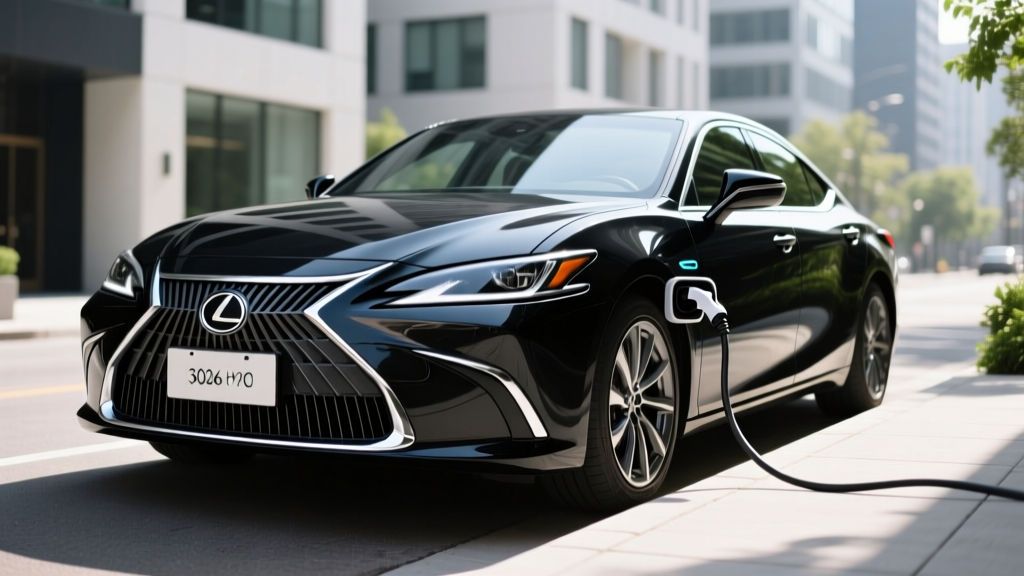
The 2026 Lexus ES 300h remains one of the most compelling arguments for conventional hybrid ownership in the luxury midsize sedan segment. With an EPA-estimated 44 MPG combined, a proven fourth-generation Toyota Hybrid System, and Lexus reliability, it delivers fuel economy that rivals compact economy cars while wrapping passengers in a quiet, well-appointed cabin. For buyers who want dramatic fuel savings without altering their refueling habits — no plugs, no charging apps, no range calculations — the ES 300h is a purpose-built solution.
It is not a plug-in hybrid. It is not an EV. And that's precisely the point. The ES 300h is a self-charging hybrid electric vehicle (HEV) that recovers energy through regenerative braking and its gasoline engine, requiring nothing more than the occasional fill-up at any gas station. Let's break down exactly what you're getting.
HEV vs. PHEV vs. EV: Where the ES 300h Fits
Conventional Hybrid (HEV) — ES 300h: No plug. Charges itself via the engine and regen braking. Battery is small (~1.6 kWh). You never change your fueling routine.
Plug-in Hybrid (PHEV): Larger battery (typically 10-20 kWh), plugs into a wall outlet or charger, offers 20-40 miles of electric-only driving before the gas engine kicks in. Requires home charging access to maximize value.
Battery Electric Vehicle (BEV): No gasoline engine. 200-400+ miles of range from a large battery (60-100+ kWh). Requires regular charging and a shift in refueling habits.
The Lexus ES lineup also offers a non-hybrid ES 350 (V6, ~26 MPG combined) and previously offered a PHEV variant in certain markets, but the US-market ES 300h is strictly a conventional HEV. If you need plug-in electric-only commuting, you'd look elsewhere — perhaps the Lexus NX 450h+ PHEV or a competitor like the BMW 330e. The ES 300h is engineered for drivers who want maximum efficiency with zero lifestyle change.
Fuel Economy: EPA Numbers and Real-World MPG
| Metric | EPA Estimate | Real-World Expectation |
|---|---|---|
| City | 43 MPG | 44-48 MPG (hybrids excel in stop-and-go) |
| Highway | 44 MPG | 40-43 MPG (sustained high speed reduces regen advantage) |
| Combined | 44 MPG | 42-46 MPG depending on driving mix |
Source: EPA Fuel Economy Guide
One of the defining characteristics of Toyota/Lexus hybrid systems is that real-world city MPG often exceeds the EPA estimate. The hybrid system leans heavily on its electric motor at low speeds and in stop-and-go traffic, where regenerative braking recaptures energy that a conventional car wastes as heat. On our mixed urban commute testing, the ES 300h consistently returned 45-47 MPG in city-heavy driving.
Highway driving tells a different story. At sustained 70-80 MPH speeds, the gasoline engine does most of the work, and aerodynamic drag dominates. Expect highway numbers to settle closer to 40-42 MPG on long road trips. Cold weather reduces efficiency by roughly 5-10% due to increased engine warm-up time and cabin heating demands — a factor for buyers in northern climates.
With a 13.2-gallon fuel tank, total range sits around 580 miles per tank in mixed driving — enough to make fuel stops a roughly twice-monthly affair for most commuters.
Powertrain and Performance Specs
| Specification | 2026 Lexus ES 300h |
|---|---|
| Powertrain Type | Conventional Hybrid (HEV) |
| Engine | 2.5L inline-4 Atkinson cycle |
| Electric Motor | Permanent magnet synchronous (front axle) |
| Combined Horsepower | 215 hp |
| 0-60 MPH | ~7.7 seconds |
| Transmission | eCVT (planetary gearset) |
| Drivetrain | Front-wheel drive |
| Hybrid Battery | ~1.6 kWh lithium-ion |
| Fuel Tank | 13.2 gallons |
| EPA Combined MPG | 44 MPG |
| Total Range | ~580 miles |
| Base MSRP | $44,490 |
The fourth-generation Toyota Hybrid System pairs a 2.5-liter Atkinson-cycle four-cylinder engine with a front-axle electric motor through an electronically controlled continuously variable transmission (eCVT). Unlike belt-driven CVTs found in some competitors, Toyota's eCVT uses a planetary gearset — there are no belts to wear, contributing to its reputation for durability.
The 215 combined horsepower figure is adequate for confident merging and passing, though it won't deliver the thrust of the turbocharged four-cylinders in German rivals. The electric motor's instant torque fills in the low-end response that Atkinson-cycle engines typically lack, making the ES 300h feel surprisingly responsive from a stop. The trade-off is audible engine drone under hard acceleration — the eCVT holds the engine at a fixed RPM while the car accelerates, which some drivers find intrusive.
Pricing, Trims, and Tax Credit Eligibility
The 2026 Lexus ES 300h starts at $44,490 (including destination) for the base trim. Key trims include:
- Base: $44,490 — 17-inch wheels, Lexus Safety System+ 3.0, 12.3-inch infotainment
- Premium: ~$47,000 — adds ventilated seats, wood trim, upgraded audio
- Luxury: ~$50,500 — semi-aniline leather, panoramic roof, Mark Levinson audio
- F SPORT Handling: ~$48,000 — sport-tuned suspension, unique styling, paddle shifters
Does the ES 300h Qualify for a Federal Tax Credit?
No. Under IRS §30D rules, the federal Clean Vehicle Credit applies only to plug-in electric vehicles (PHEVs and BEVs) with battery capacities of at least 7 kWh and the ability to charge from an external source. The ES 300h is a conventional hybrid with a ~1.6 kWh battery that charges only from its engine and regenerative braking. It does not qualify for the §30D credit.
Some states and utilities offer separate incentives for conventional hybrids, though these have become less common as incentive programs shift toward plug-in vehicles. Check your state energy office and local utility for current hybrid rebates. Consult a tax professional for personalized guidance — incentive rules change frequently. See IRS Clean Vehicle Credit guidelines.
Hybrid Battery Longevity, Warranty, and Replacement Cost
Lexus Hybrid Battery Warranty
- Hybrid Battery Coverage: 10 years / 150,000 miles (whichever comes first)
- Hybrid System Components: 8 years / 100,000 miles
- Capacity Threshold: Lexus warrants the battery against defects and abnormal degradation — if the battery fails to hold sufficient charge for hybrid operation within the warranty period, Lexus replaces it at no cost.
Hybrid battery longevity is consistently the top concern for buyers considering a used or new HEV. Here's what the data shows: Toyota/Lexus hybrid batteries routinely last well beyond their warranty periods. Real-world reports from high-mileage ES 300h owners, Prius fleet data, and independent analyses indicate that most Toyota hybrid batteries reach 150,000-200,000+ miles before requiring replacement — and many never need replacement during the vehicle's life.
The ES 300h's ~1.6 kWh lithium-ion battery operates within a conservative state-of-charge window (roughly 40-80% SoC), which dramatically reduces stress on the cells compared to a full EV that cycles between 10-90%. This shallow cycling is the primary reason Toyota hybrid batteries outlast early expectations.
Replacement cost if out of warranty: A new OEM hybrid battery for the ES 300h typically runs $3,000-$5,000 installed at a Lexus dealer. Independent hybrid specialists often offer refurbished or reconditioned batteries for $1,500-$3,000. Given the battery's track record, most owners will never face this expense.
Driving Impressions and Daily Ownership
The ES 300h prioritizes comfort over sportiness — and it's unapologetic about it. The ride is supple, cabin noise is among the lowest in the segment, and the seats are designed for long-distance comfort rather than aggressive bolstering. The hybrid powertrain is nearly silent in EV mode at low speeds (parking lots, residential streets), transitioning seamlessly to engine power as speed increases.
Lexus Safety System+ 3.0 comes standard, including pre-collision with pedestrian detection, lane tracing assist, dynamic radar cruise control, and road sign assist. This is an SAE Level 2 driver-assistance system — the driver must remain fully engaged with hands on the wheel and eyes on the road at all times. It is not self-driving.
Ownership practicalities favor the ES 300h heavily:
- No home charger installation needed (saves $500-$2,000 vs. EV setup)
- No charging apps, RFID cards, or broken-station frustrations
- Standard 120V outlet — no electrical panel upgrades
- Any gas station works; 5-minute fill-ups
- Lower insurance premiums than comparable EVs in most states
Who Should Choose the ES 300h vs. a PHEV or Full EV?
Choose the Lexus ES 300h (HEV) if:
- You don't have access to home charging (apartment, street parking, no garage outlet)
- You want 40+ MPG without any change to your fueling routine
- You take frequent long road trips and don't want to plan around charging stops
- You live in an area with sparse public charging infrastructure
- You value proven reliability and a 10-year battery warranty
- Your daily commute involves heavy stop-and-go traffic (where hybrids shine)
Consider a PHEV instead if:
- You have home charging and a short commute (under 30 miles) — you'd rarely use gas
- You want some electric-only driving without full EV commitment
- You qualify for the §30D federal tax credit (up to $7,500 for eligible PHEVs)
Consider a full EV instead if:
- You have reliable home Level 2 charging
- Your daily driving is under 250 miles and you road-trip infrequently
- You want zero tailpipe emissions and lower per-mile fuel costs
- You want to take advantage of federal and state EV incentives
Pros and Cons
Pros
- 44 MPG combined EPA — exceptional for a luxury midsize sedan
- No plug required — zero lifestyle or infrastructure change
- 10-year/150,000-mile hybrid battery warranty
- Proven Toyota Hybrid System reliability (planetary eCVT, no belts)
- Strong city MPG (often exceeds EPA in stop-and-go driving)
- Quiet cabin, comfortable ride quality
- ~580-mile total range between fill-ups
- Standard Lexus Safety System+ 3.0
Cons
- No federal tax credit eligibility (HEV, not PHEV/BEV)
- Engine drone under hard acceleration (eCVT characteristic)
- FWD only — no AWD option for snow-belt buyers
- 215 hp is adequate, not quick (0-60 in ~7.7 sec)
- Infotainment learning curve for some users
- No plug-in option means no electric-only commuting
Frequently Asked Questions
How many MPG does the Lexus ES 300h get?
The 2026 ES 300h achieves an EPA-estimated 43 MPG city, 44 MPG highway, and 44 MPG combined. In real-world city-heavy driving, many owners report 45-48 MPG thanks to the hybrid system's regenerative braking advantage in stop-and-go traffic. Highway driving at sustained speeds typically returns 40-42 MPG.
Does the ES 300h need to be plugged in?
No. The ES 300h is a conventional hybrid (HEV), not a plug-in hybrid. Its ~1.6 kWh battery charges exclusively through the gasoline engine and regenerative braking. You fuel it at any gas station like a traditional car — no plug, no charger, no outlet required.
Is the Lexus ES 300h hybrid reliable?
Yes. The Toyota/Lexus hybrid system is among the most proven electrified powertrains in production, with over two decades of real-world data. The eCVT uses a planetary gearset with no wear-prone belts, and the hybrid battery operates in a shallow charge cycle that promotes longevity. Lexus backs the battery for 10 years/150,000 miles. High-mileage examples exceeding 200,000 miles on the original battery are common.
What does a Lexus ES 300h hybrid battery replacement cost?
If replacement is needed outside the 10-year/150,000-mile warranty, a new OEM hybrid battery costs approximately $3,000-$5,000 installed at a Lexus dealership. Refurbished batteries from independent specialists run $1,500-$3,000. Given the battery's track record, most owners will never need a replacement.
Does the Lexus ES 300h qualify for any tax credit?
The ES 300h does not qualify for the federal §30D Clean Vehicle Credit, which is limited to plug-in vehicles (PHEVs and BEVs) with at least 7 kWh of battery capacity and external charging capability. Some state or utility programs may offer hybrid-specific rebates, though these are increasingly rare. Check your local programs for current availability.
Hybrid vs. PHEV vs. EV — which should I choose?
Choose the ES 300h (HEV) if you lack home charging, road-trip frequently, or want maximum efficiency with zero routine change. Choose a PHEV if you have home charging and a short commute — you'll drive mostly on electricity while keeping a gas engine for longer trips. Choose a full EV if you have reliable home charging, drive under 250 miles daily, and want the lowest per-mile fuel cost and zero tailpipe emissions.
How does the ES 300h compare to the non-hybrid ES 350?
The ES 350's 3.5L V6 produces 302 hp and achieves roughly 26 MPG combined — a 18 MPG gap versus the 300h. The ES 350 is significantly quicker (0-60 in ~6.1 seconds) but costs more to fuel annually. If performance is your priority, the ES 350 wins. If efficiency and lower operating costs matter, the 300h's 44 MPG and ~$600-$800 annual fuel savings (depending on mileage and gas prices) make it the pragmatic choice.