Quick Verdict: The Compact Hybrid That Punched Above Its Weight
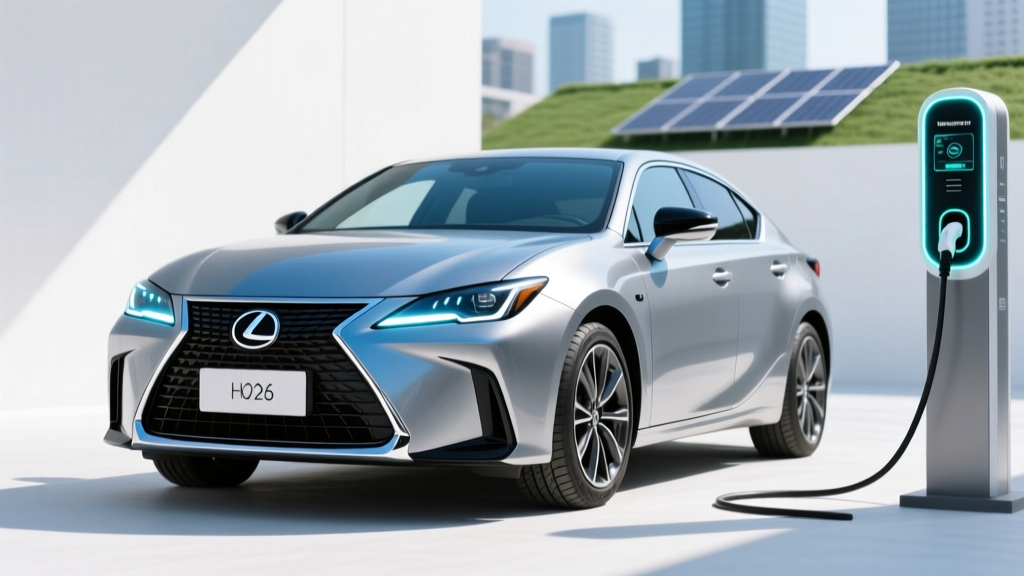
The Lexus CT 200h remains one of the most recognizable names in the premium compact hybrid segment, even though Lexus discontinued U.S. sales after the 2017 model year. If you're researching the CT hybrid today, you're most likely evaluating it as a used purchase or comparing its hybrid formula against newer PHEVs and full EVs. The CT 200h delivers a proven 42 MPG combined, Toyota Hybrid Synergy Drive reliability, and Lexus build quality — but its age shows in tech, performance, and interior space.
This guide breaks down the CT hybrid's real-world fuel economy, battery longevity, ownership costs, and how it compares to modern alternatives so you can decide whether it still earns a spot in your driveway.
EPA Fuel Economy and Real-World MPG
| Cycle | EPA Estimate | Real-World Expectation |
|---|---|---|
| City | 43 MPG | 44–48 MPG (hybrids often exceed EPA city) |
| Highway | 40 MPG | 36–39 MPG (aero and CVT limit high-speed efficiency) |
| Combined | 42 MPG | 40–44 MPG depending on driving mix |
The CT 200h's 1.8-liter Atkinson-cycle four-cylinder paired with Toyota's hybrid transaxle produces a combined 134 horsepower. That's modest by modern standards, but the hybrid system's electric torque fill makes city driving feel peppy. According to fueleconomy.gov, the CT 200h's combined rating held steady across its final model years.
HEV vs PHEV: Where the CT Hybrid Fits
The Lexus CT 200h is a conventional hybrid (HEV). It does not plug in. The 1.3 kWh nickel-metal hydride (NiMH) battery charges exclusively through regenerative braking and engine-driven generation. This is a critical distinction from plug-in hybrids (PHEVs) like the Toyota Prius Prime or the now-discontinued Lexus NX 450h+.
| Attribute | HEV (CT 200h) | PHEV (e.g., Prius Prime) | BEV (e.g., Chevy Bolt EV) |
|---|---|---|---|
| Plug-in Required? | No | Yes (optional for driving) | Yes (mandatory) |
| Electric-Only Range | ~1 mile at low speed | 39–44 miles (2025 Prius Prime) | 200–350+ miles |
| Battery Capacity | 1.3 kWh (NiMH) | 13.6 kWh (Li-ion) | 60–85+ kWh (Li-ion) |
| Fueling | Gasoline only | Gasoline + electricity | Electricity only |
| Best For | No home charging access; want simplicity | Home charging + occasional road trips | Home charging + daily commuting |
If you're cross-shopping the CT hybrid against a PHEV, the deciding factor is usually charging access. A PHEV rewards home Level 2 charging with 30–44 miles of gas-free daily driving, but without plug-in access, it operates as a heavier, slightly less efficient HEV. The CT 200h asks nothing of you except filling its 11.9-gallon tank with regular unleaded.
Powertrain Specs and Performance
| Specification | Value |
|---|---|
| Engine | 1.8L Atkinson-cycle inline-4 |
| Engine Output | 98 hp / 105 lb-ft torque |
| Electric Motor Output | 80 hp / 153 lb-ft torque |
| Combined System Horsepower | 134 hp |
| Transmission | ECVT (planetary gearset, not a belt CVT) |
| Drivetrain | Front-wheel drive |
| Battery Type | NiMH, 1.3 kWh (nominal) |
| 0–60 mph | ~9.8 seconds |
| Fuel Tank | 11.9 gallons |
| Total Driving Range | ~500 miles (at 42 MPG combined) |
| Curb Weight | ~3,130 lbs |
The CT 200h shares its powertrain with the Toyota Prius of the same era — a setup Toyota has refined over millions of units. The eCVT uses a planetary gearset rather than a rubber-belt CVT, eliminating a common failure point and contributing to the drivetrain's legendary durability. The tradeoff is leisurely acceleration: 0–60 mph in roughly 9.8 seconds feels dated next to the 2025 Prius (7.2 seconds) or any modern EV.
Battery Longevity, Warranty, and Replacement Cost
How long does the CT hybrid battery actually last? Toyota/Lexus NiMH hybrid batteries have an exceptional track record. Data from fleet operators and owner surveys indicates most CT 200h batteries reach 150,000–200,000+ miles before significant capacity loss. NiMH chemistry degrades more gracefully than early lithium-ion — you'll notice slightly reduced electric-assist range and marginally lower MPG rather than sudden failure.
Replacement cost: A new OEM hybrid battery from Lexus runs approximately $2,500–$3,500 installed at a dealership. Independent hybrid specialists offer refurbished or reconditioned NiMH modules for $1,200–$2,000 installed. Some shops replace individual failed cells for under $500, though results vary. Given the CT 200h's current used-car values ($10,000–$18,000 depending on mileage and condition), a full OEM battery replacement represents a meaningful percentage of the vehicle's worth — factor this into your purchase decision for high-mileage examples.
Pricing and Tax Credit Eligibility
Since the Lexus CT 200h is no longer sold new, there is no MSRP to evaluate. On the used market as of early 2026, expect to pay:
- $10,000–$13,000: 2011–2014 models, 100,000+ miles
- $13,000–$16,000: 2015–2017 models, 60,000–100,000 miles
- $16,000–$19,000: 2015–2017 models, under 60,000 miles, clean history
Tax credit status: The CT 200h does not qualify for the federal §30D new clean vehicle credit — that credit applies only to new BEVs and PHEVs meeting battery sourcing, MSRP cap, and buyer income requirements. As a conventional HEV, the CT hybrid was never eligible for the federal EV credit even when sold new.
For used purchases, the Used Clean Vehicle Credit (up to $4,000 or 30% of sale price, whichever is less) also requires the vehicle to be a qualified plug-in EV or fuel cell vehicle. The CT 200h, as a non-plug-in HEV, does not qualify. Your cost equation is straightforward: purchase price plus registration, insurance, and fuel — with no federal incentive offset.
Who Should Choose the CT Hybrid vs a PHEV or EV?
Pros
- Proven 42 MPG combined with no plug-in required
- Toyota/Lexus hybrid reliability — one of the most durable powertrains ever built
- Lexus build quality, quiet cabin, and premium materials for its era
- Low running costs: regular unleaded, inexpensive tires, minimal maintenance
- Strong resale value relative to non-hybrid luxury compacts
Cons
- Sluggish acceleration (9.8 sec 0–60) — noticeably slow by 2026 standards
- Dated infotainment: no Apple CarPlay/Android Auto in most model years
- Tight rear seat and small cargo area (14.3 cu ft trunk)
- Firm ride quality over rough pavement
- No factory warranty remaining on most used examples
- You lack access to home or workplace charging and want maximum MPG without plugging in
- You prioritize low operating costs and proven reliability over acceleration and tech
- Your budget is $12,000–$18,000 and you want a premium-badge compact
- Your commute is city-heavy, where the hybrid system shines (43+ MPG real-world)
- You have Level 2 home charging and want electric-only daily driving (PHEV: 30–44 mi; BEV: 200+ mi)
- You want modern safety tech (automatic emergency braking, lane-keeping) as standard — the CT 200h predates widespread ADAS
- You want federal tax credit eligibility (up to $7,500 for qualifying new BEVs/PHEVs under current IRS §30D rules)
- Performance matters — a 2025 Prius delivers 196 hp and 57 MPG combined; most compact EVs hit 0–60 in under 7 seconds
Reliability Ratings and Long-Term Ownership Data
The CT 200h benefits from its shared platform with the Toyota Prius (third generation), which has accumulated reliability data across millions of vehicles worldwide. Key reliability points:
- Powertrain: The 2ZR-FXE engine and eCVT are among the most reliable automotive drivetrains in production history. Timing chain (no belt to replace), no traditional alternator or starter motor (the hybrid motor handles both), and no conventional transmission to fail.
- Brakes: Regenerative braking significantly reduces pad and rotor wear. Many CT 200h owners report 80,000–100,000+ miles on original brake pads.
- Common issues: Some owners report water pump failures around 80,000–120,000 miles ($400–$700 repair). The 12V auxiliary battery (standard lead-acid, separate from the hybrid traction battery) may need replacement every 4–6 years. Inverter coolant pump recalls affected some 2011–2013 models — verify recall completion via NHTSA's recall lookup.
- IIHS Safety: The CT 200h earned Good ratings in most crash test categories, though it predates modern small-overlap and pedestrian testing protocols.
Frequently Asked Questions
How many MPG does the Lexus CT hybrid get?
The EPA rates the CT 200h at 43 city / 40 highway / 42 combined MPG. In real-world driving, most owners see 40–44 MPG combined, with city driving often exceeding 44 MPG thanks to regenerative braking and electric-only low-speed operation. Highway-only driving above 70 mph typically returns 36–39 MPG.
Can the CT 200h drive on electric power only?
Only marginally. The CT hybrid's 1.3 kWh NiMH battery allows roughly 1 mile of electric-only driving at very low speeds (under 25 mph) in ideal conditions. This is a conventional HEV — the electric motor assists the gasoline engine rather than replacing it. If electric-only range is a priority, a PHEV like the Toyota Prius Prime (44 miles EV range) or a full BEV is the right choice.
Is the CT hybrid reliable, and what does a battery replacement cost?
Yes — the CT 200h's Toyota-derived hybrid system is among the most reliable powertrains ever produced. Hybrid batteries typically last 150,000–200,000+ miles. If replacement is needed, expect $2,500–$3,500 for a new OEM battery at a Lexus dealer, or $1,200–$2,000 for a refurbished unit from an independent hybrid specialist.
Does the Lexus CT 200h qualify for any tax credit?
No. The CT 200h is a conventional hybrid (HEV) and does not qualify for the federal §30D new clean vehicle credit or the used clean vehicle credit. These credits are reserved for plug-in electric vehicles (BEVs and PHEVs) and fuel cell vehicles meeting specific battery sourcing, MSRP, and income requirements outlined by the IRS.
How does the CT hybrid compare to a modern Prius?
The 2025 Toyota Prius delivers 196 hp (vs. 134 hp), an EPA-estimated 57 MPG combined (vs. 42), modern ADAS (Toyota Safety Sense 3.0), Apple CarPlay, and a contemporary interior — all starting around $28,000 new. If budget allows for a new purchase, the current Prius is objectively superior in every measurable spec. The CT 200h's advantage is its used-market price ($12,000–$18,000) and Lexus badge, but it's a generation behind in technology.
Does the CT 200h require premium fuel?
No. Lexus recommends regular 87-octane unleaded for the CT 200h, keeping fuel costs low. This is one of the model's ownership advantages over some turbocharged luxury compacts that require premium.