The 2013 Lexus CT 200h: A Used Hybrid Hatchback Worth Considering?
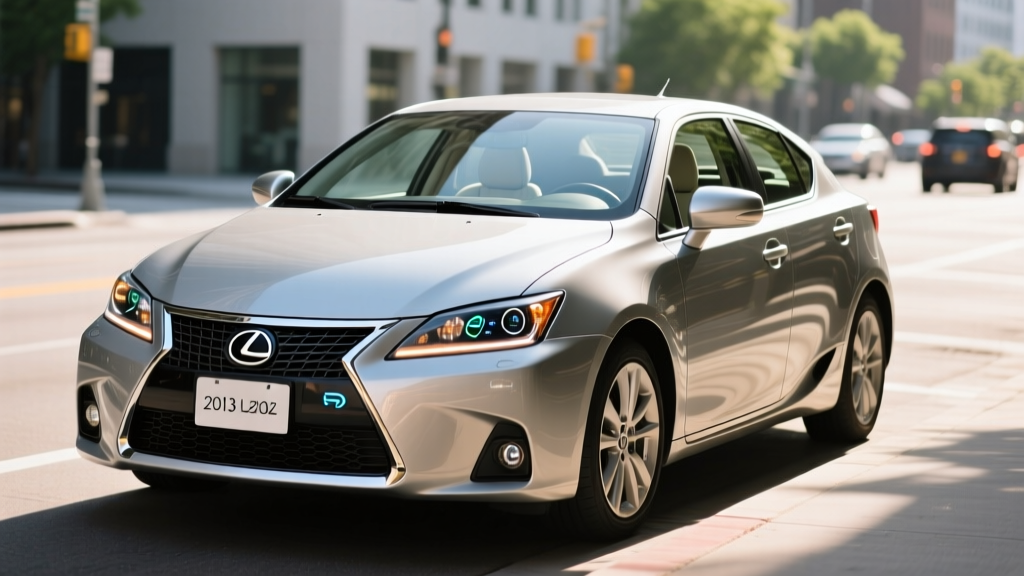
If you've been searching for a lexus hatchback hybrid 2013 model year, you're almost certainly looking at the Lexus CT 200h — the only hatchback hybrid Lexus produced that year. Now well into its second decade on the road, the CT 200h occupies an interesting space in the 2026 used-car market: it's an entry point into Lexus reliability and Toyota's proven Hybrid Synergy Drive, available for a fraction of its original MSRP. But with modern PHEVs and affordable BEVs now widely available, does a 13-year-old conventional hybrid still make financial and practical sense?
This guide breaks down everything you need to know — from real-world MPG to battery replacement costs — so you can decide whether the CT 200h fits your commute and budget.
HEV vs. PHEV: What the CT 200h Actually Is
The 2013 Lexus CT 200h is a conventional hybrid (HEV), not a plug-in hybrid (PHEV). This distinction matters:
- HEV (CT 200h): You never plug it in. A small battery (1.3 kWh) is recharged through regenerative braking and the gasoline engine. It cannot drive on electric power alone for meaningful distances.
- PHEV (e.g., Toyota Prius Prime): Features a larger battery (~13.6 kWh) that you plug in to charge, offering 30–44 miles of electric-only range before the gas engine engages.
- BEV (e.g., Tesla Model 3, Chevy Equinox EV): Fully electric, no gasoline engine. Requires home or public charging infrastructure.
The CT 200h demands zero behavior change from a gas-car driver. Fill it with regular unleaded and drive — the hybrid system handles the rest.
Fuel Economy: EPA Ratings and Real-World MPG
The CT 200h shares its powertrain with the third-generation Toyota Prius, and the fuel economy reflects that lineage. Here are the official EPA figures per fueleconomy.gov:
| Metric | EPA Estimate |
|---|---|
| City MPG | 43 MPG |
| Highway MPG | 40 MPG |
| Combined MPG | 42 MPG |
| Fuel Type | Regular Unleaded (87 octane) |
| Fuel Tank Capacity | 11.9 gallons |
| Total Range (est.) | ~499 miles |
Real-World MPG vs. EPA Sticker
Like most Toyota/Lexus hybrids, the CT 200h tends to meet or slightly exceed its EPA combined rating in city-heavy driving, where regenerative braking and electric-motor assist do the most work. Owners on fuel-tracking platforms consistently report 40–45 MPG combined in mixed driving.
However, highway-dominant commutes (sustained 70–80 mph) typically yield 36–39 MPG, because the small 1.8L Atkinson-cycle engine works harder at speed and the hybrid system's advantages diminish. Cold weather (below 35°F) can drop observed MPG by 5–10%, as the engine runs more frequently to maintain cabin heat and battery temperature.
Battery Warranty & Lifespan
When new, Lexus warranted the CT 200h hybrid battery for 8 years / 100,000 miles (extended to 10 years / 150,000 miles in California Air Resources Board states). For a 2013 model, that factory warranty expired years ago. However, the nickel-metal hydride (NiMH) battery pack in this generation has proven durable — many examples surpass 200,000 miles without replacement. Should a replacement be needed, expect $2,000–$3,500 for a refurbished or aftermarket pack installed, or roughly $4,000–$5,500 for a new OEM unit from Lexus.
Powertrain and Performance Specifications
The CT 200h was never designed for performance thrills. Its mission is efficient, refined commuting — and on those terms, the powertrain is well-matched to the chassis.
| Specification | 2013 Lexus CT 200h |
|---|---|
| Engine | 1.8L 4-cylinder Atkinson-cycle (98 hp) |
| Electric Motor | Permanent magnet synchronous (80 hp / 60 kW) |
| Combined System Output | 134 hp |
| Hybrid Battery | 1.3 kWh NiMH (not plug-in) |
| Transmission | ECVT (planetary gearset, no fixed gears) |
| 0–60 mph | ~9.8 seconds |
| Drivetrain | Front-wheel drive |
| Curb Weight | ~3,130 lbs |
| Cargo Volume (rear seats up) | 14.3 cu ft |
| Cargo Volume (rear seats folded) | 35.0 cu ft |
The eCVT is smooth but drones under hard acceleration — a characteristic of Toyota's hybrid synergy system. The 0–60 time of roughly 9.8 seconds is adequate for merging but won't impress anyone coming from a turbocharged hatchback. The F-Sport trim adds paddle shifters that simulate fixed gear ratios, but it's a cosmetic enhancement, not a performance one.
Used Pricing in 2026 and Tax Credit Eligibility
The 2013 CT 200h originally carried an MSRP starting around $29,990 for the base trim, climbing to roughly $36,000–$39,000 for well-equipped Premium and F-Sport models. In the 2026 used market, expect to pay:
- $8,000–$11,000 for examples with 100,000–140,000 miles
- $11,000–$15,000 for lower-mileage (under 80,000 miles), well-maintained examples
- $15,000–$18,000 for certified pre-owned or exceptionally clean F-Sport models from dealers
Does the 2013 CT 200h Qualify for Any Tax Credit?
Federal new-vehicle credit (§30D): No. This credit applies only to new vehicle purchases and the CT 200h was discontinued after the 2017 model year.
Federal used-EV credit (§25E): No. The IRS used clean vehicle credit applies only to qualified plug-in electric vehicles and fuel cell vehicles with a minimum 7 kWh battery capacity. Since the CT 200h is a conventional hybrid (HEV) with a 1.3 kWh NiMH battery and no plug, it does not qualify.
State incentives: A handful of states offer rebates or HOV-lane access for hybrids, but most have shifted incentives toward PHEVs and BEVs. Check your state's energy or DMV website for current programs.
Reliability, Maintenance, and Long-Term Ownership Costs
The CT 200h benefits from one of the most proven hybrid powertrains ever built — the same system underpinning millions of Prius vehicles worldwide. Here's what ownership looks like in practice:
- Hybrid battery longevity: NiMH chemistry in this generation typically lasts 150,000–250,000 miles. Individual cell failures can sometimes be repaired for $500–$1,000 rather than replacing the entire pack.
- 12V auxiliary battery: Like all cars, the CT 200h has a standard 12V battery that powers electronics. Expect replacement every 4–6 years ($150–$250).
- Brake wear: Regenerative braking significantly extends pad life. Many owners report original brake pads lasting 80,000–100,000+ miles.
- Timing chain: The 2ZR-FXE engine uses a timing chain (not a belt), eliminating a common maintenance item.
- Oil changes: Every 10,000 miles with 0W-20 synthetic — straightforward and inexpensive.
Annual maintenance costs for a well-kept CT 200h average $400–$600, well below the luxury-brand average. Lexus dealerships charge premium labor rates, but any competent independent shop familiar with Toyota hybrids can service this car.
Pros
- Proven 42 MPG combined with no plug-in required
- Lexus build quality, quiet cabin, premium materials
- Low maintenance costs for a luxury badge
- Strong reliability track record (shared Prius powertrain)
- Affordable used entry: $8K–$15K depending on mileage
- Standard Safety System (on later years), IIHS Top Safety Pick for 2013
Cons
- Sluggish acceleration (9.8s to 60 mph)
- Firm ride on F-Sport suspension; road noise on rough pavement
- Small cargo area (14.3 cu ft) vs. modern crossovers
- Infotainment is outdated — no Apple CarPlay or Android Auto
- Rear visibility compromised by hatchback design
- No federal or state EV/PHEV tax credit eligibility
- Discontinued after 2017 — limited dealer familiarity over time
CT 200h vs. Alternatives: Hybrid, PHEV, or Full EV?
If you're considering the 2013 CT 200h, you're likely cross-shopping other electrified options. Here's how it stacks up:
| Vehicle | Type | Combined MPG / MPGe | Used Price (2026 est.) | Electric-Only Range |
|---|---|---|---|---|
| 2013 Lexus CT 200h | HEV | 42 MPG | $8,000–$15,000 | N/A |
| 2013 Toyota Prius | HEV | 50 MPG | $7,000–$12,000 | N/A |
| 2017–2022 Toyota Prius Prime | PHEV | 54 MPG / 133 MPGe | $18,000–$28,000 | 25 mi (2017–2022) |
| 2018–2023 Chevrolet Bolt EV | BEV | 120 MPGe | $14,000–$22,000 | 238–259 mi |
| 2023+ Toyota Prius (redesign) | HEV | 57 MPG | $27,000–$34,000 | N/A |
The Prius delivers better MPG and a lower used price, but lacks the Lexus cabin refinement and badge prestige. A used Prius Prime gives you plug-in capability for short commutes but costs significantly more. A used Bolt EV eliminates gasoline entirely if you can charge at home, but requires charging infrastructure and carries battery-health uncertainty.
Who Should Buy the 2013 Lexus CT 200h?
Choose the CT 200h if:
- You want 40+ MPG without changing your fueling habits (no plugging in)
- You value a premium cabin and Lexus reliability at a budget-friendly used price
- Your commute is city-heavy, where hybrid efficiency shines brightest
- You don't need cutting-edge infotainment or rapid acceleration
- You want a hatchback for occasional cargo flexibility
Look elsewhere if:
- You have home charging access and want to eliminate most gasoline use (consider a used PHEV or BEV)
- You need more cargo space — a used RAV4 Hybrid or a modern hatchback crossover may suit better
- You want Apple CarPlay, Android Auto, or modern driver-assistance features
- You want a vehicle eligible for federal tax credits (only new PHEVs/BEVs qualify under current IRS §30D rules)
Frequently Asked Questions
How many MPG does the 2013 Lexus CT 200h get?
The EPA rates the 2013 CT 200h at 43 city / 40 highway / 42 combined MPG. Real-world owners typically see 40–45 MPG in mixed driving, dropping to 36–39 MPG on highway-dominant trips.
Does the CT 200h need to be plugged in?
No. The CT 200h is a conventional hybrid (HEV), not a plug-in hybrid. You never plug it in — the battery recharges through regenerative braking and the gasoline engine.
How far can the CT 200h drive on electric only?
Essentially zero meaningful distance. The 1.3 kWh NiMH battery can propel the car at very low speeds (under 25 mph) for roughly one mile or less under ideal conditions. This is not a plug-in vehicle and has no usable electric-only range for commuting.
Is the 2013 CT 200h reliable, and what does a battery replacement cost?
Yes — the CT 200h uses Toyota's third-generation Hybrid Synergy Drive, one of the most proven hybrid systems ever built. The NiMH battery typically lasts 150,000–250,000 miles. A replacement refurbished pack costs $2,000–$3,500 installed; a new OEM pack runs $4,000–$5,500.
Does the 2013 CT 200h qualify for any federal tax credit?
No. The federal §30D new-vehicle credit and §25E used-vehicle credit both require plug-in capability and minimum battery capacity thresholds that the CT 200h (a conventional hybrid with a 1.3 kWh battery) does not meet.
How does the CT 200h compare to a Toyota Prius of the same year?
Both share the same 1.8L hybrid powertrain, but the Prius achieves 50 MPG combined (vs. 42 for the CT 200h) due to lower weight and more aerodynamic bodywork. The CT 200h trades efficiency for a more premium interior, quieter ride, and Lexus dealership experience. Used Prius models are typically $1,000–$3,000 cheaper.
Should I buy a used CT 200h or a new hybrid?
A 2026 Toyota Prius LE starts around $29,000 and delivers 57 MPG combined with modern safety tech, CarPlay, and a full warranty. If your budget allows, a new hybrid is objectively better in nearly every metric. The CT 200h makes sense as a budget-conscious choice when you need a reliable, efficient daily driver for under $15,000.