Land Rover's Electrified Strategy: Mild Hybrids and Plug-Ins Explained
If you're researching a Land Rover hybrid, you'll quickly encounter a confusing web of badges: MHEV, PHEV, P400e, P460e, P550e. Let's untangle this before diving into the numbers, because the distinction between Land Rover's mild hybrids and plug-in hybrids fundamentally changes what you can expect in terms of fuel savings, electric-only driving, and tax incentives.
MHEV vs. PHEV — What Land Rover Actually Offers
Mild Hybrid (MHEV): A small 48-volt system that assists the gasoline engine during acceleration and enables smoother stop-start. It cannot drive on electricity alone. There is no plug, no electric-only range, and no federal tax credit. Models like the Defender P400 and Discovery P360 use this system.
Plug-In Hybrid (PHEV): A larger traction battery (typically 23–39 kWh gross) paired with an electric motor integrated into the drivetrain. Can drive 40–50+ miles on electricity alone before the inline-six gasoline engine engages. Requires plugging in to realize the efficiency benefit. Current Land Rover PHEVs include the Range Rover P460e/P550e and Range Rover Sport P460e/P540e.
This guide focuses primarily on Land Rover's PHEV models, since those deliver the meaningful electric-driving capability and efficiency gains that hybrid shoppers are actually looking for. We'll note where MHEV models fit in for buyers who simply want a smoother, slightly more efficient gasoline powertrain.
2026 Range Rover PHEV: EPA Range, MPG, and Powertrain Specs
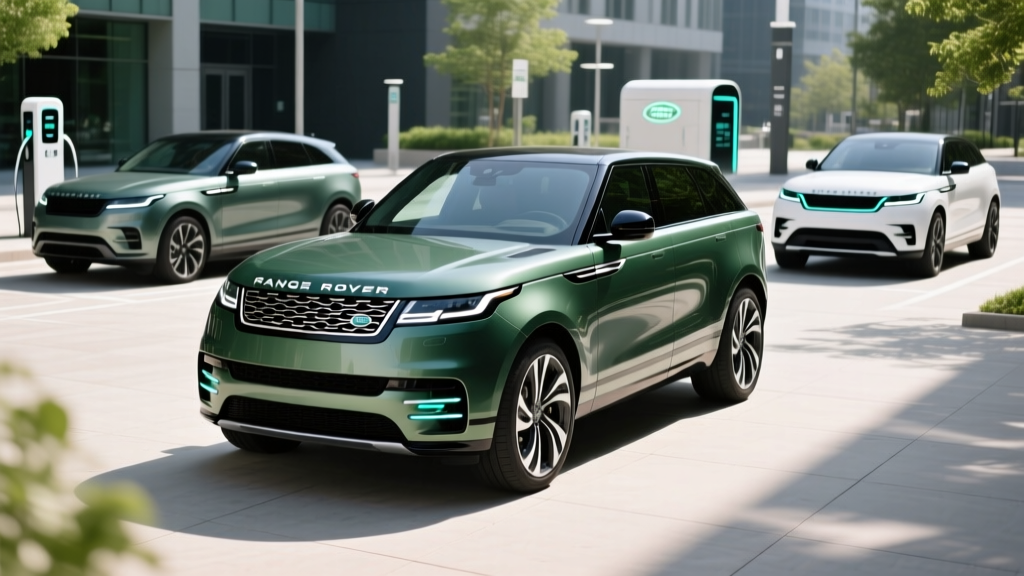
The full-size Range Rover (L460 generation, introduced for 2022 and updated through 2026) is the flagship Land Rover hybrid offering. It's available in two PHEV configurations in the U.S. market: the P460e and the P550e. Both share the same 38.2 kWh gross (approximately 31.8 kWh usable) lithium-ion battery pack and a 3.0-liter turbocharged inline-six engine paired with an electric motor integrated into the ZF 8-speed automatic transmission.
| Spec | P460e | P550e |
|---|---|---|
| Combined Horsepower | 456 hp | 542 hp |
| Combined Torque | 516 lb-ft | 590 lb-ft |
| 0–60 mph | 5.5 sec | 4.7 sec |
| Battery (gross / usable) | 38.2 kWh / ~31.8 kWh | 38.2 kWh / ~31.8 kWh |
| EPA Electric-Only Range | 48 miles | 44 miles |
| EPA Combined MPGe (EV mode) | 46 MPGe | 44 MPGe |
| EPA MPG (gas, charge-sustaining) | 20 city / 24 hwy / 21 combined | 19 city / 23 hwy / 20 combined |
| Total Combined Range | ~530 miles | ~510 miles |
| DC Fast Charging | 50 kW max (CCS) | 50 kW max (CCS) |
| AC Level 2 Charging | 7.2 kW (~5 hrs 0–100%) | 7.2 kW (~5 hrs 0–100%) |
| Starting MSRP | $118,275 | $133,575 |
Real-World Range Reality Check
The EPA rates the Range Rover P460e at 48 miles electric-only. In real-world driving, expect 36–42 miles on a full charge under mixed conditions. Highway driving at 70+ mph, cold weather below 40°F, and aggressive acceleration will push you toward the lower end of that range. In moderate temperatures with city driving and regen braking, some owners report matching or slightly exceeding the EPA figure. Once the battery depletes, the inline-six takes over and you're looking at roughly 20–21 MPG combined — respectable for a 5,800-lb luxury SUV, but not class-leading.
Range Rover Sport PHEV: The More Accessible Land Rover Hybrid
The Range Rover Sport shares the MLA-Flex platform with the full-size Range Rover but in a shorter, slightly lighter package. For 2026, it's offered as the P460e and P540e PHEV, with the same 38.2 kWh gross battery architecture.
| Model | City MPG | Highway MPG | Combined MPG | EV Range |
|---|---|---|---|---|
| Sport P460e | 21 | 25 | 22 | 50 mi |
| Sport P540e | 20 | 24 | 21 | 46 mi |
The Sport's lighter curb weight (~5,500 lbs vs. ~5,800 lbs for the full-size) translates to marginally better electric range and fuel economy. The Sport P460e starts at $96,675, making it the most affordable entry point into a Land Rover plug-in hybrid — though "affordable" is relative in this segment.
One practical advantage of the Sport: its slightly smaller footprint makes it easier to park and maneuver in urban environments where you're most likely to use electric-only mode. If your daily commute is under 40 miles round-trip and you can charge at home, you could go weeks without visiting a gas station.
Charging the Land Rover PHEV: What You Need to Know
Land Rover's PHEV models support both AC Level 2 and DC fast charging — a notable advantage over many luxury PHEVs that only offer AC charging. Here's the breakdown:
| Level | Power | 0–100% Time | Miles of EV Range/Hour |
|---|---|---|---|
| Level 1 (120V household) | ~1.4 kW | ~24 hours | ~4 mi/hr |
| Level 2 (240V home/public) | 7.2 kW | ~5 hours | ~20 mi/hr |
| DC Fast Charge (CCS) | 50 kW peak | ~40 min (0–80%) | N/A |
Key insight: The 50 kW DC fast-charging capability is genuinely useful for road trips — a 30-minute stop can restore enough electric range for the next leg of city driving. However, 50 kW is modest by 2026 standards. Don't expect the charging speeds of a dedicated BEV pulling 150–350 kW. The charge curve also tapers significantly above 80% state of charge, so plan to charge to 80% on DC and top off the remainder on Level 2.
For daily use, a home Level 2 charger is essential. A 240V/32A circuit delivering 7.2 kW will fully replenish the battery overnight. Installation costs for a Level 2 home setup typically range from $500–$2,000 depending on panel proximity and whether your electrical panel needs an upgrade. Always have a licensed electrician assess your panel capacity before committing to equipment.
Tax Credits and Incentives for Land Rover PHEVs
Under the current IRS §30D Clean Vehicle Credit rules, PHEVs can qualify for up to $7,500 in federal tax credits — but eligibility depends on meeting battery-component and critical-minerals sourcing requirements, plus MSRP and buyer income caps.
§30D Tax Credit Checklist for Land Rover PHEVs
- MSRP cap: SUVs must be under $80,000. The Range Rover Sport P460e ($96,675) and full-size Range Rover PHEVs ($118,275+) exceed this cap and do not qualify for the federal credit.
- Buyer income cap: Modified AGI must not exceed $150,000 (single) / $300,000 (joint). Most Land Rover buyers exceed these thresholds.
- Battery sourcing: Land Rover's battery supply chain does not currently meet the critical-minerals and battery-component requirements for the full $7,500.
- Point-of-sale transfer: Available for eligible vehicles, but moot if the vehicle doesn't qualify.
Bottom line: As of the 2026 tax year, no new Land Rover PHEV qualifies for the federal §30D credit due to MSRP and sourcing limitations. Some states may offer their own incentives — check your state's energy office or fueleconomy.gov for current state-level programs.
Battery Longevity, Warranty, and Replacement Costs
Land Rover's PHEV battery warranty is a critical ownership consideration given the premium purchase price. Here's what's covered:
Land Rover PHEV Battery Warranty
Hybrid battery warranty: 8 years / 100,000 miles (whichever comes first), covering defects and capacity loss below 70% of original capacity.
Powertrain warranty: 5 years / 60,000 miles.
Bumper-to-bumper: 4 years / 50,000 miles.
Estimated out-of-warranty battery replacement: $12,000–$18,000 for the 38.2 kWh pack, based on current JLR parts pricing and labor. This figure is expected to decline as battery costs continue falling industry-wide.
In practice, PHEV batteries experience less stress than full EV batteries because they operate in a narrower state-of-charge window (the system maintains a buffer and never truly depletes to 0% or charges to a true 100%). Land Rover's thermal management system actively cools and heats the pack to maintain optimal operating temperature, which further reduces degradation.
Based on data from earlier-generation Land Rover PHEVs (the P400e with its smaller 13.1 kWh pack), real-world degradation after 5 years and 60,000 miles typically falls in the 8–15% range. The current 38.2 kWh pack with improved chemistry and thermal management should perform at least as well. Most owners will never need a battery replacement within typical ownership periods.
Land Rover MHEV Models: Mild Hybrids Without the Plug
For completeness, it's worth addressing Land Rover's mild-hybrid (MHEV) lineup. Models like the Defender P400, Discovery P360, and non-PHEV Range Rover P400 use a 48-volt mild-hybrid system. This is not a plug-in system — you never charge it, and it provides zero electric-only range.
What the MHEV system does: it harvests energy during deceleration into a small 48V battery, then uses that energy to assist the engine during acceleration and enable smoother stop-start operation. The efficiency gain is modest — typically 1–2 MPG combined versus a non-hybrid equivalent.
| Model | City | Highway | Combined |
|---|---|---|---|
| Defender 110 P400 MHEV | 18 | 23 | 20 |
| Discovery P360 MHEV | 19 | 24 | 21 |
| Range Rover P400 MHEV | 19 | 26 | 22 |
These figures are typical for body-on-frame or heavy unibody luxury SUVs. The MHEV system is a refinement feature, not an efficiency strategy. If fuel economy is a priority, the PHEV is the clear choice.
Who Should Buy a Land Rover Hybrid — And Who Shouldn't
Decision Framework
Choose the Range Rover PHEV if:
- You want a full-size luxury SUV with genuine electric-only commuting capability (40–50 mi)
- You can install a Level 2 charger at home and your daily driving is under 50 miles
- You need serious off-road capability and towing (up to 7,716 lbs) alongside daily efficiency
- You value the Range Rover's interior quality, ride comfort, and brand cachet
Choose the Range Rover Sport PHEV if:
- You want PHEV capability in a more manageable, slightly more affordable package
- You prioritize driving dynamics — the Sport handles noticeably better on-road
- You want the same electric-only range as the full-size in a lighter vehicle
Choose a full EV (like the Range Rover Electric, announced for 2026) if:
- You want zero gasoline dependency and lower per-mile fuel costs
- You have reliable home charging and your trips rarely exceed 250–300 miles
- You want lower maintenance costs (no engine oil, spark plugs, or transmission fluid)
Stick with the MHEV (gasoline) models if:
- You can't install a home charger and don't want to rely on public charging
- You frequently take long road trips where PHEV complexity adds little benefit
- You want a lower purchase price and don't care about electric-only driving
Frequently Asked Questions
How many MPG does a Land Rover hybrid get?
The 2026 Range Rover P460e PHEV achieves 21 MPG combined (20 city / 24 highway) once the battery is depleted and the gasoline engine is running. In electric-only mode, it's rated at 46 MPGe. The Range Rover Sport P460e does slightly better at 22 MPG combined on gas. The MHEV (non-plug-in) models like the Defender P400 get around 20 MPG combined — the mild-hybrid system provides only a marginal improvement.
How far can the Land Rover PHEV go on electric only?
The EPA rates the Range Rover P460e at 48 miles electric-only and the Sport P460e at 50 miles. In real-world driving, expect 36–45 miles depending on temperature, terrain, and driving style. Cold weather (below 40°F) can reduce electric range by 20–30%, bringing it down to roughly 30–35 miles. Highway speeds above 70 mph also drain the battery faster than city driving with regenerative braking.
Is the Land Rover PHEV reliable, and what does a battery replacement cost?
Land Rover's overall brand reliability has historically trailed Japanese and German competitors in J.D. Power and Consumer Reports rankings. However, the PHEV powertrain itself — particularly the electric motor and battery — has proven robust. The 38.2 kWh battery is covered by an 8-year/100,000-mile warranty against defects and capacity loss below 70%. Out-of-warranty replacement is estimated at $12,000–$18,000. Most owners report 8–15% degradation over 5 years, well within warranty thresholds.
Does a Land Rover hybrid qualify for any tax credit?
As of the 2026 tax year, no new Land Rover PHEV qualifies for the federal §30D Clean Vehicle Credit. The Range Rover and Range Rover Sport PHEVs exceed the $80,000 MSRP cap for SUVs, and Land Rover's battery supply chain does not meet the critical-minerals sourcing requirements. Some states offer their own rebates or HOV-lane access for PHEVs — check your state's clean-vehicle program for details. Consult a tax professional for personalized eligibility guidance.
Can I DC fast charge a Land Rover PHEV?
Yes. The 2026 Range Rover and Range Rover Sport PHEVs support DC fast charging via CCS at up to 50 kW. A 0–80% charge takes approximately 40 minutes. This is a genuine advantage over PHEVs that only support AC charging (like many BMW and Mercedes PHEVs), making road-trip top-ups practical. However, 50 kW is slow compared to full EVs that charge at 150–350 kW.
Hybrid vs. PHEV vs. full EV — which Land Rover should I choose?
If you can charge at home and your daily commute is under 50 miles, the PHEV is the sweet spot — you'll drive electric most days with a gasoline engine available for road trips. If you rarely exceed 250 miles between stops and want the lowest running costs, wait for the Range Rover Electric (announced). If you can't charge at home and want simplicity, the MHEV gasoline models avoid plug-in complexity but deliver no meaningful fuel savings. The PHEV is the most versatile Land Rover hybrid for most buyers who have home charging access.
Sources: fueleconomy.gov (EPA estimates), Land Rover USA official specifications, IRS §30D Clean Vehicle Credit guidelines. All figures based on 2026 model-year data available at time of publication. Specifications and pricing subject to change; verify with your local retailer.