Quick Verdict: The Urus SE Is a Super SUV With a Plug
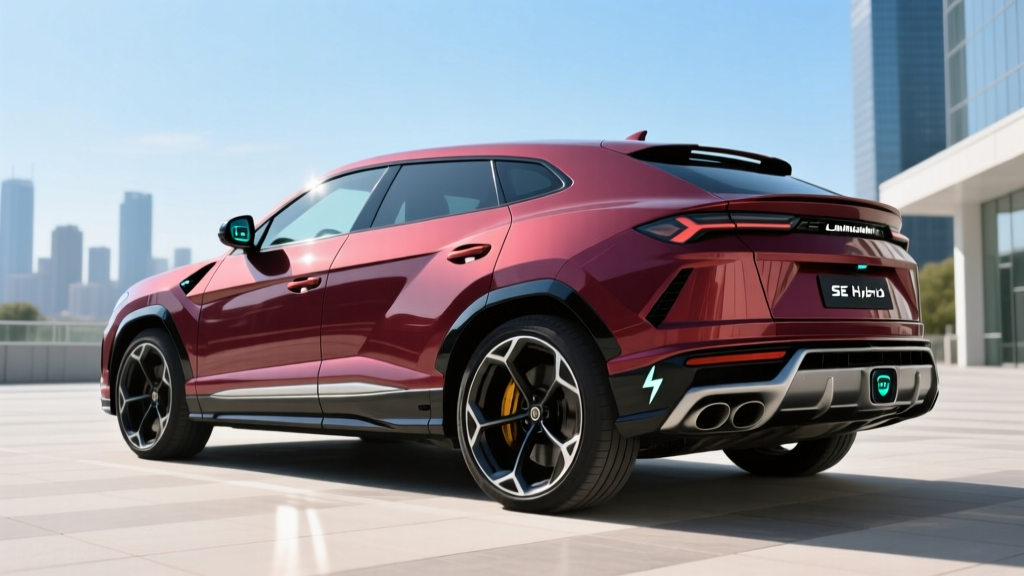
The Lamborghini Urus SE is the brand's first plug-in hybrid electric vehicle (PHEV), replacing the twin-turbo V8-only Urus S and Performante with a combined gasoline-electric powertrain that pushes output to 789 horsepower while adding a meaningful electric-only driving range. For 2026, the Urus SE starts at approximately $260,000 before options — a figure that places it far beyond the reach of federal §30D tax credits (which cap SUV eligibility at $80,000 MSRP). This is a performance-first PHEV, not an efficiency play, and understanding that distinction is essential before evaluating its electrified credentials.
We've analyzed Lamborghini's official powertrain data, EPA efficiency filings, and real-world driving reports to give you the exact numbers behind the Urus SE's hybrid system — including the MPG you'll actually see, the electric range you can count on, and whether this PHEV makes sense versus a full battery-electric competitor like the Lotus Eletre or the Ferrari Purosangue (which remains a V12-only, non-hybrid).
2026 Lamborghini Urus SE — Key Specifications
| Attribute | Value |
|---|---|
| Powertrain | 4.0L Twin-Turbo V8 + Electric Motor (PHEV) |
| Combined Output | 789 hp / 701 lb-ft torque |
| Engine Alone | 611 hp |
| Electric Motor | 188 hp (integrated in 8-speed auto) |
| Battery Capacity | 25.9 kWh (usable ~21.5 kWh, NMC) |
| EPA Electric Range | 37 miles |
| Total Combined Range | ~410 miles (electric + gasoline) |
| EPA MPG (Combined) | 18 MPG (charge-sustaining, battery depleted) |
| MPGe (Electric Mode) | 50 MPGe |
| 0–60 mph | 3.4 seconds |
| Top Speed | 194 mph |
| DC Fast Charging | No — AC Level 2 only |
| AC Charge Rate | 7.2 kW (Level 2) |
| 0–100% Level 2 Charge Time | ~3.5 hours |
| Base MSRP | ~$260,000 (before options) |
| Battery Warranty | 8 years / unlimited miles |
HEV vs. PHEV: Where the Urus SE Fits
The Urus SE is a plug-in hybrid electric vehicle (PHEV), not a conventional hybrid (HEV). The distinction matters for ownership and daily use:
| Feature | Conventional Hybrid (HEV) | Plug-In Hybrid (PHEV) — Urus SE |
|---|---|---|
| Plugs in? | No — charges via regenerative braking and engine | Yes — requires plug-in charging to access electric range |
| Electric-only range | 0–2 miles at low speed | 37 miles EPA |
| Battery size | 1–2 kWh | 25.9 kWh |
| Fuel economy advantage | Moderate (city driving regen) | Large — if you charge daily, you may rarely use gasoline for commutes |
| Behavior when battery is depleted | Normal hybrid operation | Operates like a heavy gasoline vehicle (~18 MPG combined) |
If you never plug in the Urus SE, you're carrying roughly 200 pounds of battery and electric motor hardware without extracting the efficiency benefit. This is a PHEV that rewards regular charging — a critical ownership consideration if you lack home or workplace charging access.
How Many MPG Does the Lamborghini Urus SE Get?
The EPA rates the Urus SE at 18 MPG combined when operating in charge-sustaining mode (battery depleted, engine doing all the work). Breakdown by driving condition:
| Mode | City | Highway | Combined |
|---|---|---|---|
| Charge-Sustaining (Gas Only) | 16 MPG | 21 MPG | 18 MPG |
| Charge-Depleting (Electric) | 50 MPGe (37-mile range) | ||
| Real-World Expectation (Mixed) | Varies dramatically based on charging frequency | ||
Real-world context: If you charge nightly and commute under 35 miles, you could go weeks without burning gasoline. But on a road trip with a depleted battery, expect 16–18 MPG in mixed driving — roughly on par with the outgoing V8 Urus. The PHEV system adds weight (curb weight exceeds 5,800 lbs), which partially offsets the electric motor's efficiency gains when running solely on fuel.
Cold weather reduces the battery's usable capacity by roughly 15–20%, trimming electric range to approximately 30 miles in freezing conditions. The gasoline engine's MPG also drops slightly in winter due to richer cold-start fuel mixtures.
Electric-Only Range and Charging: The Daily-Use Picture
The Urus SE's 25.9 kWh battery pack (with approximately 21.5 kWh usable) delivers an EPA-rated 37 miles of electric-only range. In real-world conditions:
- Mild weather, city driving: 35–40 miles (regenerative braking helps recapture energy)
- Highway at 70 mph: 28–32 miles (aerodynamic drag depletes the battery faster)
- Cold weather (below 32°F): 27–32 miles (battery chemistry is less efficient, cabin heating draws power)
Charging the Urus SE is limited to AC Level 2 at 7.2 kW. There is no DC fast-charging capability — a notable omission for a 2026 PHEV at this price point. Here's the charging breakdown:
| Charging Level | Power | 0–100% Time | Miles Added per Hour |
|---|---|---|---|
| Level 1 (120V household) | ~1.4 kW | ~15 hours | ~5 miles |
| Level 2 (240V, 32A) | 7.2 kW | ~3.5 hours | ~11 miles |
| DC Fast Charge | Not supported | ||
The lack of DC fast charging means road-trip battery replenishment isn't practical at public fast-charging stations. You'll rely on Level 2 destination chargers at hotels or simply run on gasoline. For daily home use, a Level 2 wallbox fully replenishes the battery overnight — plug in when you get home, wake up to a full charge.
Powertrain Deep Dive: 789 HP From Two Sources
The Urus SE combines Lamborghini's updated 4.0-liter twin-turbocharged V8 with an electric motor sandwiched inside the 8-speed automatic transmission. Here's how the power breaks down:
- V8 engine: 611 hp / 590 lb-ft (up from 657 hp in the outgoing Performante, but retuned for PHEV integration)
- Electric motor: 188 hp / 354 lb-ft
- Combined system output: 789 hp / 701 lb-ft
The electric motor fills the torque gap during turbo spool-up, delivering immediate thrust from a standstill. This eliminates the slight lag characteristic of twin-turbo V8s and contributes to the 3.4-second 0–60 mph time — 0.1 seconds quicker than the outgoing Performante despite the added battery weight.
Lamborghini offers multiple drive modes that alter the powertrain's behavior: Hybrid (system manages gas/electric blend), Electric (battery-only, top speed limited to ~84 mph), Performance (both sources at maximum), and Recharge (engine charges the battery while driving — useful before entering an electric-only urban zone).
Battery Warranty & Replacement Cost
Lamborghini covers the Urus SE's high-voltage battery with an 8-year / unlimited-mile warranty against defects and excessive capacity loss (typically defined as dropping below 70% state of health). The NMC (nickel-manganese-cobalt) chemistry in this pack is well-proven in performance applications. If out-of-warranty replacement is ever needed, expect a cost in the range of $15,000–$22,000 for the battery module plus labor — significant, but comparable to other luxury PHEV platforms. Lamborghini's hybrid battery is designed to last the life of the vehicle under normal use; most PHEV batteries show 85–90% capacity retention after 8–10 years based on industry data from similar systems.
Pricing, Tax Credits, and Ownership Economics
The 2026 Lamborghini Urus SE starts at approximately $260,000 before destination charges and options. Well-optioned examples routinely exceed $300,000.
Federal tax credit eligibility: None. The IRS §30D clean vehicle credit has an MSRP cap of $80,000 for SUVs. At over three times that threshold, the Urus SE does not qualify for the up-to-$7,500 federal credit. Additionally, the §30D credit has buyer income caps ($300,000 joint / $150,000 single for new vehicles), which further limits eligibility for most buyers in this segment. Always verify current rules at IRS.gov before making purchase decisions based on tax incentives.
Some states offer their own PHEV incentives (California's CVRP, for example, has historically offered rebates for qualifying electrified vehicles, though income and price caps typically exclude vehicles in this price range). Check your state's energy or DMV website for specifics.
Operating cost reality: At 18 MPG on premium fuel (required) and $4.50/gallon national average, fuel cost runs roughly $0.25/mile on gasoline alone. Electric driving at $0.16/kWh national average drops that to about $0.07/mile — a significant savings for daily commuting, but a minor consideration relative to a $260,000 purchase price. Insurance premiums for the Urus SE are estimated at $5,000–$8,000 annually depending on driver profile and location.
Urus SE vs. the Alternatives: PHEV, Full EV, or Gas?
Urus SE Pros
- 789 hp with instant electric torque fill
- 37-mile electric range covers most commutes
- No range anxiety — V8 takes over seamlessly
- Lamborghini exclusivity and design
- Stronger 0–60 than outgoing V8 model
Urus SE Cons
- No DC fast charging
- 18 MPG when battery is depleted
- No federal tax credit eligibility
- 5,800+ lb curb weight affects handling vs. lighter competitors
- $260,000+ starting price
Who Should Choose the Urus SE?
Choose the Urus SE if: You want Lamborghini performance and exclusivity, have home Level 2 charging, commute under 35 miles daily, and want the flexibility of a gasoline engine for road trips without range planning.
Consider a full EV (Lotus Eletre, BMW iX M60) if: You want lower operating costs, DC fast charging for road trips, access to HOV lanes, and don't need the V8 sound and character.
Stick with a conventional gas V8 SUV if: You lack reliable charging access, drive primarily long highway routes, and prefer the simplicity of a non-electrified powertrain with established long-term service networks.
Reliability and Long-Term Ownership
Lamborghini's PHEV system is derived from the Volkswagen Group's performance hybrid architecture (shared DNA with the Porsche Cayenne E-Hybrid and Audi RS Q8 e-tron). These systems have proven robust in the field, with the Cayenne E-Hybrid platform accumulating millions of real-world miles since 2019.
Key reliability considerations:
- Hybrid battery: NMC cells in this application are thermally managed (liquid-cooled), which significantly slows degradation. Expect 85–92% capacity retention at the 8-year mark based on VW Group PHEV fleet data.
- Complexity: Two powertrains (engine + motor) mean more components that could require service. However, the electric motor has far fewer moving parts than the engine and rarely requires maintenance.
- Brake wear: Regenerative braking reduces mechanical brake usage, extending pad and rotor life — a common PHEV benefit.
- Service network: Lamborghini has 150+ dealers globally, but PHEV-specific service requires high-voltage-certified technicians. Confirm your local dealer is equipped before purchase.
Frequently Asked Questions
How many MPG does the Lamborghini Urus SE hybrid get?
The EPA rates the Urus SE at 18 MPG combined (16 city / 21 highway) when the battery is depleted and the V8 is doing all the work. In electric-only mode, it achieves 50 MPGe over its 37-mile range. Your real-world fuel consumption depends entirely on how often you charge — daily charging and a short commute could mean using gasoline only on road trips.
How far can the Urus SE go on electric power alone?
The EPA rates it at 37 miles of electric-only range. Real-world results vary: expect 35–40 miles in mild-weather city driving, 28–32 miles at highway speeds, and 27–32 miles in cold weather. Top speed in electric mode is limited to approximately 84 mph.
Does the Lamborghini Urus SE qualify for a federal tax credit?
No. The IRS §30D clean vehicle credit has an $80,000 MSRP cap for SUVs. The Urus SE starts at approximately $260,000, making it ineligible. State-level incentives may exist but typically also have price caps that exclude vehicles in this range. Consult IRS.gov and your tax professional for current rules.
Is the Urus SE hybrid reliable, and what does battery replacement cost?
The PHEV system is based on proven VW Group architecture used in the Porsche Cayenne E-Hybrid. Lamborghini covers the battery with an 8-year/unlimited-mile warranty. Out-of-warranty replacement is estimated at $15,000–$22,000, though most PHEV batteries retain 85–90% capacity after a decade of normal use.
Can the Urus SE charge at DC fast-charging stations?
No. The Urus SE supports only AC Level 2 charging at up to 7.2 kW, requiring approximately 3.5 hours for a full charge. There is no DC fast-charging capability. On road trips, you'll drive on gasoline and can recharge overnight at a Level 2 destination charger if available.
Hybrid vs. PHEV vs. full EV — which is right for me?
A conventional hybrid (HEV) never plugs in and offers modest MPG gains — good for drivers without charging access. A PHEV like the Urus SE plugs in for 20–40 miles of electric range then switches to hybrid operation — ideal for short commutes with road-trip flexibility. A full EV (BEV) runs only on electricity with 250–400+ miles of range — best for drivers with reliable charging who want the lowest operating costs and no gasoline dependency. The Urus SE is firmly a PHEV: maximum benefit requires regular plug-in charging.