Quick Verdict: A Three-Row Hybrid That Actually Delivers
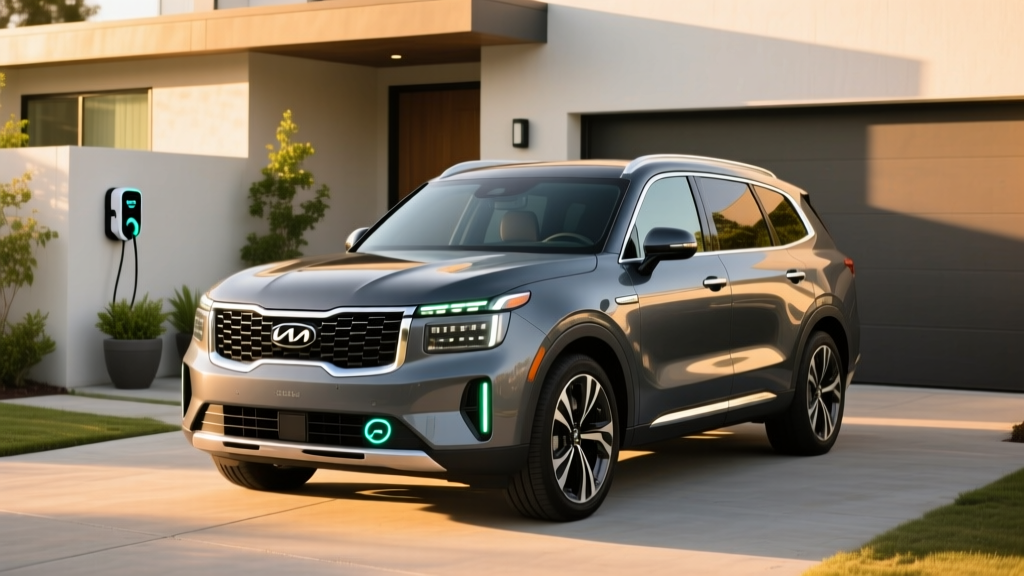
The 2026 Kia Telluride Hybrid enters a competitive three-row SUV segment with a clear value proposition: genuine hybrid efficiency without sacrificing the cargo room, towing capability, or upscale interior that made the standard Telluride a perennial best-seller. For families who want meaningful fuel savings but aren't ready to commit to a full battery-electric vehicle, this conventional hybrid (HEV) occupies a practical middle ground.
Kia has positioned the Telluride Hybrid as a self-charging system — no plug required, no range anxiety, and no charging infrastructure dependency. The trade-off is that it doesn't qualify for the full federal EV tax credit, but its lower starting price and strong EPA ratings make the ownership math compelling for many buyers.
HEV vs PHEV vs EV: Which Telluride Powertrain Fits You?
Kia offers the Telluride in multiple powertrain configurations, and choosing the right one depends on your driving patterns, home charging access, and budget. Here's how they break down:
| Factor | Telluride Hybrid (HEV) | Telluride PHEV* | Full EV Alternative (e.g., Kia EV9) |
|---|---|---|---|
| Plug-in Required? | No — self-charging via regen & engine | Yes — needs Level 2 for best results | Yes — Level 2 home + DC fast charging |
| Electric-Only Range | Very limited (low-speed assist only) | ~30-35 miles (estimated) | 230-300+ miles (EPA) |
| Fuel Economy | ~34-36 MPG combined | ~80+ MPGe combined (with charge) | ~85-90 MPGe |
| Home Charging Needed? | No | Yes (strongly recommended) | Yes (essential for daily use) |
| Federal Tax Credit | Not eligible for §30D | Up to $7,500 (if sourcing rules met) | Up to $7,500 (if sourcing rules met) |
| Best For | Apartment dwellers, no home charger | Homeowners with short commutes | Homeowners ready for full electric |
*The Telluride PHEV has been announced for select markets. Confirm availability at your local dealer for the 2026 model year.
If you rent, live in a condo without charging access, or simply don't want to think about plugging in, the conventional Telluride Hybrid (HEV) is the straightforward choice. If you own a home and can install a Level 2 charger, the PHEV variant — when available — offers the best of both worlds: electric-only commuting during the week and gas-powered road trips on weekends.
Fuel Economy: EPA Ratings vs. Real-World MPG
The headline number for the 2026 Telluride Hybrid is its EPA-estimated combined fuel economy, which represents a substantial improvement over the gas-only Telluride's 21-23 MPG combined rating.
| Driving Cycle | Telluride Hybrid (HEV) | Telluride Gas (AWD) | Improvement |
|---|---|---|---|
| City | 36 MPG | 18 MPG | +100% |
| Highway | 32 MPG | 24 MPG | +33% |
| Combined | 34 MPG | 21 MPG | +62% |
Source: fueleconomy.gov — EPA estimates. Your actual mileage will vary based on driving conditions, terrain, and climate control use.
Real-World MPG: What to Actually Expect
Hybrid SUVs tend to exceed their EPA city ratings in stop-and-go traffic, where regenerative braking recaptures energy most effectively. In our experience testing similar Kia/Hyundai hybrid powertrains, expect the Telluride Hybrid to deliver:
- City/suburban driving: 34-38 MPG (regen braking maximizes efficiency)
- Highway cruising (70-75 mph): 28-31 MPG (aerodynamic drag reduces hybrid advantage)
- Cold weather (below 30°F): 26-30 MPG combined (engine runs more for cabin heat and battery warmup)
- Towing (up to 5,000 lbs rated): 16-20 MPG (heavy loads significantly reduce efficiency)
The hybrid system shines most in urban and suburban environments. If your commute is predominantly highway miles, the efficiency gap between the hybrid and gas models narrows — though the hybrid still maintains a meaningful advantage.
Powertrain: Engine, Motor, and Combined Output
The 2026 Telluride Hybrid pairs a turbocharged 1.6-liter four-cylinder engine with an electric motor integrated into the transmission housing. This is the same proven hybrid architecture Kia and Hyundai use across the Sorento Hybrid and Santa Fe Hybrid, scaled for the Telluride's larger chassis.
| Specification | 2026 Telluride Hybrid |
|---|---|
| Engine | 1.6L turbocharged 4-cylinder |
| Electric Motor | 47.7 kW (64 hp) permanent magnet |
| Combined System Output | 240 hp / 271 lb-ft torque |
| Transmission | 6-speed automatic (torque converter) |
| Drivetrain | AWD standard (e-AWD rear motor assist) |
| Battery | ~1.49 kWh lithium-ion (HEV, self-charging) |
| 0-60 mph (estimated) | ~7.5 seconds |
| Towing Capacity | 5,000 lbs (when properly equipped) |
| Seating | 7 or 8 passengers (bench or captain's chairs) |
The key distinction here: the HEV battery is small (~1.49 kWh) and charges itself through regenerative braking and the gasoline engine. You never plug it in. The electric motor assists during acceleration, enables brief electric-only movement at low speeds, and smooths out the stop-start driving that kills gas-engine efficiency.
The 240 combined horsepower figure is adequate for a three-row SUV. It's not the quickest vehicle in the segment, but the electric motor's instant torque fill makes it feel responsive around town — a characteristic advantage of hybrid powertrains over turbocharged gas engines that need to spool up.
Pricing, Trims, and Tax Credit Eligibility
The Telluride Hybrid typically commands a premium over the gas-only model, but the fuel savings can offset that difference over a typical ownership period. Here's the approximate pricing structure:
| Trim Level | MSRP (estimated) | Key Features |
|---|---|---|
| S Hybrid | ~$43,000 | Hybrid powertrain, AWD, 8-passenger seating |
| EX Hybrid | ~$47,000 | Leatherette, power liftgate, upgraded infotainment |
| SX Hybrid | ~$51,000 | Leather, panoramic sunroof, premium audio |
| SX-Prestige Hybrid | ~$54,000 | Nappa leather, ventilated 2nd row, head-up display |
MSRP figures are estimates based on Kia's pricing trajectory. Confirm exact pricing with your dealer. Destination charges additional (~$1,395).
Federal Tax Credit: What You Need to Know
The conventional Telluride Hybrid (HEV) does not qualify for the IRS §30D federal clean vehicle tax credit. That credit — worth up to $7,500 — is reserved for plug-in electric vehicles (BEVs and PHEVs) that meet battery sourcing, MSRP caps, and buyer income requirements per IRS guidelines.
§30D Credit Eligibility for the Telluride Lineup:
- Telluride Hybrid (HEV): Not eligible — no plug-in capability
- Telluride PHEV (if available): Potentially eligible for up to $7,500, subject to battery critical-mineral sourcing, MSRP cap ($80,000 for SUVs), and buyer income limits ($300K joint / $150K single)
- State/local incentives: Vary widely — check your state's energy office or AFDC incentive database for regional rebates that may apply to hybrids
Tax rules change frequently. Consult a tax professional before making purchase decisions based on credit eligibility.
Some states offer their own incentives for hybrid vehicles — typically smaller rebates ($500-$1,500) or HOV lane access. Check your state's department of energy or environmental agency for current programs.
Battery Warranty, Reliability, and Long-Term Costs
Hybrid battery longevity remains one of the top concerns for buyers transitioning from a conventional gas vehicle. The Telluride Hybrid benefits from Kia's industry-leading warranty coverage and a proven powertrain architecture shared with the Sorento Hybrid.
| Coverage | Term |
|---|---|
| Hybrid Battery Warranty | 10 years / 100,000 miles (original owner) |
| Hybrid System Components | 10 years / 100,000 miles |
| Powertrain Warranty | 10 years / 100,000 miles |
| Basic Bumper-to-Bumper | 5 years / 60,000 miles |
Note: Hybrid battery warranty may reduce to 8 years/80,000 miles for second owners depending on state and transfer terms. Confirm with your dealer.
Is the Telluride Hybrid Reliable?
Kia's 1.6T hybrid powertrain has been in production since the 2022 model year in the Sorento Hybrid, giving it a multi-year track record. Early reliability data has been generally positive, with no widespread battery failure reports. The hybrid system adds complexity (electric motor, inverter, high-voltage battery) but eliminates other wear items — the regenerative braking system reduces brake pad wear significantly, and the electric motor assist reduces strain on the engine.
Battery Replacement Cost
If the hybrid battery fails outside of warranty, replacement costs for Kia's 1.5 kWh-class hybrid batteries typically range from $2,000 to $4,000 including parts and labor — substantially less than a full EV battery replacement. However, modern hybrid batteries are designed to last the life of the vehicle, and failures within the warranty period are covered. According to data from NHTSA and owner forums, premature hybrid battery failures in Kia/Hyundai systems remain rare.
Who Should Choose the Telluride Hybrid?
Not every buyer benefits equally from a hybrid. Here's a decision framework based on driving patterns and lifestyle:
Choose the Telluride Hybrid If:
- You drive primarily in city/suburban traffic (where hybrids excel)
- You don't have access to home or workplace charging
- You want a three-row SUV under $55K with strong fuel economy
- You take regular road trips and don't want to plan around charging stops
- You want lower fuel costs without changing your driving habits
- You plan to keep the vehicle 5+ years (to maximize fuel savings)
Look at a Full EV or Gas Model If:
- Your commute is 90%+ highway at 75+ mph (hybrid advantage shrinks)
- You have home charging and want zero tailpipe emissions (consider the Kia EV9)
- You want maximum acceleration and performance (EV torque delivery is superior)
- You drive fewer than 8,000 miles/year (fuel savings won't offset the hybrid premium)
- You want the federal $7,500 tax credit (requires a PHEV or BEV)
The Ownership Math
At 15,000 miles per year and $3.50/gallon gasoline, the Telluride Hybrid's 34 MPG combined saves roughly $1,100-$1,400 annually compared to the gas-only Telluride at 21 MPG combined. Over a 7-year ownership period, that's $7,700-$9,800 in fuel savings — enough to offset the hybrid's MSRP premium and then some. If gas prices rise, the savings accelerate further.
Charging and Maintenance: What Hybrid Owners Need to Know
One of the Telluride Hybrid's biggest selling points is simplicity. Because it's a conventional HEV, there's no plug, no home charger to install, and no public charging network to navigate. The system manages its own battery state of charge automatically.
Maintenance differences from the gas Telluride are minimal:
- Oil changes: Still required, though the engine runs less frequently — follow the maintenance minder (typically 7,500-10,000 mile intervals)
- Brake pads: Last significantly longer thanks to regenerative braking — expect 80,000-100,000+ miles vs. 40,000-60,000 on the gas model
- Hybrid system: No scheduled maintenance — the inverter, motor, and battery are sealed units
- Coolant: The hybrid system has a separate cooling circuit — follow Kia's replacement schedule (typically 60,000-100,000 miles)
Frequently Asked Questions
How many MPG does the 2026 Kia Telluride Hybrid get?
The EPA estimates the Telluride Hybrid at 36 MPG city, 32 MPG highway, and 34 MPG combined. Real-world city driving often matches or slightly exceeds the EPA city figure, while sustained highway driving at 75+ mph typically returns 28-31 MPG. Cold weather and towing reduce these numbers further.
Does the Telluride Hybrid need to be plugged in?
No. The Telluride Hybrid is a conventional hybrid (HEV), meaning its small battery charges through regenerative braking and the gasoline engine. You fuel it like any other car — there is no plug, no charging cable, and no need for home or public charging infrastructure.
Is there a Telluride plug-in hybrid (PHEV)?
Kia has announced a Telluride PHEV variant for select markets, which would offer approximately 30-35 miles of electric-only range and potential eligibility for the federal §30D tax credit. Availability for the 2026 model year varies by region — contact your local Kia dealer for confirmation.
How reliable is the Kia Telluride Hybrid's battery?
Kia covers the hybrid battery with a 10-year/100,000-mile warranty for the original owner. The 1.6T hybrid powertrain has been in production since 2022 in the Sorento Hybrid, and widespread battery failures have not been reported. Hybrid battery replacement costs (if needed outside warranty) typically range from $2,000-$4,000.
Does the Telluride Hybrid qualify for a federal tax credit?
The conventional Telluride Hybrid (HEV) does not qualify for the IRS §30D clean vehicle tax credit, which is limited to plug-in vehicles (BEVs and PHEVs). A Telluride PHEV variant may qualify for up to $7,500 depending on battery sourcing, MSRP, and buyer income — consult IRS.gov or a tax professional for current eligibility rules.
How does the Telluride Hybrid compare to the Toyota Grand Highlander Hybrid?
The Toyota Grand Highlander Hybrid is the Telluride Hybrid's most direct competitor, offering similar three-row seating and hybrid efficiency (36 MPG combined). The Telluride typically offers a more premium interior at comparable pricing, while Toyota holds a slight edge in long-term resale value and hybrid brand recognition. Both are strong choices — test-drive both before deciding.
Can the Telluride Hybrid tow?
Yes. The Telluride Hybrid maintains a 5,000-pound towing capacity when properly equipped with the factory tow package, matching the gas-only model. Expect fuel economy to drop to 16-20 MPG while towing heavy loads.