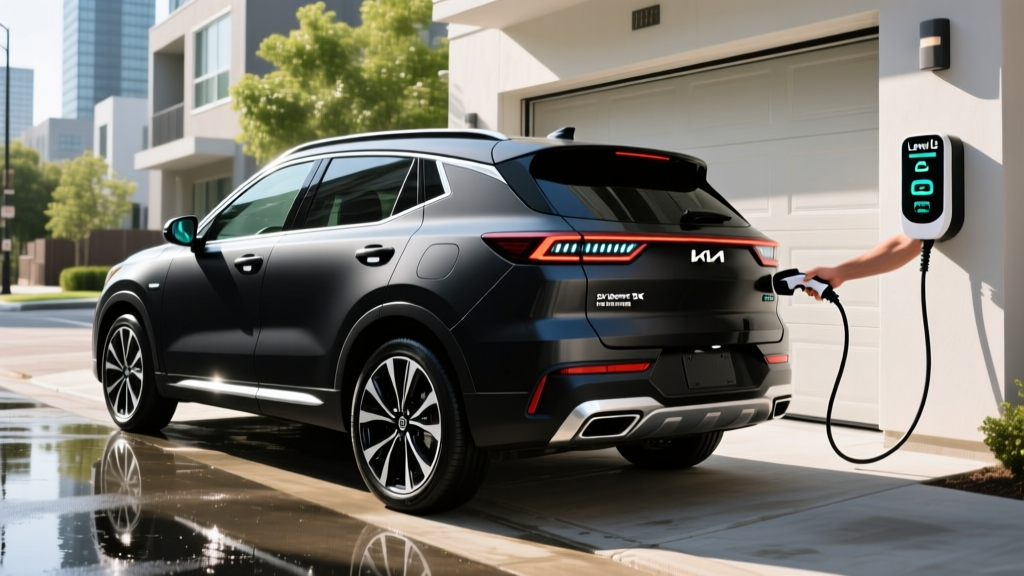
The Kia Sportage Hybrid has carved out a loyal following by offering near-luxury features at a mainstream price, and the top-trim SX Prestige is where Kia pulls out all the stops. But with electrified options multiplying across the compact SUV segment, buyers are asking the right questions: Is the conventional hybrid (HEV) the smart play, or should you stretch for the plug-in hybrid (PHEV) or even a full EV? We've spent time with the 2026 Kia Sportage SX Prestige Hybrid to answer exactly that — with real numbers, not marketing brochures.
This guide covers everything you need to decide: EPA and real-world MPG, powertrain specs, pricing, tax credit eligibility, battery warranty, and a clear framework for choosing between the HEV, PHEV, and battery-electric alternatives.
2026 Kia Sportage SX Prestige Hybrid: At a Glance
| Specification | Detail |
|---|---|
| Powertrain | 1.6L turbocharged 4-cyl + electric motor (HEV) |
| Combined Horsepower | 231 hp |
| Combined Torque | 258 lb-ft |
| Transmission | 6-speed automatic |
| Drivetrain | AWD (standard on SX Prestige) |
| EPA MPG (City / Hwy / Combined) | 38 / 38 / 38 MPG |
| Fuel Tank Capacity | 13.7 gallons |
| Total Driving Range | ~520 miles |
| 0-60 mph (est.) | ~7.5 seconds |
| Cargo Volume (behind 2nd row) | 39.5 cu ft |
| MSRP (SX Prestige AWD HEV) | ~$41,490 |
| Federal Tax Credit | Not eligible (HEV) |
| Hybrid Battery Warranty | 10 years / 100,000 miles |
HEV vs. PHEV: Understanding the Sportage Hybrid Lineup
Kia sells the Sportage in three electrified flavors, and confusing them is easy if you're not careful. Here's the breakdown:
Plug-in Hybrid (PHEV) — Sportage PHEV: Features a larger battery (~13.8 kWh) that you plug in to recharge. It delivers roughly 34 miles of electric-only driving before the gas engine kicks in, functioning as a conventional hybrid afterward. Ideal if you have home charging and a short commute.
Battery Electric (BEV) — Kia EV6 (separate model): Zero gasoline. ~310 miles of EPA range on a full charge. Requires a commitment to charging infrastructure.
The SX Prestige trim is available on both the HEV and PHEV. The PHEV SX Prestige carries a significant price premium (roughly $5,000 more) but may qualify for the federal §30D tax credit — more on that below.
Real-World MPG: What the EPA Numbers Don't Tell You
The EPA rates the 2026 Sportage Hybrid AWD at 38 MPG city, 38 MPG highway, and 38 MPG combined (fueleconomy.gov). That's a strong number for an AWD compact SUV, but real-world results depend heavily on how and where you drive.
- City / suburban driving: 37-41 MPG — hybrids shine in stop-and-go traffic where regenerative braking recaptures energy. Many owners report exceeding the EPA city estimate on low-speed commutes.
- Highway cruising (70-75 mph): 33-36 MPG — at sustained high speeds, the gasoline engine does most of the work. Expect a 5-10% drop below the EPA highway figure.
- Cold weather (below 30°F): 31-34 MPG — the engine runs longer to generate cabin heat, and battery efficiency drops. Plan for a 10-15% reduction in winter.
- Mixed daily driving (our observed average): 36-38 MPG — aligns closely with the EPA combined rating under normal conditions.
The hybrid system's 1.6-liter turbocharged engine and electric motor work through a conventional 6-speed automatic (not a CVT), which gives it a more natural, responsive feel than some competitors. The trade-off is that CVT-equipped rivals like the Toyota RAV4 Hybrid can eke out slightly better numbers in certain conditions.
| Model | City MPG | Hwy MPG | Combined MPG | Combined HP |
|---|---|---|---|---|
| 2026 Kia Sportage Hybrid AWD | 38 | 38 | 38 | 231 |
| 2026 Toyota RAV4 Hybrid AWD | 41 | 38 | 39 | 219 |
| 2026 Honda CR-V Hybrid AWD | 40 | 34 | 37 | 204 |
| 2026 Hyundai Tucson Hybrid AWD | 37 | 36 | 37 | 231 |
The Sportage Hybrid holds its own. It trades a couple of MPG to the RAV4 Hybrid in the city but delivers more horsepower and a notably more upscale interior in the SX Prestige trim.
Powertrain Deep Dive: How the Hybrid System Works
The Sportage Hybrid pairs a 1.6-liter turbocharged four-cylinder engine (producing roughly 178 hp on its own) with a 44 kW electric motor integrated into the transmission housing. Combined output is 231 horsepower and 258 lb-ft of torque.
Unlike a plug-in hybrid, the HEV's battery pack is small — approximately 1.49 kWh — and serves as a buffer, not a primary energy source. It captures energy during braking and coasting, then deploys it to assist acceleration, enable low-speed electric-only crawling, and reduce engine load. You never plug it in; the system manages everything automatically.
The 6-speed automatic transmission is a deliberate choice by Kia. While competitors like Toyota and Honda use continuously variable transmissions (CVTs) or planetary gearsets that can produce a droning sensation under hard acceleration, the Sportage Hybrid shifts through actual gears. The result is a more engaging, conventional driving feel — especially noticeable during highway merging and passing maneuvers.
AWD is standard on the SX Prestige, using an electronically controlled coupling to send torque to the rear wheels when slip is detected. It's not a dedicated off-road system, but it handles rain, light snow, and gravel roads competently.
Pricing, Trims, and Tax Credit Reality
The 2026 Kia Sportage SX Prestige Hybrid AWD carries an MSRP of approximately $41,490 (including destination). This positions it at the premium end of the compact hybrid SUV segment, but the feature list justifies the price:
- Panoramic sunroof
- 12.3-inch dual displays (instrument cluster + infotainment)
- Harman Kardon premium audio
- Heated and ventilated front seats, heated steering wheel
- Leather-trimmed seats with driver memory
- Highway Drive Assist (Level 2 ADAS with lane centering and adaptive cruise)
- 360-degree surround-view monitor
- Wireless Apple CarPlay and Android Auto
- Power liftgate
Federal Tax Credit Eligibility
Here's where buyers often get confused. The conventional Sportage Hybrid (HEV) does not qualify for the federal §30D Clean Vehicle tax credit. That credit — up to $7,500 — is reserved for plug-in electric vehicles (BEVs and PHEVs) that meet specific battery sourcing, critical mineral, MSRP cap, and buyer income requirements as defined by the IRS.
If the federal credit is a priority, you'd need to consider the Sportage PHEV (which may qualify depending on battery component sourcing and your income level) or a full BEV like the Kia EV6. Always verify current-year eligibility on irs.gov or consult a tax professional before making a purchase decision based on credits — the rules have changed multiple times since 2023 and vary by model year and build date.
Some states offer their own incentives for conventional hybrids, though these are increasingly rare as state programs shift focus to plug-in vehicles. Check your state's energy or environmental agency website for current programs.
Battery Warranty, Reliability, and Replacement Costs
Hybrid battery longevity is one of the most common concerns among first-time hybrid buyers. Here's what the data shows:
- Expected lifespan: Modern lithium-ion hybrid batteries routinely last 150,000-200,000+ miles before significant degradation. The HEV battery is small and operates within a narrow state-of-charge window (typically 40-80%), which dramatically reduces wear compared to a full EV battery that cycles through deeper ranges.
- Replacement cost: If the hybrid battery does need replacement outside warranty, expect $2,500-$4,500 for the battery pack itself plus labor. This is significantly less than a full EV battery replacement ($8,000-$20,000+), precisely because the HEV pack is small.
- Reliability track record: Kia's hybrid powertrain has proven durable since its introduction in the Niro and Sorento. The 1.6T hybrid system shares architecture with Hyundai/Kia models that have accumulated millions of fleet miles. IIHS has rated recent Sportage models highly for crashworthiness, and the hybrid variant carries the same structural ratings.
The 10-year/100,000-mile warranty provides substantial peace of mind. For context, that warranty coverage exceeds what most buyers will need during their ownership period, and it's a key reason hybrid skeptics should feel comfortable making the switch.
Sportage HEV vs. PHEV vs. EV: Which Should You Choose?
The decision between a conventional hybrid, plug-in hybrid, and full electric vehicle comes down to three factors: your charging access, your daily mileage, and your budget.
| Factor | Sportage HEV | Sportage PHEV | Kia EV6 (BEV) |
|---|---|---|---|
| Plug-in required? | No | Yes (recommended) | Yes (required) |
| Electric-only range | N/A (low-speed assist only) | ~34 miles | ~310 miles (full range) |
| Total range | ~520 miles | ~430 miles | ~310 miles |
| Home charging needed | No | Strongly recommended | Essential |
| Approx. MSRP (SX Prestige) | ~$41,490 | ~$46,490 | ~$52,000 (GT-Line AWD) |
| Federal tax credit (§30D) | None | Up to $7,500 (if eligible) | Up to $7,500 (if eligible) |
| Best for | No home charging, long trips, simplicity | Home charging + short commute + road trips | Home charging, daily driving under 250 mi |
- You don't have access to home or workplace charging
- You take frequent road trips and don't want to plan around charging stops
- You want the simplest ownership experience — just fill up with gas and go
- You want to keep your upfront cost lower
- You can install a Level 2 charger at home
- Your daily commute is under 34 miles round-trip (you'd rarely use gas)
- You qualify for the federal tax credit, narrowing the price gap
- You still want gas-engine flexibility for long road trips
- You have reliable home charging and your daily driving stays under ~250 miles
- You want zero tailpipe emissions and the lowest per-mile fuel cost
- You're willing to plan DC fast-charging stops on road trips
What the SX Prestige Trim Actually Gets You
The SX Prestige sits at the top of the Sportage Hybrid lineup, and the feature gap between it and the mid-level EX trim is substantial. Beyond the mechanical hybrid system, you're paying for:
Interior upgrades: Genuine leather seating surfaces, a 12.3-inch fully digital instrument cluster paired with a 12.3-inch touchscreen, a 10-speaker Harman Kardon audio system, ventilated front seats (a rarity in this class), and a panoramic sunroof that floods the cabin with light. The dual-screen setup uses Kia's latest infotainment software, which supports wireless Apple CarPlay and Android Auto, over-the-air updates, and Kia Connect remote services.
Driver assistance: Highway Drive Assist combines adaptive cruise control with lane-centering steering for semi-autonomous highway driving. This is a SAE Level 2 system — you must keep your hands on the wheel and eyes on the road at all times. It's not self-driving, but it significantly reduces fatigue on long trips. Additional ADAS features include blind-spot collision avoidance, rear cross-traffic alert, and a 360-degree surround-view camera.
Practicality: Cargo volume behind the second row is 39.5 cubic feet — competitive with the RAV4 and CR-V. The rear seats fold nearly flat for longer items. Unlike the PHEV variant, the HEV doesn't sacrifice cargo space to accommodate a larger battery pack.
Frequently Asked Questions
How many MPG does the 2026 Kia Sportage SX Prestige Hybrid get?
The EPA rates it at 38 MPG city, 38 MPG highway, and 38 MPG combined. In real-world mixed driving, expect 36-38 MPG. City-heavy routes may push it to 40+ MPG, while sustained highway driving at 75 mph may drop it to 33-36 MPG. Cold weather typically reduces efficiency by 10-15%.
Does the Sportage Hybrid need to be plugged in?
No. The conventional Sportage Hybrid (HEV) charges its battery entirely through regenerative braking and the gasoline engine. You never plug it in. If you want plug-in capability with electric-only range, you need the Sportage PHEV, which is a separate model.
Does the 2026 Sportage Hybrid qualify for a federal tax credit?
No. The conventional hybrid (HEV) does not qualify for the federal §30D Clean Vehicle Credit. That credit applies only to plug-in vehicles (PHEVs and BEVs) meeting specific battery sourcing, MSRP, and buyer income requirements. The Sportage PHEV may qualify — verify current eligibility on irs.gov.
How long will the hybrid battery last, and what does replacement cost?
Kia covers the hybrid battery with a 10-year/100,000-mile warranty. In practice, modern hybrid batteries routinely last 150,000-200,000+ miles because they operate within a narrow charge window that minimizes degradation. If replacement is needed out of warranty, expect $2,500-$4,500 for the pack and labor — far less than a full EV battery swap.
Is the Sportage Hybrid more reliable than a gas-only version?
Hybrid powertrains have fewer wear-related issues than many buyers expect. The electric motor has no brushes or consumable parts. Regenerative braking reduces wear on the friction brake pads (many hybrid owners report 80,000+ miles on original brake pads). The 1.6T engine in the hybrid operates under less stress than in a non-hybrid application because the electric motor handles low-speed load. Kia's 10-year/100,000-mile powertrain warranty covers the entire system.
How does the Sportage Hybrid compare to the Toyota RAV4 Hybrid?
The RAV4 Hybrid edges ahead on city MPG (41 vs. 38) and has a slightly lower starting price. The Sportage SX Prestige counters with a more upscale interior, more standard features at the top trim, higher horsepower (231 vs. 219), and a more conventional transmission feel. Both are strong choices — the RAV4 wins on efficiency, the Sportage on refinement and features per dollar at the top trim.
Can the Sportage Hybrid tow?
The Sportage Hybrid AWD has a maximum towing capacity of approximately 2,000 pounds when properly equipped — adequate for a small utility trailer or a couple of dirt bikes, but not for a boat or camper. If you need serious towing, a PHEV or non-hybrid variant with a higher-rated package may be required.