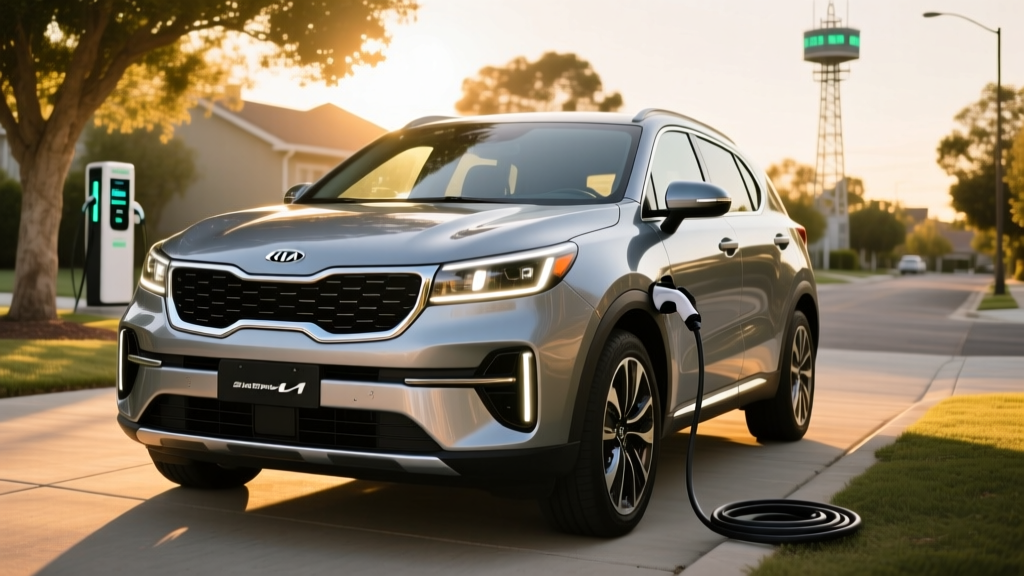
Quick Verdict: The Kia Sportage Prestige Hybrid at a Glance
The 2026 Kia Sportage Prestige Hybrid occupies a specific niche that many buyers are searching for without quite knowing the name: a conventional hybrid electric vehicle (HEV) that requires zero plug-in charging, delivers class-leading fuel economy in its segment, and comes loaded at the top trim without crossing the $40,000 line. If you're not ready to deal with charging infrastructure but want to meaningfully cut your fuel costs, this is one of the strongest candidates in the compact crossover segment.
The Sportage Hybrid pairs a 1.6-liter turbocharged four-cylinder with an electric motor integrated into the transmission, producing a combined 232 horsepower and 258 lb-ft of torque. The Prestige trim sits at the top of the Hybrid lineup, adding features like a panoramic sunroof, heated and ventilated front seats, a head-up display, and Kia's full suite of advanced driver-assistance systems (ADAS). This is not a plug-in hybrid — it charges its small battery through regenerative braking and the gasoline engine. You fuel it like any other car and simply drive.
| Specification | 2026 Kia Sportage Hybrid (Prestige AWD) |
|---|---|
| Powertrain | 1.6L Turbo I4 + Electric Motor |
| Combined Output | 232 hp / 258 lb-ft torque |
| Transmission | 6-Speed Automatic |
| Drivetrain | AWD (standard on Prestige) |
| Battery Type | ~1.5 kWh Lithium-Ion (HEV, self-charging) |
| EPA Fuel Economy (FWD) | 43 city / 44 highway / 43 combined MPG |
| EPA Fuel Economy (AWD) | 38 city / 38 highway / 38 combined MPG |
| Fuel Tank | 13.7 gallons |
| Max Range (AWD, est.) | ~520 miles |
| 0–60 mph | ~7.5 seconds (est.) |
| Cargo Volume | 39.5 cu ft (rear seats up) |
| Base MSRP (Prestige AWD) | ~$39,590 |
| Hybrid Battery Warranty | 10 years / 100,000 miles |
HEV vs PHEV vs EV: Which Powertrain Fits You?
Before evaluating the Sportage Hybrid's specifics, it's worth clarifying exactly what you're buying — because Kia sells the Sportage in three distinct electrified flavors, and confusing them is one of the most common mistakes shoppers make.
| Feature | Sportage Hybrid (HEV) | Sportage Plug-In Hybrid (PHEV) | Sportage EV (EV6/EV9 platform) |
|---|---|---|---|
| Plug-in Required? | No — self-charging | Yes — plug in for EV range | Yes — plug in to charge |
| Electric-Only Range | None (motor assists engine) | ~34 miles (EPA) | ~239–310 miles (EPA, model-dependent) |
| Battery Size | ~1.5 kWh | 13.8 kWh | 58–77.4 kWh |
| Combined MPG / MPGe | 38–43 MPG | 84 MPGe (combined) | 117–134 MPGe |
| Home Charging Needed? | No | Recommended (Level 2, ~2 hrs) | Essential (Level 2, 6–8 hrs) |
| DC Fast Charge? | No | No (AC only) | Yes (up to 240+ kW) |
| Federal Tax Credit | Not eligible (§30D is for PHEV/EV) | Eligible (up to $7,500 if sourcing rules met) | Eligible (up to $7,500 if sourcing rules met) |
| Best For | No charging access, want better MPG | Short daily commute + home charging | Full electric, committed to charging |
The Sportage Prestige Hybrid (HEV) is for drivers who want fuel savings without changing their habits. You fill up at the gas station, the car manages the electric motor assist automatically, and you never think about it.
The Sportage PHEV is a different vehicle with a larger battery you plug in. If your daily commute is under 34 miles and you can charge at home, the PHEV lets you drive on electricity most days while retaining the gas engine for longer trips.
A full EV like the Kia EV6 eliminates gasoline entirely but demands reliable charging access — either at home or via public infrastructure.
Real-World Fuel Economy: EPA vs What You'll Actually See
The EPA rates the 2026 Sportage Hybrid at 43 MPG combined for front-wheel-drive models and 38 MPG combined for all-wheel-drive models. Since the Prestige trim comes exclusively with AWD, expect the 38 MPG combined figure as your baseline.
| Driving Condition | EPA Estimate (AWD) | Real-World Expectation |
|---|---|---|
| City (stop-and-go) | 38 MPG | 39–42 MPG (hybrids excel in city driving — regen braking recovers energy at every stop) |
| Highway (65–75 mph) | 38 MPG | 34–37 MPG (aerodynamic drag reduces hybrid advantage at sustained speed) |
| Combined (mixed driving) | 38 MPG | 36–40 MPG depending on route mix |
| Cold Weather (below 32°F) | — | 32–36 MPG (engine runs more to heat cabin and warm the catalytic converter) |
| Hot Weather w/ A/C | — | 35–38 MPG (A/C compressor load reduces efficiency modestly) |
This is where conventional hybrids like the Sportage HEV differ fundamentally from both gas cars and EVs. Hybrids often exceed their EPA city estimates in real-world stop-and-go traffic because regenerative braking recovers kinetic energy that a gas car wastes as heat in the brake pads. Conversely, at sustained highway speeds above 70 mph, the electric motor's contribution diminishes and the turbocharged gas engine does most of the work, so highway MPG may dip slightly below the EPA sticker.
Over a 50,000-mile ownership period at 38 MPG combined with gas at $3.50/gallon, you'd spend roughly $4,605 on fuel. A comparable non-hybrid compact crossover averaging 26 MPG would cost approximately $6,730 over the same distance — a savings of about $2,125 with the hybrid powertrain.
Powertrain Deep Dive: How the Hybrid System Works
The Sportage Hybrid uses Kia's TMED-II (Transmission-Mounted Electric Device) architecture. Here's what that means in practice: the electric motor is sandwiched between the 1.6-liter turbocharged engine and the 6-speed automatic transmission. Unlike some hybrids that use a continuously variable transmission (CVT), the Sportage Hybrid shifts through real gears, which gives it a more natural driving feel and avoids the "rubber-band" sensation that CVT-equipped hybrids can produce under hard acceleration.
The combined output of 232 hp and 258 lb-ft of torque makes the Sportage Hybrid one of the more powerful entries in the compact hybrid crossover segment. For context, the Toyota RAV4 Hybrid produces 219 hp, and the Honda CR-V Hybrid produces 204 hp. The Sportage's torque advantage is especially noticeable in city merging and passing situations where the electric motor delivers instant low-RPM torque before the turbo spools.
The hybrid battery is a small (~1.5 kWh) lithium-ion pack mounted under the rear seats. It never fully charges or fully depletes — the system keeps it in a narrow state-of-charge window (roughly 40–60%) to maximize longevity. You'll never see a "range" figure for this battery because it's not designed to drive the car on electricity alone for any meaningful distance. It exists to capture regen energy and provide torque assist to the gas engine.
Pricing, Trims, and Tax Credit Reality
The 2026 Kia Sportage Hybrid is offered in three trims: LX, EX, and the range-topping Prestige. AWD is standard on the Prestige and available on lower trims.
| Trim | Drivetrain | MSRP (est.) |
|---|---|---|
| LX FWD | FWD | ~$30,090 |
| LX AWD | AWD | ~$31,590 |
| EX AWD | AWD | ~$34,590 |
| Prestige AWD | AWD | ~$39,590 |
The Prestige trim adds significant equipment: a panoramic curved display (dual 12.3-inch screens), panoramic sunroof, heated and ventilated front seats, heated steering wheel, head-up display, Highway Driving Assist 2 (Kia's Level 2 ADAS with semi-autonomous lane centering and adaptive cruise), a 360-degree camera, and Harman Kardon premium audio.
Federal Tax Credit Eligibility
This is a critical distinction that trips up many buyers: the Kia Sportage Hybrid (HEV) does NOT qualify for the federal §30D Clean Vehicle Credit. That credit — worth up to $7,500 — applies only to plug-in electric vehicles (PHEVs and BEVs) that meet battery sourcing, critical mineral, MSRP cap, and buyer income requirements as defined by the IRS.
If the tax credit is a deciding factor in your purchase, you would need to step up to the Sportage PHEV (which may qualify depending on current battery-sourcing compliance) or consider a full EV like the Kia EV6. However, the Sportage Hybrid's lower purchase price — roughly $4,000–$8,000 less than the PHEV depending on trim — often offsets the lack of a credit when you run total cost of ownership over five years.
Some states offer separate incentives for hybrid vehicles, though these are less common than EV incentives. Check your state's energy office or department of environmental quality for current programs. These vary by jurisdiction and change frequently, so always verify with official state sources.
Battery Warranty, Reliability, and Replacement Cost
Kia Hybrid Battery Warranty: 10 years / 100,000 miles (whichever comes first). This covers the hybrid battery pack and hybrid-specific components including the electric motor, inverter, and converter against defects and capacity loss below functional thresholds.
Powertrain Warranty: 10 years / 100,000 miles.
Bumper-to-Bumper: 5 years / 60,000 miles.
Kia's 10-year/100,000-mile hybrid battery warranty is among the best in the industry and matches the coverage offered by Hyundai (its corporate sibling). Toyota covers its hybrid battery for 10 years/150,000 miles on newer models, which is slightly more generous on mileage.
How Long Will the Hybrid Battery Last?
Conventional hybrid batteries like the one in the Sportage HEV are under far less stress than EV or PHEV batteries. Because the system never fully charges or discharges the pack — keeping it in a tight 40–60% state-of-charge window — degradation is minimal. Based on long-term data from Kia and Hyundai hybrid platforms, most conventional hybrid batteries last well beyond 150,000 miles with negligible capacity loss. Failures within the warranty period are uncommon.
Should the battery require replacement outside warranty, expect a cost between $2,000 and $4,000 for the battery module, depending on whether you use OEM or aftermarket parts and your labor rates. This is significantly less than an EV or PHEV battery replacement, which can exceed $10,000–$20,000, because the HEV battery pack is small (~1.5 kWh vs 13.8 kWh for the PHEV or 77.4 kWh for an EV).
Overall Reliability
The Sportage Hybrid's powertrain shares architecture with the Hyundai Tucson Hybrid and Santa Fe Hybrid, which have accumulated several model years of field data. The 1.6L turbo engine paired with the TMED-II hybrid system has proven generally reliable, though some owners of earlier model-year Kia/Hyundai 1.6T engines (non-hybrid) reported issues that led to extended warranty programs. The hybrid variant uses a different engine calibration and has not been subject to the same recall campaigns. As always, check NHTSA for any active recalls on the specific model year before purchasing.
Driving Impressions and Practical Ownership
The Sportage Prestige Hybrid drives like a well-sorted compact crossover with a fuel-economy bonus rather than a dedicated eco-machine. The 232 hp output means highway merging and uphill passing are handled confidently — something you can't say about every hybrid in this class. The 6-speed automatic is a welcome choice over a CVT; shifts are perceptible but smooth, and there's none of the droning RPM hang that CVTs produce under sustained acceleration.
Ride quality on the Prestige's 19-inch wheels is firm but controlled. Road noise is well-managed at highway speeds, and the hybrid system transitions between electric-motor assist and engine power seamlessly — most drivers won't notice when the engine shuts off at stoplights or re-engages on acceleration.
Practically, the Sportage Hybrid offers 39.5 cubic feet of cargo space behind the rear seats, which is competitive with the RAV4 Hybrid (37.5 cu ft) and CR-V Hybrid (39.3 cu ft). The hybrid battery's under-seat packaging preserves the full cargo floor — no humps or compromises.
Who Should Buy the Sportage Prestige Hybrid?
Choose the Sportage Hybrid (HEV) if:
- You don't have access to home or workplace charging and don't want to rely on public chargers
- You want meaningful fuel savings (38–43 MPG) without any behavioral changes
- You want a loaded compact crossover under $40,000 with strong warranty coverage
- Your annual mileage is high enough that fuel savings compound (15,000+ miles/year)
- You want AWD for snow/rain without the efficiency penalty of a gas-only AWD crossover
Choose the Sportage PHEV instead if:
- You can install a Level 2 home charger and your daily commute is under 34 miles
- You want to drive mostly on electricity during the week and use gas only for road trips
- The federal §30D tax credit applies to your purchase (check current IRS sourcing requirements)
Choose a full EV (e.g., Kia EV6) if:
- You have reliable home charging (Level 2, 240V)
- You want zero tailpipe emissions and the lowest per-mile energy cost
- Your typical trips fall within 200–250 miles, or you're comfortable with DC fast charging on road trips
Pros
- 38–43 MPG combined with no plug-in required
- 232 hp — more powerful than RAV4 and CR-V hybrids
- 10-year/100,000-mile hybrid battery and powertrain warranty
- Prestige trim is heavily equipped for under $40K
- Real 6-speed automatic — no CVT drone
- Competitive cargo space with no battery intrusion
Cons
- AWD Prestige drops to 38 MPG combined (vs 43 for FWD lower trims)
- No federal tax credit eligibility (HEV, not PHEV/EV)
- ~1.5 kWh battery means no electric-only driving mode
- Not as fuel-efficient as a PHEV on short, chargeable commutes
- 19-inch wheels on Prestige add road harshness vs smaller wheel options
Frequently Asked Questions
How many MPG does the Kia Sportage Prestige Hybrid get?
The EPA rates the 2026 Sportage Hybrid AWD (standard on Prestige) at 38 city / 38 highway / 38 combined MPG. In real-world city driving with frequent stops, many owners report 39–42 MPG thanks to regenerative braking. Highway driving at 70+ mph typically yields 34–37 MPG. The FWD hybrid trims (LX, EX) achieve a higher 43 MPG combined.
Does the Kia Sportage Hybrid need to be plugged in?
No. The Sportage Hybrid (HEV) is a conventional, self-charging hybrid. Its small battery recharges through regenerative braking and the gasoline engine. You never plug it in. If you want a Sportage you can plug in for electric-only driving, you need the Sportage PHEV, which is a separate model with a larger 13.8 kWh battery and ~34 miles of electric-only range.
How far can the Sportage Hybrid go on electric only?
The Sportage HEV cannot drive on electric power alone for any meaningful distance. The electric motor assists the gas engine during acceleration and captures energy during braking, but the vehicle always uses gasoline for sustained propulsion. This is fundamentally different from the Sportage PHEV, which can travel ~34 miles on electricity alone before the gas engine engages.
Does the Kia Sportage Hybrid qualify for a tax credit?
The Sportage Hybrid (HEV) does not qualify for the federal §30D Clean Vehicle Credit, which is reserved for plug-in vehicles (PHEVs and BEVs) meeting battery sourcing, MSRP, and buyer income requirements. The Sportage PHEV may qualify for up to $7,500 depending on current-year IRS rules. Some states offer their own hybrid incentives — check your state energy office for details. Consult a tax professional for eligibility specifics.
Is the Kia Sportage Hybrid reliable?
The Sportage Hybrid uses Kia's proven TMED-II hybrid system shared with the Hyundai Tucson Hybrid. The 10-year/100,000-mile hybrid battery and powertrain warranty provides substantial protection. Conventional hybrid batteries experience minimal degradation due to the narrow state-of-charge operating window. Long-term data from Kia/Hyundai hybrid platforms shows battery life typically exceeding 150,000 miles. Check NHTSA.gov for any active recalls before purchasing.
What does it cost to replace the hybrid battery?
Outside of warranty coverage, a replacement hybrid battery for the Sportage HEV typically costs between $2,000 and $4,000 including parts and labor. This is far less than EV or PHEV battery replacements because the HEV pack is small (~1.5 kWh). However, replacements within the 10-year/100,000-mile warranty period are covered at no cost, and premature failures are statistically uncommon in conventional hybrids.
How does the Sportage Hybrid compare to the RAV4 Hybrid and CR-V Hybrid?
The Sportage Hybrid produces 232 hp — more than both the RAV4 Hybrid (219 hp) and CR-V Hybrid (204 hp). Fuel economy is comparable: the RAV4 Hybrid AWD achieves 41 MPG combined, and the CR-V Hybrid AWD achieves 40 MPG combined, both slightly ahead of the Sportage AWD's 38 MPG. The Sportage Prestige compensates with more standard luxury features at its price point and a longer powertrain warranty (10 years vs Toyota's and Honda's 5 years).