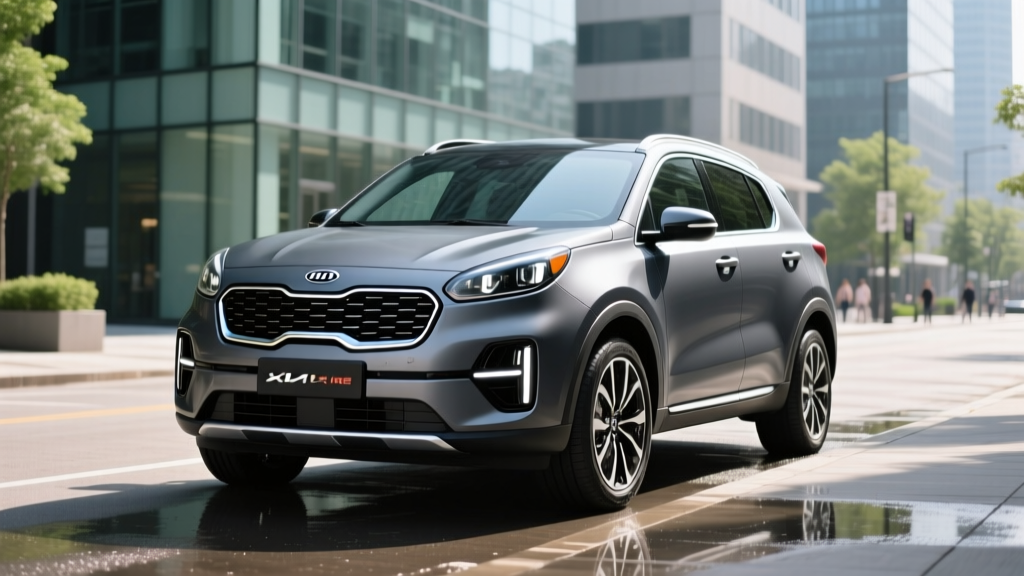
The 2026 Kia Sportage Hybrid X-Line occupies a specific niche: a rugged-styled compact crossover that sips fuel without requiring a plug. For buyers who want electrified efficiency but lack reliable home charging access, this conventional hybrid (HEV) eliminates the infrastructure hurdle entirely. Here's everything you need to know about its fuel economy, powertrain, ownership costs, and whether it makes sense versus the plug-in hybrid or full EV alternatives.
Quick Verdict: Who the Sportage Hybrid X-Line Is For
The X-Line trim brings blacked-out exterior accents, a matte-finish grille, and standard all-wheel drive to the Sportage Hybrid lineup. Underneath the rugged cosmetics, it shares the same 1.6-liter turbocharged hybrid powertrain as other Sportage HEV trims. The result is a practical compact SUV that delivers consistent real-world efficiency in the high-30s MPG without ever needing to plug in.
- You don't have access to home or workplace Level 2 charging
- You want AWD and a rugged look without a fuel-economy penalty
- You drive a mix of city and highway and want strong city MPG
- You want lower upfront cost than the PHEV variant
- You have reliable home charging and want electric-only daily commuting (consider the Sportage PHEV)
- You want a pure EV experience with zero tailpipe emissions (consider the EV6 or Ioniq 5)
- Prioritizing maximum cargo space over fuel economy
Fuel Economy: EPA Ratings vs. Real-World MPG
| Metric | EPA Estimate | Real-World Expectation |
|---|---|---|
| City MPG | 38 MPG | 37–40 MPG |
| Highway MPG | 38 MPG | 34–37 MPG |
| Combined MPG | 38 MPG | 35–39 MPG |
The 2026 Sportage Hybrid X-Line AWD carries an EPA combined rating of 38 MPG. Like most conventional hybrids, it tends to outperform its EPA city estimate in stop-and-go traffic where regenerative braking captures the most energy. Highway driving, particularly above 70 mph, sees a slight dip as the turbocharged engine works harder and the electric motor provides less assistance.
For context, the non-hybrid 2026 Sportage AWD achieves 25 MPG combined — making the hybrid's 52% efficiency improvement substantial. Over 15,000 miles annually, that translates to roughly 200 fewer gallons of fuel per year, or approximately $700–$800 in savings at $3.50/gallon.
Powertrain Specs: 1.6L Turbo Hybrid System
| Specification | Detail |
|---|---|
| Engine | 1.6L turbocharged 4-cylinder |
| Electric Motor | 47.7 kW (64 hp) permanent-magnet synchronous |
| Combined System Output | 232 horsepower / 258 lb-ft torque |
| Transmission | 6-speed automatic (torque-converter) |
| Drivetrain | AWD (standard on X-Line) |
| 0–60 mph | ~7.4 seconds |
| Towing Capacity | 2,000 lbs |
| Hybrid Battery | 1.49 kWh lithium-ion (self-charging, no plug) |
The Sportage Hybrid uses a conventional parallel-hybrid architecture — the gasoline engine and electric motor can drive the wheels independently or together. The small 1.49 kWh battery recharges through regenerative braking and engine-driven generation. You never plug it in; the system manages energy flow automatically.
The 232 combined horsepower is competitive with rivals like the Toyota RAV4 Hybrid (219 hp) and Honda CR-V Hybrid (204 hp). The 6-speed automatic avoids the drone of a CVT under acceleration, a trait many buyers prefer. AWD is standard on the X-Line, using an electronically controlled coupling to send torque rearward when slip is detected.
HEV vs. PHEV: Sportage Hybrid Compared to Sportage Plug-In Hybrid
| Attribute | Sportage Hybrid (HEV) X-Line | Sportage Plug-In Hybrid (PHEV) X-Line |
|---|---|---|
| Plug Required? | No — self-charging | Yes — 13.7 kWh battery, plugs in |
| Electric-Only Range | N/A (motor assists engine) | ~34 miles EPA (electric-only) |
| Combined MPG / MPGe | 38 MPG combined | 84 MPGe (electric mode) / 35 MPG (gas-only) |
| Total Range | ~500 miles | ~420 miles (electric + gas) |
| System Horsepower | 232 hp | 261 hp |
| Level 2 Charge Time | N/A | ~3.5 hours (240V, 3.3 kW onboard charger) |
| DC Fast Charging | N/A | Not available |
| Base MSRP (approx.) | $35,090 | $40,490 |
| Federal Tax Credit (§30D) | Not eligible | Up to $7,500 (eligibility varies) |
The choice between HEV and PHEV comes down to charging access and commute distance. If you can install a Level 2 charger at home and your daily round-trip commute is under 30 miles, the PHEV lets you drive almost entirely on electricity on weekdays while retaining a gas engine for longer trips. The HEV is the simpler, lower-cost option for those without plug-in capability or who prefer not to manage charging routines.
Pricing, Trims, and Tax Credit Eligibility
The 2026 Kia Sportage Hybrid X-Line AWD starts at an MSRP of approximately $35,090, including destination. The X-Line sits above the LX and EX Hybrid trims and adds distinctive styling cues (gloss black trim, unique 19-inch wheels, roof rails) along with standard features like heated front seats, a 12.3-inch dual-panorama display, and Kia's Highway Driving Assist 2 (SAE Level 2 driver-assist).
- Sportage Hybrid (HEV): NOT eligible. Conventional hybrids do not qualify for the §30D Clean Vehicle Credit — only plug-in hybrids and full EVs with sufficient battery capacity qualify.
- Sportage PHEV: May qualify for up to $7,500, subject to:
- — Buyer income caps ($150K single / $300K joint MAGI)
- — MSRP cap ($80,000 for SUVs — Sportage PHEV qualifies)
- — Battery critical-mineral and component sourcing requirements (check IRS.gov for current-year eligibility)
- — Point-of-sale transfer available at participating dealers
Always verify eligibility with your tax professional before purchase. Rules change and vary by vehicle build date and battery sourcing.
Without a federal credit, the HEV's value proposition rests on its lower MSRP versus the PHEV (~$5,400 less) and its simplicity. Some states offer additional incentives for hybrids — check your state energy office or fueleconomy.gov for local programs.
Battery Warranty, Reliability, and Replacement Cost
- Coverage: 10 years / 100,000 miles (whichever comes first)
- What's Covered: Hybrid battery pack, hybrid control unit, electric motor
- Capacity Threshold: Kia warrants against defects and abnormal capacity loss; specific degradation percentage thresholds vary — consult your warranty booklet
- Transferability: Warranty is fully transferable to second owners
Kia's 10-year/100,000-mile hybrid battery warranty is among the strongest in the segment. The 1.49 kWh battery in the HEV is small and operates within a conservative state-of-charge window (the system never fully depletes or fully charges it), which significantly extends cell longevity. Real-world data from earlier Kia and Hyundai hybrid models shows these batteries routinely lasting 150,000+ miles with minimal degradation.
Should a replacement be needed out of warranty, a new hybrid battery pack for the Sportage HEV is estimated at $2,000–$3,500 (parts and labor), far less than a full EV battery replacement. This is an important cost differentiator versus BEVs, where pack replacement can exceed $10,000–$15,000.
According to IIHS and owner surveys, the Sportage Hybrid platform has demonstrated solid reliability since its 2023 introduction. The turbocharged 1.6L engine and 6-speed automatic are proven components shared across Hyundai-Kia's lineup.
Driving Impressions and Practical Ownership Notes
The X-Line's AWD system and 232 hp make it one of the more engaging compact hybrid crossovers to drive. Acceleration from a stop is brisk thanks to the electric motor's instant torque fill, and the transition between electric and gas power is nearly seamless. Regenerative braking is moderate — you won't get true one-pedal driving as in a full EV, but deceleration feels natural and predictable.
Cargo space measures 39.5 cubic feet behind the rear seats — unchanged from the non-hybrid Sportage, as the small battery pack is packaged under the rear seats without intruding on cabin volume. A hands-free liftgate and 60/40 split rear seat are standard on the X-Line.
Insurance costs for the Sportage Hybrid are typically 5–10% lower than the equivalent PHEV or full EV, reflecting lower repair complexity and replacement cost. Expect annual premiums in the $1,400–$1,800 range depending on your profile and state.
Hybrid vs. PHEV vs. Full EV: Which Powertrain Fits You?
| Factor | HEV (Sportage Hybrid) | PHEV (Sportage PHEV) | Full EV (e.g., EV6) |
|---|---|---|---|
| Home Charging Needed? | No | Recommended (Level 2) | Essential |
| Daily Commute (under 30 mi) | Gas + electric assist | Mostly electric | Fully electric |
| Road-Trip Convenience | Gas stations only, ~500 mi range | Gas + electric, ~420 mi range | DC fast charging, 20–40 min stops |
| Upfront Cost | Lowest ($35,090) | Moderate ($40,490) | Highest ($42,600+) |
| Fuel/Energy Cost per Mile | ~$0.10/mi | ~$0.05/mi (electric mode) | ~$0.04/mi (home charging) |
| Tax Credit | None | Up to $7,500 | Up to $7,500 |
| Maintenance | Oil changes + standard | Oil changes (less frequent) + standard | Minimal — no oil, fewer moving parts |
The HEV wins on simplicity and upfront cost. The PHEV wins for plug-in commuters who want electric daily driving with gas-engine backup. The full EV wins on per-mile energy cost and zero tailpipe emissions but demands charging infrastructure commitment.
- 38 MPG combined without plugging in
- 232 hp with standard AWD — responsive and capable
- 10-year/100,000-mile hybrid battery warranty
- ~500-mile total range eliminates trip-planning stress
- Distinctive X-Line styling at a moderate price premium
- Low battery replacement cost vs. PHEV or BEV
- No federal tax credit eligibility
- Highway MPG drops to mid-30s at sustained speed
- No electric-only driving mode (motor only assists)
- AWD system is reactive, not a dedicated off-roader
- X-Line cosmetic upgrades add cost without functional gains
Frequently Asked Questions
How many MPG does the 2026 Kia Sportage Hybrid X-Line get?
The EPA rates the 2026 Sportage Hybrid X-Line AWD at 38 MPG city, 38 MPG highway, and 38 MPG combined. In real-world driving, expect 37–40 MPG in city traffic and 34–37 MPG on sustained highway trips above 70 mph.
Does the Sportage Hybrid need to be plugged in?
No. The Sportage Hybrid is a conventional hybrid (HEV). Its small battery recharges through regenerative braking and the gasoline engine. You simply fill up at a gas station like any other car.
Is the Sportage Hybrid reliable, and what does battery replacement cost?
The hybrid powertrain has proven reliable across Kia and Hyundai's lineup. The battery is covered by a 10-year/100,000-mile warranty. Out-of-warranty replacement is estimated at $2,000–$3,500 — far less than a full EV battery.
Does the Sportage Hybrid qualify for any tax credit?
The conventional Sportage Hybrid (HEV) does not qualify for the federal §30D Clean Vehicle Credit, which requires plug-in capability and minimum battery capacity. The Sportage PHEV may qualify for up to $7,500 depending on income, sourcing, and MSRP requirements. Check IRS.gov for current rules.
Should I get the Sportage Hybrid or the Sportage PHEV?
If you have home Level 2 charging and a commute under 34 miles round-trip, the PHEV's electric-only mode can eliminate most weekday gas use. If you lack charging access or prefer lower upfront cost and zero plug-in management, the HEV is the better fit.
How does the Sportage Hybrid compare to the RAV4 Hybrid?
The Toyota RAV4 Hybrid AWD achieves 39 MPG combined (1 MPG more) with 219 hp. The Sportage Hybrid offers more horsepower (232 hp), a more modern interior with the dual 12.3-inch display, and a longer hybrid battery warranty (10 years vs. Toyota's 10 years/150,000 miles for the battery). Both are strong choices — the Sportage edges ahead on power and tech, while the RAV4 holds a slight efficiency advantage and Toyota's resale-value reputation.
Sources: fueleconomy.gov (EPA ratings), Kia.com (manufacturer specifications), IRS.gov (§30D tax credit rules). Specifications reflect 2026 model year as published; verify with your dealer for final pricing and availability.