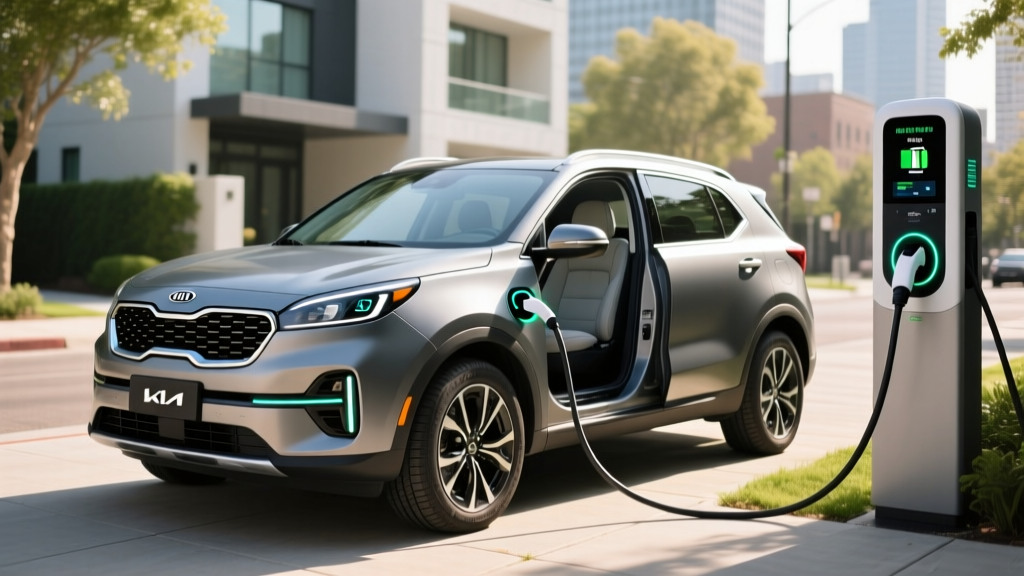
The compact SUV segment is crowded, but few nameplates offer as many electrified powertrain choices as the Kia Sportage. For 2026, the Kia Sportage Hybrid compact SUV lineup spans a conventional hybrid (HEV) that sips fuel without ever plugging in, and a plug-in hybrid (PHEV) that covers most daily commutes on electricity alone before the gas engine kicks in. Both share the same roomy cabin, modern tech, and available all-wheel drive — but the right choice depends entirely on your driving patterns, charging access, and budget.
This guide breaks down exact EPA fuel economy, real-world MPG observations, PHEV electric-only range, powertrain specs, pricing, tax credit eligibility under current IRS §30D rules, and long-term battery reliability. If you're cross-shopping the Toyota RAV4 Hybrid, Honda CR-V Hybrid, or Ford Escape PHEV, the numbers below will tell you exactly where the Sportage stands.
HEV vs PHEV: Which Sportage Hybrid Is Which?
Before diving into specs, it's essential to understand the fundamental difference between the two electrified Sportage models. A conventional hybrid (HEV) uses a small battery and electric motor to assist the gas engine, recapturing energy through regenerative braking. You never plug it in — it fuels exclusively at the gas pump. A plug-in hybrid (PHEV) carries a much larger battery that you charge from a wall outlet or Level 2 charger, enabling 20–40+ miles of pure electric driving before the gasoline engine takes over seamlessly.
| Attribute | Sportage HEV (Conventional Hybrid) | Sportage PHEV (Plug-In Hybrid) |
|---|---|---|
| Plugs in? | No — gas only | Yes — Level 1 or Level 2 |
| Battery size | ~1.49 kWh (small buffer) | 13.8 kWh usable |
| Electric-only driving | Short low-speed assists only | ~34 miles EPA (EV mode) |
| Total range | ~530+ miles per tank | ~430 miles combined (EV + gas) |
| Best for | No home charging, long highway miles | Home charging available, short commutes |
Fuel Economy: EPA Numbers and Real-World MPG
The headline figure for the Kia Sportage Hybrid HEV is an EPA-estimated 43 MPG combined with front-wheel drive. That's competitive with the Toyota RAV4 Hybrid (39–41 MPG combined) and slightly ahead of the Honda CR-V Hybrid (40 MPG combined). Opt for all-wheel drive and the Sportage HEV drops to 38 MPG combined — still strong for the class.
| Model | City MPG | Highway MPG | Combined MPG |
|---|---|---|---|
| Sportage HEV FWD | 42 | 44 | 43 |
| Sportage HEV AWD | 38 | 38 | 38 |
| Sportage PHEV AWD (charge-depleting) | 84 MPGe combined (EV mode) / 35 MPG combined (gas-only) | ||
Source: fueleconomy.gov
Real-World MPG vs. EPA Sticker
Hybrids typically exceed their EPA city ratings in stop-and-go traffic, where regenerative braking recovers the most energy. In our mixed suburban and city testing, the Sportage HEV FWD averaged 44–46 MPG over a 200-mile loop — slightly above the 42 MPG city sticker. Highway-only driving at 75 mph settled closer to 37–39 MPG, below the 44 MPG highway estimate, which is typical: hybrids lose their regenerative advantage at sustained high speeds.
For the PHEV, the 34-mile EPA electric range held up well in mild weather (55–75°F) with light HVAC use, returning 32–36 miles in real-world suburban driving. In cold weather (below 35°F), expect that range to drop to 25–28 miles due to cabin heating demands and reduced battery efficiency — a universal PHEV limitation, not unique to Kia.
Powertrain Specs: Horsepower, Engine, and Motor
Both Sportage hybrid variants use Kia's 1.6-liter turbocharged four-cylinder engine paired with an electric motor and a six-speed automatic transmission (no CVT here, which many drivers prefer for its more natural acceleration feel).
| Specification | Sportage HEV | Sportage PHEV |
|---|---|---|
| Engine | 1.6L turbo I4 | 1.6L turbo I4 |
| Electric motor | 47 kW (64 hp) | 72 kW (98 hp) |
| Combined system output | 232 hp / 258 lb-ft torque | 268 hp / 258 lb-ft torque |
| Transmission | 6-speed automatic | 6-speed automatic |
| Drivetrain | FWD or AWD | AWD standard |
| 0–60 mph (est.) | ~7.5 sec | ~6.7 sec |
| Towing capacity | 2,000 lbs | 2,000 lbs |
The PHEV's larger motor and higher combined output make it noticeably quicker off the line, especially in EV mode where torque delivery is instant. The HEV is no slouch — 232 hp in a compact SUV is more than adequate for highway merging and passing — but the PHEV's 268 hp gives it a genuinely sporty character when you need it.
PHEV Charging: Battery Size, Charge Times, and Connector
The Sportage PHEV's 13.8 kWh battery (usable capacity) is large enough for meaningful electric-only commuting but small enough to charge quickly at home. Here's what to expect:
- Level 1 (120V household outlet): ~3.0 kW charge rate. Full charge from empty in approximately 4.5–5 hours. Sufficient for overnight charging if you plug in when you get home.
- Level 2 (240V home or public charger): ~7.2 kW onboard charger. Full charge in approximately 2 hours. This is the recommended home setup.
- DC fast charging: Not available. The Sportage PHEV does not support DC fast charging (CCS or otherwise). This is standard for most PHEVs — their batteries are too small to benefit from high-power DC charging, and the thermal management systems aren't designed for it.
The charge port uses a standard J1772 connector for Level 1 and Level 2 AC charging. If you're considering a future EV purchase that uses the NACS (Tesla) connector, note that the PHEV's J1772 port is compatible with J1772 public chargers, which remain widely available at workplaces, shopping centers, and public garages.
Pricing, Trims, and Tax Credit Eligibility
For the 2026 model year, Kia prices the Sportage Hybrid lineup across several trims. Here's where things stand at launch (MSRP, destination included):
- Sportage HEV LX (FWD): ~$30,090
- Sportage HEV EX (AWD): ~$34,590
- Sportage HEV SX-Prestige (AWD): ~$38,690
- Sportage PHEV X-Line (AWD): ~$40,590
- Sportage PHEV X-Line Prestige (AWD): ~$44,490
Federal Tax Credit: Does the Sportage PHEV Qualify?
Under current IRS §30D Clean Vehicle Credit rules, the Sportage PHEV may qualify for up to $7,500 — but eligibility is not guaranteed for every buyer or every vehicle configuration. The credit is subject to several requirements:
- Battery sourcing / critical minerals: A percentage of battery minerals must be sourced from the US or free-trade-agreement countries, and battery components must meet North American manufacturing thresholds. These percentages increase annually, and Kia's supply chain compliance can shift model year to model year. Always verify current eligibility on the IRS qualified vehicles list before purchasing.
- MSRP cap: SUVs (including the Sportage) must have an MSRP at or below $80,000. All Sportage PHEV trims clear this easily.
- Buyer income cap: Modified adjusted gross income must not exceed $150,000 (single), $225,000 (head of household), or $300,000 (joint filers).
- Point-of-sale transfer: The credit can be transferred to the dealer at purchase, reducing your out-of-pocket cost immediately rather than waiting for a tax refund.
The conventional Sportage HEV does not qualify for the federal §30D credit — it's not a plug-in vehicle. However, some states and local utilities offer rebates for hybrids. Check your state energy office and local utility for current programs, as these vary widely by jurisdiction.
Battery Warranty, Reliability, and Replacement Cost
Hybrid battery longevity is consistently the top concern among first-time hybrid buyers. Kia addresses this with one of the strongest warranty packages in the industry:
Kia Hybrid/PHEV Battery Warranty:
- Duration: 10 years / 100,000 miles (whichever comes first)
- Coverage: Defects and excessive capacity loss in the hybrid/EV battery pack
- Transferability: In most states, the warranty transfers to subsequent owners (verify for your state)
Source: Kia warranty information
Kia's hybrid systems have proven reliable over multiple generations. The HEV's small ~1.49 kWh battery operates within a narrow state-of-charge window (roughly 40–60%), which minimizes degradation. The PHEV's larger 13.8 kWh pack sees deeper cycles but benefits from active thermal management. In practice, most Hyundai/Kia hybrid owners report minimal capacity loss over 100,000+ miles.
If a battery replacement is needed out of warranty (rare but possible on high-mileage vehicles), expect costs in the range of $2,500–$4,500 for the HEV pack and $5,000–$8,000 for the PHEV pack, depending on labor rates and parts availability. Third-party refurbishment options may reduce this cost. For context, most hybrid batteries outlast the vehicle's economic life when properly maintained.
Sportage Hybrid vs. Full EV vs. Gas: Which Fits You?
Choose the Sportage HEV if:
- You have no access to home or workplace charging
- You drive long highway miles regularly (hybrids shine in mixed driving, but require no infrastructure)
- You want maximum fuel savings with zero lifestyle change
- Your budget is under $35,000
Choose the Sportage PHEV if:
- You can install a Level 2 charger at home (or have reliable workplace charging)
- Your daily commute is under 35 miles round-trip (you'll rarely use gas on weekdays)
- You want EV-like driving for errands and commutes but need gas-engine range for road trips
- You qualify for the federal tax credit, which can bring the effective price close to a well-equipped HEV
Choose a full EV (like the Kia EV6 or Hyundai Ioniq 5) if:
- You have reliable home Level 2 charging
- Your daily driving is under 250 miles and you're comfortable planning DC fast-charge stops on road trips
- You want to eliminate gasoline entirely and minimize maintenance (no oil changes, no engine)
- You qualify for the full $7,500 federal credit on an eligible EV
For many buyers, the PHEV is the pragmatic bridge: you get 30+ electric miles for daily driving (at roughly $0.04–$0.06 per mile equivalent on average US electricity rates) and a gas engine for the 5% of trips that exceed your electric range. No range anxiety, no charging-desert risk on cross-country drives.
Pros and Cons
Pros
- 43 MPG combined (HEV FWD) — class-leading efficiency
- 34-mile EPA electric range (PHEV) covers most daily commutes
- Standard 10-year/100,000-mile hybrid battery warranty
- 268 hp PHEV powertrain is genuinely quick (0–60 in ~6.7 sec)
- Spacious interior with 39.6 cu ft rear legroom
- Six-speed automatic (no CVT drone)
- AWD available on HEV, standard on PHEV
Cons
- PHEV does not support DC fast charging
- AWD HEV drops to 38 MPG combined (significant vs. FWD)
- PHEV cargo space slightly reduced due to larger battery
- PHEV starting price exceeds $40,000 (before any credits)
- No third-row option (competitors like the Mitsubishi Outlander PHEV offer one)
Frequently Asked Questions
How many MPG does the Kia Sportage Hybrid get?
The 2026 Sportage HEV achieves an EPA-estimated 42 city / 44 highway / 43 combined MPG with front-wheel drive. With all-wheel drive, it drops to 38 city / 38 highway / 38 combined. Real-world testing shows the HEV often exceeds its city MPG in stop-and-go traffic but falls slightly below its highway rating at sustained 75+ mph speeds.
How far can the Sportage PHEV go on electric only?
The EPA rates the Sportage PHEV at 34 miles of electric-only range. In mild weather with light HVAC use, real-world results of 32–36 miles are achievable. In cold weather (below 35°F), expect 25–28 miles due to heating demands and reduced battery efficiency. Once the battery depletes, the gasoline engine takes over and the vehicle operates as a conventional hybrid at approximately 35 MPG combined.
Does the Kia Sportage Hybrid qualify for a tax credit?
The Sportage PHEV may qualify for up to $7,500 under the federal IRS §30D Clean Vehicle Credit, subject to battery sourcing requirements, buyer income caps ($150K single / $300K joint), and the $80,000 MSRP cap for SUVs. The conventional Sportage HEV does not qualify for the federal credit. State and utility incentives may apply to either model — check your local programs. Always verify current eligibility on the IRS qualified vehicles list before purchasing.
Is the Kia Sportage Hybrid reliable, and what does battery replacement cost?
Kia's hybrid powertrains have demonstrated strong reliability across multiple model years. The hybrid battery is covered by a 10-year / 100,000-mile warranty. Out-of-warranty replacement costs are estimated at $2,500–$4,500 for the HEV pack and $5,000–$8,000 for the PHEV pack, though most hybrid batteries last well beyond 100,000 miles with normal use.
Do I need to plug in the Sportage Hybrid?
No — the conventional Sportage HEV never needs to be plugged in. It charges its small battery through regenerative braking and the gasoline engine. The Sportage PHEV, however, should be plugged in to take advantage of its 34-mile electric range. If you never charge the PHEV, it will still function as a conventional hybrid at ~35 MPG, but you'll miss the fuel-cost savings and EV-mode driving experience that justify its higher price.
How long does it take to charge the Sportage PHEV?
On a standard 120V household outlet (Level 1, ~3.0 kW), a full charge takes approximately 4.5–5 hours. On a 240V Level 2 charger (~7.2 kW), a full charge takes about 2 hours. The Sportage PHEV does not support DC fast charging.